



Karnataka’s Religion Bill proposes 10-year jail for facilitating conversion of woman, minor and SC/ST

News Network
December 16, 2021

Bengaluru, Dec 16: Karnataka government’s proposed anti-conversion bill suggested up to 10 years of imprisonment and placed the “burden of proof” on the person who facilitated the conversion on the basis of force or coercion. 

The draft of the so called ‘Karnataka Protection of Right to Freedom of Religion Bill-2021’, which official sources say is not yet finalised, aims to prohibit "conversion from one religion to another religion by misrepresentation, force, fraud, undue influence, coercion, allurement or marriage".

Offences registered under the proposed bill will be cognizable and non-bailable. Imprisonment "shall not be less than three years, but which may extend to five years" along with a fine of around Rs 25,000. However, for conversion involving a minor, woman or a person belonging to Scheduled Castes or Scheduled Tribes, jail term can go up to 10 years with a fine of Rs 50,000.

The accused person will have to prove that the religious conversion was voluntary and not by force. Further, the bill makes a provision for the accused to pay up to Rs 5 lakh as compensation to those who were made to convert. 

The bill requires people willing to convert to declare at least 60 days in advance to the deputy commissioner and within 30 days of the conversion under a specified format. 

After the conversion, the “authority concerned shall take steps in accordance with applicable laws with regard to entitlement of persons converted to enjoy social status or to receive economic benefits from the government (prior to conversion),” the bill says. 

This means that a Dalit who converts should forego benefits he or she is entitled to as a member of the SC community. 

Any institution or organisation violating the provisions of the proposed law will not be eligible for any financial aid or grant from the government, the bill says. 

The bill noted that by virtue of Right to Freedom of Religion all persons are free to profess, practice or propagate any religion of their choice. However, "...Supreme Court has held that 'Right to Propagate' under Article 25 does not include the right to convert another person,” the bill notes.

“In recent years the state has noticed many (instances) of conversion by means of 'allurement', 'coercion', 'force', 'fraudulent means' and also 'mass conversion'. These instances caused disturbances of 'public order' in the state,” the bill explains.

“The Law Commission of Karnataka, after studying the various laws on the subject and considering the situation in the state in its thirtieth report, has made the recommendation to the government to enact a suitable law on the subject," the proposed bill says.

Comments

Add new comment

  • Coastaldigest.com reserves the right to delete or block any comments.
  • Coastaldigset.com is not responsible for its readers’ comments.
  • Comments that are abusive, incendiary or irrelevant are strictly prohibited.
  • Please use a genuine email ID and provide your name to avoid reject.
News Network
January 23,2026

oscar.jpg

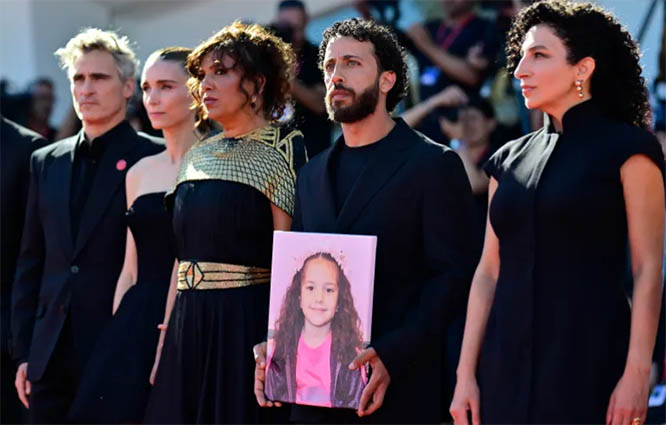
The Voice of Hind Rajab, inspired by the tragic final moments of a young Palestinian girl killed by Israeli fire in Gaza, has been nominated for an Academy Award in the Best International Feature Film category.

Directed by Tunisian filmmaker Kaouther Ben Hania, the film recounts the true story of five-year-old Hind Rajab, who lost her life in January 2024 while fleeing Israeli bombardment with her family.

The film features the real audio of Hind’s desperate call to the Palestinian Red Crescent Society, where she pleaded for help moments before the vehicle she was in was struck by 355 bullets.

The haunting narrative begins with a brief call made from the besieged Tel al-Hawa neighborhood of Gaza, where gunfire and armored vehicles drowned out every sound.

After witnessing the brutal killing of her family, she made a trembling call, her voice reduced to a whisper as she spoke of the massacre and her unbearable loneliness as the sole survivor.

Premiering at the Venice International Film Festival in September 2025, The Voice of Hind Rajab garnered widespread acclaim, receiving a record-setting 23-minute standing ovation and the Silver Lion Grand Jury Prize, the festival’s second-highest honor.

In her acceptance speech, Ben Hania dedicated the film to humanitarian workers and first responders in Gaza, emphasizing that Hind's voice symbolizes countless civilians affected by war.

She aims to give voice to victims often reduced to mere statistics, highlighting the broader suffering of civilians in war zones.

The film’s Oscar nomination underscores its powerful storytelling and ethical approach to depicting real-life tragedy, making it a crucial piece of contemporary cinema.

It serves not only as a narration of individual tragedy but also as an artistic and documentary response to the silence and censorship that often overshadow West Asian struggles and wars.

Using an innovative method she calls docufiction, Ben Hania bridges unvarnished reality and narrative structure, creating a work that is both artistically valuable and socially impactful.

Born in 1977 in Sidi Bouzid—later the epicenter of the Arab revolution—her background profoundly influenced her worldview and artistic approach.

She is a graduate of the Higher School of Audiovisual Arts of Tunis, Pantheon-Sorbonne University, and La Fémis in Paris, where her studies equipped her with the technical and theoretical tools needed to address complex subjects. 

Comments

Add new comment

  • Coastaldigest.com reserves the right to delete or block any comments.
  • Coastaldigset.com is not responsible for its readers’ comments.
  • Comments that are abusive, incendiary or irrelevant are strictly prohibited.
  • Please use a genuine email ID and provide your name to avoid reject.