



Mangaluru Muslim Leaders Denounce Wakf Bill as a Threat to Religious Freedom

coastaldigest.com news network
March 1, 2025

waqfmanglore.jpg

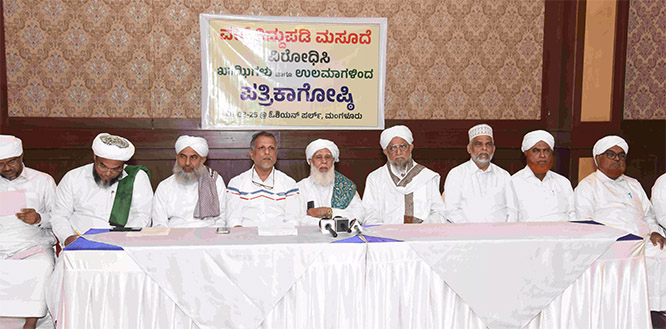
Mangaluru, Mar 1: Muslim religious and community leaders have strongly opposed the Wakf Amendment Bill 2024, calling it a threat to religious freedom. They have urged the government to uphold constitutional values and withdraw the bill immediately.

Speaking at a press conference on Saturday, March 1, they stated that the bill, introduced in August last year, has faced widespread resistance. Critics argue that it undermines the rights of Muslims and disregards constitutional protections. The bill was referred to a Joint Parliamentary Committee, but reports suggest that the committee rejected opposition-proposed changes and introduced even more controversial provisions, deepening concerns.

Leaders emphasized that Wakf properties are sacred donations meant for religious and social welfare purposes within the community. The Wakf Act, first established in 1913 and amended multiple times, safeguards these properties. The Indian Constitution guarantees religious freedom under Articles 25-28, and Article 26 specifically grants religious communities the right to manage their institutions and properties.

The BJP-led government has proposed a new bill titled United Wakf - Management, Empowerment, Efficiency, Development (UMEED) Act. Community leaders fear that the amendments will reduce Muslim control over Wakf assets. One of the most contentious changes requires all Wakf properties to have documented proof within six months, failing which they will lose their Wakf status. Previously, an independent Islamic law expert surveyed Wakf properties, but the amendment shifts this responsibility to district collectors, raising concerns about impartiality. Additionally, the bill removes the requirement for only Muslim officials to be appointed to the Wakf Tribunal and mandates at least two non-Muslim members in the Wakf Board. Critics question why such changes apply only to Wakf institutions while other religious trusts remain self-governed.

The Joint Parliamentary Committee received 9.8 million public objections, the majority opposing the amendments. However, reports suggest that the government ignored these concerns and proceeded with the bill in both Houses of Parliament.

Opponents argue that this amendment aims to bring Wakf assets under government control, eroding the religious and cultural identity of the Muslim community. They view it as a divisive political move that threatens the rights of India’s largest minority.

Religious leaders have urged all citizens who support constitutional values and secularism to voice their opposition to the bill.

Prominent scholars and community leaders at the press conference included Khazi Ahmad Musliyar Takha Ustad, Khazi Zainul Ulama Mani Ustad, Sayyid Ismail Thangal Ujire, Usmanul Faizi Thodaru, U K Muhammad Sadi Valavoor, U K Abdul Aziz Darimi Chokkabetu, S P Hamza Sakhafi Bantwal, N K M Shafi Sadi Bengaluru, Abdul Hameed Darimi Sampya, P P Ahmad Sakhafi Kashipatna, K I Abdul Khader Darimi Kukkil, P M Usman Sadi Pattori, K L Umar Darimi Pattori, T M Muhiyuddin Kamil Sakhafi Toke, Dr M S M Zaini Kamil, Anees Kausari, Umar Darimi Salmar, Qasim Darimi Savanoor, M Y Abdul Hafeez Sadi Kodagu, Abu Bakr Siddiq Darimi Kadaba, K K M Kamil Sakhafi Suribail, Rafiq Hudavi Kolar, K M Abu Bakr Siddiq Montugoli, Hussain Darimi Renjaladi, M P M Ashraf Sadi Malluru, Abu Saleh Faizi Tumbe, Muhammad Ali Turkalike, and Muhammad Musliyar Mundol.

The meeting was led by B A Abdul Nasir Lakki Star, president of the Dakshina Kannada Wakf Advisory Committee, and Ashraf Kinar, vice president of the committee.

Comments

Add new comment

  • Coastaldigest.com reserves the right to delete or block any comments.
  • Coastaldigset.com is not responsible for its readers’ comments.
  • Comments that are abusive, incendiary or irrelevant are strictly prohibited.
  • Please use a genuine email ID and provide your name to avoid reject.
News Network
January 31,2026

files.jpg

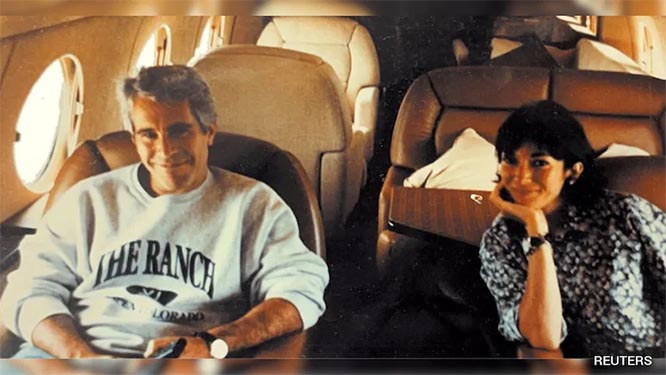
A fresh cache of files related to the investigation into the late convicted sex offender Jeffrey Epstein contains documents that reference President Donald Trump and other high-profile figures including Microsoft co-founder Bill Gates, Commerce Secretary Howard Lutnick and British billionaire Richard Branson.

Here are key details about mentions of the celebrities, none of whom have been accused of wrongdoing:

Donald Trump

The files included an FBI-compiled list of sexual assault allegations related to President Donald Trump -- many of them involving anonymous callers and unverified tips.

The allegations -- some secondhand -- were sent to the FBI's National Threat Operations Center which receives information by phone and electronically.

The document suggests that investigators followed up on a number of the tips. Some were deemed to lack credibility.

Trump has long denied any wrongdoing related to Epstein.

In a statement accompanying Friday's file dump, the Justice Department said: "Some of the documents contain untrue and sensationalist claims against President Trump that were submitted to the FBI right before the 2020 election. To be clear, the claims are unfounded and false."

Bill Gates

In a draft email among the documents, Epstein alleged Gates had engaged in extramarital affairs.

In the mail, Epstein wrote that his relationship with Gates had ranged from "helping Bill to get drugs, in order to deal with consequences of sex with russian girls, to facilitating his illicit trysts, with married women."

Richard Branson

Files show friendly relations between the two billionaires.

In an email sent to Epstein on Sept 11, 2013, Branson wrote "It was really nice seeing you yesterday. The boys in Watersports can't stop speaking about it! Any time you're in the area would love to see you. As long as you bring your harem!"

Elon Musk

The files contain numerous mail exchanges between Epstein and billionaire entrepreneur Elon Musk.

In November 2012, Epstein sent Musk an email asking "how many people will you be for the heli to island."

"Probably just Talulah and me. What day/night will be the wildest party on your island?" Musk replied.

Andrew Mountbatten-Windsor

The disgraced former prince invited Epstein to visit him at Buckingham Palace in September 2010 while the financier was making a trip to London.

An email exchange shows Epstein contacting Andrew to ask: "What time would you like me... we will also need... private time."

Andrew replied: "we could have dinner at Buckingham Palace and lots of privacy."

Howard Lutnick

Emails show that Epstein and businessman Lutnick -- currently Trump's commerce secretary -- made plans in December 2012 to lunch on Epstein's Caribbean island.

"We are heading towards you from St. Thomas" Lutnick's wife wrote to Epstein's secretary, asking where they should anchor.

Steve Tisch

Several mails suggested Epstein connected Steve Tisch, 76, producer of the movies "Forrest Gump" and "Risky Business" and the co-owner of the New York Giants football team, with multiple women.

In one exchange with Tisch, Epstein describes a woman as "russian, and rarely tells the full truth, but fun."

Zohran Mamdani's Mother, Filmmaker Mira Nair 

New York City Mayor Zohran Mamdani's mother, Mira Nair, attended an afterparty at convicted sex trafficker Ghislaine Maxwell's house for her 2009 film "Amelia", reveals a new set of Epstein files.

An email dated October 21, 2009, sent by publicist Peggy Siegal to Jeffrey Epstein, also surfaced in documents. The email, sent in the early hours, right after Siegal left the gathering, gives an insight into the afterparty. 

The party was also attended by former President Bill Clinton and Amazon CEO Jeff Bezos.

"Just left Ghislaine's townhouse...after party for film. Bill Clinton and Jeff Bezos were there...Jean Pigoni, director Mira Nair....etc," the email read.

The email described the reaction of guests to Nair's film as "tepid."

"Film received tepid reaction although women like it much more...Hillary Swank and Gen: at stupid party in Bloomingdales cheap sportwear department....very weird. Studio went for free party from store and windows for a month....Going to be in Wall Street 2 tomorrow ....more to come. xoxo Peg," the email read.

Comments

Add new comment

  • Coastaldigest.com reserves the right to delete or block any comments.
  • Coastaldigset.com is not responsible for its readers’ comments.
  • Comments that are abusive, incendiary or irrelevant are strictly prohibited.
  • Please use a genuine email ID and provide your name to avoid reject.
News Network
February 3,2026

Bengaluru: Following reports of fresh Nipah virus (NiV) cases in West Bengal and heightened vigilance across parts of Southeast Asia, the Karnataka Health Department has placed the state on high alert and activated emergency preparedness protocols.

Health officials said enhanced surveillance measures have been initiated after two healthcare workers in Barasat, West Bengal, tested positive for the virus earlier this month. While no cases have been reported in Karnataka so far, authorities said the state’s past exposure to Nipah outbreaks and high inter-state mobility warranted preventive action.

Officials have directed district health teams to intensify monitoring, particularly at hospitals and points of entry, and to ensure early detection and isolation of suspected cases.

High Mortality Virus with Multiple Transmission Routes

Nipah virus is a zoonotic disease that can spread from animals to humans and has a reported fatality rate ranging between 60 and 75 per cent. Fruit bats, also known as flying foxes, are the natural reservoirs of the virus and can transmit it by contaminating food sources with saliva or urine.

Known modes of transmission include:

•    Contaminated food: Consumption of fruits partially eaten by bats or raw date-palm sap
•    Animal contact: Exposure to infected pigs or other animals
•    Human-to-human transmission: Close contact with body fluids of infected persons, particularly in healthcare settings

Symptoms and Disease Progression

The incubation period typically ranges from 4 to 14 days, though delayed onset has also been reported. Early symptoms often resemble common viral infections, making prompt clinical suspicion critical.

•    Initial symptoms: Fever, headache, body aches, fatigue, sore throat
•    Progressive symptoms: Drowsiness, disorientation, altered mental state
•    Severe stage: Seizures, neck stiffness and acute encephalitis, which can rapidly progress to coma

Public Health Advisory

The Health Department has issued precautionary guidelines urging the public to adopt risk-avoidance practices to prevent any local spillover.

Do’s
•    Wash fruits thoroughly before consumption
•    Drink boiled and cooled water
•    Use protective equipment while handling livestock
•    Maintain strict hand hygiene

Don’ts
•    Avoid fruits found on the ground or showing bite marks
•    Do not consume beverages made from raw tree sap, including toddy
•    Avoid areas with dense bat populations
•    Do not handle sick or dead animals

Preparedness Measures

Officials confirmed that isolation wards are being readied in major government hospitals and that medical staff are being sensitised to identify early warning signs.

“There is no cause for panic, but there is a need for heightened vigilance,” a senior health official said, adding that there is currently no approved vaccine or specific antiviral treatment for Nipah, and care remains largely supportive.

Comments

Add new comment

  • Coastaldigest.com reserves the right to delete or block any comments.
  • Coastaldigset.com is not responsible for its readers’ comments.
  • Comments that are abusive, incendiary or irrelevant are strictly prohibited.
  • Please use a genuine email ID and provide your name to avoid reject.
News Network
January 20,2026

Mangaluru: In a major step towards strengthening rural innovation, the Office of the Principal Scientific Adviser (PSA) to the Government of India is supporting the establishment of RuTAGe Smart Village Centres (RSVCs) across the country through collaborations with academic institutions, civil society organisations and philanthropic partners.

As part of this national initiative, Nitte (Deemed to be University) will set up the first RSVCs in the region at Nitte GP in Udupi district and at the Nitte Health Centre, Sevanjali Trust, Farangipete, in Dakshina Kannada district. The centres will be inaugurated on January 21. In South India, the programme is being implemented by the Section Infin-8 Foundation (SI-8).

Speaking to reporters on Monday, SI-8 founder-director Vishwas US said experts from Nitte University and SI-8 would work closely with farmers, students, youth and local entrepreneurs to adapt and deploy technologies tailored to local needs.

Project head Prof Iddya Karunasagar, representing Nitte DU, said the RSVCs at Nitte and Farangipete would serve as demonstration hubs for a wide range of agriculture, energy, skill-development and assistive technologies. These include solar dryers for fruits, vegetables and crops; soil-testing solutions; power weeders and women-friendly farm tools; wind-powered devices for rural artisans; grain storage systems; grass-cutting and tree-climbing equipment; and liquid fertiliser production using cowshed waste.

SI-8 CEO Aravind C Kumar said the centres would also provide access to digital and knowledge-based platforms such as ISRO applications, government scheme portals, market linkage tools and gamified learning resources, along with assistive technologies for persons with visual impairments.

Highlighting the broader impact of the initiative, Principal Scientific Adviser Prof Ajay Kumar Sood said it demonstrated how applied research could bridge the rural–urban divide and help create self-reliant, technology-enabled villages.

The initiative has been made possible through philanthropic support from Dr NC Murthy of ACM Business Solutions, LLC, USA. Dr Sapna Poti, Director (Strategic Alliances) at the Office of the Principal Scientific Adviser, said the long-term objective is to build self-sufficient, technology-driven communities capable of generating sustainable livelihoods on their own.

Comments

Add new comment

  • Coastaldigest.com reserves the right to delete or block any comments.
  • Coastaldigset.com is not responsible for its readers’ comments.
  • Comments that are abusive, incendiary or irrelevant are strictly prohibited.
  • Please use a genuine email ID and provide your name to avoid reject.