Political tussle over Hindu temples in Karnataka

News Network
January 2, 2022

Bengaluru, Jan 2: The ruling Bharatiya Janata Party (BJP) in Karnataka has again stirred the hornets' nest in the state by declaring that it will set more than 35,500 temples that come under the Muzarai department free from government regulations.

The Opposition, Congress, has said that it will not allow the BJP to enact such a law. State Congress President DK Shivakumar stated that a decision will be taken on this matter on January 4, after holding a meeting of its senior leaders.

The BJP's announcement came during the recent state executive committee meeting in Hubballi right after the Muzarai department took the decision of getting the temples audited.

Successive Congress governments and the secular leaders have not dared to touch upon the subject of bringing transparency in temple managements and holding powerful temple authorities responsible for accounts. Even the Siddaramaiah government, branded as anti-Hindu, did not address the issue. The recent decision of freeing temples from government control by Chief Minister Basavaraj Bommai has surprised many.

The declaration has kicked off a debate in the state. Congress' Shivakumar has charged that the decision on temples will be a historical blunder. He said that the decision is a conspiracy to hand over the temples to the RSS and BJP leaders.

Chakravarthy Sulibele, the founder of Yuva Brigade, told IANS that the BJP has taken a good and wise decision to hand over the temples' managements to the Hindu community. The concept of 'taking control' originated during the time of the Mughals and the Britishers. The Britishers, being an occupying force, even brought legislation such as the 'Endowment Acts' to take control of Hindu temples, he said.

"When the government is managing the affairs, there is room for suspicion. Temple administrators take decisions at their convenience rather than the devotees' convenience. Wherever there is less money in the collection boxes before temples, they neglect them totally," he opined.

"The administrators will break all traditions when there is a VIP or minister's visit to the temple. In the temples where there is private management, such things are not encouraged. Here, they go against all the traditions to please ministers and block devotees. The total administration should go to community members," he said.

However, Shivakumar questioned how temples that come under the Muzarai department be given to community members for administration. He said that it is the wealth of the government, and that collections are in crores at these temples.

Actor and Tamil Nadu BJP leader Khushboo Sundar has praised the Karnataka BJP government for taking a stand to free the temples from the control of the government authorities. "It is an extremely important decision as every other religious institution is free, except temples," she said.

Chief Minister Bommai stated that Hindu temples have suffered a lot under the control of state authorities and bureaucrats. Several rules and by-laws are detrimental to the development of temples. The new bill will be brought before the cabinet before the budget session.

The temple authorities will be under the regulation of the government, but they will be able to utilise their funds for the development of temples without having to wait for the nod of the government, he maintained.

After the attacks by Shivakumar, Bommai has stated that "we are not handing over the temples to anyone. The temples are being freed from the regulations of the government. Shivakumar's opinion is against the Hindu temples and Hindu devotees."

Siddalnga Prabhu, member of the Rajya Dharmika Parishat, told IANS that it is a good decision, but that the disadvantages are more if one considers the pros and cons of the decision. Presently, deputy commissioners and administrators discuss the issues and there is accountability from the temples, he said. "The temples have properties and we have seen disputes and attempts to take away the land belonging to temples. Giving independence to 'A' and 'B' grade temples is okay as they have a good source of income. But, what about 'C' grade temples," he said.

Sources in the Muzarai department told IANS that the matter is yet to be discussed with the ministry. The fears expressed are about the temple money being taken by the government for other purposes. However, the income of temples will be deposited in bank accounts of the temples and it will be utilised for their development. The Muzarai department will take 10 per cent of the income and utilise it for the repair and renovation of 'C' grade temples. Since this is the case, there is no scope for freeing the temples, a senior official in the Muzarai department said.

Whenever a structure is registered as a mosque and prayer hall, it comes under the Karnataka State Wakf Board, which is a government body. There is a misconception and the government has to give more clarity on the issue, the official stated. The efforts by the Muzarai department to streamline the system at the famous Kukke Subramanya temple in Dakshina Kannada district is well appreciated by the devotees, the official said.

There are 1.80 lakh temples in Karnataka, among which 35,500 temples come under the Muzarai department. As per the records of the Muzarai department, there are 207 'A' grade temples that get an annual income of more than Rs 25 lakh, 139 'B' grade temples that have an income between Rs 5 lakh and Rs 24.99 lakh. These 'A' and 'B' grade temples are required to submit accounts annually, as mandated by the law.

Only four temples in the state i.e. Chamundeshwari temple of Mysuru, Yediyur Siddalingeshwara temple, Ghati Subramanya temple and Banashankari temple of Bengaluru are submitting audit reports every year. Barring these temples, cash-rich temples and the managements of those temples having huge incomes through commercial activities and commercial complexes have not submitted accounts.

At a time when temple accountability is being sought and powerful temple managements are warned of legal action, the announcement by CM Bommai has raised many questions. With the Opposition Congress' declaration that it won't let it happen — after the Anti-conversion Bill and the ban on cow slaughter — the stage is all set for a 'temple dangal' in the state in the coming days.


Comments

Add new comment

  • Coastaldigest.com reserves the right to delete or block any comments.
  • Coastaldigset.com is not responsible for its readers’ comments.
  • Comments that are abusive, incendiary or irrelevant are strictly prohibited.
  • Please use a genuine email ID and provide your name to avoid reject.
News Network
January 31,2026

Roy.jpg

Bengaluru: The shooting incident involving CJ Roy, founder of the Confident Group, has once again put the spotlight on a businessman whose life has swung between flamboyant global success and persistent controversy at home.

Though Roy’s business interests extended across continents, his roots lay firmly in Karnataka. An alumnus of Christ School in Bengaluru, he later moved to Tumakuru to pursue an engineering degree. Those familiar with his early years describe him as intensely ambitious, beginning his career as a salesman at a small electronics firm dealing in computers.

Roy’s entry into large-scale real estate came through the Crystal Group, where he worked closely with Latha Namboothiri and rose from manager to director. However, the launch of the Confident Group in 2005 was clouded by industry speculation. Insiders speak of a fallout involving alleged “benami” properties and claims of deception that ultimately led to his independent venture—an episode Roy spent years trying to distance himself from, according to associates.

A tale of two cities

Roy’s professional trajectory diverged sharply across geographies.

In Dubai, he built a reputation as a bold and efficient developer, completing massive luxury residential projects in record time—some reportedly within 11 months. His rapid project delivery and lavish lifestyle in the Emirates earned him admiration and visibility in the real estate sector.

In Bengaluru, however, his image remained far more fractured. Sources say Roy stayed away from the city for several years amid disputes over unpaid dues to vendors and suppliers. Several projects were allegedly stalled, with accusations of unfulfilled commitments to cement and steel suppliers continuing to follow him.

Roy’s return to Bengaluru’s business and social circles began around 2018, marked by a conscious attempt at rebranding. His appointment as Honorary Consul of the Slovak Republic added diplomatic legitimacy, which he complemented with visible CSR initiatives, including ambulance donations and high-profile charity events.

Heavy police presence in Langford Town

Following the incident, police personnel from the Central division were deployed outside the Confident Group building in Langford Town, which also houses the Slovak Honorary Consulate in Bengaluru.

The otherwise busy premises near Hosur Road wore a deserted look on Friday, reflecting the shock and uncertainty that followed the tragedy.

Comments

Add new comment

  • Coastaldigest.com reserves the right to delete or block any comments.
  • Coastaldigset.com is not responsible for its readers’ comments.
  • Comments that are abusive, incendiary or irrelevant are strictly prohibited.
  • Please use a genuine email ID and provide your name to avoid reject.
News Network
February 3,2026

wind.jpg

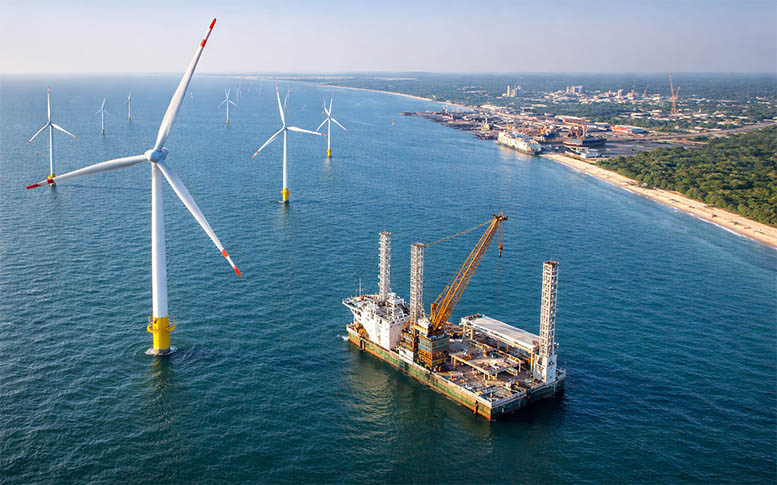
Dakshina Kannada MP Capt Brijesh Chowta has urged the Centre to give high priority to offshore wind energy generation along the Mangaluru coast, citing its strategic importance to India’s green energy and port-led development goals.

Raising the issue in the Lok Sabha under Rule 377, Chowta said studies by the National Institute of Oceanography have identified the Mangaluru coastline as part of India’s promising offshore wind ‘Zone-2’, covering nearly 6,490 sq km. He noted that the region’s relatively low exposure to cyclones and earthquakes makes it suitable for long-term offshore wind projects and called for its development as a dedicated offshore wind energy zone.

Highlighting the role of New Mangalore Port, Chowta said its modern infrastructure, multiple berths and heavy cargo-handling capacity position it well as a logistics hub for transporting and assembling large wind energy equipment.

He also pointed to the presence of major industrial units such as MRPL, OMPL, UPCL and the Mangaluru SEZ, which could serve as direct buyers of green power through power purchase agreements, improving project viability and speeding up execution.

With Karnataka’s peak power demand crossing 18,000 MW in early 2025, Chowta stressed the need to diversify renewable energy sources. He added that offshore wind projects in the Arabian Sea are strategically safer compared to the cyclone-prone Bay of Bengal.

Calling the project vital to India’s target of 500 GW of renewable energy by 2030, Chowta urged the Ministry of New and Renewable Energy to initiate resource assessments, pilot projects and stakeholder consultations at the earliest.

Comments

Add new comment

  • Coastaldigest.com reserves the right to delete or block any comments.
  • Coastaldigset.com is not responsible for its readers’ comments.
  • Comments that are abusive, incendiary or irrelevant are strictly prohibited.
  • Please use a genuine email ID and provide your name to avoid reject.
News Network
February 3,2026

wind.jpg

Dakshina Kannada MP Capt Brijesh Chowta has urged the Centre to give high priority to offshore wind energy generation along the Mangaluru coast, citing its strategic importance to India’s green energy and port-led development goals.

Raising the issue in the Lok Sabha under Rule 377, Chowta said studies by the National Institute of Oceanography have identified the Mangaluru coastline as part of India’s promising offshore wind ‘Zone-2’, covering nearly 6,490 sq km. He noted that the region’s relatively low exposure to cyclones and earthquakes makes it suitable for long-term offshore wind projects and called for its development as a dedicated offshore wind energy zone.

Highlighting the role of New Mangalore Port, Chowta said its modern infrastructure, multiple berths and heavy cargo-handling capacity position it well as a logistics hub for transporting and assembling large wind energy equipment.

He also pointed to the presence of major industrial units such as MRPL, OMPL, UPCL and the Mangaluru SEZ, which could serve as direct buyers of green power through power purchase agreements, improving project viability and speeding up execution.

With Karnataka’s peak power demand crossing 18,000 MW in early 2025, Chowta stressed the need to diversify renewable energy sources. He added that offshore wind projects in the Arabian Sea are strategically safer compared to the cyclone-prone Bay of Bengal.

Calling the project vital to India’s target of 500 GW of renewable energy by 2030, Chowta urged the Ministry of New and Renewable Energy to initiate resource assessments, pilot projects and stakeholder consultations at the earliest.

Comments

Add new comment

  • Coastaldigest.com reserves the right to delete or block any comments.
  • Coastaldigset.com is not responsible for its readers’ comments.
  • Comments that are abusive, incendiary or irrelevant are strictly prohibited.
  • Please use a genuine email ID and provide your name to avoid reject.