Bus operators seek fare revision, public oppose; Decision awaited

[email protected] (DHNS, Photos by Savitha B R)
July 16, 2011
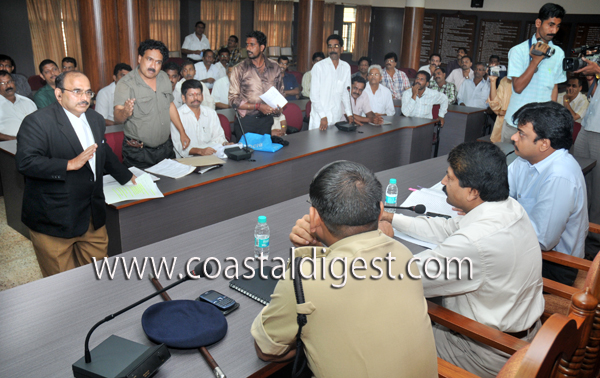
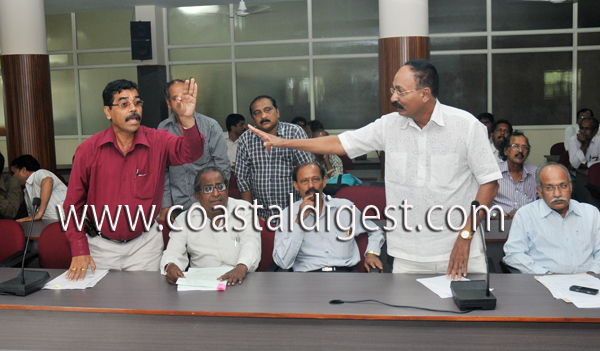
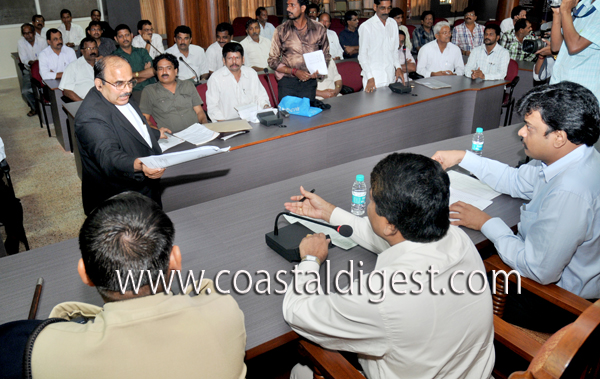
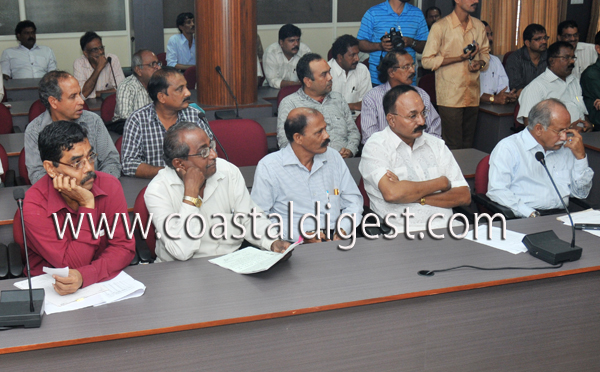
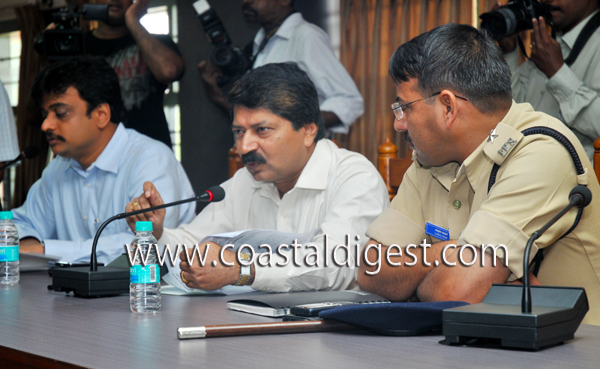
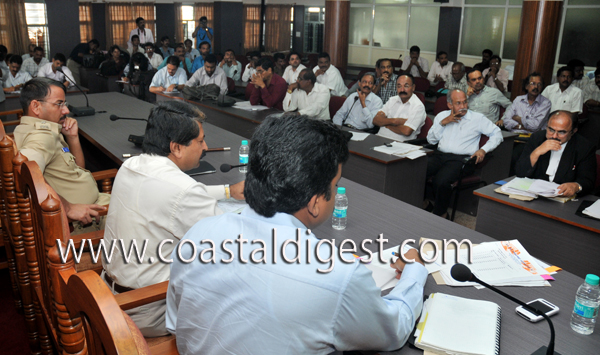
Mangalore, July 16: The bus operators have appealed the Regional Transport Authority (RTA) to increase the bus fare in the district in the backdrop of hike in the prices of diesel and spare parts, while the public and activists of various organisations opposed it and urged the Authority not to increase the burden on the people.

At a public hearing convened by the RTA at the Deputy Commissioner's Office here on Saturday, the bus operators said they want a hike of 50 paise for first four stages and Re one for the next four stages for city buses, 70 paise hike for shuttle buses and 75 paise for Express buses.

RTO Mallikarjuna said the hike sought by the bus operators for city buses include—Rs 4.50 (Rs 5), Rs 5 (Rs 5.50), Rs 7 (Rs 8), Rs 8 (Rs 8.50), Rs 8 (Rs 9), Rs 9 (Rs 10). For rural service the revision sought by the owners include—Rs 4.50 (Rs 5), Rs 5 (Rs 6), Rs 6 (Rs 6.50), Rs 6 (Rs 7), Rs 7 (Rs 8). The revision sought for moffusil service include—Rs 5 (Rs 5.50), Rs 9 (Rs 10), Rs 13 (Rs 14), Rs 17 (Rs 18), Rs 22 (Rs 23) and the revision sought for Express buses include—Rs 5 (Rs 5), Rs 9 (Rs 10), Rs 13 (Rs 14) and so on.

Public voice

Bus Karmika Sangha representative Mohammed Rafiq said increasing the bus fare within four months is not acceptable. No RTA meeting took any decision which was in favour of the public. The RTA takes decision in the interest of the bus operators. The revised fare of the KSRTC is less than the city bus fare. It is not right to seek revision in bus fare for every once in three months. The DC should recommend for the nationalisation of routes to help the passengers.

On the other hand, Nagarika Hitharakshana Samithi President Hanumanth Kamath said “the bus operators speak of stage only for the revision of bus fare. When a passenger boards a bus, then he is not asked to pay according to the stage. While revising the bus fare, the RTA has a responsibility to see that the buses are not overcrowded, buses follow the rules and regulations.”

“Many a time, the buses cancel their trips causing inconvenience to the public and the bus drivers and conductors behave rudely with the passengers. Though the KSRTC had sought 72 bus permits, the RTA did not issue it upholding the DM notification. However, the same RTA could issue 23 permits to private bus operators,” he charged adding that the RTA should support the government-owned KSRTC, instead of helping the private bus owners.

He said the bus fare should not be increased even by a single pie. CITU District General Secretary Sunil Kumar Bajal said the hike in the bus fare will cause lot of inconvenience to the poor labourers who live with Rs 2,000 per month. “If the district administration takes a decision in favour of the bus owners, then we will intensify our protest,” he said.

Hasanabba, a member of the public, said the officials should not fine the buses within the city limits. “The fine should be imposed when the bus reaches the bus stand, to avoid traffic block. Zeebra crossing should be marked on all the important places in the city,” he suggested.

Owners speak

Canara Bus Operators Association President Rajavarma Ballal said that they are not asking for more. “With the steep increase in the prices of diesel and spare parts of the buses, we want the revision in the bus fare. The bus fare for Express buses should be hiked by 8.5 per cent and shuttle buses by 7.5 per cent. The cost of running a bus per kilometre has increased to Rs 28.8. We are asking for increase in five paise per passenger kilometre,” he said.

Dakshina Kannada Bus Operators Association President Bhaskar Salian said “About 75 per cent of the earnings from the bus operation goes to the fuel. When KSRTC could not withstand the hike in the price of petroleum products, how can we withstand? We are already incurring loss due to hike in the prices of petroleum products and spare parts.

We can not run the buses if the situation continues,” he said. Dakshina Kannada Bus Operators Association General Secretary Ajeej Parthipady said the insurance premium has been hiked by 80 per cent in the last one year. “We have not hiked student concession fare since 2008. We do not have any tax exemption just like the way KSRTC enjoys in North Karnataka,” he said.

Superintendent of Police Labhu Ram was also present.

'Decision on fare hike soon'

Deputy Commissioner Dr N S Chennappa Gowda said that he along with RTO?and SP have heard the bus operators and the public appeal. “After studying the bus fare in the neighbouring district and other factors, a final decision will be taken. We have certain guidelines from the government and we can not hike beyond the guidelines,” he said.

A meeting to discuss on the problems faced by the passengers and the public will be convened soon, he added.
dc1

dc2

dc3

dc4

dc5

dc7

Comments

Add new comment

  • Coastaldigest.com reserves the right to delete or block any comments.
  • Coastaldigset.com is not responsible for its readers’ comments.
  • Comments that are abusive, incendiary or irrelevant are strictly prohibited.
  • Please use a genuine email ID and provide your name to avoid reject.
coastaldigest.com news network
January 19,2026

badriya.jpg

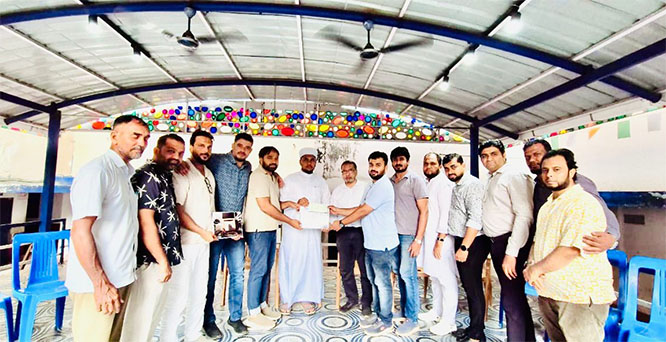
Mangaluru: The Phase I project of Badria Vision 2028 was formally launched at a ceremony held at the Badria Campus on January 17, marking an important step in the institution’s long-term development roadmap.

The programme was attended by P.B. Abdul Hameed, Secretary of the MEA, and P.C. Hasir, Correspondent of the MEA, who presided over the event and underscored the institution’s commitment to growth and academic excellence.

Office-bearers of the Badria Alumni Association were present in large numbers, including A.K. Sajid (President), Shamsuddin and S.M. Farooq (Vice-Presidents), Shaheed (General Secretary), and Khaleel (Treasurer), reflecting strong alumni engagement in the initiative.

The gathering was blessed by Sayyid Shamsuddeen Basith Thangal Kukkaje, Qateeb of Zeenat Yatheem Bakshi, who led a special dua seeking divine guidance and success for the project.

The ceremony also witnessed the participation of prominent alumnus and local corporate professional Abdul Latheef, along with alumni members Naushad, Kalandar, Safwan, members of the core committee, and several other former students.

A key moment of the event was the formal handover of a cheque to Ameen Woodland Architect, signalling the immediate commencement of construction work under Phase I of the project.

Organisers said the launch of Phase I reflects a shared vision, institutional unity, and collective resolve to realise the objectives of Badria Vision 2028.

Comments

Add new comment

  • Coastaldigest.com reserves the right to delete or block any comments.
  • Coastaldigset.com is not responsible for its readers’ comments.
  • Comments that are abusive, incendiary or irrelevant are strictly prohibited.
  • Please use a genuine email ID and provide your name to avoid reject.
coastaldigest.com news network
January 19,2026

rizwanzameer.jpg

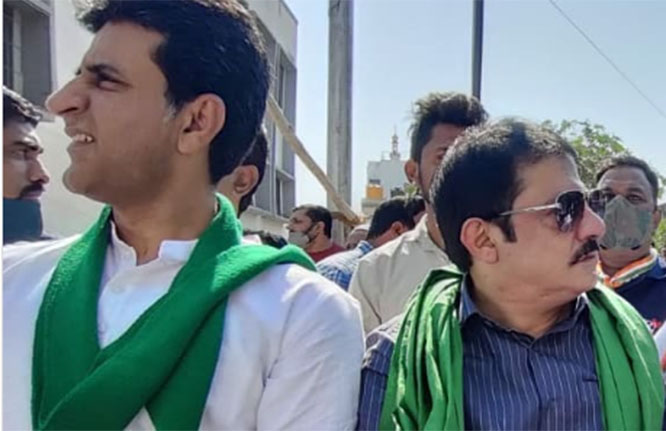
Bengaluru: As the dust settles on the recent legislative session, the corridors of Vidhana Soudha are buzzing with more than just policy talk. A high-stakes game of political musical chairs has begun, exposing a deepening rift within the Congress party’s Muslim leadership as a major Cabinet reshuffle looms.

With the party hierarchy signaling a "50% refresh" to gear up for the 2028 Assembly elections, the race to fill three projected Muslim ministerial berths has transformed from a strategic discussion into an all-out turf war.

The "Star Son" Spark

The internal friction turned public this week following provocative remarks by Zaid Khan, actor and son of Wakf Minister Zameer Ahmed Khan. Zaid’s claim—that his father "helped" secure a ticket for Shivajinagar MLA Rizwan Arshad in 2023—has acted as a lightning rod for resentment.

Rizwan’s camp was quick to fire back, dismissing the comment as a desperate attempt by Zameer to manufacture seniority. "Rizwan’s political pedigree was forged in the NSUI and Youth Congress long before Zameer even stepped into the party," a supporter noted, highlighting Rizwan’s tenure as an AICC secretary and his two-term presidency of the State Youth Congress.

A Tale of Two Loyalists

While both Zameer Ahmed Khan and Rizwan Arshad are staunch allies of Chief Minister Siddaramaiah and represent Bengaluru strongholds, their political DNA could not be more different:

•    Zameer Ahmed Khan: A four-time MLA who crossed over from JD(S) in 2018. Known for his "overzealous" and often polarizing outreach during communal flashpoints—from the DJ Halli riots to the recent Wakf land notice controversy—his style has frequently left the Congress high command in a state of "discomfort."

•    Rizwan Arshad: A homegrown organizational man. Seen as a "quiet performer," Arshad represents the sophisticated, moderate face of the party, preferred by those who find Zameer’s brand of politics too volatile.

The Outsiders Looking In

The bickering isn't limited to a duo. The "Beary" community, represented by leaders like N A Haris and Saleem Ahmed, is demanding its pound of flesh. Saleem Ahmed, the Chief Whip in the Legislative Council, has dropped the veil of diplomacy, openly declaring his ministerial aspirations.

"I was the only working president not included in the Cabinet last time," Saleem noted pointedly, signaling that the "loyalty quota" is no longer enough to keep the peace.

As Chief Minister Siddaramaiah prepares to finalize the list, he faces a delicate balancing act: rewarding the aggressive grassroots mobilization of Zameer’s camp without alienating the organizational stalwarts and minority sub-sects who feel increasingly sidelined by the "Chamarajpet-Shivajinagar" binary.

Comments

Add new comment

  • Coastaldigest.com reserves the right to delete or block any comments.
  • Coastaldigset.com is not responsible for its readers’ comments.
  • Comments that are abusive, incendiary or irrelevant are strictly prohibited.
  • Please use a genuine email ID and provide your name to avoid reject.
News Network
January 23,2026

Mangaluru: The Karnataka Government Polytechnic (KPT), Mangaluru, has achieved autonomous status from the All India Council for Technical Education (AICTE), becoming the first government polytechnic in the country to receive such recognition in its 78-year history. The status was granted by AICTE, New Delhi, and subsequently approved by the Karnataka Board of Technical Education in October last year.

Officials said the autonomy was conferred a few months ago. Until recently, AICTE extended autonomous status only to engineering colleges, excluding diploma institutions. However, with a renewed national focus on skill development, several government polytechnics across India have now been granted autonomy.

KPT, the second-largest polytechnic in Karnataka, was established in 1946 with four branches and has since expanded to offer eight diploma programmes, including computer science and polymer technology. The institution is spread across a 19-acre campus.

Ravindra M Keni, the first dean of the institution, told The Times of India that AICTE had proposed autonomous status for polytechnic institutions that are over 25 years old. “Many colleges applied. In the first round, 100 institutions were shortlisted, which was further narrowed down to 15 in the second round. We have already completed one semester after becoming an autonomous institution,” he said. He added that nearly 500 students are admitted annually across eight three-year diploma courses.

Explaining the factors that helped KPT secure autonomy, Keni said the institution has consistently recorded 100 per cent admissions and placements for its graduates. He also noted its strong performance in sports, with the college emerging champions for 12 consecutive years, along with active student participation in NCC and NSS activities.

Autonomous status allows KPT to design industry-oriented curricula, conduct examinations, prepare question papers, and manage academic documentation independently. The institution can also directly collaborate with industries and receive priority funding from AICTE or the Ministry of Education. While academic autonomy has been granted, financial control will continue to rest with the state government.

“There will be separate committees for examinations, question paper setting, boards of studies, and boards of examiners. The institution will now have the freedom to conduct admissions without government notifications and issue its own marks cards,” Keni said, adding that new academic initiatives would be planned after a year of functioning under the autonomous framework.

Comments

Add new comment

  • Coastaldigest.com reserves the right to delete or block any comments.
  • Coastaldigset.com is not responsible for its readers’ comments.
  • Comments that are abusive, incendiary or irrelevant are strictly prohibited.
  • Please use a genuine email ID and provide your name to avoid reject.