Bank to convert Khan Bahadur Hazi Abdullah Hazi Khasim Saheb Bahadur's home into 'financial temple'

September 9, 2011

corp-bank

Udupi, September 9: From coins dating back to the era of Carisus (BC 55) and Augustus (BC 22 to AD 14) (contemporary of Jesus Christ) to British Raj; from currency notes with the history of all the signatories (all 22 RBI, governors) to stamps of all denominations and all varieties; and from Financial Research Centre to the Financial literacy and Credit Counselling Centre, the Corporation Bank Heritage Museum has all that a person looks forward in a banking arena. It introduces one to the world that remained unexcavated.

In fact, every brick and tile of the museum is the saga of how economic activities are strongly rooted in the layers of this soil.

The Bank has grown from a humble beginning as a “Nidhi” with a first day business of Rs 38, Annas 13 and Pies 2 (on March 12, 1906), to a business level of over Rs 2 lakh crore as on date.

The museum, which was also the home of the founder Khan Bahadur Hazi Abdullah Hazi Khasim Saheb Bahadur, who founded the Corporation Bank on March 12, 1906, was opened on March 12, 2011, on the 106th Foundation day of the bank.

The Heritage Museum building, apart from a heritage museum, also has a Financial Research Centre, Financial Inclusion resource Centre, Financial literacy and Credit Counselling Centre, Corporation Bank - Commonwealth Youth Enterprise Financing Centre and an auditorium.

Speaking to media persons, Corporation Bank Chairman and Managing Director Ramnath Pradeep said the Heritage Museum would remind the people about the path traversed by banking in the coastal district of Karnataka in general and Corporation Bank in particular, by showcasing the evolution of banking, banking instruments, records, bank notes and currency.

“Plans are on the anvil to convert the museum into a financial temple,” he said and added that more aspects would be added in the museum so that everything pertaining to banking would be available under one roof.

At present, all the 1,360 coins on display at the museum belong to its curator Radhakrishna Kumble (also bank's employee) and all the stamps on display belong to another curator M?K?Krishnayya (who is also the president of Dakshina Kannada Philatelic &?Numismatic Association).

The Bank CMD said that the bank is in the process of acquiring coins and is also in touch with other numismatists to acquire rare coins of historic value.

Historic coins

Giving details about coins, Curator Radhakrishna Kumble said that the coins on display include ancient Indian coinage, Indo-European coins, world size silver coins, East India company coins, British India coins, Roman coins, copper coins, punch marked coins and so on.

Though Kumble estimates the value of his coins (on display) at Rs 42 lakh going by the market rate, he said that the effort that has gone into collecting each coin is invaluable. Stating that half of his salary (in his career) has gone into collecting these coins, he said that he may not be able to buy a few coins even if he pools the entire salary earned in his career as a banker.

The coins displayed are mute witnesses of the financial transactions that was carried out in the period of Gautama Buddha, Mauryas, Kanishkas, Satavahanas, Khushanas, Western Kshatraps, Kadambas, Kuras, Youdheyas and many other dynasties that has left incredible mark in the cultural and historical legacy of India.

Hazi a revered man

The two-tier 4,683.5 sq ft building houses heritage museum, numismatic, notaphily centre, library and mini-theater which is dedicated to the founder of the Corporation Bank Khan Bahadur Hazi Abdullah Hazi Khasim Saheb Bahadur.

It is a general practice that nobody wears footwear inside the museum. Quoting contemporaries of Bank Founder, Curator Krishnayya said that nobody used to wear footwear in the entire lane (stretch) in front of the Founder's home (now heritage museum), if they had to cross the lane, when he was alive. Krishnayya too does not wear footwear, not only inside the museum, but also in the premises.


Comments

Add new comment

  • Coastaldigest.com reserves the right to delete or block any comments.
  • Coastaldigset.com is not responsible for its readers’ comments.
  • Comments that are abusive, incendiary or irrelevant are strictly prohibited.
  • Please use a genuine email ID and provide your name to avoid reject.
News Network
January 23,2026

Mangaluru: The Karnataka Government Polytechnic (KPT), Mangaluru, has achieved autonomous status from the All India Council for Technical Education (AICTE), becoming the first government polytechnic in the country to receive such recognition in its 78-year history. The status was granted by AICTE, New Delhi, and subsequently approved by the Karnataka Board of Technical Education in October last year.

Officials said the autonomy was conferred a few months ago. Until recently, AICTE extended autonomous status only to engineering colleges, excluding diploma institutions. However, with a renewed national focus on skill development, several government polytechnics across India have now been granted autonomy.

KPT, the second-largest polytechnic in Karnataka, was established in 1946 with four branches and has since expanded to offer eight diploma programmes, including computer science and polymer technology. The institution is spread across a 19-acre campus.

Ravindra M Keni, the first dean of the institution, told The Times of India that AICTE had proposed autonomous status for polytechnic institutions that are over 25 years old. “Many colleges applied. In the first round, 100 institutions were shortlisted, which was further narrowed down to 15 in the second round. We have already completed one semester after becoming an autonomous institution,” he said. He added that nearly 500 students are admitted annually across eight three-year diploma courses.

Explaining the factors that helped KPT secure autonomy, Keni said the institution has consistently recorded 100 per cent admissions and placements for its graduates. He also noted its strong performance in sports, with the college emerging champions for 12 consecutive years, along with active student participation in NCC and NSS activities.

Autonomous status allows KPT to design industry-oriented curricula, conduct examinations, prepare question papers, and manage academic documentation independently. The institution can also directly collaborate with industries and receive priority funding from AICTE or the Ministry of Education. While academic autonomy has been granted, financial control will continue to rest with the state government.

“There will be separate committees for examinations, question paper setting, boards of studies, and boards of examiners. The institution will now have the freedom to conduct admissions without government notifications and issue its own marks cards,” Keni said, adding that new academic initiatives would be planned after a year of functioning under the autonomous framework.

Comments

Add new comment

  • Coastaldigest.com reserves the right to delete or block any comments.
  • Coastaldigset.com is not responsible for its readers’ comments.
  • Comments that are abusive, incendiary or irrelevant are strictly prohibited.
  • Please use a genuine email ID and provide your name to avoid reject.
News Network
February 1,2026

Golf.jpg

The coastal city of Mangaluru is gearing up for a major sporting milestone with the launch of a Golf Excellence Academy at the Pilikula Golf Club (PGC), scheduled to open on May 31. The initiative aims to position Mangaluru firmly on India’s national golfing map.

Speaking to reporters on Saturday during PGC’s first-ever floodlit Pro-Am tournament, club captain Manoj Kumar Shetty said the project is being funded by UAE-based philanthropist Michael D’Souza and is currently in the design phase. Experts from leading golf academies across the country are expected to visit Mangaluru to help shape the training programme and infrastructure.

The academy will train 20 young golfers at a time, with a long-term vision of producing national-level players from the region. Until now, PGC relied on an in-house coach, but the recent renovation of the course and the introduction of floodlights have opened new possibilities for expanding the sport.

Shetty said discussions are underway with two reputed coaching academies, whose heads are expected to visit PGC shortly. “A dormitory for trainers is already under construction. We are inviting academies to assess the facilities and suggest changes so we can build a truly world-class Golf Excellence Academy,” he said.

Professional golfer Aryan Roopa Anand noted that the floodlit course would be a game-changer for young players. “Students can now practise after school hours, even up to 8 or 9 pm, without compromising on academics,” he said.

Comments

Add new comment

  • Coastaldigest.com reserves the right to delete or block any comments.
  • Coastaldigset.com is not responsible for its readers’ comments.
  • Comments that are abusive, incendiary or irrelevant are strictly prohibited.
  • Please use a genuine email ID and provide your name to avoid reject.
News Network
February 3,2026

Kanchur2.jpg

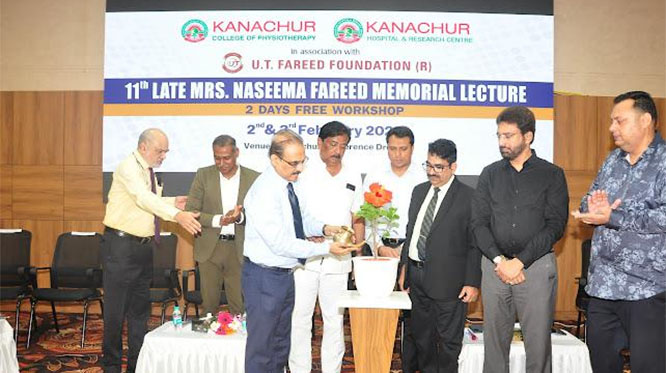
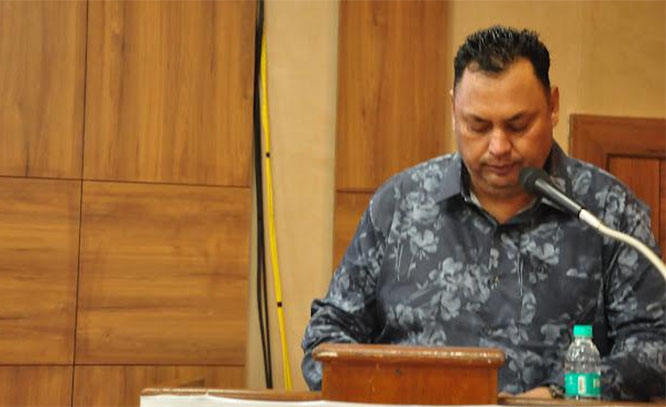
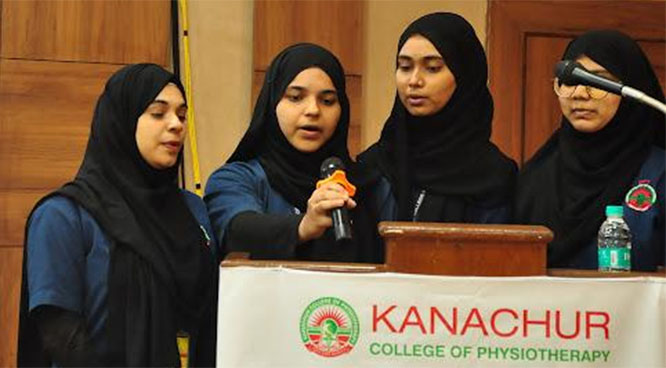
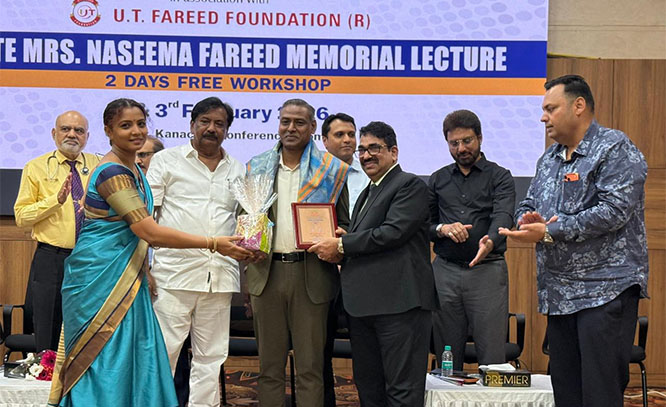
Mangaluru, Feb 3: Kanachur College of Physiotherapy and Kanachur Hospital & Research Centre, in association with U.T. Fareed Foundation (R), organised the 11th Late Mrs. Naseema Fareed Memorial Lecture on Tuesday.

The programme was inaugurated by Dr. Subramanyam K, Head of the Department and Professor, Department of Cardiology, Srinivas Institute of Medical Sciences & Research Centre, Mangaluru. In his inaugural address, Dr. Subramanyam delivered an insightful talk highlighting the vital role of physiotherapy in modern medical care, particularly in cardiac rehabilitation, patient recovery, and improving overall quality of life through a multidisciplinary healthcare approach.

The presidential address was delivered by Dr. Haji U.K. Monu, Chairman, KIET. The keynote address was presented by Dr. Mohammed Ismail Hejamady, who spoke on the evolving scope and significance of physiotherapy.

The event was held in the presence of Mr. Abdul Rahiman, Director, Kanachur Institute of Medical Sciences, Mangaluru; Dr. Vaishali Sreejith, Senate Member, Rajiv Gandhi University of Health Sciences, Bengaluru; Dr. Sudhan S.G., Professor and Principal, Krupanidhi College of Physiotherapy, Bengaluru; Dr. Shanavaz Manipady, Dean, Kanachur Institute of Medical Sciences, Mangaluru; and Dr. Venkat Rai Prabhu, Member, Kanachur Health Science Advisory Council, Kanachur Hospital & Research Centre.

Dr. Mohammad Suhail, Dean, Kanachur College of Physiotherapy, welcomed the guests and delegates.

As part of the programme, a two-day free workshop was organised on the following topics:

•    Art of Practice in Cardiopulmonary Conditions by Dr. Sudhan S.G., Principal, Krupanidhi College of Physiotherapy

•    The Gift of Life – Organ Donation by Dr. Rohan Monis, Chief Administrative Medical Officer

•    Chest X-ray Interpretation by Dr. Hemanth, Department of Radiology, KIMS

•    Pulmonary Rehabilitation by Dr. Vijaya Kumar, Department of Respiratory Medicine, KIMS

Organisers noted that the memorial lecture series has been conducted continuously for the 11th year, benefiting interns and postgraduate students from various colleges across Mangaluru. A total of 130 delegates attended the workshop.

Dr. Reshma, Vice Principal, Kanachur College of Physiotherapy, Mangaluru, delivered the vote of thanks.

Kanchur7.jpg

Kanchur6.jpg

Kanchur5.jpg

Kanchur4.jpg

Kanchur3.jpg

Kanchur1.jpg

Comments

Add new comment

  • Coastaldigest.com reserves the right to delete or block any comments.
  • Coastaldigset.com is not responsible for its readers’ comments.
  • Comments that are abusive, incendiary or irrelevant are strictly prohibited.
  • Please use a genuine email ID and provide your name to avoid reject.