



Blame crumbling breakwater structure for boat mishaps

September 15, 2011

alive

Mangalore, September 15: The boat tragedy at Old Port Estuary mouth on Tuesday, where five persons were injured, is not the first of its kind this year. It's the third such incident where boats got stuck in the sand bar, but none were injured in the previous cases.

"The problem is mainly due to crumbling Kotepura-Ullal South Breakwater structure erected 18 years ago," says fisheries department deputy director Suresh Kumar Ullal. The North breakwater at Thota Bengre is 200m from the south breakwater. Breakwaters are constructed to protect an anchorage from the effects of ill weather and long shore drift.

He said, "The Rs 200-crore ADB-funded project to repair and extend the two breakwaters from 300m to 400m should solve the problem of sand accretion at the estuary mouth. The project is yet to commence."

The problem exists only in September and October due to the South Westerly winds depositing sands. They get dispersed during Easterly winds, which start October end.

Fishermen leader Umesh Karkera alleges dams in the upper reaches of Nethravathi river such as Thumbe, AMR and MRPL has reduced water inflow to the sea, thus, leading to accumulation of sand and narrowing the gap for boat movement to the sea for fishing.

Suresh Kumar begs to differ saying when the dams did not exist the estuary mouth was rougher than this. "The breakwaters have eased the problem. The problem cropped up as the breakwaters were not maintained," he adds.

Usually, the 200-m-wide estuary mouth allows 15 boats to go side by side in to the sea, but during these two months, a boat can only behind another one. Karkera also alleges the dredging done in January this year was not scientific. Sources say dredging was done according to fishermen leaders' satisfaction and under their supervision.

Dredging operation is a costly affair and owning a dredger is prohibitive. Even the New Mangalore Port (NMP) does not have its own dredger. NMP officials say it requires skilled manpower and lot of maintenance. Fifteen years ago, NMP had its own dredger and as it was not economical, it was disposed of.

Comments

Add new comment

  • Coastaldigest.com reserves the right to delete or block any comments.
  • Coastaldigset.com is not responsible for its readers’ comments.
  • Comments that are abusive, incendiary or irrelevant are strictly prohibited.
  • Please use a genuine email ID and provide your name to avoid reject.
News Network
January 23,2026

Karnataka Governor Thaawarchand Gehlot read only three lines from the 122-paragraph address prepared by the Congress-led state government while addressing the joint session of the Legislature on Thursday, effectively bypassing large sections critical of the BJP-led Union government.

The omitted portions of the customary Governor’s address outlined what the state government described as a “suppressive situation in economic and policy matters” under India’s federal framework. The speech also sharply criticised the Centre’s move to replace the Mahatma Gandhi National Rural Employment Guarantee Act (MGNREGA) with the Viksit Bharat–Guarantee for Rozgar and Ajeevika Mission (Gramin) Act, commonly referred to as the VB-GRAM (G) Act.

Governor Gehlot had earlier conveyed his objection to several paragraphs that were explicitly critical of the Union government. On Thursday, he confined himself to the opening lines — “I extend a warm welcome to all of you to the joint session of the State legislature. I am extremely pleased to address this august House” — before jumping directly to the concluding sentence of the final paragraph.

He ended the address by reading the last line of paragraph 122: “Overall, my government is firmly committed to doubling the pace of the State’s economic, social and physical development. Jai Hind — Jai Karnataka.”

According to the prepared speech, the Karnataka government demanded the scrapping of the VB-GRAM (G) Act, describing it as “contractor-centric” and detrimental to rural livelihoods, and called for the full restoration of MGNREGA. The state government argued that the new law undermines decentralisation, weakens labour protections, and centralises decision-making in violation of constitutional norms.

Key points from the unread sections of the speech:

•    Karnataka facing a “suppressive” economic and policy environment within the federal system

•    Repeal of MGNREGA described as a blow to rural livelihoods

•    VB-GRAM (G) Act accused of protecting corporate and contractor interests

•    New law alleged to weaken decentralised governance

•    Decision-making said to be imposed by the Centre without consulting states

•    Rights of Adivasis, women, backward classes and agrarian communities curtailed

•    Labourers allegedly placed under contractor control

•    States facing mounting fiscal stress due to central policies

•    VB-GRAM (G) Act accused of enabling large-scale corruption

Comments

Add new comment

  • Coastaldigest.com reserves the right to delete or block any comments.
  • Coastaldigset.com is not responsible for its readers’ comments.
  • Comments that are abusive, incendiary or irrelevant are strictly prohibited.
  • Please use a genuine email ID and provide your name to avoid reject.
News Network
January 20,2026

Mangaluru: In a major step towards strengthening rural innovation, the Office of the Principal Scientific Adviser (PSA) to the Government of India is supporting the establishment of RuTAGe Smart Village Centres (RSVCs) across the country through collaborations with academic institutions, civil society organisations and philanthropic partners.

As part of this national initiative, Nitte (Deemed to be University) will set up the first RSVCs in the region at Nitte GP in Udupi district and at the Nitte Health Centre, Sevanjali Trust, Farangipete, in Dakshina Kannada district. The centres will be inaugurated on January 21. In South India, the programme is being implemented by the Section Infin-8 Foundation (SI-8).

Speaking to reporters on Monday, SI-8 founder-director Vishwas US said experts from Nitte University and SI-8 would work closely with farmers, students, youth and local entrepreneurs to adapt and deploy technologies tailored to local needs.

Project head Prof Iddya Karunasagar, representing Nitte DU, said the RSVCs at Nitte and Farangipete would serve as demonstration hubs for a wide range of agriculture, energy, skill-development and assistive technologies. These include solar dryers for fruits, vegetables and crops; soil-testing solutions; power weeders and women-friendly farm tools; wind-powered devices for rural artisans; grain storage systems; grass-cutting and tree-climbing equipment; and liquid fertiliser production using cowshed waste.

SI-8 CEO Aravind C Kumar said the centres would also provide access to digital and knowledge-based platforms such as ISRO applications, government scheme portals, market linkage tools and gamified learning resources, along with assistive technologies for persons with visual impairments.

Highlighting the broader impact of the initiative, Principal Scientific Adviser Prof Ajay Kumar Sood said it demonstrated how applied research could bridge the rural–urban divide and help create self-reliant, technology-enabled villages.

The initiative has been made possible through philanthropic support from Dr NC Murthy of ACM Business Solutions, LLC, USA. Dr Sapna Poti, Director (Strategic Alliances) at the Office of the Principal Scientific Adviser, said the long-term objective is to build self-sufficient, technology-driven communities capable of generating sustainable livelihoods on their own.

Comments

Add new comment

  • Coastaldigest.com reserves the right to delete or block any comments.
  • Coastaldigset.com is not responsible for its readers’ comments.
  • Comments that are abusive, incendiary or irrelevant are strictly prohibited.
  • Please use a genuine email ID and provide your name to avoid reject.
News Network
February 3,2026

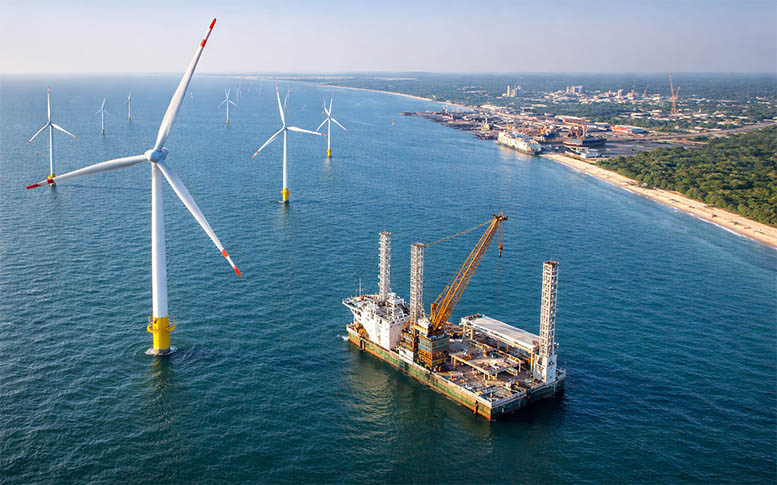
wind.jpg

Dakshina Kannada MP Capt Brijesh Chowta has urged the Centre to give high priority to offshore wind energy generation along the Mangaluru coast, citing its strategic importance to India’s green energy and port-led development goals.

Raising the issue in the Lok Sabha under Rule 377, Chowta said studies by the National Institute of Oceanography have identified the Mangaluru coastline as part of India’s promising offshore wind ‘Zone-2’, covering nearly 6,490 sq km. He noted that the region’s relatively low exposure to cyclones and earthquakes makes it suitable for long-term offshore wind projects and called for its development as a dedicated offshore wind energy zone.

Highlighting the role of New Mangalore Port, Chowta said its modern infrastructure, multiple berths and heavy cargo-handling capacity position it well as a logistics hub for transporting and assembling large wind energy equipment.

He also pointed to the presence of major industrial units such as MRPL, OMPL, UPCL and the Mangaluru SEZ, which could serve as direct buyers of green power through power purchase agreements, improving project viability and speeding up execution.

With Karnataka’s peak power demand crossing 18,000 MW in early 2025, Chowta stressed the need to diversify renewable energy sources. He added that offshore wind projects in the Arabian Sea are strategically safer compared to the cyclone-prone Bay of Bengal.

Calling the project vital to India’s target of 500 GW of renewable energy by 2030, Chowta urged the Ministry of New and Renewable Energy to initiate resource assessments, pilot projects and stakeholder consultations at the earliest.

Comments

Add new comment

  • Coastaldigest.com reserves the right to delete or block any comments.
  • Coastaldigset.com is not responsible for its readers’ comments.
  • Comments that are abusive, incendiary or irrelevant are strictly prohibited.
  • Please use a genuine email ID and provide your name to avoid reject.