



Lakshadweep-Mangalore ship service under threat

[email protected] (Harigovind, Deccan Herald)
November 10, 2011

shipq

Mangalore, November 10: Mangalore has been and still a heaven and supply bastion for the islanders and Lakshadweep is not an exception. For a long time, the islanders have been trading profitably their goods mainly dry fish and copra and obtain many essentials and services to meet their basic needs from Mangalore.

Though the total charted islands number 24, there are nine submerged sand banks and coral reef in the Lakshadweep group. Eleven of the islands are permanently inhabited and the combined population in 2001 was put at 60,700 (now 64,429). The Island area roughly measures 32 sq. kms. The ethnic/racial feature of the inhabitants is predominantly Afro-Arabic with the islanders following Islam.

At a time when authorities concerned go out of the way to promote tourism, the island has become one of the leisure spots of the world.

The problem

Though the islanders prefer Mangalore than Kochi, the ship services from the Lakshadweep to Mangalore are under threat after the ship officials have reportedly expressed their concern over the safety of travel through estuary of Old Mangalore Port. The first passenger ship of the season carrying passengers has left the port on November 1 with 90 passengers but the authorities concerned are skeptical about their second voyage.

This ship service is connecting six islands in the Lakshadweep Islands. Lack of proper dredging to remove the sand and mud accumulated at estuary which connects the outer sea with the port has become a cause for concern. It appears that the delay in dredging would have a serious affect on the revenue of the port. If the path is not safe for travel, the Island administration will be forced to terminate the ship service to the main port or other ports.

According to the officials of ship, they are having difficulty to enter the old port due to the excess silt and sand accumulation at the estuary (the place where the Gurupur river meets the Arabian sea). If the water-level is not sufficient for ships to enter the Old Port (usually 11-13 ft required), the vessels would be damaged while entering the port. The only option then is to wait till the water-level goes up (high tides), which is nothing but waste of time and energy.

How it affects Islanders

Lakshadweep is a group of islands approximately 365 kms away from Mangalore. It is easier for people of many islands to travel to Mangalore than Cochin considering the time of travel and cost of goods. Many items like gold, clothes etc are relatively cheaper in Mangalore than Cochin.

At the same time, many islanders are depending on Mangalore for their health care, education and business needs. Last year, when the passenger service started for the first time, the cruisers to Lakshadweep were jam packed. This apart, tourists from mainland also use Mangalore to visit Lakshadweep, since the Mangalore- Lakshadweep sea route is rich with enchanting scenery - islands en route as well as the lagoons and corals under water.

Since a small region like Lakshadweep cannot support industries, the island government is actively promoting tourism as a means of their income. Besides affecting the tourism revenue in the island (if the services are stopped), the revenue of the Old Port too will be hit as 98 per cent of Old Port's loading and unloading is done by ships from the island.

Official speaks

Speaking to City Herald, Port Conservator Madusudan said that the proposal of Rs 4.6 crore for dredging has been submitted to the Government. “We are waiting for the sanction from the Government. Once it is sanctioned, we will call the tender for dredging,” he said. “Old port is a natural port. So the phenomenon of accumulating sand and mud is common.

At the same time, he also said that the cruisers carrying passengers will not have much problem, when compared with cargo vessels. “Passenger ships can sail if 10 feet water level is available. When it comes to cargos, it requires 13-14 feet which is not very often available,” he pointed out.

Since we are in mainland, we do not understand the problems of islanders, who are cut off from the mainland. But still it is not a proud thing to say that we are responsible for such a situation in a place which was once a part of South Canara.

Historical relation with DK

The Amindivi group of islands (Amini, Kadmat, Kiltan, Chetlat and Bitra) came under the rule of Tipu Sultan in 1787. They passed to British control after the Third Anglo-Mysore War and were attached to South Canara. The rest of the islands came under the suzerainty of the Arakkal family of in return for a payment of annual tribute. The British took over the administration of those islands for non-payment of arrears. These islands were attached to the Malabar district of the Madras Presidency during the British Raj.

Lakshadweep

Lakshadweep is an archipelago of twelve atolls, three reefs and five submerged banks, with a total of about thirty-nine islands and islets. The Amindivi group islands (consisting of Amini, Keltan, Chetlat, Kadamat, Bitra and Peremul Par) and the Lakshadweep group islands (comprising mainly Androth, Kalpeni, Kavaratti, Pitti and Suheli Par), both have a submarine connection between them, together with the Minicoy Island form the Coral Islands of India in the Arabian Sea. All these islands have been built up by corals and have fringing coral reefs very close to their shores. Lakshadweep is the smallest Union Territory of India. The capital is Kavaratti and the land area is 32 square kilometers. Only 10 islands have inhabitants.

Comments

Add new comment

  • Coastaldigest.com reserves the right to delete or block any comments.
  • Coastaldigset.com is not responsible for its readers’ comments.
  • Comments that are abusive, incendiary or irrelevant are strictly prohibited.
  • Please use a genuine email ID and provide your name to avoid reject.
News Network
February 4,2026

shettigar.jpg

An Indian resident who won the Dh20 million (approximately Rs 50 crore) jackpot in Abu Dhabi's Big Ticket draw has told of his joy at sharing his life-changing fortune with a friend.

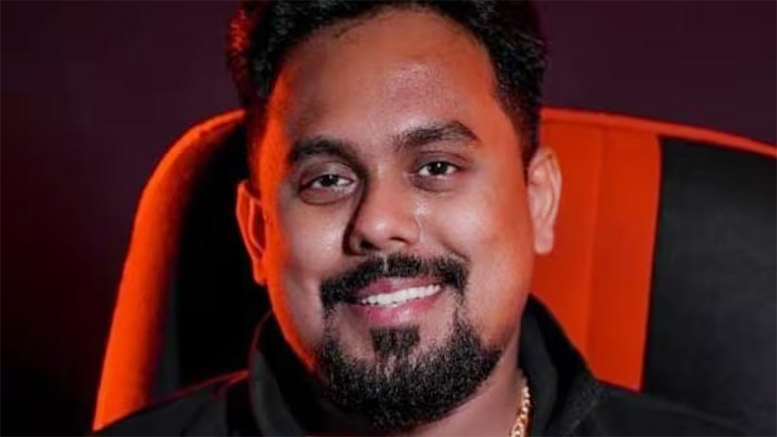
Shanthanu Shettigar, a shop manager in Muscat, regularly buys tickets for the monthly grand prize draw with one of his closest friends – and the pair won on February 3.

Mr Shettigar, 33, who is from Udyavar in Udupi district of the southern state of Karnataka and has lived in the Omani capital for eight years, said he was left speechless after learning of his success.

“When I first moved to Muscat, many of my colleagues were purchasing Big Ticket, which encouraged me to give it a try,” he said.

“I started buying tickets on my own, and later began sharing tickets with a close friend. The ticket that brought me this win was one we purchased together.”

“Like most people, I receive a lot of spam calls, and I was fully absorbed in my work as well. I knew the live draw was taking place tonight, but I never imagined my name would be announced,” he said.

“When I realised it was real and that I had won, I was honestly speechless. It still hasn’t fully sunk in, but I’m extremely happy.”

Mr Shettigar is not sure how he will spend his share of the money, but encouraged others to take part.

“This win was completely unexpected, so I want to take some time to think things through before deciding what to do next,” he said.

“I would definitely encourage others to participate with Big Ticket, whether with family or friends – you never know when your moment might come.”

The Big Ticket was established in 1992 with an initial first prize of Dh1 million. It is one of the most popular monthly raffles in the UAE.

It has transformed the lives of many people across the Emirates and beyond.

Entry to the Big Ticket Millionaire is Dh500. Tickets can be bought online or at counters at Zayed International Airport and Al Ain Airport.

Comments

Add new comment

  • Coastaldigest.com reserves the right to delete or block any comments.
  • Coastaldigset.com is not responsible for its readers’ comments.
  • Comments that are abusive, incendiary or irrelevant are strictly prohibited.
  • Please use a genuine email ID and provide your name to avoid reject.
News Network
January 23,2026

Mangaluru: The Karnataka Government Polytechnic (KPT), Mangaluru, has achieved autonomous status from the All India Council for Technical Education (AICTE), becoming the first government polytechnic in the country to receive such recognition in its 78-year history. The status was granted by AICTE, New Delhi, and subsequently approved by the Karnataka Board of Technical Education in October last year.

Officials said the autonomy was conferred a few months ago. Until recently, AICTE extended autonomous status only to engineering colleges, excluding diploma institutions. However, with a renewed national focus on skill development, several government polytechnics across India have now been granted autonomy.

KPT, the second-largest polytechnic in Karnataka, was established in 1946 with four branches and has since expanded to offer eight diploma programmes, including computer science and polymer technology. The institution is spread across a 19-acre campus.

Ravindra M Keni, the first dean of the institution, told The Times of India that AICTE had proposed autonomous status for polytechnic institutions that are over 25 years old. “Many colleges applied. In the first round, 100 institutions were shortlisted, which was further narrowed down to 15 in the second round. We have already completed one semester after becoming an autonomous institution,” he said. He added that nearly 500 students are admitted annually across eight three-year diploma courses.

Explaining the factors that helped KPT secure autonomy, Keni said the institution has consistently recorded 100 per cent admissions and placements for its graduates. He also noted its strong performance in sports, with the college emerging champions for 12 consecutive years, along with active student participation in NCC and NSS activities.

Autonomous status allows KPT to design industry-oriented curricula, conduct examinations, prepare question papers, and manage academic documentation independently. The institution can also directly collaborate with industries and receive priority funding from AICTE or the Ministry of Education. While academic autonomy has been granted, financial control will continue to rest with the state government.

“There will be separate committees for examinations, question paper setting, boards of studies, and boards of examiners. The institution will now have the freedom to conduct admissions without government notifications and issue its own marks cards,” Keni said, adding that new academic initiatives would be planned after a year of functioning under the autonomous framework.

Comments

Add new comment

  • Coastaldigest.com reserves the right to delete or block any comments.
  • Coastaldigset.com is not responsible for its readers’ comments.
  • Comments that are abusive, incendiary or irrelevant are strictly prohibited.
  • Please use a genuine email ID and provide your name to avoid reject.
News Network
February 3,2026

wind.jpg

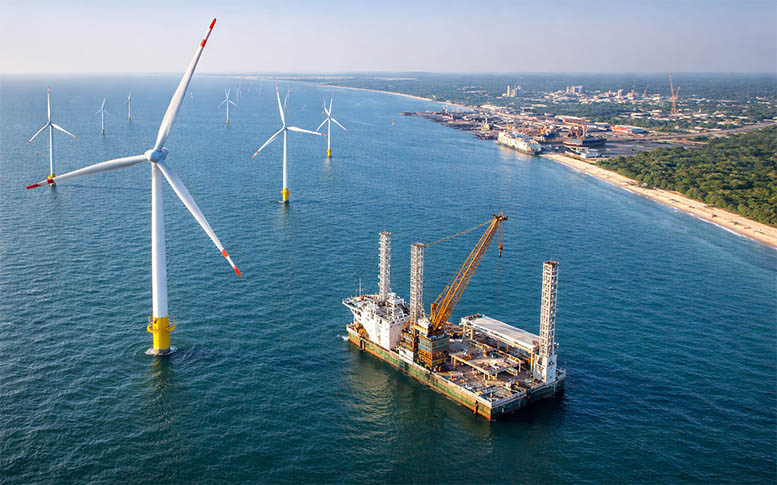
Dakshina Kannada MP Capt Brijesh Chowta has urged the Centre to give high priority to offshore wind energy generation along the Mangaluru coast, citing its strategic importance to India’s green energy and port-led development goals.

Raising the issue in the Lok Sabha under Rule 377, Chowta said studies by the National Institute of Oceanography have identified the Mangaluru coastline as part of India’s promising offshore wind ‘Zone-2’, covering nearly 6,490 sq km. He noted that the region’s relatively low exposure to cyclones and earthquakes makes it suitable for long-term offshore wind projects and called for its development as a dedicated offshore wind energy zone.

Highlighting the role of New Mangalore Port, Chowta said its modern infrastructure, multiple berths and heavy cargo-handling capacity position it well as a logistics hub for transporting and assembling large wind energy equipment.

He also pointed to the presence of major industrial units such as MRPL, OMPL, UPCL and the Mangaluru SEZ, which could serve as direct buyers of green power through power purchase agreements, improving project viability and speeding up execution.

With Karnataka’s peak power demand crossing 18,000 MW in early 2025, Chowta stressed the need to diversify renewable energy sources. He added that offshore wind projects in the Arabian Sea are strategically safer compared to the cyclone-prone Bay of Bengal.

Calling the project vital to India’s target of 500 GW of renewable energy by 2030, Chowta urged the Ministry of New and Renewable Energy to initiate resource assessments, pilot projects and stakeholder consultations at the earliest.

Comments

Add new comment

  • Coastaldigest.com reserves the right to delete or block any comments.
  • Coastaldigset.com is not responsible for its readers’ comments.
  • Comments that are abusive, incendiary or irrelevant are strictly prohibited.
  • Please use a genuine email ID and provide your name to avoid reject.