



Mohan bought 10 bottles from same shop between May-June 2009'

November 25, 2011

mohan_copy_copy

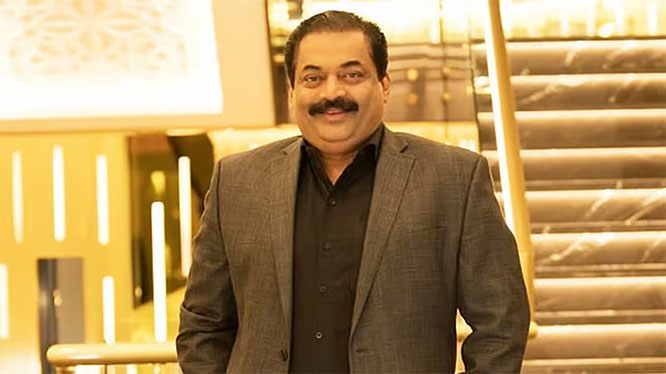
Mangalore, November 25: The trial of Mohan Kumar, who has been facing charges of killing 20 women after administering them cyanide, continued on fourth day, Thursday with as many as six witnesses giving their statement at the Fast Track court.

On Thursday, the issues related to the recovery of a dead body in a public toilet in Hassan bus stand, Mohan staying in one of the lodges in Madikeri using false name and pledging of gold with one of the financers in Thokottu were taken up for hearing.

While five witnesses gave their statement till the lunch break, one witness gave the statement in the afternoon.

Mohan who is doubling as his own advocate quizzed three witnesses but left the other three go without any counter questions.

Before the hearing could start, Mohan submitted a letter to the Judge which read that the gold chain which was pledged by him with one of the financers did not belong to Anitha, one of his victims, but instead belongs to his wife.

Responding to this, the Judge said that Anitha's brother had identified the chain on the first day of the hearing.

“If you wanted to submit an objection, you should have done it on the same day,” said the Judge who went on to ask Mohan if he want the prosecution to arrange a lawyer for him.

“If you wish the prosecution will appoint a lawyer at government's expense,” said the Judge.

Mohan responding to this, had only nodded his head, without clarifying what his answer was.

First witness

Henry D'Souza, a receptionist at Vinayaka Lodge in Madikeri was the first witness of the day who said that Mohan had come to the lodge on April 13, 2009 along with a lady named Shanthi and stayed in the lodge. Next day both had left the lodge together but Mohan returned to the lodge alone to check out.

D'Souza said that he had registered his name as Sudhakar Acharya in hotel register. The police had come to the hotel four months later, enquiring about the same person, he said.

Cross question

Quizzing D'Souza, Mohan Kumar asked if Shanti was wearing a 'Magalsutra' and if the accused Sudhakar Acharya has introduced her as his wife.

Second witness

Hassan KSTRC Bus stand Security Guard Channaiah giving his statement said that he learnt that a dead body of a lady was found in one of the toilets on June 18, 2009 at 11.30 am. “The body smelled pungent and we suspected that the lady must have consumed poison.”

At this point, Mohan intervened and questioned Channaiah if he had seen the lady coming to the bus stand in the morning.

Judge put an end to this argument started by Mohan by saying that the question is irrelevant as the Guard had come to know about the dead body at 11.30 am.

Third witness

Cyril D'Souza from Kavoor revealed to the Court that Mohan over the last five years has been purchasing tiny bottles from Sai Traders, Central Market, where he is working as a Manager. During May-June, 2009, Mohan had bought 10 such bottles from his shop, said D'Souza.

When Mohan questioned D'Souza as to how he can remember by face hundreds of customers who come to his shop, D'Souza was adamant that Mohan had purchased bottles from him.

Other witnesses

Suresh K, a welder from Bantwal identified the things that were worn by the lady who was found dead at Hassan.

Fifth witness Dinesh Rai, proprietor of Raghavendra Finance Thokottu, said that Mohan had pledged three chains and other gold ornaments in his finance shop on June 20, 2009, and had taken Rs 15,000.

When the ornaments were presented before the Court, Rai identified them.

Suchivratha Shetty was the sixth witness of the day.

Today

On Friday there are possibilities of some doctors giving witness, said Special Prosecutor Cheyyabba Beary.

Comments

Add new comment

  • Coastaldigest.com reserves the right to delete or block any comments.
  • Coastaldigset.com is not responsible for its readers’ comments.
  • Comments that are abusive, incendiary or irrelevant are strictly prohibited.
  • Please use a genuine email ID and provide your name to avoid reject.
News Network
January 23,2026

Karnataka Governor Thaawarchand Gehlot read only three lines from the 122-paragraph address prepared by the Congress-led state government while addressing the joint session of the Legislature on Thursday, effectively bypassing large sections critical of the BJP-led Union government.

The omitted portions of the customary Governor’s address outlined what the state government described as a “suppressive situation in economic and policy matters” under India’s federal framework. The speech also sharply criticised the Centre’s move to replace the Mahatma Gandhi National Rural Employment Guarantee Act (MGNREGA) with the Viksit Bharat–Guarantee for Rozgar and Ajeevika Mission (Gramin) Act, commonly referred to as the VB-GRAM (G) Act.

Governor Gehlot had earlier conveyed his objection to several paragraphs that were explicitly critical of the Union government. On Thursday, he confined himself to the opening lines — “I extend a warm welcome to all of you to the joint session of the State legislature. I am extremely pleased to address this august House” — before jumping directly to the concluding sentence of the final paragraph.

He ended the address by reading the last line of paragraph 122: “Overall, my government is firmly committed to doubling the pace of the State’s economic, social and physical development. Jai Hind — Jai Karnataka.”

According to the prepared speech, the Karnataka government demanded the scrapping of the VB-GRAM (G) Act, describing it as “contractor-centric” and detrimental to rural livelihoods, and called for the full restoration of MGNREGA. The state government argued that the new law undermines decentralisation, weakens labour protections, and centralises decision-making in violation of constitutional norms.

Key points from the unread sections of the speech:

•    Karnataka facing a “suppressive” economic and policy environment within the federal system

•    Repeal of MGNREGA described as a blow to rural livelihoods

•    VB-GRAM (G) Act accused of protecting corporate and contractor interests

•    New law alleged to weaken decentralised governance

•    Decision-making said to be imposed by the Centre without consulting states

•    Rights of Adivasis, women, backward classes and agrarian communities curtailed

•    Labourers allegedly placed under contractor control

•    States facing mounting fiscal stress due to central policies

•    VB-GRAM (G) Act accused of enabling large-scale corruption

Comments

Add new comment

  • Coastaldigest.com reserves the right to delete or block any comments.
  • Coastaldigset.com is not responsible for its readers’ comments.
  • Comments that are abusive, incendiary or irrelevant are strictly prohibited.
  • Please use a genuine email ID and provide your name to avoid reject.
News Network
January 31,2026

Roy.jpg

Bengaluru: The shooting incident involving CJ Roy, founder of the Confident Group, has once again put the spotlight on a businessman whose life has swung between flamboyant global success and persistent controversy at home.

Though Roy’s business interests extended across continents, his roots lay firmly in Karnataka. An alumnus of Christ School in Bengaluru, he later moved to Tumakuru to pursue an engineering degree. Those familiar with his early years describe him as intensely ambitious, beginning his career as a salesman at a small electronics firm dealing in computers.

Roy’s entry into large-scale real estate came through the Crystal Group, where he worked closely with Latha Namboothiri and rose from manager to director. However, the launch of the Confident Group in 2005 was clouded by industry speculation. Insiders speak of a fallout involving alleged “benami” properties and claims of deception that ultimately led to his independent venture—an episode Roy spent years trying to distance himself from, according to associates.

A tale of two cities

Roy’s professional trajectory diverged sharply across geographies.

In Dubai, he built a reputation as a bold and efficient developer, completing massive luxury residential projects in record time—some reportedly within 11 months. His rapid project delivery and lavish lifestyle in the Emirates earned him admiration and visibility in the real estate sector.

In Bengaluru, however, his image remained far more fractured. Sources say Roy stayed away from the city for several years amid disputes over unpaid dues to vendors and suppliers. Several projects were allegedly stalled, with accusations of unfulfilled commitments to cement and steel suppliers continuing to follow him.

Roy’s return to Bengaluru’s business and social circles began around 2018, marked by a conscious attempt at rebranding. His appointment as Honorary Consul of the Slovak Republic added diplomatic legitimacy, which he complemented with visible CSR initiatives, including ambulance donations and high-profile charity events.

Heavy police presence in Langford Town

Following the incident, police personnel from the Central division were deployed outside the Confident Group building in Langford Town, which also houses the Slovak Honorary Consulate in Bengaluru.

The otherwise busy premises near Hosur Road wore a deserted look on Friday, reflecting the shock and uncertainty that followed the tragedy.

Comments

Add new comment

  • Coastaldigest.com reserves the right to delete or block any comments.
  • Coastaldigset.com is not responsible for its readers’ comments.
  • Comments that are abusive, incendiary or irrelevant are strictly prohibited.
  • Please use a genuine email ID and provide your name to avoid reject.
News Network
February 4,2026

Mangaluru: Urban local bodies and gram panchayats should make the use of Kannada on signboards mandatory while issuing trade licences to commercial establishments, Dakshina Kannada Deputy Commissioner Darshan HV said. He also called for regular inspections to ensure compliance.

Presiding over the District Kannada Awareness Committee meeting at the deputy commissioner’s office, Darshan said the city corporation would be directed to ensure that shops operating in malls prominently display their names in Kannada. “All commercial establishments, including shops, companies, offices and hotels, must mandatorily display their names in Kannada on signboards,” he said.

The deputy commissioner added that the National Highways Authority of India (NHAI) would be instructed to include Kannada on signboards along national highways. Banks, he said, would be directed through committee meetings to provide application forms in Kannada.

“Even if English-medium schools and colleges impart education in English, their signboards must display the institution’s name in Kannada. Steps will also be taken to ensure that private buses display place names in Kannada,” Darshan said.

During the meeting, committee members raised concerns over the closure of Kannada-medium schools in rural areas due to a shortage of teachers and stressed the need for immediate corrective measures. They also pointed out that several industries employ workers from other states while overlooking local candidates.

Members further demanded that nationalised banks provide deposit and withdrawal slips in Kannada. It was brought to the deputy commissioner’s notice that the presence of staff without knowledge of Kannada in rural branches of nationalised banks is causing hardship to local customers.

Meanwhile, MP Srinath, president of the District Kannada Sahitya Parishat, urged the district administration to allot land for the construction of a district Kannada Bhavana in Mangaluru.

Comments

Add new comment

  • Coastaldigest.com reserves the right to delete or block any comments.
  • Coastaldigset.com is not responsible for its readers’ comments.
  • Comments that are abusive, incendiary or irrelevant are strictly prohibited.
  • Please use a genuine email ID and provide your name to avoid reject.