



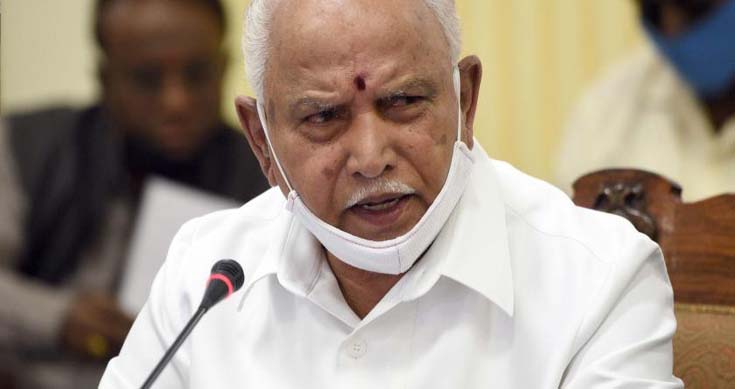
Karnataka to move SC over Tamil Nadu's river-linking project

Agencies
February 28, 2021

Karnataka To Move To Centre Against Tamil Nadu Cauvery Linking Project

Bengaluru, Feb 28: Karnataka is readying itself to wage a legal battle in the Supreme Court against Tamil Nadu's ambitious Cauvery-Vellaru-Vaigai-Gundar river linking project, Law and Parliamentary Affairs Minister Basavaraj Bommai said here on Friday.

Last week, Tamil Nadu Chief Minister E. Palaniswami had laid the foundation stone for the Rs 14,400 crore, 262 km river-linking project, which will divert 6,300 cubic feet of surplus water during floods and increase the groundwater levels in the state's southern districts to meet drinking water needs.

Addressing mediapersons after a series of meetings with legal experts and concerned officials along with Major and Medium Irrigation Minister Ramesh Jarakiholi here, Bommai asserted that Tamil Nadu's inter-linking river project is against the interests of Karnataka, and the state government will oppose it strongly in all fora.

"Tamil Nadu is trying to utilise surplus 45 Tmcft of water. This is against Karnataka's interest. As there is no legal provision to utilise this surplus water, hence Tamil Nadu's project itself is illegally conceived," he said.
He added that surplus water has not been shared between the states officially or legally, so taking up the project in such a situation is not right.

"This project is not in accordance with the Interstate River Water Disputes Act. According to the Act, surplus water should also be adjudicated and the tribunal has to decide on it. So this project is against the law. Therefore, this is a fit case to oppose in the apex court," Bommai said.

He alleged that it has been proved beyond doubt in many cases in the past that Tamil Nadu has been acting in a prejudiced manner for over 400 years.

Jarkiholi also asserted that Karnataka has decided to respond legally and politically to Tamil Nadu's river linking project.

Bommai further alleged that Tamil Nadu had started the Hogenakkal project without taking any permission, and now they have launched the Cauvery-Vellaru-Vaigai-Gundar linking project.

"Surplus water needs to be shared between the states, this is the fundamental principle. Whatever they are doing is against this principle, as they are indicating their claim over surplus water. We strongly oppose and condemn this and have decided to fight it legally," he said.

The minister further said that Tamil Nadu had objected when Karnataka sought allocation for a drinking water project for Bengaluru, besides opposing several projects in the Cauvery basin, including plans to modernise or repair a 300-400 year-old dam and carry out modernisation of canal projects that are in bad condition.

Rebutting both the opposition parties' allegations, Bommai said that there was no delay in taking action against the Tamil Nadu project. "Where is the question of going soft on Tamil Nadu? Protecting our state's interests is paramount for us. They may have elections or some other compulsions, but that cannot come in the way of protecting our interests. Opposition parties are levelling baseless allegations," he said.

Comments

Add new comment

  • Coastaldigest.com reserves the right to delete or block any comments.
  • Coastaldigset.com is not responsible for its readers’ comments.
  • Comments that are abusive, incendiary or irrelevant are strictly prohibited.
  • Please use a genuine email ID and provide your name to avoid reject.
News Network
February 3,2026

Bengaluru: Following reports of fresh Nipah virus (NiV) cases in West Bengal and heightened vigilance across parts of Southeast Asia, the Karnataka Health Department has placed the state on high alert and activated emergency preparedness protocols.

Health officials said enhanced surveillance measures have been initiated after two healthcare workers in Barasat, West Bengal, tested positive for the virus earlier this month. While no cases have been reported in Karnataka so far, authorities said the state’s past exposure to Nipah outbreaks and high inter-state mobility warranted preventive action.

Officials have directed district health teams to intensify monitoring, particularly at hospitals and points of entry, and to ensure early detection and isolation of suspected cases.

High Mortality Virus with Multiple Transmission Routes

Nipah virus is a zoonotic disease that can spread from animals to humans and has a reported fatality rate ranging between 60 and 75 per cent. Fruit bats, also known as flying foxes, are the natural reservoirs of the virus and can transmit it by contaminating food sources with saliva or urine.

Known modes of transmission include:

•    Contaminated food: Consumption of fruits partially eaten by bats or raw date-palm sap
•    Animal contact: Exposure to infected pigs or other animals
•    Human-to-human transmission: Close contact with body fluids of infected persons, particularly in healthcare settings

Symptoms and Disease Progression

The incubation period typically ranges from 4 to 14 days, though delayed onset has also been reported. Early symptoms often resemble common viral infections, making prompt clinical suspicion critical.

•    Initial symptoms: Fever, headache, body aches, fatigue, sore throat
•    Progressive symptoms: Drowsiness, disorientation, altered mental state
•    Severe stage: Seizures, neck stiffness and acute encephalitis, which can rapidly progress to coma

Public Health Advisory

The Health Department has issued precautionary guidelines urging the public to adopt risk-avoidance practices to prevent any local spillover.

Do’s
•    Wash fruits thoroughly before consumption
•    Drink boiled and cooled water
•    Use protective equipment while handling livestock
•    Maintain strict hand hygiene

Don’ts
•    Avoid fruits found on the ground or showing bite marks
•    Do not consume beverages made from raw tree sap, including toddy
•    Avoid areas with dense bat populations
•    Do not handle sick or dead animals

Preparedness Measures

Officials confirmed that isolation wards are being readied in major government hospitals and that medical staff are being sensitised to identify early warning signs.

“There is no cause for panic, but there is a need for heightened vigilance,” a senior health official said, adding that there is currently no approved vaccine or specific antiviral treatment for Nipah, and care remains largely supportive.

Comments

Add new comment

  • Coastaldigest.com reserves the right to delete or block any comments.
  • Coastaldigset.com is not responsible for its readers’ comments.
  • Comments that are abusive, incendiary or irrelevant are strictly prohibited.
  • Please use a genuine email ID and provide your name to avoid reject.