One million species risk extinction due to humans: draft UN report

Agencies
April 24, 2019

UN, Apr 24: Up to one million species face extinction due to human influence, according to a draft UN report obtained by AFP that painstakingly catalogues how humanity has undermined the natural resources upon which its very survival depends.

The accelerating loss of clean air, drinkable water, CO2-absorbing forests, pollinating insects, protein-rich fish and storm-blocking mangroves -- to name but a few of the dwindling services rendered by Nature -- poses no less of a threat than climate change, says the report, set to be unveiled May 6.

Indeed, biodiversity loss and global warming are closely linked, according to the 44-page Summary for Policy Makers, which distills a 1,800-page UN assessment of scientific literature on the state of Nature.

Delegates from 130 nations meeting in Paris from April 29 will vet the executive summary line-by-line.

Wording may change, but figures lifted from the underlying report cannot be altered.

"We need to recognise that climate change and loss of Nature are equally important, not just for the environment, but as development and economic issues as well," Robert Watson, chair of the UN-mandated body that compiled the report, told AFP, without divulging its findings.

"The way we produce our food and energy is undermining the regulating services that we get from Nature," he said, adding that only "transformative change" can stem the damage.

Deforestation and agriculture, including livestock production, account for about a quarter of greenhouse gas emissions, and have wreaked havoc on natural ecosystems as well.

The Intergovernmental Science-Policy Platform on Biodiversity and Ecosystem Services (IPBES) report warns of "an imminent rapid acceleration in the global rate of species extinction." The pace of loss "is already tens to hundreds of times higher than it has been, on average, over the last 10 million years," it notes. "Half-a-million to a million species are projected to be threatened with extinction, many within decades." Many experts think a so-called "mass extinction event" -- only the sixth in the last half-billion years -- is already under way.

The most recent saw the end of the Cretaceous period some 66 million years ago, when a 10-kilometre-wide asteroid strike wiped out most lifeforms.

Scientists estimate that Earth is today home to some eight million distinct species, a majority of them insects.

A quarter of catalogued animal and plant species are already being crowded, eaten or poisoned out of existence.

The drop in sheer numbers is even more dramatic, with wild mammal biomass -- their collective weight -- down by 82 per cent.

Humans and livestock account for more than 95 per cent of mammal biomass.

"If we're going to have a sustainable planet that provides services to communities around the world, we need to change this trajectory in the next ten years, just as we need to do that with climate," noted WWF chief scientist Rebecca Shaw, formerly a member of the UN scientific bodies for both climate and biodiversity.

The direct causes of species loss, in order of importance, are shrinking habitat and land-use change, hunting for food or illicit trade in body parts, climate change, pollution, and alien species such as rats, mosquitoes and snakes that hitch rides on ships or planes, the report finds.

"There are also two big indirect drivers of biodiversity loss and climate change -- the number of people in the world and their growing ability to consume," said Watson. Once seen as primarily a future threat to animal and plant life, the disruptive impact of global warming has accelerated.

Shifts in the distribution of species, for example, will likely double if average temperature go up a notch from 1.5 degrees Celsius (2.7 Fahrenheit) to 2 C.

So far, the global thermometer has risen 1C compared with mid-19th century levels.

The 2015 Paris Agreement enjoins nations to cap the rise to "well below" 2C.

But a landmark UN climate report in October said that would still be enough to boost the intensity and frequency of deadly heatwaves, droughts, floods and storms.

Other findings in the report include:

Three-quarters of land surfaces, 40 per cent of the marine environment, and 50 per cent of inland waterways across the globe have been "severely altered".

Many of the areas where Nature's contribution to human wellbeing will be most severely compromised are home to indigenous peoples and the world's poorest communities that are also vulnerable to climate change.

More than two billion people rely on wood fuel for energy, four billion rely on natural medicines, and more than 75 percent of global food crops require animal pollination.

Nearly half of land and marine ecosystems have been profoundly compromised by human interference in the last 50 years.

Subsidies to fisheries, industrial agriculture, livestock raising, forestry, mining and the production of biofuel or fossil fuel energy encourage waste, inefficiency and over-consumption.

The report cautioned against climate change solutions that may inadvertently harm Nature.

The use, for example, of biofuels combined with "carbon capture and storage" -- the sequestration of CO2 released when biofuels are burned -- is widely seen as key in the transition to green energy on a global scale.

But the land needed to grow all those biofuel crops may wind up cutting into food production, the expansion of protected areas or reforestation efforts.

Comments

Add new comment

  • Coastaldigest.com reserves the right to delete or block any comments.
  • Coastaldigset.com is not responsible for its readers’ comments.
  • Comments that are abusive, incendiary or irrelevant are strictly prohibited.
  • Please use a genuine email ID and provide your name to avoid reject.
News Network
January 16,2026

Mangaluru: Mangaluru’s skyline is set for a high-end transformation as the coastal district of Dakshina Kannada prepares to shed its reputation for lacking premium hospitality. In a massive show of confidence, entrepreneurs have committed nearly ₹500 crores toward the construction of four new five-star hotels, a move experts say will finally plug the "luxury leak" to neighboring states.

For years, Mangaluru International Airport (MIA) has served as a gateway for high-net-worth travelers who, upon landing, promptly departed for Kerala or Kodagu due to a dearth of elite accommodation in the city. These new projects, three of which are backed by local visionary investors, aim to turn Mangaluru into a destination rather than just a transit point.

Mapping the Luxury Boom

The expansion is already in motion, with two major landmarks leading the charge:
•    Gurupura Property: Construction is already underway on a premier resort-style hotel.
•    Kuloor Hub: A sophisticated urban luxury hotel has been proposed for this strategic area.
•    Timeline: All four projects are slated for completion within the next 24 months, promising to fundamentally alter the region's tourism profile by 2028.

Why Now? The Investor Demand

The push for five-star infrastructure isn't just about tourism; it’s a direct response to the city’s industrial and academic evolution. Stakeholders from the IT and corporate sectors have long flagged the lack of premium suites as a hurdle for international business investments.

"Mangaluru is an powerhouse of mega-industries, medical excellence, and a burgeoning IT scene," noted a senior Tourism Department official. "It is an anomaly that a city with this much economic muscle has lacked a five-star anchor. By offering premium hospitality, we aren't just housing tourists; we are inviting global investors to stay, engage, and invest more deeply in our coast."

Strategic Retention

The "drain" of visitors to the neighboring state of Kerala has been a long-standing grievance for local businesses. With these new properties, the district administration expects a significant multiplier effect—benefiting local sightseeing, high-end retail, and the burgeoning medical tourism sector. As Mangaluru accelerates on its development trajectory, the message to the world is clear: the coast is finally ready to host you in style.

Comments

Add new comment

  • Coastaldigest.com reserves the right to delete or block any comments.
  • Coastaldigset.com is not responsible for its readers’ comments.
  • Comments that are abusive, incendiary or irrelevant are strictly prohibited.
  • Please use a genuine email ID and provide your name to avoid reject.
News Network
January 20,2026

DGP.jpg

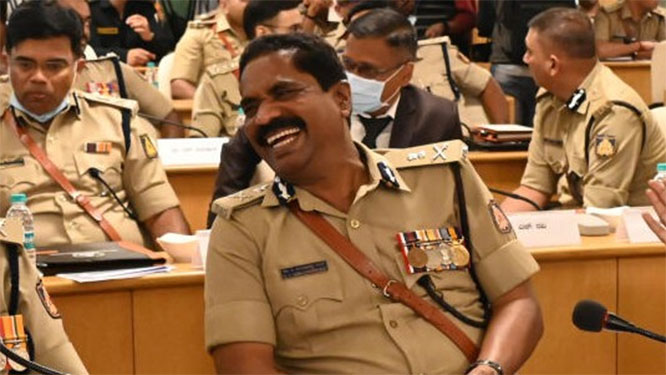
Karnataka DGP (Civil Rights Enforcement) K Ramachandra Rao was suspended with immediate effect, as per a state government order issued on Monday, 19 January. The order cited conduct unbecoming of a government servant and causing embarrassment to the state administration.

The Karnataka government suspended Rao after a purported video showed him in a compromising position with a woman inside his official chamber. The video went viral on social media. Rao rejected the videos outright, terming them "fabricated and false".

Who is K Ramachandra Rao?

Rao is a DGP-rank officer who was heading the Directorate of Civil Rights Enforcement until his suspension. He was promoted to DGP in September 2023 and assumed office in October 2023, the Sunday Guardian reported.

He also served as the Chairman and Managing Director of the Karnataka State Police Housing and Infrastructure Development Corporation Limited.

His stint as the Inspector General of Police (IGP) for the Southern Range was also marred by controversy. In 2014, during a cash seizure near Mysuru’s Yelwal, officials claimed the seized amount was ₹20 lakh, while the accused (Kerala-based merchants) claimed it was around ₹2.27 crore.

Rao, who was present during the seizure, denied all allegations. However, he was transferred soon after.

Allegations of collusion with a businessman surfaced, and a senior police officer was quoted by The Sunday Guardian as saying, “In Rao’s case, the CID has clearly mentioned that there was a great degree of lapse on the part of Rao and a deputy superintendent of police after it was brought to their notice that a few policemen, including a gunman attached to the IGP, were involved in the robbery.”

Rao had denied all wrongdoing in that incident. Despite past controversies, he rose to the state’s top police position, the Sunday Guardian reported.

Ranya Rao’s stepfather

Rao is the stepfather of Kannada actress Harshavardhini Ranya alias Ranya Rao, accused of orchestrating the illegal import of gold worth over ₹12.56 crore from Dubai to India along with two others — businessman Tarun Raju, and jewellery dealer Sahil Jain.

‘Obscene video’ controversy

A viral video showed Rao behaving inappropriately with a woman inside his office while in uniform.

The Karnataka government said in its Monday order that “vide videos and news reports widely broadcast on public news channels and media platforms, it is observed that Dr K Ramachandra Rao has acted in an obscene manner which is unbecoming of a Government Servant and also causing embarrassment to the Government.”

The order said the matter was examined by the state government, which found that the officer's conduct amounted to a violation of Rule 3 of the All India Services (Conduct) Rules, 1968.

The government said it is prima facie satisfied that "it is necessary to place Rao under suspension with immediate effect, pending inquiry".

During the suspension period, Rao will be entitled to subsistence allowance as per Rule 4 of the All India Services (Discipline and Appeal) Rules, 1969.

The order also places restrictions on his movement, stating that during the period of suspension, the officer must not leave headquarters under any circumstances without the written permission of the state government.

Comments

Add new comment

  • Coastaldigest.com reserves the right to delete or block any comments.
  • Coastaldigset.com is not responsible for its readers’ comments.
  • Comments that are abusive, incendiary or irrelevant are strictly prohibited.
  • Please use a genuine email ID and provide your name to avoid reject.
News Network
January 16,2026

tourism.jpg

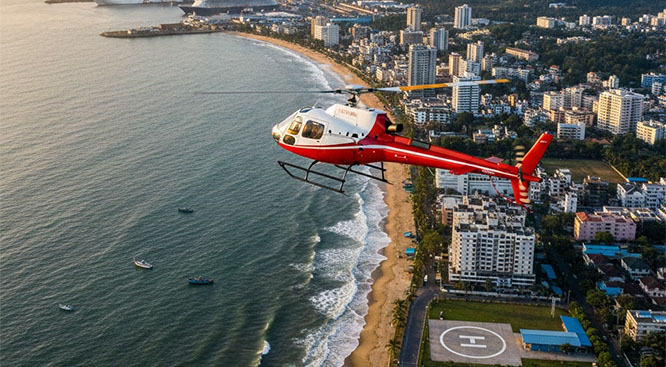
Following a record-breaking response to experimental joyrides during the Karavali Utsava, the Dakshina Kannada district administration has signaled a major shift toward high-end travel. Officials are now laying the groundwork to transform Mangaluru into a permanent heli-tourism hub, connecting the state’s most sacred pilgrim centers and untouched coastal gems via the skies.

The move comes as the Karnataka government readies a specialized tourism policy for the coast, aimed at drawing global investors. With Mangaluru already serving as a critical nexus for education, healthcare, and maritime trade, the introduction of a scheduled helicopter service is seen as the "missing link" in the region’s economic evolution.

By the Numbers: A Flying Success

The data from the recent 10-day trial (beginning December 26) paints a clear picture of high demand:

•    Total Passengers: 1,032
•    Ride Duration: 7 minutes
•    Ticket Price: ₹3,500 per person
•    Origin of Tourists: Significant turnout from Kerala, Udupi, and Karwar.

Bridging the Gap for Global Travelers

Deputy Commissioner Darshan HV emphasized that the vision extends far beyond festival joyrides. Currently, international tourists arriving via luxury cruises at the New Mangalore Port (peak season December–April) often find themselves "landlocked" by time.

"Foreign visitors staying for just 24 to 48 hours currently struggle to visit inland attractions like Chikkamagaluru or Kodagu due to road travel times," a senior official noted. "A permanent heli-link would make these Western Ghats destinations accessible in under 30 minutes."

Beyond Tourism: Medical and Logistics

The administration is also looking at the humanitarian and logistical benefits. As a medical powerhouse, Mangaluru’s private hospitals could utilize the proposed permanent helipads for:

1.    Cardiac Emergencies: Rapid transfer of critical patients.
2.    Organ Transplants: Vital "green corridors" through the air to save lives.
3.    Regional Connectivity: Linking remote areas like Puttur, Sullia, and Beltangady to the main city.

While the Karavali Utsava has traditionally focused on beach-side festivities, the DC confirmed that the district is now evaluating formal proposals from private operators. The goal is to establish a network of permanent helipads that will eventually offer regular sorties to Kudremukh National Park and the scenic heights of the Western Ghats.

Comments

Add new comment

  • Coastaldigest.com reserves the right to delete or block any comments.
  • Coastaldigset.com is not responsible for its readers’ comments.
  • Comments that are abusive, incendiary or irrelevant are strictly prohibited.
  • Please use a genuine email ID and provide your name to avoid reject.