



Pak expels Indian envoy; downgrades diplomatic ties

Agencies
August 8, 2019

Islamabad, Aug 8: Pakistan on Wednesday expelled Indian High Commissioner Ajay Bisaria, minutes after it decided to downgrade the diplomatic ties with India over what it called New Delhi's "unilateral and illegal" move to revoke the special status of Jammu and Kashmir.
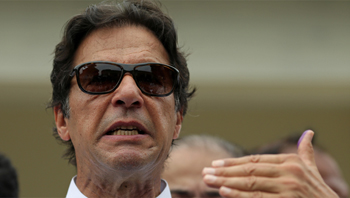
This was announced after Pakistan Prime Minister Imran Khan chaired a crucial meeting of the National Security Committee (NSC), attended by top civil and military leadership, during which it was also decided to suspend the bilateral trade and review the "bilateral arrangements".

"Our ambassadors will no longer be in New Delhi and their counterparts here will also be sent back," Foreign Minister Shah Mehmood Qureshi said in televised comments soon after the NSC meeting.

Later, the Foreign Office in a statement said that "Pursuant to the decision of the National Security Committee today, the Government of India has been told to withdraw its High Commissioner to Pakistan."

It, however, did not give any time line for India to pull back its envoy.

"The Indian Government has also been informed that Pakistan will not be sending its High Commissioner-designate to India," the statement said.

Pakistan's new High Commissioner Moin-ul-Haq was expected to leave for India this month to take up his responsibilities.

India on Monday revoked Article 370 of the Constitution to withdraw the special status given to Jammu and Kashmir and bifurcated the state into two Union Territories -- Jammu and Kashmir, and Ladakh.

A statement issued after the NSC meeting read that the Committee discussed situation "arising out of unilateral and illegal actions" by the Indian government, situation inside Jammu and Kashmir and along the Line of Control.

The Committee decided "downgrading of diplomatic relations with India" and "suspension of bilateral trade with India," the statement said.

Pakistan will also take the matter (abolition of the Article 370 by India) to the United Nations, including the Security Council, the statement said.

India has said Jammu and Kashmir is an integral part of India and the issue is strictly internal to the country.

The statement said that the country will observe this Independence Day on August 14 in solidarity with Kashmiris. "August 15 will be observed as Black Day," it added.

Prime Minister Khan also directed that all diplomatic channels be activated to highlight the alleged human rights violations in the Valley. He directed the military to continue vigilance, the statement said.

The Foreign Minister, Defense Minister, Interior Minister, Advisor on finance, Kashmir Affairs Minister as well as Joint Chiefs of Staff Committee Chairman, three services chiefs, ISI chief, and other top officials attended the meeting.

The NSC met after the meeting of top military generals and and a rare joint session of parliament on the Kashmir issue on Tuesday. It was the second meeting of Pakistan's top decision making body this week.

On Sunday, Prime Minister Khan convened the NSC meeting to discuss issues pertaining to national security in the wake of developments in the region. The NSC is the highest forum of civil and military top leadership to come together and discuss important matters of national security.

On Tuesday, Khan expressed apprehension that Pulwama-like attacks can follow the revocation of the special status for Jammu and Kashmir, which could trigger a conventional war between Pakistan and India.

"This will be a war that no one will win and the implications will be global," he warned while addressing a rare joint sitting of Parliament that was convened to discuss the Kashmir situation.

Khan said that his government would approach the world leaders and apprise them of situation in Kashmir. "We will fight it at every forum including the UN Security Council," he said, adding that Pakistan also plans to take the matter to the International Court of Justice.

Speaking in Parliament, Foreign Minister Qureshi said on Wednesday that India has only harmed itself by revoking the special status of Kashmir.

"History will prove that this action of India will badly impact its union," he said.

Qureshi said all bilateral agreements with India would be reviewed by a special committee already setup by Prime Minister Khan to suggest measures against Indian actions.

The foreign minister said that he might dash to China for consultations over the issue.

Pakistan lawmakers unanimously passed a resolution condemning "Indian action in Kashmir and pledging support for Kashmiris."

The resolution was adopted by the joint session of parliament after the lawmakers discussed the situation in Kashmir for two days.

The resolution reiterated the "strong conviction of Pakistan that the Jammu and Kashmir dispute would be resolved only through dialogue and diplomacy and in accordance with international law."

India has not been engaging with Pakistan since an attack on the Air Force base at Pathankot in January of 2016 by Pakistan-based terrorists, maintaining that talks and terror cannot go together.

Early this year, tensions flared up between India and Pakistan after a suicide bomber of Pakistan-based Jaish-e-Muhammed (JeM) killed 40 CRPF personnel in Kashmir's Pulwama district.

Amid mounting outrage, the Indian Air Force carried out a counter-terror operation, hitting the biggest JeM training camp in Balakot, deep inside Pakistan on February 26.

The next day, Pakistan Air Force retaliated and downed a MiG-21 in an aerial combat and captured Indian pilot, who was handed over to India on March 1.

Comments

Add new comment

  • Coastaldigest.com reserves the right to delete or block any comments.
  • Coastaldigset.com is not responsible for its readers’ comments.
  • Comments that are abusive, incendiary or irrelevant are strictly prohibited.
  • Please use a genuine email ID and provide your name to avoid reject.
News Network
February 1,2026

US President Donald Trump on Saturday claimed that the government of India led by Prime Minister Narendra Modi has made a deal to buy Venezuelan oil, as opposed to purchasing it from Iran.

"We've already made that deal, the concept of the deal," he told reporters on Air Force One.

Trump had imposed 25% tariffs on countries buying Venezuelan oil, including India, in March 2025. He had also hit India with tariffs for buying Russian oil, saying it was "funding" President Vladimir Putin's war against Ukraine.

Trump has said that the US has taken control of the oil-rich Venezuela after capturing former President Nicolas Maduro in January.

A fleet of 18 ships loaded with crude oil bound for refineries in Texas, Louisiana, and Mississippi in January, the most since December 2024, according to a report by the news agency Bloomberg.

Combined crude deliveries to the US will reach about 2,75,000 barrels a day, more than doubling volumes seen in December last year. Shipments to China, which averaged 4,00,000 barrels a day last year, fell to zero in January.

PM Modi, Venezuelan President Agree To Expand Ties

Prime Minister Narendra Modi and Venezuela's acting President Delcy Rodriguez spoke on Friday and agreed to take the bilateral relations to "new heights" in the years ahead.

It was the first phone call between the two leaders since the capture of Maduro and his wife by the US on January 3.

"Spoke with Acting President of Venezuela, Ms. Delcy Rodriguez. We agreed to further deepen and expand our bilateral partnership in all areas, with a shared vision of taking India-Venezuela relations to new heights in the years ahead," PM Modi said in a post on X.

A statement from Prime Minister Modi's office said the two leaders agreed to further expand and deepen the India-Venezuela partnership in all areas, including trade and investment, energy, digital technology, health, agriculture, and people-to-people ties.

They exchanged views on various regional and global issues of mutual interest and underscored the importance of their close cooperation for the Global South, the statement said.

Rodriguez also said that they discussed partnerships in the fields of agriculture, science and technology, mining, and tourism, as well as the pharmaceutical and automotive industries.

Comments

Add new comment

  • Coastaldigest.com reserves the right to delete or block any comments.
  • Coastaldigset.com is not responsible for its readers’ comments.
  • Comments that are abusive, incendiary or irrelevant are strictly prohibited.
  • Please use a genuine email ID and provide your name to avoid reject.
News Network
February 3,2026

Bengaluru: Following reports of fresh Nipah virus (NiV) cases in West Bengal and heightened vigilance across parts of Southeast Asia, the Karnataka Health Department has placed the state on high alert and activated emergency preparedness protocols.

Health officials said enhanced surveillance measures have been initiated after two healthcare workers in Barasat, West Bengal, tested positive for the virus earlier this month. While no cases have been reported in Karnataka so far, authorities said the state’s past exposure to Nipah outbreaks and high inter-state mobility warranted preventive action.

Officials have directed district health teams to intensify monitoring, particularly at hospitals and points of entry, and to ensure early detection and isolation of suspected cases.

High Mortality Virus with Multiple Transmission Routes

Nipah virus is a zoonotic disease that can spread from animals to humans and has a reported fatality rate ranging between 60 and 75 per cent. Fruit bats, also known as flying foxes, are the natural reservoirs of the virus and can transmit it by contaminating food sources with saliva or urine.

Known modes of transmission include:

•    Contaminated food: Consumption of fruits partially eaten by bats or raw date-palm sap
•    Animal contact: Exposure to infected pigs or other animals
•    Human-to-human transmission: Close contact with body fluids of infected persons, particularly in healthcare settings

Symptoms and Disease Progression

The incubation period typically ranges from 4 to 14 days, though delayed onset has also been reported. Early symptoms often resemble common viral infections, making prompt clinical suspicion critical.

•    Initial symptoms: Fever, headache, body aches, fatigue, sore throat
•    Progressive symptoms: Drowsiness, disorientation, altered mental state
•    Severe stage: Seizures, neck stiffness and acute encephalitis, which can rapidly progress to coma

Public Health Advisory

The Health Department has issued precautionary guidelines urging the public to adopt risk-avoidance practices to prevent any local spillover.

Do’s
•    Wash fruits thoroughly before consumption
•    Drink boiled and cooled water
•    Use protective equipment while handling livestock
•    Maintain strict hand hygiene

Don’ts
•    Avoid fruits found on the ground or showing bite marks
•    Do not consume beverages made from raw tree sap, including toddy
•    Avoid areas with dense bat populations
•    Do not handle sick or dead animals

Preparedness Measures

Officials confirmed that isolation wards are being readied in major government hospitals and that medical staff are being sensitised to identify early warning signs.

“There is no cause for panic, but there is a need for heightened vigilance,” a senior health official said, adding that there is currently no approved vaccine or specific antiviral treatment for Nipah, and care remains largely supportive.

Comments

Add new comment

  • Coastaldigest.com reserves the right to delete or block any comments.
  • Coastaldigset.com is not responsible for its readers’ comments.
  • Comments that are abusive, incendiary or irrelevant are strictly prohibited.
  • Please use a genuine email ID and provide your name to avoid reject.