In Pakistan, voices critical of CPEC being suppressed, US lawmakers told

Agencies
May 14, 2019

Washington, May 14: People and the media in Pakistan are scared of speaking against the multi-billion-dollar China Pakistan Economic Corridor (CPEC) as critical voices are being suppressed, treated as anti-national or branded as terrorists, a former Obama Administration official has told US lawmakers.

"Rarely will you read an article that's critical about CPEC in the Pakistani media. Very rarely. There's been a media capture essentially and there's only the CPEC narrative because people are scared or they've been intimidated or threatened not to do certain pieces," Shamila Chaudhary from the Johns Hopkins University School for Advanced International Studies said.

Testifying before a Congressional committee last week, Chaudhary, who served in the previous Obama Administration, told the lawmakers that at the very local level, people who critique CPEC are often labelled as terrorists.

"There are anti-terrorism laws that can be used against them. Worse things could possibly happen. So it's a very real threat and it has already done a lot of damage to the civil society and the democratic culture that's fairly vibrant, despite their country's history with democracy," she said.

Responding to questions from the lawmakers, Chaudhary said unlike America's soft power, the Chinese model of development does not increase people to people relationship.

"The Chinese don't have that and the Chinese nationals that are going to, say, Pakistan, for example, they're not there to become part of the culture or learn about the communities or have cross-cultural dialogue," she said.

Chinese are in Pakistan to make money, she alleged. "They live in enclaves and essentially what people call Chinese colonies and go to their own restaurants. And that's not something that's going to favour China, Pakistan or China's cooperation with any country for that matter over the long run. Local communities will be very upset by those things, I believe," Chaudhary said.

Informing the lawmakers that the Chinese financial assistance to Pakistan is being kept secret, she said the information now has been shared by Pakistan with the International Monetary Fund (IMF) so that it can be bailed out of the current financial crisis.

"The deal (with IMF) is almost complete and it's my understanding that that information has actually been shared, and so, you know, what Pakistan won't share publicly as part of a bilateral deal with the Chinese, I think it's more willing to share when it needs it," Chaudhary said.

CPEC, she said, hurts US regional interests by disrupting the fragile India-Pakistan ties, a nuclear-fuelled dynamic that demands US stewardship from time to time during times of crisis.

"China's provision of surveillance, data collection capabilities and new hardware to the Pakistani military may seem like it improves security, but such tools also increase the likelihood of invasive data collection, misuse of information and violations of privacy," she said.

"The notion that the Pakistani military might start to mimic Chinese authoritarianism is no longer theoretical. Pakistani civil society and media report more aggressive tactics by the military to silence critical voices. They share a common refrain, that the military is more powerful than ever and that's because of China," Chaudhary said.

She told the lawmakers that in Pakistan, Chinese influence stands alone, changing the rules of the game for everyone else.

For example, Pakistan no longer publicly discloses the terms of its loans from China. Indeed, CPEC pretends immense geo-economic and geopolitical advantages for China in Pakistan, but its repercussions will dwarf any comparable American influence, she said.

To protect US geopolitical options in the future, the US should support the Pakistani and regional actors most threatened by Chinese influence. Ultimately, countering China's rise will require the US to create policies that both address and benefit from the needs of other countries, Chaudhary said.

Make sense of the 2019 Lok Sabha Elections and results on May 23 with TOI. Follow us to track latest news, live updates, news analysis and cutting-edge data analytics. Track live Election Results, the big trends and fastest updates on counting day with India's largest news network.


Comments

Add new comment

  • Coastaldigest.com reserves the right to delete or block any comments.
  • Coastaldigset.com is not responsible for its readers’ comments.
  • Comments that are abusive, incendiary or irrelevant are strictly prohibited.
  • Please use a genuine email ID and provide your name to avoid reject.
News Network
December 6,2025

pilot.jpg

New Delhi: IndiGo, India’s largest airline, faced major operational turbulence this week after failing to prepare for new pilot-fatigue regulations issued by the Directorate General of Civil Aviation (DGCA). The stricter rules—designed to improve flight safety—took effect in phases through 2024, with the latest implementation on November 1. IndiGo has acknowledged that inadequate roster planning led to widespread cancellations and delays.

Below are the key DGCA rules that affected IndiGo’s operations:

1. Longer Mandatory Weekly Rest

Weekly rest for pilots has been increased from 36 hours to 48 hours.

The government says the extended break is essential to curb cumulative fatigue. This rule remains in force despite the current crisis.

2. Cap on Night Landings

Pilots can now perform only two night landings per week—a steep reduction from the earlier limit of six.

Night hours, defined as midnight to early morning, are considered the least alert period for pilots.

Given the disruptions, this rule has been temporarily relaxed for IndiGo until February 10.

3. Reduced Maximum Night Flight Duty

Flight duty that stretches into the night is now capped at 10 hours.

This measure has also been kept on hold for IndiGo until February 10 to stabilize operations.

4. Weekly Rest Cannot Be Replaced With Personal Leave

Airlines can no longer count a pilot’s personal leave as part of the mandatory 48-hour rest.

Pilots say this closes a loophole that previously reduced actual rest time.

Currently, all airlines are exempt from this rule to normalise travel.

5. Mandatory Fatigue Monitoring

Airlines must submit quarterly fatigue reports along with corrective actions to DGCA.

This system aims to create a transparent fatigue-tracking framework across the industry.

The DGCA has stressed that these rules were crafted to strengthen flight safety and align India with global fatigue-management standards. The temporary relaxations are expected to remain until February 2025, giving IndiGo time to stabilise its schedules and restore normal air travel.

Comments

Add new comment

  • Coastaldigest.com reserves the right to delete or block any comments.
  • Coastaldigset.com is not responsible for its readers’ comments.
  • Comments that are abusive, incendiary or irrelevant are strictly prohibited.
  • Please use a genuine email ID and provide your name to avoid reject.
News Network
November 27,2025

siddDKS.jpg

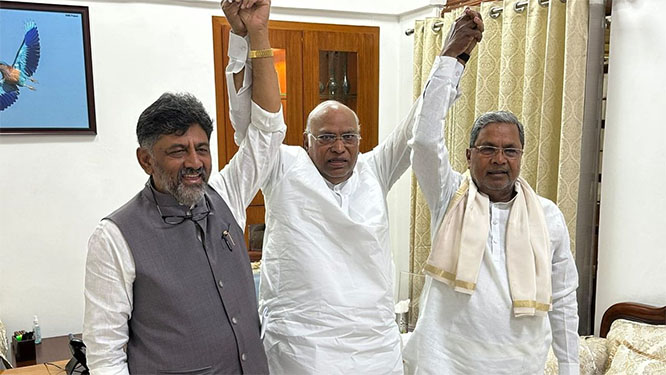
Congress president Mallikarjun Kharge on Thursday announced that he will convene a high-level meeting in New Delhi with senior leaders — including Rahul Gandhi, Karnataka Chief Minister Siddaramaiah and Deputy Chief Minister D.K. Shivakumar — to resolve the escalating leadership turmoil in Karnataka and “put an end to the confusion.”

Kharge said the discussions would focus on the way forward for the ruling party, as rumours of a possible leadership change continue to swirl. The speculation has intensified after the Congress government crossed the halfway mark of its five-year term on November 20, reviving talk of an alleged 2023 “power-sharing agreement” between Siddaramaiah and Shivakumar.

“After reaching Delhi, I will call three or four important leaders and hold discussions. Once we talk, we will decide how to move ahead and end this confusion,” Kharge told reporters in Bengaluru, according to PTI.

When asked specifically about calling Siddaramaiah and Shivakumar to Delhi, he responded: “Certainly, we should call them. We will discuss with them and settle the issue.”

He confirmed that Rahul Gandhi, the Chief Minister, the Deputy Chief Minister and other senior members would be part of the deliberations. “After discussing with everyone, a decision will be made,” he said.

Meanwhile, Siddaramaiah held a separate strategy meeting at his Bengaluru residence with ministers and leaders seen as his close confidants, including G. Parameshwara, Satish Jarkiholi, H.C. Mahadevappa, K. Venkatesh and K.N. Rajanna.
Signalling calm, the Chief Minister told reporters, “Will go to Delhi if the high command calls.”

Shivakumar echoed a similar stance, saying he too would head to the national capital if summoned by the party leadership.

Comments

Add new comment

  • Coastaldigest.com reserves the right to delete or block any comments.
  • Coastaldigset.com is not responsible for its readers’ comments.
  • Comments that are abusive, incendiary or irrelevant are strictly prohibited.
  • Please use a genuine email ID and provide your name to avoid reject.
News Network
November 27,2025

DKSvokkaliga.jpg

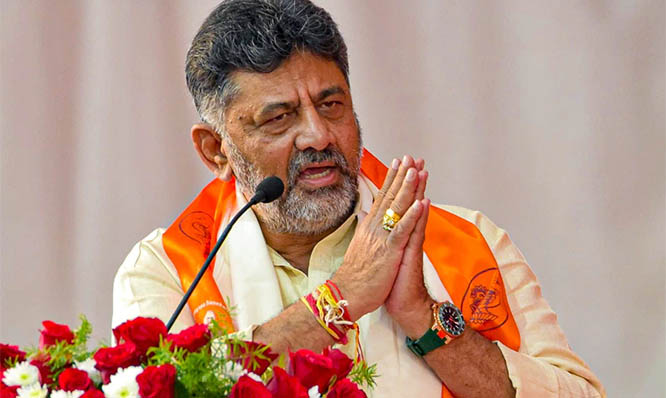
Bengaluru: The Vokkaligara Sangha on Thursday issued a stern warning to the Congress, saying the party could face serious electoral repercussions if Deputy Chief Minister D.K. Shivakumar is not appointed as Chief Minister.

The warning follows the public backing of Shivakumar’s chief ministerial ambition by top Vokkaliga pontiff Nirmalanandanatha Swami, who urged the Congress high command to honor his claim.

“The community supported Congress in the 2023 Assembly elections only because Shivakumar had a real chance to become CM. If he is cheated, we’ll teach the party a big lesson,” said newly elected Sangha president L. Srinivas. He added that Vokkaligas would organize protests under the guidance of community leaders.

General Secretary C.G. Gangadhar pointed out that Congress won more seats in the Vokkaliga-dominated Old Mysuru region due to Shivakumar’s influence, adding, “If Congress wants to retain power, Shivakumar should be made the CM.”

Outgoing president Kenchappa Gowda emphasized Shivakumar’s contribution to Congress’ victory. “Our community voted for Congress thinking he would become CM. Siddaramaiah has also served the party well, but Shivakumar should now be given a chance,” he said.

Former general-secretary Konappa Reddy appealed to Sonia and Rahul Gandhi to recognize Shivakumar’s loyalty and service, saying, “Congress is known to keep its promises. We hope it won’t break the promise made to him.”

Comments

Add new comment

  • Coastaldigest.com reserves the right to delete or block any comments.
  • Coastaldigset.com is not responsible for its readers’ comments.
  • Comments that are abusive, incendiary or irrelevant are strictly prohibited.
  • Please use a genuine email ID and provide your name to avoid reject.