A prime minister's assassination recalled

October 30, 2014

New Delhi, Oct 30: Thirty years later, the 90-year-old doctor remembers the event as if it was just the other day.
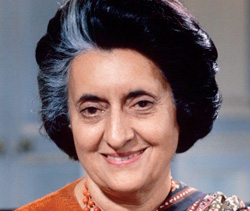
Indira Gandhi

"I had left after chatting with her, like I used to do every morning after a routine check-up," said Dr K.P. Mathur, of his patient of 18 years, Prime Minister Indira Gandhi.

"But within 20 minutes I had to come back after getting an urgent call from the office. She had been shot."

Sitting in his modest East Delhi residence, Mathur, slightly bent with age, a little hard of hearing but upright with memory, recalls vividly the morning of Oct 31, 1984, the day that shook India and whose shock reverberated for the next three days, leading to the worst orgy of killings and communal hatred since probably the 1947 partition of the subcontinent.

"I had gone to her 1, Safdarjung Road residence as usual, the routine I had been following every day of the week," said Mathur to reporters as he sought to piece together fragments of his distintegrating memory for the fateful day in his and the nation's life.

"Indira Gandhi was her usual cheerful self even as make-up artists from Doordarshan prepared for her interview with Peter Ustinov who, along with his crew, were waiting in the adjoining 1, Akbar Road office.

"She talked of this and that, including how President Reagan prepared for his TV appearances, what I read on the flight back from Bhubaneswar where the PM had gone to address a political rally, and even remembered how my younger daughter had topped in her high school exams.

"She then went into the adjoining room, told her valet Nathu Ram about her evening programme, including that she has to go to the airport to receive President Zail Singh, who was returning from a foreign tour, asked us to join her for tea and then left for the interview."

Mathur recalled how he also left after that, driving out the car from the residence himself and headed for Ram Manohar Lohia Hospital, just 10 minutes' drive in those days, where he was the medical superintendent.

He had barely parked when his secretary came rushing to say there was an urgent call from the Prime Minister's House (there were no mobile phones then) that there was some shooting and probably the prime minister had been hit.

"I immediately got into my car and drove back, only to find complete disorder having descended on the residence where there was complete order and functional equilibrium just a little while ago," recounted Mathur to reporters.

Guards were running helter-skelter, with one guard shouting incoherently that "she has been shot, she has been shot!" It was only when Mathur went inside the compound that he realised what had happened.

Two of her Sikh bodyguards, Beant Singh and Satwant Singh, who were manning the wicker gate that separated her residence at 1, Safdarjung Road from her office at 1, Akbar Road, sprayed her with bullets from their automatic weapons as soon as she stepped across it. She came down in a pool of spurting blood, the crackle of guns that punctured the tranquil morning air had her daughter-in-law Sonia Gandhi come running out of her house in her nightgown, shouting "Mummy, Mummy!"

After initial pandemonium (there were no elite Special Protection Group then for the prime minister), a limp Indira Gandhi was put in her white Ambassador car, her head cradled in the arms of Sonia, and rushed to the All India Institute of Medical Sciences (AIIMS), about five kilometers away.

Recalled Mathur: "When I reached AIIMS, I saw her lying on a stretcher, her body drenched in blood. I felt her pulse, and knew she was no more." Doctors were still trying to revive her and para-medics were rushing in bringing bottles of blood. "Everyone knew it was all over, but no one wanted to believe it."

Slowly her senior aides like P.C. Alexander, principal secretary to the prime minister, arrived, and discussions reluctantly veered to government and constitutional matters and options before the nation.

Mathur says Indira Gandhi had a premonition of her death and used to talk of death and political violence in the weeks leading up to her assassination.

In Bhubaneswar, the evening before, on Oct 30, she said: "I am here today; I may not be here tomorrow... I do not care whether I live or die. I have lived a long life and I am proud that I spent the whole of my life in the service of my people... I shall continue to serve until my last breath and when I die, I can say, that every drop of my blood will invigorate India and strengthen it."

Mathur, who said he had not missed a day seeing Indira Gandhi, whether she was in or out of power, for the 18 years he was with her, and that "without any appointment letter", thinks she will be remembered for her genuine concern for the poor, the measures she took towards a more equitable society, for the way she engineered the creation of Bangladesh, for the way she returned to power in January 1980 after her stunning March 1977 electoral defeat.

"She was a very good, simple, informed, charming, well-meaning, helpful and a caring person," reminisced Mathur about his former patient who, from being just a former prime minister's daughter rose to become one of the world's most powerful and admired leaders of her time and even took stewardship in 1983 of the then powerful Non-Alignment Movement (NAM) of countries that were aligned with neither the western or eastern blocs and wanted to retain their strategic and functional independence.

But her death unleashed forces that she had fought against and the principles of secularism, religious tolerance and communal amity that she had sought to uphold.

Incensed by her killing by two Sikhs, organized mobs, backed by her Congress party, roamed the streets of Delhi and a few other cities, pulled Sikhs out of homes, shops and vehicles, beat them up and set them on fire in public view with police nowhere to be seen. Sikh homes and commercial establishments were burnt to cinder.

Close to 3,000 Sikhs were killed, mostly in Delhi, an incident that was dismissed by Indira Gandhi's son and successor, Rajiv Gandhi, with the words: "When a big tree falls, the earth shakes." The army finally moved in on the evening of Nov 2 to restore order. But by then Delhi had burnt in a way that left permanent scars on the collective psyche of a nation.

Comments

Add new comment

  • Coastaldigest.com reserves the right to delete or block any comments.
  • Coastaldigset.com is not responsible for its readers’ comments.
  • Comments that are abusive, incendiary or irrelevant are strictly prohibited.
  • Please use a genuine email ID and provide your name to avoid reject.
News Network
December 19,2025

Mangaluru: Public transport in Mangaluru is set for a state-led transformation as the government moves to deploy 100 new electric govt buses to replace unreliable private services. The initiative aims to provide a dependable alternative to private operators who have been frequently "cutting trips," leaving thousands of commuters stranded.

The announcement was made by Deputy Commissioner and MCC Administrator Darshan HV during a public phone-in session. The move specifically targets routes where private bus service has become erratic, ensuring that citizens no longer have to rely on a fluctuating private sector for their daily commute.

Restoring the Govt Presence

The transport crisis was brought to the forefront by Ramayya, a resident of Bajal, who highlighted a growing trend of private buses skipping morning and night trips. With the previous KSRTC (govt) services discontinued, residents have been left without a fallback option.

To fix this, the DC confirmed that the PM-eBus Sewa Scheme will bring 100 government-owned electric buses to the city:

•    Phased Deployment: The first 50 of the new 100 government buses are scheduled to arrive by March 2026.

•    State Infrastructure: Two new government depots, including one at Mudipu, are being prepared for operations.

•    Recruitment: The state has already begun training a new batch of government bus drivers to ensure the fleet is operational the moment it arrives.

Comments

Add new comment

  • Coastaldigest.com reserves the right to delete or block any comments.
  • Coastaldigset.com is not responsible for its readers’ comments.
  • Comments that are abusive, incendiary or irrelevant are strictly prohibited.
  • Please use a genuine email ID and provide your name to avoid reject.
News Network
December 16,2025

SMR1.jpg

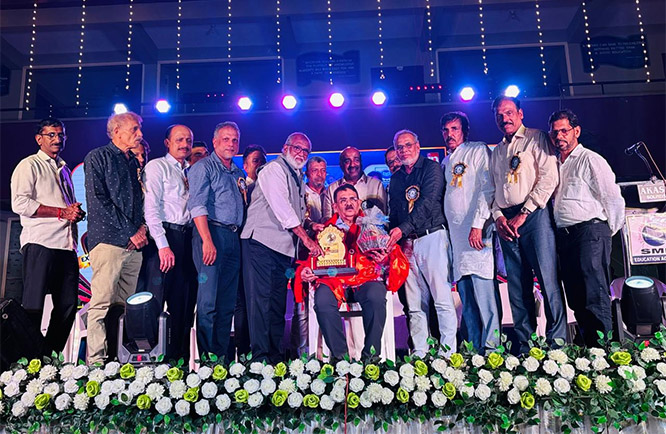
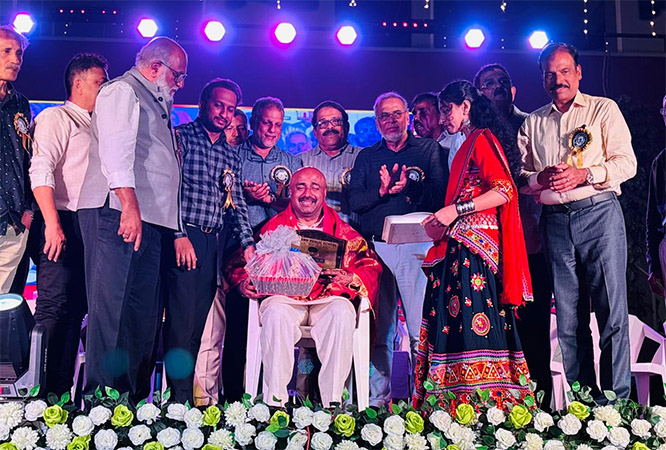
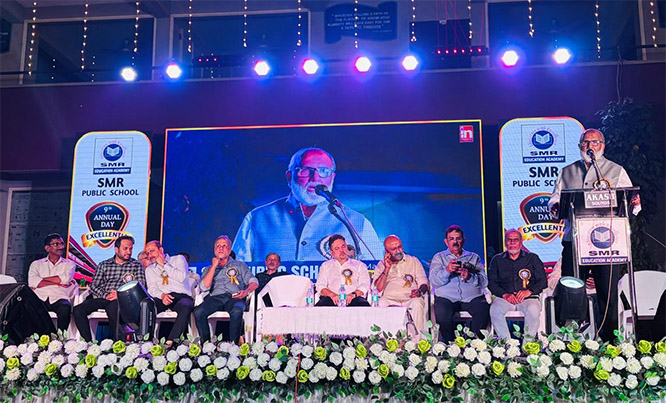
Melkar (Bantwal): The 9th Annual Day celebration of SMR Public School, titled “EXCELLENTIA”, was held on December 15 with great enthusiasm and dignity, marking a significant milestone in the institution’s journey towards academic excellence and holistic development.

The programme was inaugurated by Dr. U. T. Iftikar Ali. The chief guests were Dr. Akhtar Hussain, Mr. P. Moosabba Beary, Mr. Zakaria Jokattre, and Dr. T. M. Abdul Rahuf—whose inspiring addresses motivated the students and appreciated the school’s contributions to education.

Mr. Abdul Nasir, Mr. Ibrahim Gadiyar, Mr. Razak Golthamajal, Mr. Sali Koya, Mr. Arshad Hussain, Mr. Ismail Balanoor, Mr. Feroz Bawa, Mr. Sahul Hameed, Mr. Abubakkar, Mr. Hameed K. Mani, Mr. Abdul Majeed (Principal, Melkar Women’s College), and Mr. Abdul Lathief (Former Principal, Melkar Women’s College) were the guests of honour.

The Annual Report was presented by the Headmistress, Ms. Fathimathul Zaheera, highlighting the school’s achievements and progress during the academic year. The Presidential Address was delivered by the Chairman of SMR Public School, Dr. Haji S. M. Rasheed, who emphasised the vital role of education in shaping students’ futures and stressed the importance of discipline, dedication, and consistent effort in achieving 100 per cent academic results.

Secretary of SMR Public School, Mr. Rifath Ahmed, and PTA President, Mr. Sandeep Kumar, were also present on the occasion.

The Annual Day celebration showcased the collective efforts of students and teachers and reaffirmed the school’s commitment to quality education and all-round development. The programme concluded with a vote of thanks, expressing gratitude to all dignitaries, parents, and well-wishers for their support. The 9th Annual Day—EXCELLENTIA—was a memorable and successful event, leaving a lasting impression on everyone present. 

SMR3.jpg

SMR2.jpg

Comments

Add new comment

  • Coastaldigest.com reserves the right to delete or block any comments.
  • Coastaldigset.com is not responsible for its readers’ comments.
  • Comments that are abusive, incendiary or irrelevant are strictly prohibited.
  • Please use a genuine email ID and provide your name to avoid reject.
News Network
December 15,2025

Mangaluru, Dec 15: Educational institutions in Mangaluru that rely on the popular Mangala Stadium for their annual sports events are bracing for an inconvenience as the city's key sporting venue is set to close its gates for a significant upgrade. The stadium is expected to be unavailable for approximately two months starting from January 15, 2026.

The closure is necessitated by a proposed overhaul of the stadium's facilities, with a special focus on upgrading the synthetic track. Pradeep Dsouza, Assistant Director of the District of Youth Empowerment and Sports (DYES), Dakshina Kannada, confirmed the development.

"Experts have visited the stadium, conducted a thorough inspection, and have given the go-ahead for a complete makeover," Dsouza stated. "Funds have been allocated for the project, and we are currently awaiting the final green signal from state officials to commence the work. We anticipate that the work will likely begin in the second week of January. Consequently, we have stopped renting out the stadium to colleges and other organizations in preparation for the upgrade."

The timing presents a logistical challenge for colleges, as many schools have already concluded their sports meets.

"Colleges will now be organizing their events and will need to find alternative locations to host their sports meets," Dsouza added. He suggested a few potential venues, including the Dakshina Kannada police ground, University College grounds, Panambur grounds, Swaraj Maidan in Moodbidri, and the Mangalore University sports grounds in Konaje.

However, many institutions note that finding a comparable venue will be difficult. While the DK police ground and University College grounds are closer to the city center, they do not possess the extensive facilities and infrastructure offered by Mangala Stadium.

Dr. P Dayananda Pai - P Satisha Govt First Grade College, Carstreet, is one such institution dependent on the stadium. Principal Jayakar Bhandary expressed hope for a swift completion of the work. "We expect the work to be completed at the earliest. If not, we will be forced to look for other venues to host the sports day for our students," Bhandary said, highlighting the pressing need for the city's main sporting facility.

Comments

Add new comment

  • Coastaldigest.com reserves the right to delete or block any comments.
  • Coastaldigset.com is not responsible for its readers’ comments.
  • Comments that are abusive, incendiary or irrelevant are strictly prohibited.
  • Please use a genuine email ID and provide your name to avoid reject.