



Saudi Arabia gives $31 billion aid to 78 countries, Yemen tops list

Arab News
June 22, 2018

Jeddah, Jun 22: Since the foundation of Saudi Arabia, its wealth has not been limited to its citizens but has been spread throughout most of the world.

It has provided humanitarian aid, charitable grants and soft loans to countries regardless of color or race. The Kingdom has always been one of world’s top providers of aid.

To highlight the Kingdom’s effort internationally and to preserve its right to give in the same way as the major donor countries, King Salman issued a royal decree, under the guidance of the King Salman Humanitarian Aid and Relief Centre (KSRelief), to establish a database of Saudi aid, including the Kingdom’s humanitarian assistance in coordination with the relevant authorities.

The center worked on the design and prepared the platform for the registration of humanitarian, development and philanthropic projects and contributions based on international standards in the registration and documentation of the Development Assistance Committee of the Organization for Economic Cooperation and Development (DAC-OECD), and the UN's Financial Tracking Service (UNFTS) and the International Aid Transparency Initiative (IATI).

Saudi aid is in cash and in-kind  assistance, provided in humanitarian and charitable grants and soft loans to promote development. The aid data also includes payments and subsequent financial commitments.

Saudi donors have been trained to provide and classify the aid in three phases: The first 10 years (2007-2017) — the current phase — the second phase (1996-2006) and the third phase, which includes the rest of the assistance provided since the establishment of the Kingdom.

The Kingdom has a long history in a variety of sectors and fields, where it is called the Kingdom of Humanity and its name is associated with issues that call for peace and giving.

The Kingdom’s humanitarian tenders in accordance with the official Saudi Aid Platform in its current phase (2007-2017) has reached a total of $32.83 billion.

The number of the Kingdom’s humanitarian, development and philanthropic projects reached 1,084, with a total of $31.90 billion for 78 benefiting countries.

The financial contributions to international organizations and entities included (489) contributions totaling $929,711,258 to 37 beneficiaries. Development aid amounted to $493.88 billion and humanitarian aid to $353.440 billion, while philanthropic aid reached $82.381 billion.

The top five recipient countries of aid from Saudi Arabia are: Yemen, with a total of $14 billion for 290 projects, followed by Syria with a total of $3 billion/153 projects, Egypt was ranked third with a total of $2 billion/20 projects, while Niger was ranked fourth with a total of $1.230 billion/7 projects and Mauritania was ranked fifth with 14 projects and a total of $1.219 million.

The top five beneficiaries of the Kingdom were the UN with 45 contributions totaling $303.37 million, the General Secretariat of the Cooperation Council for the Arab States of the Gulf with 23 contributions totaling $225.849 million, the League of Arab States with 28 contributions totaling $140.810 million, the UN Development Program with 24 contributions totaling $80.200 million and the Organization of Islamic Cooperation with 21 contributions totaling $48.395 million.

The official public statistics of Saudi humanitarian, development and philanthropic projects to serve the continents and regions worldwide have reached more than $21.165 billion in Asia, $9.810 billion in Africa, $379 million in Europe, $376 million in North America and $170 million in Europe and Central Asia.

The number of partners was 192, the number of sectors was 20 and Saudi donors amounted to 10 entities, where the value of development aid amounted to $21 billion, humanitarian aid was $21 billion, while philanthropic donations amounted to $39 billion.

The top 10 projects have reached the highest level by sector, including humanitarian aid relief aid in emergency cases by 69 percent for 716 projects, transportation with 73 projects, religious and social philanthropic activities with 62 projects, education with 60 projects, health with 42 projects, water and public health with 29 projects, power generation and supply with 20 projects in addition to other projects.

Comments

Add new comment

  • Coastaldigest.com reserves the right to delete or block any comments.
  • Coastaldigset.com is not responsible for its readers’ comments.
  • Comments that are abusive, incendiary or irrelevant are strictly prohibited.
  • Please use a genuine email ID and provide your name to avoid reject.
News Network
February 1,2026

US President Donald Trump on Saturday claimed that the government of India led by Prime Minister Narendra Modi has made a deal to buy Venezuelan oil, as opposed to purchasing it from Iran.

"We've already made that deal, the concept of the deal," he told reporters on Air Force One.

Trump had imposed 25% tariffs on countries buying Venezuelan oil, including India, in March 2025. He had also hit India with tariffs for buying Russian oil, saying it was "funding" President Vladimir Putin's war against Ukraine.

Trump has said that the US has taken control of the oil-rich Venezuela after capturing former President Nicolas Maduro in January.

A fleet of 18 ships loaded with crude oil bound for refineries in Texas, Louisiana, and Mississippi in January, the most since December 2024, according to a report by the news agency Bloomberg.

Combined crude deliveries to the US will reach about 2,75,000 barrels a day, more than doubling volumes seen in December last year. Shipments to China, which averaged 4,00,000 barrels a day last year, fell to zero in January.

PM Modi, Venezuelan President Agree To Expand Ties

Prime Minister Narendra Modi and Venezuela's acting President Delcy Rodriguez spoke on Friday and agreed to take the bilateral relations to "new heights" in the years ahead.

It was the first phone call between the two leaders since the capture of Maduro and his wife by the US on January 3.

"Spoke with Acting President of Venezuela, Ms. Delcy Rodriguez. We agreed to further deepen and expand our bilateral partnership in all areas, with a shared vision of taking India-Venezuela relations to new heights in the years ahead," PM Modi said in a post on X.

A statement from Prime Minister Modi's office said the two leaders agreed to further expand and deepen the India-Venezuela partnership in all areas, including trade and investment, energy, digital technology, health, agriculture, and people-to-people ties.

They exchanged views on various regional and global issues of mutual interest and underscored the importance of their close cooperation for the Global South, the statement said.

Rodriguez also said that they discussed partnerships in the fields of agriculture, science and technology, mining, and tourism, as well as the pharmaceutical and automotive industries.

Comments

Add new comment

  • Coastaldigest.com reserves the right to delete or block any comments.
  • Coastaldigset.com is not responsible for its readers’ comments.
  • Comments that are abusive, incendiary or irrelevant are strictly prohibited.
  • Please use a genuine email ID and provide your name to avoid reject.
News Network
February 3,2026

wind.jpg

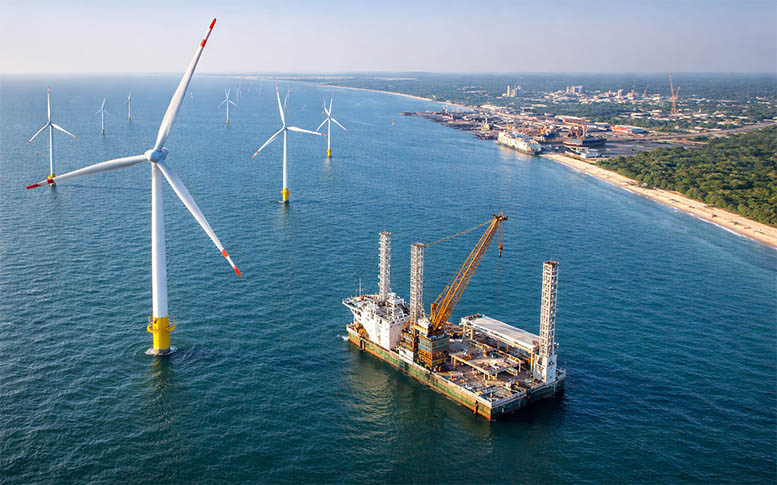
Dakshina Kannada MP Capt Brijesh Chowta has urged the Centre to give high priority to offshore wind energy generation along the Mangaluru coast, citing its strategic importance to India’s green energy and port-led development goals.

Raising the issue in the Lok Sabha under Rule 377, Chowta said studies by the National Institute of Oceanography have identified the Mangaluru coastline as part of India’s promising offshore wind ‘Zone-2’, covering nearly 6,490 sq km. He noted that the region’s relatively low exposure to cyclones and earthquakes makes it suitable for long-term offshore wind projects and called for its development as a dedicated offshore wind energy zone.

Highlighting the role of New Mangalore Port, Chowta said its modern infrastructure, multiple berths and heavy cargo-handling capacity position it well as a logistics hub for transporting and assembling large wind energy equipment.

He also pointed to the presence of major industrial units such as MRPL, OMPL, UPCL and the Mangaluru SEZ, which could serve as direct buyers of green power through power purchase agreements, improving project viability and speeding up execution.

With Karnataka’s peak power demand crossing 18,000 MW in early 2025, Chowta stressed the need to diversify renewable energy sources. He added that offshore wind projects in the Arabian Sea are strategically safer compared to the cyclone-prone Bay of Bengal.

Calling the project vital to India’s target of 500 GW of renewable energy by 2030, Chowta urged the Ministry of New and Renewable Energy to initiate resource assessments, pilot projects and stakeholder consultations at the earliest.

Comments

Add new comment

  • Coastaldigest.com reserves the right to delete or block any comments.
  • Coastaldigset.com is not responsible for its readers’ comments.
  • Comments that are abusive, incendiary or irrelevant are strictly prohibited.
  • Please use a genuine email ID and provide your name to avoid reject.
News Network
January 23,2026

Mangaluru: The Karnataka Government Polytechnic (KPT), Mangaluru, has achieved autonomous status from the All India Council for Technical Education (AICTE), becoming the first government polytechnic in the country to receive such recognition in its 78-year history. The status was granted by AICTE, New Delhi, and subsequently approved by the Karnataka Board of Technical Education in October last year.

Officials said the autonomy was conferred a few months ago. Until recently, AICTE extended autonomous status only to engineering colleges, excluding diploma institutions. However, with a renewed national focus on skill development, several government polytechnics across India have now been granted autonomy.

KPT, the second-largest polytechnic in Karnataka, was established in 1946 with four branches and has since expanded to offer eight diploma programmes, including computer science and polymer technology. The institution is spread across a 19-acre campus.

Ravindra M Keni, the first dean of the institution, told The Times of India that AICTE had proposed autonomous status for polytechnic institutions that are over 25 years old. “Many colleges applied. In the first round, 100 institutions were shortlisted, which was further narrowed down to 15 in the second round. We have already completed one semester after becoming an autonomous institution,” he said. He added that nearly 500 students are admitted annually across eight three-year diploma courses.

Explaining the factors that helped KPT secure autonomy, Keni said the institution has consistently recorded 100 per cent admissions and placements for its graduates. He also noted its strong performance in sports, with the college emerging champions for 12 consecutive years, along with active student participation in NCC and NSS activities.

Autonomous status allows KPT to design industry-oriented curricula, conduct examinations, prepare question papers, and manage academic documentation independently. The institution can also directly collaborate with industries and receive priority funding from AICTE or the Ministry of Education. While academic autonomy has been granted, financial control will continue to rest with the state government.

“There will be separate committees for examinations, question paper setting, boards of studies, and boards of examiners. The institution will now have the freedom to conduct admissions without government notifications and issue its own marks cards,” Keni said, adding that new academic initiatives would be planned after a year of functioning under the autonomous framework.

Comments

Add new comment

  • Coastaldigest.com reserves the right to delete or block any comments.
  • Coastaldigset.com is not responsible for its readers’ comments.
  • Comments that are abusive, incendiary or irrelevant are strictly prohibited.
  • Please use a genuine email ID and provide your name to avoid reject.