Saudi's oil refinery in Gwadar threatens Iran, China

Agencies
October 9, 2018

Hong Kong, Oct 9: Pakistan's latest announcement about Saudi Arabia's investment in an oil refinery at the port city of Gwadar has set alarm bells ringing in the international arena.

A Zerohedge article claims that Pakistan's move comes from a "desperate" need for funding to ward off a financial crisis stoked by growing debt to China.

The column, written by James Dorsey on Mid East Soccer blog, claims that Saudi's oil refinery in Gwadar Port could threaten Iran's India-backed Chabahar Port, making China(and Pakistan) a part of an "all but open war" between Iran and Saudi Arabia.

The Saudis may invest up to USD 10 billion dollars in the region. The deal could additionally involve deferred payments on Saudi oil supplies which will firstly, create a strategic oil reserve close to Iran, and secondly, help cash-strapped Pakistan in payments.

The Zerohedge article further stated that Pakistan will be forced to seek a USD 12 billion bailout from International Monetary Fund (IMF) if government expenditure is not brought under control -- a fact that Prime Minister Imran Khan-led Pakistan has taken note of.

Islamabad's first step to curb the spending spree came in September, as funds for road projects, which are a part of CPEC's Western route that connects Balochistan with China's troubled region of Xinjiang, were not sanctioned in time. The very same road project was already grappling with delays in approval from China, with Pakistan's move bringing progress to a standstill.

Furthermore, Pakistan's Railways Minister Sheikh Rashid cut USD 2 billion dollars from a USD 8.2 billion project that aims to upgrade and expand Pakistan's railway network, a significant part of CPEC.

The article quoted Rashid who said, "Pakistan is a poor country that cannot afford huge burden of the loans. CPEC is like the backbone for Pakistan, but our eyes and ears are open."

Islamabad's latest move was inviting the oil-rich Saudi for investments in the Gwadarrefinery and mines in Balochistan. The fact that Pakistan officials denied suggestions that the Gulf country would join the CPEC was an indication to China's apprehensions with the deal.

During campaigning for the General Elections in the country, the Pakistan Tehreek-e-Insaf (PTI) had likened the CPEC to "a modern-day equivalent of the British East IndiaCompany" which eventually led to colonisation in the South-Asian subcontinent and drained the economies of the countries colonised.

The PTI also denounced Chinese-funded transit projects in Punjab and claimed that funds, which could be used for social spending, were being squandered, while "suggesting" that the projects involved "corrupt practises".

Therefore, while the Saudi engagement eases Pakistan's financial woes, it also enables Saudi Arabia to prevent Chabahar from emerging as a powerful Arabian Sea hub.

A study published last year by the International Institute for Iranian Studies claims that Iran's Chabahar port posed "a direct threat to the Arab Gulf states" that called for "immediate countermeasures."

The study, credited to Mohammed Hassan Husseinbor, further 'warned' that the India-backed port could raise foreign investment in Iran, increase government revenues and "enable Iran to increase its oil market share in India at the expense of Saudi Arabia."
Husseinbor also suggested Saudi support for a low-level Baloch insurgency in Iran's Sistan and Baluchestan province, which would "be a formidable challenge, if not impossible, for the Iranian government to protect such long distances and secure Chabahar in the face of widespread Baluch opposition, particularly if this opposition is supported by Iran's regional adversaries and world powers."

US President Donald Trump's national security advisor John Bolton had drafted a plan last year that "envisioned US support 'for the democratic Iranian opposition' including in Balochistan and Iran's Sistan and Balochistan province."

The Saudi-Pakistan deal may potentially bear ominous implications for China, who may well be able to manage Pakistan by addressing their CPEC-related reservations, however, a Saudi-Iranian conflict will be much more complicated to deal with.

Comments

Add new comment

  • Coastaldigest.com reserves the right to delete or block any comments.
  • Coastaldigset.com is not responsible for its readers’ comments.
  • Comments that are abusive, incendiary or irrelevant are strictly prohibited.
  • Please use a genuine email ID and provide your name to avoid reject.
News Network
February 3,2026

manjeshwar.jpg

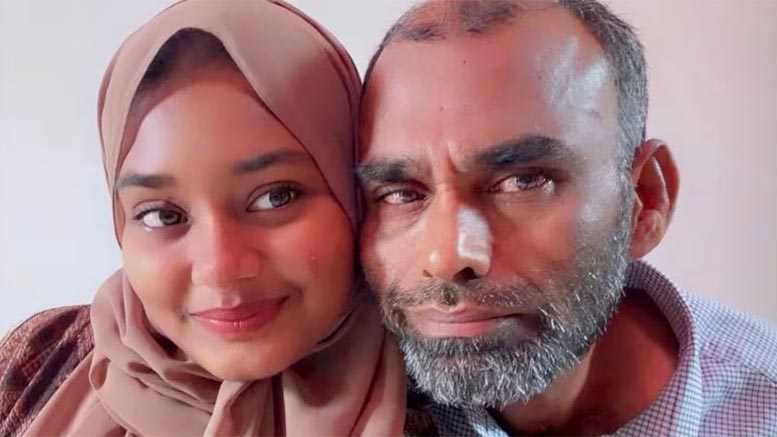
Kasaragod: An 18-year-old girl was stabbed to death at Thuminad in Manjeshwar panchayat on Monday, allegedly by her father following a domestic dispute. 

The victim has been identified as K U Mariyamath Jumaila. Her father, Umar Farooq, has been taken into police custody, Manjeshwar Station House Officer Inspector Ajith Kumar P said.

According to the police, Umar Farooq had been working in a West Asian country and returned home about three months ago. 

Family tensions reportedly escalated after his wife, Thahira (41), decided to seek a divorce and asked him to leave her life. Kasaragod district panchayat member Harshad Vorkady alleged that Umer was addicted to marijuana and frequently caused disturbances at home.

On Monday, Thahira asked Umar to come to her sister’s house in Thuminad to discuss the dispute. Jumaila accompanied her mother. 

Manjeshwar panchayat member Illiyas Thuminad said Umar arrived along with his brother, following which Thahira handed over gold ornaments and property documents to him and asked him to sever ties with her.

However, the police said a property dispute had been ongoing between Umar Farooq and his sister-in-law’s husband. During a heated argument, Umar allegedly attempted to attack the man with a sharp weapon. When Jumaila intervened to stop the assault, she was stabbed in the neck.

The teenager collapsed after bleeding profusely and was rushed to a private hospital in Mangaluru, where doctors declared her dead. Her body was later shifted to Mangalpady Taluk Hospital for post-mortem examination.

Jumaila was a former student of Sirajul Huda English Medium Higher Secondary School, Manjeshwar. 

Comments

Add new comment

  • Coastaldigest.com reserves the right to delete or block any comments.
  • Coastaldigset.com is not responsible for its readers’ comments.
  • Comments that are abusive, incendiary or irrelevant are strictly prohibited.
  • Please use a genuine email ID and provide your name to avoid reject.
News Network
January 23,2026

Karnataka Governor Thaawarchand Gehlot read only three lines from the 122-paragraph address prepared by the Congress-led state government while addressing the joint session of the Legislature on Thursday, effectively bypassing large sections critical of the BJP-led Union government.

The omitted portions of the customary Governor’s address outlined what the state government described as a “suppressive situation in economic and policy matters” under India’s federal framework. The speech also sharply criticised the Centre’s move to replace the Mahatma Gandhi National Rural Employment Guarantee Act (MGNREGA) with the Viksit Bharat–Guarantee for Rozgar and Ajeevika Mission (Gramin) Act, commonly referred to as the VB-GRAM (G) Act.

Governor Gehlot had earlier conveyed his objection to several paragraphs that were explicitly critical of the Union government. On Thursday, he confined himself to the opening lines — “I extend a warm welcome to all of you to the joint session of the State legislature. I am extremely pleased to address this august House” — before jumping directly to the concluding sentence of the final paragraph.

He ended the address by reading the last line of paragraph 122: “Overall, my government is firmly committed to doubling the pace of the State’s economic, social and physical development. Jai Hind — Jai Karnataka.”

According to the prepared speech, the Karnataka government demanded the scrapping of the VB-GRAM (G) Act, describing it as “contractor-centric” and detrimental to rural livelihoods, and called for the full restoration of MGNREGA. The state government argued that the new law undermines decentralisation, weakens labour protections, and centralises decision-making in violation of constitutional norms.

Key points from the unread sections of the speech:

•    Karnataka facing a “suppressive” economic and policy environment within the federal system

•    Repeal of MGNREGA described as a blow to rural livelihoods

•    VB-GRAM (G) Act accused of protecting corporate and contractor interests

•    New law alleged to weaken decentralised governance

•    Decision-making said to be imposed by the Centre without consulting states

•    Rights of Adivasis, women, backward classes and agrarian communities curtailed

•    Labourers allegedly placed under contractor control

•    States facing mounting fiscal stress due to central policies

•    VB-GRAM (G) Act accused of enabling large-scale corruption

Comments

Add new comment

  • Coastaldigest.com reserves the right to delete or block any comments.
  • Coastaldigset.com is not responsible for its readers’ comments.
  • Comments that are abusive, incendiary or irrelevant are strictly prohibited.
  • Please use a genuine email ID and provide your name to avoid reject.
News Network
January 23,2026

modIKERALA.jpg

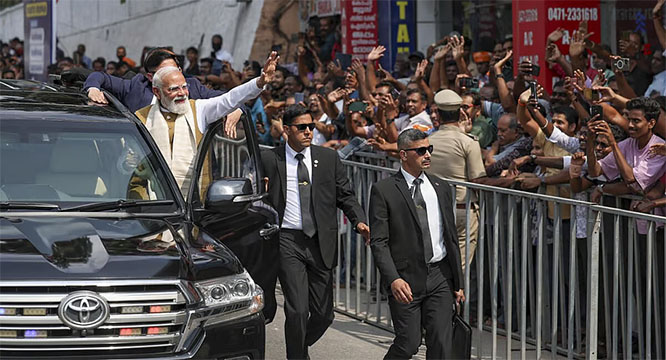
Prime Minister Narendra Modi, during his visit to Thiruvananthapuram on Friday, January 23, indicated that the Bharatiya Janata Party (BJP) is aiming to expand its political footprint in Kerala ahead of the Assembly elections scheduled in the coming months.

Speaking at a BJP-organised public meeting, Modi drew parallels between the party’s early electoral gains in Gujarat and its recent victory in the Thiruvananthapuram Municipal Corporation. The civic body win, which ended decades of Left control, was cited by the Prime Minister as a possible starting point for the party’s broader ambitions in the state.

Recalling BJP’s political trajectory in Gujarat, Modi said the party was largely insignificant before 1987 and received little media attention. He pointed out that the BJP’s first major breakthrough came with its victory in the Ahmedabad Municipal Corporation that year.

“Just as our journey in Gujarat began with one city, Kerala’s journey has also started with a single city,” Modi said, suggesting that the party’s municipal-level success could translate into wider electoral acceptance.

The Prime Minister alleged that successive governments led by the Left Democratic Front (LDF) and the United Democratic Front (UDF) had failed to adequately develop Thiruvananthapuram. He accused both fronts of corruption and neglect, claiming that basic infrastructure and facilities were denied to the capital city for decades.

According to Modi, the BJP’s control of the civic body represents a shift driven by public dissatisfaction with the existing political alternatives. He asserted that the BJP administration in Thiruvananthapuram had begun working towards development, though no specific details or timelines were outlined.

Addressing the gathering at Putharikandam Maidan, Modi said the BJP intended to project Thiruvananthapuram as a “model city,” reiterating his party’s commitment to governance-led change.

The Prime Minister’s visit to Kerala also included the inauguration of several development projects and the flagging off of new train services, as the BJP intensifies its political outreach in the poll-bound state.

Comments

Add new comment

  • Coastaldigest.com reserves the right to delete or block any comments.
  • Coastaldigset.com is not responsible for its readers’ comments.
  • Comments that are abusive, incendiary or irrelevant are strictly prohibited.
  • Please use a genuine email ID and provide your name to avoid reject.