



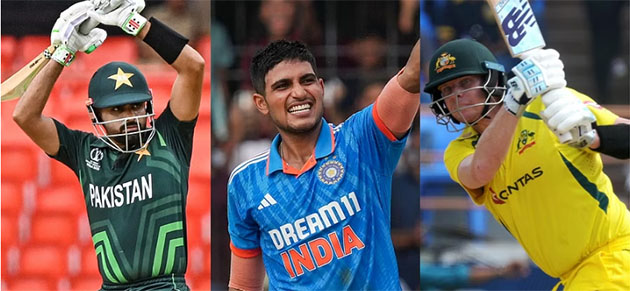
The stage is ready for the most coveted prize in the world of cricket – the ICC ODI World Cup 2023, a tournament every cricket-playing nation aspires to win. Ten teams are in contention to compete for the prestigious title.
On this grandest stage of cricket, only a few players from these nations will stand out from the rest with their performances for their team’s campaign. We have the dependable veterans who have proven themselves time and again, and alongside them, a handful of emerging talents who are poised to make a significant impact.
When it comes to playing on batting-friendly pitches in India, it's the skillful batsmen who are expected to shine on a grander scale. The following are five batters to watch at the World Cup in India:
Ben Stokes (England)
The talismanic all-rounder came out of ODI retirement in August and has already fired a warning to title rivals after smashing 182 runs - England's highest individual score in the format - against New Zealand last month.
Stokes, the architect of England's first World Cup triumph in 2019 and who starred in last year's title run at the T20 World Cup, has operated as a specialist batter since his return.
Stokes' ODI average of 40.50 is his highest in all three formats and his 96-plus strike rate makes him an explosive weapon in the middle order.
Shubman Gill (India)
Gill has been in stellar form and moved up to a career-high world number two in the ODI rankings having scored 1,230 runs in 20 matches this year.
The 24-year-old was the leading scorer at the recent Asia Cup as India won their eighth title and his partnership with captain Rohit Sharma will again be crucial, with the World Cup hosts looking to repeat their 2011 success by lifting the trophy on home soil.
Gill is among the handful of batters with a century in each format of the international game, which includes a double hundred against New Zealand in an ODI earlier this year.
Babar Azam (Pakistan)
Despite a lacklusture Asia Cup campaign, the top-ranked ODI batter remains a crucial anchor in Pakistan's top order as they aim to bounce back from recent disappointments.
Fast bowler Naseem Shah's absence due to injury could hamper Pakistan's World Cup campaign but Babar's brilliance with the bat means they are capable of posting imposing totals and remain a formidable team.
The graceful right-hander averages 58.16 in ODIs and has the ability to score freely despite not being a natural power-hitter.
Steve Smith (Australia)
The 34-year-old was included in the World Cup squad despite still recovering from a wrist injury sustained during the Ashes. After scoring 41 and falling for a golden duck on his return to action in the first two ODIs against India, he hit 74 in the third as Australia snapped a five-match losing run.
With opener Travis Head's injury adding to Australia's long list of concerns before the tournament, a return to form for Smith would be key to their hopes of challenging for a sixth title.
Kane Williamson (New Zealand)
The 33-year-old Black Caps skipper returned to action in this week's World Cup warm-up games against Pakistan, having ruptured his anterior cruciate ligament (ACL) during the Indian Premier League in March.
He will miss the opening game against England on Oct. 5 as he continues his recovery.
Williamson was named player of the tournament in 2019 after New Zealand's agonising loss to England in the final and is set to feature at his fourth World Cup. Having scored more than 6,500 runs in the format, his return to the crease will be a huge boost.

Comments
Add new comment