



Sri Lanka: Terror death toll rises to 290, about 500 injured

Agencies
April 22, 2019

Colombo, Apr 22: At least 290 are now known to have died in a series of bomb blasts that tore through churches and luxury hotels in Sri Lanka, in the worst violence to hit the island since its devastating civil war ended a decade ago.

Eight apparently co-ordinated explosions targeted Easter worshippers and high end hotels popular with international guests.

The horrific death toll, which has risen dramatically overnight, was given on Monday morning by a police spokesman, who said a further 500 people had been wounded.

The news came hours after it was revealed that an improvised bomb discovered at the main airport in Colombo had been defused.

A nationwide curfew imposed shortly after the blasts was lifted early Monday. There was still a heavy security presence at the city's St Sebastien's Church, the scene of one of the devastating blasts.

President Maithripala Sirisena, who was abroad when the attacks happened, had called a meeting of the National Security Council early on Monday. Prime Minister Ranil Wickremesinghe would attend the meeting, the source said.

Sri Lanka's small Christian minority — just six percent of the 21 million-strong population — has been targeted by violence in the past, but never to such brutal effect.

There was no immediate claim of responsibility, but police said on Monday 24 people had been arrested. The government earlier said investigators would to look into whether the attackers had "overseas links".

The powerful blasts — six in quick succession and then two more hours later — wounded around 450 people.

At least two of the explosions involved suicide bombers, including one who lined up at a hotel breakfast buffet before unleashing carnage.

Six Indians killed in blasts

The police said on Monday that at least six Indian nationals have been reported among the foreigners who died in the blasts.

External affairs minister Sushma Swaraj on Monday identified two more individuals killed in the blasts on Sunday.

"We sadly confirm the deaths of the following two individuals in the blasts yesterday, K G Hanumantharayappa and M Rangappa," Swaraj retweetd Indian High Commission in Colombo's tweet.

On Sunday, Swaraj, in a series of tweets, identified the three Indians as Lakshmi, Narayan Chandrashekhar and Ramesh.

"Indian High Commission in Colombo has conveyed that National Hospital has informed them about the death of three Indian nationals," she said in a tweet.

Intel on attacks

Sri Lanka's police chief Pujuth Jayasundara had issued an intelligence alert to top officers 10 days ago, warning that suicide bombers planned to hit "prominent churches".

"A foreign intelligence agency has reported that the NTJ (National Thowheeth Jama'ath) is planning to carry out suicide attacks targeting prominent churches as well as the Indian high commission in Colombo," the alert said.

The NTJ is a radical Muslim group in Sri Lanka that was linked last year to the vandalisation of Buddhist statues.

Prime Minister Ranil Wickremesinghe acknowledged that "information was there" about possible attacks and that an investigation would look into "why adequate precautions were not taken".

Ethnic and religious violence has plagued Sri Lanka for decades, with a 37-year conflict with Tamil rebels followed by an upswing in recent years in clashes between the Buddhist majority and Muslims.

Embassies in the capital warned citizens to stay inside, while there were chaotic scenes at Colombo airport as travellers formed huge lines at the only taxi counter that was open.

Sri Lankans anxious over what's to come

Bhanuka Harischandra was running a little late for his meeting on Sunday.

As a car carrying him pulled into the back entrance of the luxury Shangri-La Hotel in Sri Lanka's capital of Colombo, he realized something was wrong.

People were telling him not to come in, it wasn't safe. Still, the car pulled around to the front of the hotel and Harischandra saw the aftermath of a bombing. People were being evacuated, others were being dragged. Blood and ambulances were everywhere.

"It was panic mode," Harischandra, a 24-year-old founder of a tech marketing company, said by telephone later in the day. "I didn't process it for a while."

He decided to go to the Cinnamon Grand Hotel, where he thought it would be safe. But just after he was dropped at the luxury hotel and about to enter the building, he heard another bomb go off.

Now he was being evacuated. Soot and ash fell on his white sweat shirt.

His car had left, so he hailed a motorized rickshaw and went to meet friends at a coffee shop. They contacted other friends, trying to make sure everyone they knew was safe.

It was too soon to think about what it might mean.

Over the course of the day, a series of bombs exploded, including at churches and luxury hotels, killing more at least 290 people. The Easter Sunday violence was the deadliest the South Asian island country has seen since a bloody civil war ended a decade ago.

Many Sri Lankans remember well the terror of the 26-year war. But not Harischandra, who was just a teenager when it officially ended. Toward the end, the conflict was not in Colombo. Growing up, he was mostly aware of his parents' anxiety about safety, not of actual fighting.

Now their anxiety is back.

"For them, it's a bit of a different situation," he said. "They're afraid this might start racial violence."

On Sunday night, he was with his family, observing a curfew. He said there was "a lot of tension" in the air, but he was also hoping that the worst might be over: It had been a few hours since the last blast.

Harischandra was heartened by the fact that his social media feed was flooded with photos of the lines of people waiting to give blood. Lines so long "you can't see the end."

Comments

Add new comment

  • Coastaldigest.com reserves the right to delete or block any comments.
  • Coastaldigset.com is not responsible for its readers’ comments.
  • Comments that are abusive, incendiary or irrelevant are strictly prohibited.
  • Please use a genuine email ID and provide your name to avoid reject.
News Network
January 31,2026

files.jpg

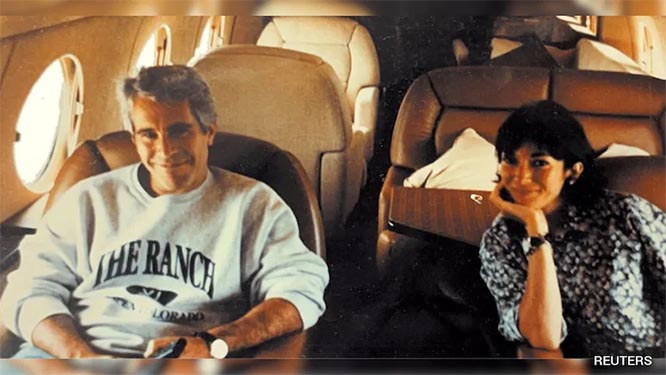
A fresh cache of files related to the investigation into the late convicted sex offender Jeffrey Epstein contains documents that reference President Donald Trump and other high-profile figures including Microsoft co-founder Bill Gates, Commerce Secretary Howard Lutnick and British billionaire Richard Branson.

Here are key details about mentions of the celebrities, none of whom have been accused of wrongdoing:

Donald Trump

The files included an FBI-compiled list of sexual assault allegations related to President Donald Trump -- many of them involving anonymous callers and unverified tips.

The allegations -- some secondhand -- were sent to the FBI's National Threat Operations Center which receives information by phone and electronically.

The document suggests that investigators followed up on a number of the tips. Some were deemed to lack credibility.

Trump has long denied any wrongdoing related to Epstein.

In a statement accompanying Friday's file dump, the Justice Department said: "Some of the documents contain untrue and sensationalist claims against President Trump that were submitted to the FBI right before the 2020 election. To be clear, the claims are unfounded and false."

Bill Gates

In a draft email among the documents, Epstein alleged Gates had engaged in extramarital affairs.

In the mail, Epstein wrote that his relationship with Gates had ranged from "helping Bill to get drugs, in order to deal with consequences of sex with russian girls, to facilitating his illicit trysts, with married women."

Richard Branson

Files show friendly relations between the two billionaires.

In an email sent to Epstein on Sept 11, 2013, Branson wrote "It was really nice seeing you yesterday. The boys in Watersports can't stop speaking about it! Any time you're in the area would love to see you. As long as you bring your harem!"

Elon Musk

The files contain numerous mail exchanges between Epstein and billionaire entrepreneur Elon Musk.

In November 2012, Epstein sent Musk an email asking "how many people will you be for the heli to island."

"Probably just Talulah and me. What day/night will be the wildest party on your island?" Musk replied.

Andrew Mountbatten-Windsor

The disgraced former prince invited Epstein to visit him at Buckingham Palace in September 2010 while the financier was making a trip to London.

An email exchange shows Epstein contacting Andrew to ask: "What time would you like me... we will also need... private time."

Andrew replied: "we could have dinner at Buckingham Palace and lots of privacy."

Howard Lutnick

Emails show that Epstein and businessman Lutnick -- currently Trump's commerce secretary -- made plans in December 2012 to lunch on Epstein's Caribbean island.

"We are heading towards you from St. Thomas" Lutnick's wife wrote to Epstein's secretary, asking where they should anchor.

Steve Tisch

Several mails suggested Epstein connected Steve Tisch, 76, producer of the movies "Forrest Gump" and "Risky Business" and the co-owner of the New York Giants football team, with multiple women.

In one exchange with Tisch, Epstein describes a woman as "russian, and rarely tells the full truth, but fun."

Zohran Mamdani's Mother, Filmmaker Mira Nair 

New York City Mayor Zohran Mamdani's mother, Mira Nair, attended an afterparty at convicted sex trafficker Ghislaine Maxwell's house for her 2009 film "Amelia", reveals a new set of Epstein files.

An email dated October 21, 2009, sent by publicist Peggy Siegal to Jeffrey Epstein, also surfaced in documents. The email, sent in the early hours, right after Siegal left the gathering, gives an insight into the afterparty. 

The party was also attended by former President Bill Clinton and Amazon CEO Jeff Bezos.

"Just left Ghislaine's townhouse...after party for film. Bill Clinton and Jeff Bezos were there...Jean Pigoni, director Mira Nair....etc," the email read.

The email described the reaction of guests to Nair's film as "tepid."

"Film received tepid reaction although women like it much more...Hillary Swank and Gen: at stupid party in Bloomingdales cheap sportwear department....very weird. Studio went for free party from store and windows for a month....Going to be in Wall Street 2 tomorrow ....more to come. xoxo Peg," the email read.

Comments

Add new comment

  • Coastaldigest.com reserves the right to delete or block any comments.
  • Coastaldigset.com is not responsible for its readers’ comments.
  • Comments that are abusive, incendiary or irrelevant are strictly prohibited.
  • Please use a genuine email ID and provide your name to avoid reject.
News Network
February 1,2026

Bengaluru: Karnataka Deputy Chief Minister D K Shivakumar on Sunday criticised the Union Budget presented by Finance Minister Nirmala Sitharaman, claiming it offered no tangible benefit to the state.

Though he said he was yet to study the budget in detail, Shivakumar asserted that Karnataka had gained little from it. “There is no benefit for our state from the central budget. I was observing it. They have now named a programme after Mahatma Gandhi, after repealing the MGNREGA Act that was named after him,” he said.

Speaking to reporters here, the Deputy Chief Minister demanded the restoration of MGNREGA, and made it clear that the newly enacted rural employment scheme — VB-G RAM G — which proposes a 60:40 fund-sharing formula between the Centre and the states, would not be implemented in Karnataka.

“I don’t see any major share for our state in this budget,” he added.

Shivakumar, who also holds charge of Bengaluru development, said there were high expectations for the city from the Union Budget. “The Prime Minister calls Bengaluru a ‘global city’, but what has the Centre done for it?” he asked.

He also drew attention to the problems faced by sugar factories, particularly those in the cooperative sector, alleging a lack of timely decisions and support from the central government.

Noting that the Centre has the authority to fix the minimum support price (MSP) for agricultural produce, Shivakumar said the Union government must take concrete steps to protect farmers’ interests.

Comments

Add new comment

  • Coastaldigest.com reserves the right to delete or block any comments.
  • Coastaldigset.com is not responsible for its readers’ comments.
  • Comments that are abusive, incendiary or irrelevant are strictly prohibited.
  • Please use a genuine email ID and provide your name to avoid reject.
News Network
January 20,2026

iran.jpg

Iranian security and intelligence forces have captured more than 470 individuals in three provinces, identified as key figures behind the recent wave of violent unrest and terrorist activities linked to foreign-backed networks.

The Intelligence Ministry's provincial office in Khorasan Razavi announced on Monday the arrest of 192 armed terrorists, identified as the main agents behind recent riots in the region. 

According to an official statement, the detainees were involved in the killing of several security personnel and civilians, setting fire to mosques, public service facilities, and buses, as well as attacks on military and law enforcement centers.

The seized items from the group include several bulletproof vests, Kalashnikov rifles, hunting weapons, Winchester rifles, and various cold weapons such as daggers, swords, brass knuckles, tactical knives, crossbows, and chains.

Evidence indicates that some of the individuals were tied to hostile movements and terrorist organizations, with links overseas. Others were identified as members of violent criminal gangs, actively taking part in the unrest alongside their associates.

Simultaneously, in the western province of Lorestan, the IRGC announced the arrest of 134 individuals as the main leaders and influential field agents of a US-Israeli terrorist network.

The IRGC statement stated that these individuals formed terrorist cells during the recent unrest, committing "Daesh-like" acts.

They wounded security forces with firearms and cold weapons, and burned and destroyed public and private properties, including mosques, shops, banks, and private and public vehicles.

In the northwestern province of Zanjan, the police reported detaining 150 people identified as principal leaders and agents behind recent riots.

Authorities noted that these individuals were responsible for destroying public and private property and intentionally setting fire to vehicles in the province's squares.

Their crimes include shedding the blood of innocent people, destroying public and private property, attempting to enter military sites, disrupting public order, and spreading terror among citizens.

A variety of cold weapons were reportedly seized from the detainees.

What began late last month as peaceful protests over economic hardship across Iran turned violent after public statements by US and Israeli regime figures encouraged vandalism and disorder.

During the unrest, foreign-backed mercenaries rampaged through cities, killing security forces and civilians and damaging public property.

Comments

Add new comment

  • Coastaldigest.com reserves the right to delete or block any comments.
  • Coastaldigset.com is not responsible for its readers’ comments.
  • Comments that are abusive, incendiary or irrelevant are strictly prohibited.
  • Please use a genuine email ID and provide your name to avoid reject.
