Sushma Swaraj meets Saudi King, inaugurates Janadriyah festival

Agencies
February 8, 2018

Riyadh, Feb 8: External Affairs Minister Sushma Swaraj today met Saudi King Salman bin Abdulaziz who inaugurated the prestigious National Heritage and Culture Festival Janadriyah at which India is the guest of honour country.

King Salman in the presence of Swaraj inaugurated the festival which exhibits Saudi Arabias rich tapestry of culture and heritage and is organised by the National Guard.

Speaking at the inaugural function, Swaraj thanked Saudi Arabia for according the Guest of Honour status to India at the Janadriyah festival, an official statement said.

She recalled the landmark visit of Prime Minister Narendra Modi to Saudi Arabia in April 2016 which gave strong impetus to the bilateral partnership, it said.

Swaraj added that the festival provides an opportunity to showcase and further build upon this relationship, the statement said.

"Indias participation at the Janadriyah Festival provides an opportunity to showcase our strong bilateral relationship: EAM @SushmaSwaraj,", Ministry of External Affairs spokesperson Raveesh Kumar tweeted.

Showcasing the core values and traditions of India, the India Pavilion mounted on the occasion is based on the theme "Saudi ka Dost Bharat", the official statement said.

"EAM @SushmaSwaraj receives His Majesty King Salman at the India Pavilion showcasing the traditional and modern aspects of India! The Pavilion with the theme Saudi ka dost Bharat is a big draw at Janadriyah," Kumar said in another tweet.

Swaraj, who arrived here yesterday on her maiden visit to Saudi Arabia, called on King Salman here.

They discussed steps to further intensify the bilateral strategic partnership in all sectors and to work towards each others progress.

"Steps to further intensify our strategic partnership in all sectors and to work together towards each others progress came up during warm discussion," Kumar tweeted.

Earlier, Swaraj met her Saudi counterpart Adel al-Jubeir and discussed ways to enhance bilateral trade, energy, defence and security ties.

Kumar said the discussions between the two leaders focused on enhancing trade and investment, energy, defence and security, culture and people-to-people ties.

The two leaders also discussed the regional and global situation, Kumar said.

Swaraj reaffirmed Indias support to peace in the region and called for collective efforts in fighting the menace of terrorism, the statement said.

She called for taking the strategic partnership to a higher level and in a variety of sectors, it said.

Swaraj said that Indias flagship programmes including Make in India and Digital India complement well with Vision 2030 launched by Saudi Arabia and invited Saudi investments in India, it added.

A welcome sign in Hindi appreciating Indias rich cultural heritage was placed at the Foreign Ministry building where Adel Jubeir hosted a lunch in honour of Swaraj.

Last evening, Swaraj addressed Indian community members at a reception here and spoke in length about the growing relations between the two countries, Kumar said.

Swaraj thanked the Indian community for the goodwill it has earned for the country and lauded the Indian embassy for its promptness.

Saudi Arabia is home to more than 3 million Indian people and ties between the two countries are on an upswing in the last few years especially after the landmark visit of Prime Minister Narendra Modi to the Gulf Kingdom in April 2016.

Saudi Arabia is Indias fourth largest trade partner after China, the US and the UAE. The country is a major source of Indias energy requirement as it accounts for almost one- fifth of Indias crude oil requirement.

The volume of bilateral trade during 2016-17 was recorded at USD 25.079 billion, a slight decrease from the USD 26.71 billion in 2015-16.

Comments

Add new comment

  • Coastaldigest.com reserves the right to delete or block any comments.
  • Coastaldigset.com is not responsible for its readers’ comments.
  • Comments that are abusive, incendiary or irrelevant are strictly prohibited.
  • Please use a genuine email ID and provide your name to avoid reject.
News Network
January 20,2026

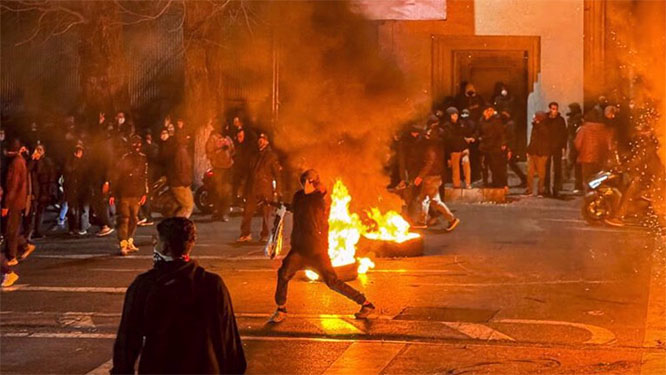
iran.jpg

Iranian security and intelligence forces have captured more than 470 individuals in three provinces, identified as key figures behind the recent wave of violent unrest and terrorist activities linked to foreign-backed networks.

The Intelligence Ministry's provincial office in Khorasan Razavi announced on Monday the arrest of 192 armed terrorists, identified as the main agents behind recent riots in the region. 

According to an official statement, the detainees were involved in the killing of several security personnel and civilians, setting fire to mosques, public service facilities, and buses, as well as attacks on military and law enforcement centers.

The seized items from the group include several bulletproof vests, Kalashnikov rifles, hunting weapons, Winchester rifles, and various cold weapons such as daggers, swords, brass knuckles, tactical knives, crossbows, and chains.

Evidence indicates that some of the individuals were tied to hostile movements and terrorist organizations, with links overseas. Others were identified as members of violent criminal gangs, actively taking part in the unrest alongside their associates.

Simultaneously, in the western province of Lorestan, the IRGC announced the arrest of 134 individuals as the main leaders and influential field agents of a US-Israeli terrorist network.

The IRGC statement stated that these individuals formed terrorist cells during the recent unrest, committing "Daesh-like" acts.

They wounded security forces with firearms and cold weapons, and burned and destroyed public and private properties, including mosques, shops, banks, and private and public vehicles.

In the northwestern province of Zanjan, the police reported detaining 150 people identified as principal leaders and agents behind recent riots.

Authorities noted that these individuals were responsible for destroying public and private property and intentionally setting fire to vehicles in the province's squares.

Their crimes include shedding the blood of innocent people, destroying public and private property, attempting to enter military sites, disrupting public order, and spreading terror among citizens.

A variety of cold weapons were reportedly seized from the detainees.

What began late last month as peaceful protests over economic hardship across Iran turned violent after public statements by US and Israeli regime figures encouraged vandalism and disorder.

During the unrest, foreign-backed mercenaries rampaged through cities, killing security forces and civilians and damaging public property.

Comments

Add new comment

  • Coastaldigest.com reserves the right to delete or block any comments.
  • Coastaldigset.com is not responsible for its readers’ comments.
  • Comments that are abusive, incendiary or irrelevant are strictly prohibited.
  • Please use a genuine email ID and provide your name to avoid reject.
News Network
January 23,2026

Mangaluru: The Karnataka Government Polytechnic (KPT), Mangaluru, has achieved autonomous status from the All India Council for Technical Education (AICTE), becoming the first government polytechnic in the country to receive such recognition in its 78-year history. The status was granted by AICTE, New Delhi, and subsequently approved by the Karnataka Board of Technical Education in October last year.

Officials said the autonomy was conferred a few months ago. Until recently, AICTE extended autonomous status only to engineering colleges, excluding diploma institutions. However, with a renewed national focus on skill development, several government polytechnics across India have now been granted autonomy.

KPT, the second-largest polytechnic in Karnataka, was established in 1946 with four branches and has since expanded to offer eight diploma programmes, including computer science and polymer technology. The institution is spread across a 19-acre campus.

Ravindra M Keni, the first dean of the institution, told The Times of India that AICTE had proposed autonomous status for polytechnic institutions that are over 25 years old. “Many colleges applied. In the first round, 100 institutions were shortlisted, which was further narrowed down to 15 in the second round. We have already completed one semester after becoming an autonomous institution,” he said. He added that nearly 500 students are admitted annually across eight three-year diploma courses.

Explaining the factors that helped KPT secure autonomy, Keni said the institution has consistently recorded 100 per cent admissions and placements for its graduates. He also noted its strong performance in sports, with the college emerging champions for 12 consecutive years, along with active student participation in NCC and NSS activities.

Autonomous status allows KPT to design industry-oriented curricula, conduct examinations, prepare question papers, and manage academic documentation independently. The institution can also directly collaborate with industries and receive priority funding from AICTE or the Ministry of Education. While academic autonomy has been granted, financial control will continue to rest with the state government.

“There will be separate committees for examinations, question paper setting, boards of studies, and boards of examiners. The institution will now have the freedom to conduct admissions without government notifications and issue its own marks cards,” Keni said, adding that new academic initiatives would be planned after a year of functioning under the autonomous framework.

Comments

Add new comment

  • Coastaldigest.com reserves the right to delete or block any comments.
  • Coastaldigset.com is not responsible for its readers’ comments.
  • Comments that are abusive, incendiary or irrelevant are strictly prohibited.
  • Please use a genuine email ID and provide your name to avoid reject.
News Network
February 3,2026

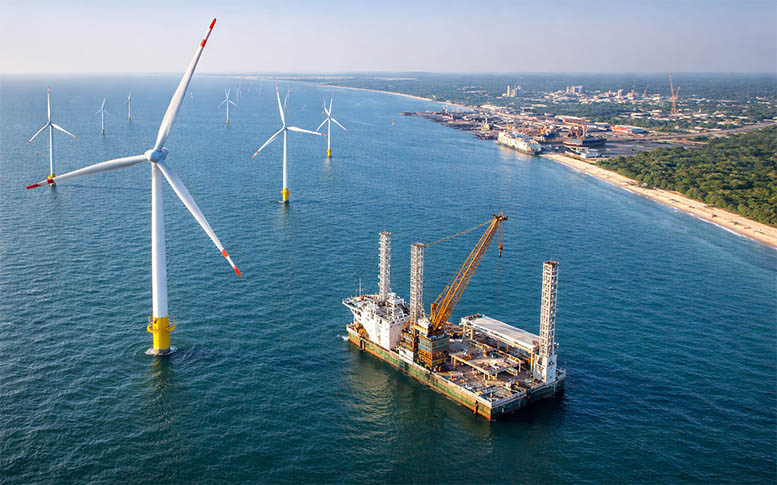
wind.jpg

Dakshina Kannada MP Capt Brijesh Chowta has urged the Centre to give high priority to offshore wind energy generation along the Mangaluru coast, citing its strategic importance to India’s green energy and port-led development goals.

Raising the issue in the Lok Sabha under Rule 377, Chowta said studies by the National Institute of Oceanography have identified the Mangaluru coastline as part of India’s promising offshore wind ‘Zone-2’, covering nearly 6,490 sq km. He noted that the region’s relatively low exposure to cyclones and earthquakes makes it suitable for long-term offshore wind projects and called for its development as a dedicated offshore wind energy zone.

Highlighting the role of New Mangalore Port, Chowta said its modern infrastructure, multiple berths and heavy cargo-handling capacity position it well as a logistics hub for transporting and assembling large wind energy equipment.

He also pointed to the presence of major industrial units such as MRPL, OMPL, UPCL and the Mangaluru SEZ, which could serve as direct buyers of green power through power purchase agreements, improving project viability and speeding up execution.

With Karnataka’s peak power demand crossing 18,000 MW in early 2025, Chowta stressed the need to diversify renewable energy sources. He added that offshore wind projects in the Arabian Sea are strategically safer compared to the cyclone-prone Bay of Bengal.

Calling the project vital to India’s target of 500 GW of renewable energy by 2030, Chowta urged the Ministry of New and Renewable Energy to initiate resource assessments, pilot projects and stakeholder consultations at the earliest.

Comments

Add new comment

  • Coastaldigest.com reserves the right to delete or block any comments.
  • Coastaldigset.com is not responsible for its readers’ comments.
  • Comments that are abusive, incendiary or irrelevant are strictly prohibited.
  • Please use a genuine email ID and provide your name to avoid reject.