Syrian radar site destroyed as Israel hits back after Iran launches rocket attack

Agencies
May 10, 2018

Jerusalem/Beirut, May 10: Iranian forces in Syria launched a rocket attack on Israeli army bases in the Golan Heights early on Thursday, Israel said, prompting one of the heaviest Israeli barrages in Syria since the conflict there began in 2011.The attack on the Israeli-occupied Golan Heights, just past midnight, marked the first time Iranian forces have hit Israel from Syria, where they have deployed along with Iran-backed Shia militias and Russian troops to support President Bashar al-Assad in the seven-year-old civil war.

A wider escalation in wait

Syrian state media said dozens of Israeli missile strikes hit a radar station, Syrian air defence positions and an ammunition dump, underscoring the risks of a wider escalation involving Iran and its regional allies.

Israel said the Iranian salvo of 20 Grad and Fajr rockets were shot down by its Iron Dome air defence system or fell short of the Golan targets. The Quds Force, an external arm of Iran’s Revolutionary Guards, carried out the launch, Israel said.

“It was commanded and ordered by [Quds Force chief General] Qassem Soleimani and its has not achieved its purpose,” military spokesman Lieutenant-Colonel Jonathan Conricus told reporters.

Israel struck back by destroying dozens of Iranian military sites in Syria,Lieutenant-Colonel Conricus said, as well as Syrian anti-aircraft units that tried unsuccessfully to shoot down Israeli planes.

“We do not know yet the [Iranian] casualty count,” he said.

“But I can say that in terms of our purpose, we focussed less on personnel and more on capabilities and hardware ... to inflict long-term damage on the Iranian military establishment in Syria. We assess it will take substantial time to replenish.”

Russia concerned

Tensions between Israel and Iran had already spilled over in Syria, worrying Russia, which want to stabilise Mr. Assad’s rule.

Iran vowed retaliation after a suspected Israeli air strike last month killed seven of its military personnel in a Syrian air base. Israel regards Iran as its biggest threat, and has repeatedly targeted Iranian forces and allied militia in Syria.

Thursday’s flare-up came hours after Israeli Prime Minister Benjamin Netanyahu returned from a visit to Moscow, where he discussed Syria concerns with Russian President Vladimir Putin.

Lieutenant-Colonel Conricus said Israel forewarned Russia of its strikes on Thursday, which Syrian state media first reported hit Baath City in Quneitra, near the border. Further waves of missiles followed. Syrian state media said Israeli missiles had been brought down over Damascus, Homs and Sueida.

Barrage of Israeli rockets

“Air defences confronted tens of Israeli rockets and some of them reached their target and destroyed one of the radar sites,” Syrian state news agency SANA reported, citing a military source. Another rocket hit an ammunition warehouse, it said.

Asked whether Israel had attacked near Damascus or scrambled communications there, an Israeli military spokeswoman said: “I have no comment on that at this time.”

Syrian state television was broadcasting footage of its air defences firing, and playing patriotic songs. Damascus residents described explosions in the sky from air defence systems.

Israeli media said residents of Metulla, on the Lebanese border, had been instructed to go to bomb shelters. There was no official confirmation.

Lebanon’s National News Agency, citing Lebanese Army Command, reported Israeli jets circling over Lebanese territory early on Thursday before exiting.

Lebanese-Syrian front against Israel?

Fearing that Iran and Hezbollah are setting up a Lebanese-Syrian front against it, Israel has occasionally struck at their forces. The April 9 air strike that Iran blamed on Israel killed seven members of the Iranian Revolutionary Guards Corps.

Expectations of a regional flare-up were stoked by U.S. President Donald Trump’s announcement on Tuesday that he was withdrawing from the Iranian nuclear deal. Hours later, Israeli rocket rockets targeted a military base in Kisweh, a commander in the pro-Syrian government regional alliance said.

That attack killed 15 people, including eight Iranians, the Syrian Observatory for Human Rights said, though the commander said there were no casualties. Israel has neither confirmed nor denied responsibility.

Comments

Add new comment

  • Coastaldigest.com reserves the right to delete or block any comments.
  • Coastaldigset.com is not responsible for its readers’ comments.
  • Comments that are abusive, incendiary or irrelevant are strictly prohibited.
  • Please use a genuine email ID and provide your name to avoid reject.
News Network
January 23,2026

Mangaluru: The Karnataka Government Polytechnic (KPT), Mangaluru, has achieved autonomous status from the All India Council for Technical Education (AICTE), becoming the first government polytechnic in the country to receive such recognition in its 78-year history. The status was granted by AICTE, New Delhi, and subsequently approved by the Karnataka Board of Technical Education in October last year.

Officials said the autonomy was conferred a few months ago. Until recently, AICTE extended autonomous status only to engineering colleges, excluding diploma institutions. However, with a renewed national focus on skill development, several government polytechnics across India have now been granted autonomy.

KPT, the second-largest polytechnic in Karnataka, was established in 1946 with four branches and has since expanded to offer eight diploma programmes, including computer science and polymer technology. The institution is spread across a 19-acre campus.

Ravindra M Keni, the first dean of the institution, told The Times of India that AICTE had proposed autonomous status for polytechnic institutions that are over 25 years old. “Many colleges applied. In the first round, 100 institutions were shortlisted, which was further narrowed down to 15 in the second round. We have already completed one semester after becoming an autonomous institution,” he said. He added that nearly 500 students are admitted annually across eight three-year diploma courses.

Explaining the factors that helped KPT secure autonomy, Keni said the institution has consistently recorded 100 per cent admissions and placements for its graduates. He also noted its strong performance in sports, with the college emerging champions for 12 consecutive years, along with active student participation in NCC and NSS activities.

Autonomous status allows KPT to design industry-oriented curricula, conduct examinations, prepare question papers, and manage academic documentation independently. The institution can also directly collaborate with industries and receive priority funding from AICTE or the Ministry of Education. While academic autonomy has been granted, financial control will continue to rest with the state government.

“There will be separate committees for examinations, question paper setting, boards of studies, and boards of examiners. The institution will now have the freedom to conduct admissions without government notifications and issue its own marks cards,” Keni said, adding that new academic initiatives would be planned after a year of functioning under the autonomous framework.

Comments

Add new comment

  • Coastaldigest.com reserves the right to delete or block any comments.
  • Coastaldigset.com is not responsible for its readers’ comments.
  • Comments that are abusive, incendiary or irrelevant are strictly prohibited.
  • Please use a genuine email ID and provide your name to avoid reject.
News Network
February 3,2026

wind.jpg

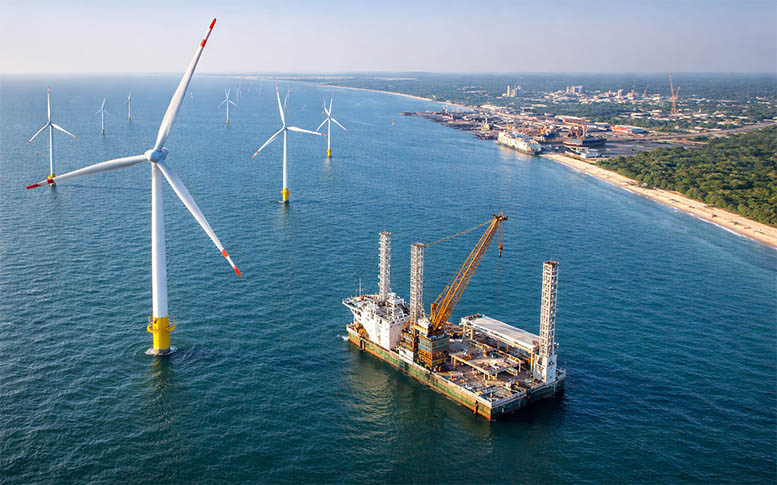
Dakshina Kannada MP Capt Brijesh Chowta has urged the Centre to give high priority to offshore wind energy generation along the Mangaluru coast, citing its strategic importance to India’s green energy and port-led development goals.

Raising the issue in the Lok Sabha under Rule 377, Chowta said studies by the National Institute of Oceanography have identified the Mangaluru coastline as part of India’s promising offshore wind ‘Zone-2’, covering nearly 6,490 sq km. He noted that the region’s relatively low exposure to cyclones and earthquakes makes it suitable for long-term offshore wind projects and called for its development as a dedicated offshore wind energy zone.

Highlighting the role of New Mangalore Port, Chowta said its modern infrastructure, multiple berths and heavy cargo-handling capacity position it well as a logistics hub for transporting and assembling large wind energy equipment.

He also pointed to the presence of major industrial units such as MRPL, OMPL, UPCL and the Mangaluru SEZ, which could serve as direct buyers of green power through power purchase agreements, improving project viability and speeding up execution.

With Karnataka’s peak power demand crossing 18,000 MW in early 2025, Chowta stressed the need to diversify renewable energy sources. He added that offshore wind projects in the Arabian Sea are strategically safer compared to the cyclone-prone Bay of Bengal.

Calling the project vital to India’s target of 500 GW of renewable energy by 2030, Chowta urged the Ministry of New and Renewable Energy to initiate resource assessments, pilot projects and stakeholder consultations at the earliest.

Comments

Add new comment

  • Coastaldigest.com reserves the right to delete or block any comments.
  • Coastaldigset.com is not responsible for its readers’ comments.
  • Comments that are abusive, incendiary or irrelevant are strictly prohibited.
  • Please use a genuine email ID and provide your name to avoid reject.
News Network
January 23,2026

modIKERALA.jpg

Prime Minister Narendra Modi, during his visit to Thiruvananthapuram on Friday, January 23, indicated that the Bharatiya Janata Party (BJP) is aiming to expand its political footprint in Kerala ahead of the Assembly elections scheduled in the coming months.

Speaking at a BJP-organised public meeting, Modi drew parallels between the party’s early electoral gains in Gujarat and its recent victory in the Thiruvananthapuram Municipal Corporation. The civic body win, which ended decades of Left control, was cited by the Prime Minister as a possible starting point for the party’s broader ambitions in the state.

Recalling BJP’s political trajectory in Gujarat, Modi said the party was largely insignificant before 1987 and received little media attention. He pointed out that the BJP’s first major breakthrough came with its victory in the Ahmedabad Municipal Corporation that year.

“Just as our journey in Gujarat began with one city, Kerala’s journey has also started with a single city,” Modi said, suggesting that the party’s municipal-level success could translate into wider electoral acceptance.

The Prime Minister alleged that successive governments led by the Left Democratic Front (LDF) and the United Democratic Front (UDF) had failed to adequately develop Thiruvananthapuram. He accused both fronts of corruption and neglect, claiming that basic infrastructure and facilities were denied to the capital city for decades.

According to Modi, the BJP’s control of the civic body represents a shift driven by public dissatisfaction with the existing political alternatives. He asserted that the BJP administration in Thiruvananthapuram had begun working towards development, though no specific details or timelines were outlined.

Addressing the gathering at Putharikandam Maidan, Modi said the BJP intended to project Thiruvananthapuram as a “model city,” reiterating his party’s commitment to governance-led change.

The Prime Minister’s visit to Kerala also included the inauguration of several development projects and the flagging off of new train services, as the BJP intensifies its political outreach in the poll-bound state.

Comments

Add new comment

  • Coastaldigest.com reserves the right to delete or block any comments.
  • Coastaldigset.com is not responsible for its readers’ comments.
  • Comments that are abusive, incendiary or irrelevant are strictly prohibited.
  • Please use a genuine email ID and provide your name to avoid reject.