Trump calls on Times to reveal 'coward' behind critical op-ed

Agencies
September 7, 2018

Washington, Sept 7: Donald Trump on Thursday called on the New York Times to reveal the name of the "coward" who wrote an explosive, anonymous article that has plunged his presidency into its worst crisis yet.

The White House has been convulsed by a fevered hunt for the senior official who declared, in an unsigned article for The New York Times published Wednesday, that "unsung heroes" were quietly working within the administration to frustrate the president's "worst inclinations."

"Nobody knows who the hell he is, or she," Trump told supporters at a rally in Billings, Montana, adding: "Unidentified deep state operatives who defy voters to push their secret agendas are truly a threat to democracy itself."

Invoking national security concerns, Trump said the paper should publish the official's name, before encouraging reporters to investigate the matter. "That would be a good scoop!" he said.

On the internet and in Washington, a guessing game has raged over who the author might be, prompting nearly every cabinet-ranked member of the government to deny it was them.

Vice President Mike Pence, Secretary of State Mike Pompeo, Defense Secretary Jim Mattis and Director of National Intelligence Dan Coats were among those who issued denials.

"The Vice President puts his name on his Op-eds. The @nytimes should be ashamed and so should the person who wrote the false, illogical, and gutless op-ed," Pence's spokesman Jarrod Agen wrote on Twitter.

"Our office is above such amateur acts."

The manifesto followed the release of excerpts from a bombshell book by Watergate reporter Bob Woodward, who portrayed Trump's White House as an out-of-control "crazytown."

Trump responded with a furious volley of tweets that asked if the author had committed treason while First Lady Melania Trump condemned the decision to publish.

"To the writer of the op-ed -- you are not protecting this country, you are sabotaging it with your cowardly actions," she said.

The Woodward book, "Fear: Trump in the White House," reported that senior aides lifted documents from the Oval Office desk to keep the president from acting on his impulses, reinforcing the assertions in the Times article.

The firestorm caught up with Mattis and Pompeo in New Delhi, where the Secretary of State denounced the Times' decision to publish as "sad" and "disturbing."

"I come from a place where if you're not in a position to execute the commander's intent, you have a singular option, that is to leave," he said.

Both men denied involvement, while Coats, who as intelligence chief has at times been publicly at odds with Trump, said in a statement speculation that he or his deputy had written the op-ed were "patently false."

When asked if she wrote it, UN envoy Nikki Haley responded with a curt "no" on her way to a Security Council meeting.

James Dao, who runs the Times op-ed page, told CNN he received the article several days ago through an intermediary, but had spoken directly with its author.

In one eye-opening passage, the writer says cabinet members initially considered invoking the 25th Amendment of the US Constitution, which provides for the president's removal if he is "unable to discharge the powers and duties of his office."

They decided against the move, fearing a constitutional crisis, but Democratic Senator Elizabeth Warren took to the airwaves on Thursday to revive the idea.

"If senior administration officials think the president of the United States is not able to do his job, then they should invoke the 25th Amendment," Warren told CNN.

Trump meanwhile has called for the article's author to be unmasked.

"Are the investigative 'journalists' of the New York Times going to investigate themselves - who is the anonymous letter writer?," he tweeted ahead of a rally in Montana.

The Times acknowledged the "rare step" of publishing an anonymous editorial but said the official's job would be jeopardized if they were identified.

The piece described a "two-track" presidency in which Trump says one thing and his staff consciously does another, citing the president's alleged preference "for autocrats and dictators."

"The root of the problem is the president's amorality," the official said, denouncing Trump's "impetuous, adversarial, petty and ineffective" leadership style.

Comments

Add new comment

  • Coastaldigest.com reserves the right to delete or block any comments.
  • Coastaldigset.com is not responsible for its readers’ comments.
  • Comments that are abusive, incendiary or irrelevant are strictly prohibited.
  • Please use a genuine email ID and provide your name to avoid reject.
News Network
January 31,2026

trumpkill.jpg

The US Department of Justice has released millions of new documents linked to the case of convicted child sex offender Jeffrey Epstein, before removing some pages that contained complaints mentioning President Donald Trump.

Deputy Attorney General Todd Blanche said on Friday that approximately 3.5 million files were published to comply with the Epstein Transparency Act, following criticism that the administration had missed a December 19 deadline set by Congress.

The documents include FBI communications and complaints submitted as tips, some of which list comments mentioning Trump and others who had social or professional ties to Epstein.

Trump has repeatedly denied any wrongdoing in relation to his past association with Epstein.

Pages removed from DOJ website

After their publication, pages containing complaints that mentioned Trump were removed from the DOJ website and now return a “page not found” message. Copies of the documents, however, have circulated widely on social media. CNN anchor Jake Tapper was among those who publicly noted that the pages had been taken down.

One complaint, filed by a friend of a victim, says Trump forced a girl aged 13–14 to perform “oral sex” approximately 35 years ago in New Jersey. The document states that an investigator was sent to Washington to conduct an interview.

Another complaint says Trump regularly paid an individual to perform sexual acts and adds that he was present when her newborn child was murdered by a relative. The paperwork notes that there was “no contact made” with the complainant.

A separate complaint, which provided no contact information, said “calendar girls” parties at Trump’s Mar-a-Lago involved children and sexual abuse. The document also names several public figures as present at such events.

In another account, a complainant said they witnessed a “sex trafficking ring” at Trump National Golf Club in Rancho Palos Verdes, California, in the mid-1990s. The person noted “threats” from Trump’s head of security if she spoke publicly about what she had seen.

Other figures mentioned in the files

The latest release also includes a draft email Epstein wrote to himself in 2013, referring to Microsoft co-founder Bill Gates. In the message, Epstein said Gates asked him to delete emails and referenced “personal matters.”

The DOJ has not provided a detailed explanation for why certain pages were removed after publication. The department said the document release was ongoing.

Comments

Add new comment

  • Coastaldigest.com reserves the right to delete or block any comments.
  • Coastaldigset.com is not responsible for its readers’ comments.
  • Comments that are abusive, incendiary or irrelevant are strictly prohibited.
  • Please use a genuine email ID and provide your name to avoid reject.
News Network
January 23,2026

oscar.jpg

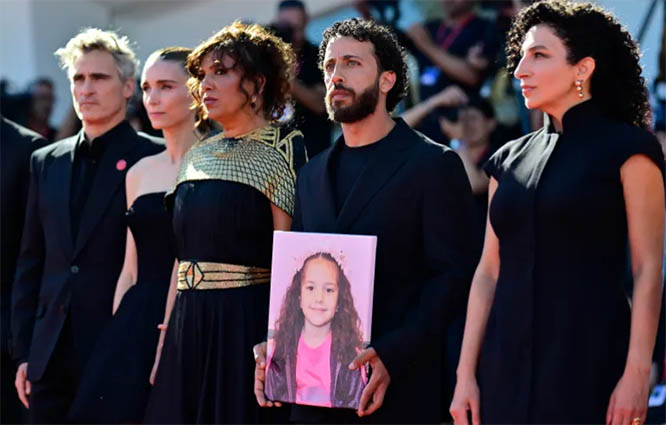
The Voice of Hind Rajab, inspired by the tragic final moments of a young Palestinian girl killed by Israeli fire in Gaza, has been nominated for an Academy Award in the Best International Feature Film category.

Directed by Tunisian filmmaker Kaouther Ben Hania, the film recounts the true story of five-year-old Hind Rajab, who lost her life in January 2024 while fleeing Israeli bombardment with her family.

The film features the real audio of Hind’s desperate call to the Palestinian Red Crescent Society, where she pleaded for help moments before the vehicle she was in was struck by 355 bullets.

The haunting narrative begins with a brief call made from the besieged Tel al-Hawa neighborhood of Gaza, where gunfire and armored vehicles drowned out every sound.

After witnessing the brutal killing of her family, she made a trembling call, her voice reduced to a whisper as she spoke of the massacre and her unbearable loneliness as the sole survivor.

Premiering at the Venice International Film Festival in September 2025, The Voice of Hind Rajab garnered widespread acclaim, receiving a record-setting 23-minute standing ovation and the Silver Lion Grand Jury Prize, the festival’s second-highest honor.

In her acceptance speech, Ben Hania dedicated the film to humanitarian workers and first responders in Gaza, emphasizing that Hind's voice symbolizes countless civilians affected by war.

She aims to give voice to victims often reduced to mere statistics, highlighting the broader suffering of civilians in war zones.

The film’s Oscar nomination underscores its powerful storytelling and ethical approach to depicting real-life tragedy, making it a crucial piece of contemporary cinema.

It serves not only as a narration of individual tragedy but also as an artistic and documentary response to the silence and censorship that often overshadow West Asian struggles and wars.

Using an innovative method she calls docufiction, Ben Hania bridges unvarnished reality and narrative structure, creating a work that is both artistically valuable and socially impactful.

Born in 1977 in Sidi Bouzid—later the epicenter of the Arab revolution—her background profoundly influenced her worldview and artistic approach.

She is a graduate of the Higher School of Audiovisual Arts of Tunis, Pantheon-Sorbonne University, and La Fémis in Paris, where her studies equipped her with the technical and theoretical tools needed to address complex subjects. 

Comments

Add new comment

  • Coastaldigest.com reserves the right to delete or block any comments.
  • Coastaldigset.com is not responsible for its readers’ comments.
  • Comments that are abusive, incendiary or irrelevant are strictly prohibited.
  • Please use a genuine email ID and provide your name to avoid reject.
News Network
January 23,2026

Karnataka Governor Thaawarchand Gehlot read only three lines from the 122-paragraph address prepared by the Congress-led state government while addressing the joint session of the Legislature on Thursday, effectively bypassing large sections critical of the BJP-led Union government.

The omitted portions of the customary Governor’s address outlined what the state government described as a “suppressive situation in economic and policy matters” under India’s federal framework. The speech also sharply criticised the Centre’s move to replace the Mahatma Gandhi National Rural Employment Guarantee Act (MGNREGA) with the Viksit Bharat–Guarantee for Rozgar and Ajeevika Mission (Gramin) Act, commonly referred to as the VB-GRAM (G) Act.

Governor Gehlot had earlier conveyed his objection to several paragraphs that were explicitly critical of the Union government. On Thursday, he confined himself to the opening lines — “I extend a warm welcome to all of you to the joint session of the State legislature. I am extremely pleased to address this august House” — before jumping directly to the concluding sentence of the final paragraph.

He ended the address by reading the last line of paragraph 122: “Overall, my government is firmly committed to doubling the pace of the State’s economic, social and physical development. Jai Hind — Jai Karnataka.”

According to the prepared speech, the Karnataka government demanded the scrapping of the VB-GRAM (G) Act, describing it as “contractor-centric” and detrimental to rural livelihoods, and called for the full restoration of MGNREGA. The state government argued that the new law undermines decentralisation, weakens labour protections, and centralises decision-making in violation of constitutional norms.

Key points from the unread sections of the speech:

•    Karnataka facing a “suppressive” economic and policy environment within the federal system

•    Repeal of MGNREGA described as a blow to rural livelihoods

•    VB-GRAM (G) Act accused of protecting corporate and contractor interests

•    New law alleged to weaken decentralised governance

•    Decision-making said to be imposed by the Centre without consulting states

•    Rights of Adivasis, women, backward classes and agrarian communities curtailed

•    Labourers allegedly placed under contractor control

•    States facing mounting fiscal stress due to central policies

•    VB-GRAM (G) Act accused of enabling large-scale corruption

Comments

Add new comment

  • Coastaldigest.com reserves the right to delete or block any comments.
  • Coastaldigset.com is not responsible for its readers’ comments.
  • Comments that are abusive, incendiary or irrelevant are strictly prohibited.
  • Please use a genuine email ID and provide your name to avoid reject.