



U.K. excludes India from relaxed student visa rules

Agencies
June 16, 2018

London, Jun 16: The U.K. government has caused outrage with its decision to exclude Indian students from a new list of countries considered low risk in order to facilitate an easier visa application process to U.K. universities.

In changes to its immigration policy tabled in Parliament on June 15, the U.K. Home Office announced a relaxation of the Tier 4 visa category for overseas students from around 25 countries.

On a list already covering countries like the U.S., Canada and New Zealand, the Home Office has added on the likes of China, Bahrain and Serbia as countries from where students would face reduced checks on educational, financial and English language skill requirements to study at British universities.

The changes, which come into effect on July 6, aim to make it easier for international students to come to study in the U.K.

However, India has been left out of this new expanded list, which means Indian students applying for similar courses will continue to face rigorous checks and documentary requirements.

'Kick in the teeth'
Lord Karan Bilimoria, Indian-origin entrepreneur and president of the U.K. Council for International Student Affairs (UKCISA), described the move as an insult to India and another example of Britain’s economically illiterate and hostile attitude to immigration.

“I consider this another kick in the teeth for India... This sends entirely the wrong message to India, to exclude it from these Tier 4 measures. The government has simply got it wrong, said “Mr. Bilimoria, while welcoming the overall visa relaxation measures introduced by U.K. Home Secretary Sajid Javid.

Mr. Bilimoria, the founder of Cobra Beer and founding-chair of U.K. India Business Council (U.K.IBC), added, “It is completely hypocritical that this is announced at the same time that Britain is talking about doing a post-Brexit Free Trade Agreement (FTA) with India. If this is the way they treat India, they can dream on about an FTA with India.”

“India has always been one of Britain’s closest allies and an emerging global economic superpower. Excluding India from this list is myopically short-sighted and is damaging what has always been a special relationship between our countries,” he said.

NISAU disappointed
The National Indian Students and Alumni Union (NISAU) U.K. also expressed disappointment at India’s exclusion from the list, which it said effectively categorises Indian students as high risk. The representative body for Indian students in the U.K. said it was unfair that Indian students should be treated differently from Chinese or other nationals on the list.

"It is important to note that June 16 announcement makes no change to the process of application for Indian students, but it is the perception of this message among Indian students that worries us. And, this raises another question — will China continue to get even more favourable actions while India gets the rhetoric," questioned Sanam Arora, president of NISAU U.K..

According to latest Office of National Statistics (ONS) data, India is among the top three countries from where overseas students come in to study at U.K. universities, after China and the U.S. While Indian students registered a hike of 30% to hit 15,171 Tier 4 visas last year, the numbers remain a far cry from around 30,000 six years ago.

The latest development will add to growing concern within Indian government circles, given that Ministers and diplomats have repeatedly highlighted the need for a more welcoming immigration regime for Indian students.

Last week, Indian High Commissioner to the U.K., Y.K. Sinha, held a meeting with the U.K.’s minister for universities, Sam Gyimah, during which he once again raised the issue of “smoother and greater student and faculty mobility between the two countries.”

“It is unfortunate that in the last six years we have seen a steep drop [in Indian student numbers]. What should be troubling universities here is that Indian students are now going in much greater numbers to the U.S., Australia — even France and Germany,” Mr. Sinha has said in the past.

Reduced documentation additional 11 countries
The U.K. Home Office said in order to make it easier for students to come and study in the U.K.’s world-leading education sector, it has expanded the list of countries from which students will be able to benefit from a streamlined application process.

Students from an additional 11 countries, including China, will be able to provide a reduced level of documentation when applying for their Tier 4 visa, the Home Office statement notes.

On being asked why India had been omitted from this expanded list, a spokesperson said, “We welcome Indian students who want to come to the U.K. to study at our world-leading educational institutions. We issue more visas to students from India than any other country except China and the USA.”

The Home Office stressed that 90% of Indian students who apply for a U.K. visa get one, a figure up from 86% in 2014 and 83% the year before that.

It added, “In addition, the proportion of Indian students coming to study in the U.K. at a university has increased from around 50% in 2010 to around 90% in 2016. Indian student visa applications are up 30% on last year. We continue to have regular discussions with the Indian government on a range of issues including on visas and U.K. immigration policy,” it said.

Comments

Add new comment

  • Coastaldigest.com reserves the right to delete or block any comments.
  • Coastaldigset.com is not responsible for its readers’ comments.
  • Comments that are abusive, incendiary or irrelevant are strictly prohibited.
  • Please use a genuine email ID and provide your name to avoid reject.
News Network
February 4,2026

Mangaluru: Urban local bodies and gram panchayats should make the use of Kannada on signboards mandatory while issuing trade licences to commercial establishments, Dakshina Kannada Deputy Commissioner Darshan HV said. He also called for regular inspections to ensure compliance.

Presiding over the District Kannada Awareness Committee meeting at the deputy commissioner’s office, Darshan said the city corporation would be directed to ensure that shops operating in malls prominently display their names in Kannada. “All commercial establishments, including shops, companies, offices and hotels, must mandatorily display their names in Kannada on signboards,” he said.

The deputy commissioner added that the National Highways Authority of India (NHAI) would be instructed to include Kannada on signboards along national highways. Banks, he said, would be directed through committee meetings to provide application forms in Kannada.

“Even if English-medium schools and colleges impart education in English, their signboards must display the institution’s name in Kannada. Steps will also be taken to ensure that private buses display place names in Kannada,” Darshan said.

During the meeting, committee members raised concerns over the closure of Kannada-medium schools in rural areas due to a shortage of teachers and stressed the need for immediate corrective measures. They also pointed out that several industries employ workers from other states while overlooking local candidates.

Members further demanded that nationalised banks provide deposit and withdrawal slips in Kannada. It was brought to the deputy commissioner’s notice that the presence of staff without knowledge of Kannada in rural branches of nationalised banks is causing hardship to local customers.

Meanwhile, MP Srinath, president of the District Kannada Sahitya Parishat, urged the district administration to allot land for the construction of a district Kannada Bhavana in Mangaluru.

Comments

Add new comment

  • Coastaldigest.com reserves the right to delete or block any comments.
  • Coastaldigset.com is not responsible for its readers’ comments.
  • Comments that are abusive, incendiary or irrelevant are strictly prohibited.
  • Please use a genuine email ID and provide your name to avoid reject.
News Network
February 4,2026

gaming.jpg

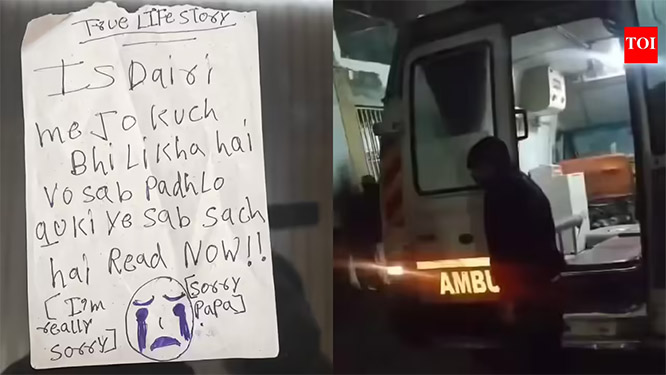
Ghaziabad: In a tragic incident, three sisters aged 12, 14 and 16 died after jumping from the ninth floor of their apartment in Uttar Pradesh’s Ghaziabad in the early hours of Wednesday. The girls allegedly took the extreme step after becoming deeply obsessed with an online Korean task-based game.

The incident occurred around 2.15 am at a high-rise apartment complex in Bharat City. Before jumping, the sisters — Pakhi (12), Prachi (14) and Vishika (16) — left behind a handwritten note that read, “Sorry, Papa.”

According to police, the girls went to the balcony, bolted the door from inside and jumped one after another. Their screams and the sound alerted their parents, neighbours and security guards. By the time the parents broke open the balcony door, all three had died.

“When we reached the spot, we confirmed that three minor girls, daughters of Chetan Kumar, had died after jumping from the building,” said Assistant Commissioner of Police Atul Kumar Singh.

Visuals from the scene on Wednesday morning showed the bodies lying on the ground, their mother wailing in grief, and stunned neighbours gathering at the complex.

Police said the sisters were heavily influenced by Korean culture and were addicted to an online “Korean love game”, though no specific game has been identified so far. Investigators are examining an eight-page suicide note written in a pocket diary, detailing the girls’ mobile and gaming activities.

“Read everything written in this diary because all of it is true. I’m really sorry. Sorry, Papa,” the note said, accompanied by a hand-drawn crying emoji.

Their father, Chetan Kumar, told police that the girls had even adopted Korean names and had gradually withdrawn from school and daily activities. “They used to say, ‘Korea is our life, Korea is our biggest love. We cannot give it up,’” he said, breaking down.

Police said the parents had recently restricted the girls’ mobile phone usage, which may have triggered distress. “The investigation has not revealed the name of any particular game, but it is evident that the girls were deeply influenced by Korean culture, as mentioned in the suicide note,” said senior police officer Nimish Patel.

The sisters reportedly did everything together, including eating and bathing. Their gaming addiction is believed to have begun during the COVID-19 pandemic, after which they became irregular at school and eventually stopped attending altogether.

Police also revealed that Chetan Kumar is married to two sisters and lives with both wives and their children, all daughters. Two of the deceased girls were daughters of one wife, while the third was their half-sister.

Further investigation is underway.

Comments

Add new comment

  • Coastaldigest.com reserves the right to delete or block any comments.
  • Coastaldigset.com is not responsible for its readers’ comments.
  • Comments that are abusive, incendiary or irrelevant are strictly prohibited.
  • Please use a genuine email ID and provide your name to avoid reject.
News Network
January 23,2026

Mangaluru: The Karnataka Government Polytechnic (KPT), Mangaluru, has achieved autonomous status from the All India Council for Technical Education (AICTE), becoming the first government polytechnic in the country to receive such recognition in its 78-year history. The status was granted by AICTE, New Delhi, and subsequently approved by the Karnataka Board of Technical Education in October last year.

Officials said the autonomy was conferred a few months ago. Until recently, AICTE extended autonomous status only to engineering colleges, excluding diploma institutions. However, with a renewed national focus on skill development, several government polytechnics across India have now been granted autonomy.

KPT, the second-largest polytechnic in Karnataka, was established in 1946 with four branches and has since expanded to offer eight diploma programmes, including computer science and polymer technology. The institution is spread across a 19-acre campus.

Ravindra M Keni, the first dean of the institution, told The Times of India that AICTE had proposed autonomous status for polytechnic institutions that are over 25 years old. “Many colleges applied. In the first round, 100 institutions were shortlisted, which was further narrowed down to 15 in the second round. We have already completed one semester after becoming an autonomous institution,” he said. He added that nearly 500 students are admitted annually across eight three-year diploma courses.

Explaining the factors that helped KPT secure autonomy, Keni said the institution has consistently recorded 100 per cent admissions and placements for its graduates. He also noted its strong performance in sports, with the college emerging champions for 12 consecutive years, along with active student participation in NCC and NSS activities.

Autonomous status allows KPT to design industry-oriented curricula, conduct examinations, prepare question papers, and manage academic documentation independently. The institution can also directly collaborate with industries and receive priority funding from AICTE or the Ministry of Education. While academic autonomy has been granted, financial control will continue to rest with the state government.

“There will be separate committees for examinations, question paper setting, boards of studies, and boards of examiners. The institution will now have the freedom to conduct admissions without government notifications and issue its own marks cards,” Keni said, adding that new academic initiatives would be planned after a year of functioning under the autonomous framework.

Comments

Add new comment

  • Coastaldigest.com reserves the right to delete or block any comments.
  • Coastaldigset.com is not responsible for its readers’ comments.
  • Comments that are abusive, incendiary or irrelevant are strictly prohibited.
  • Please use a genuine email ID and provide your name to avoid reject.