



UN report: 7,500 kids killed or wounded in Yemen since 2013

Agencies
June 30, 2019

United Nations, Jun 30: Over 7,500 children have been killed or wounded in Yemen in the last 5 1/2 years as a result of airstrikes, shelling, fighting, suicide attacks, mines and other unexploded ordnance, according to a U.N. report released Friday.

The report by Secretary-General Antonio Guterres said the killings and injuries were among 11,779 grave violations against children during the period between April 1, 2013 and Dec. 31, 2018.

It said the figures are likely to be worse because monitoring Yemen has become increasingly difficult.

The conflict in the Arab world's poorest country began with the 2014 takeover of Yemen's capital Sanaa by Iranian-backed Houthi Shiite rebels, who toppled the government of Abed Rabbo Mansour Hadi. 

A Saudi-led coalition allied with Yemen's internationally recognized government has been fighting the Houthis since 2015.

Saudi-led airstrikes have hit schools, hospitals and wedding parties. The Houthis have used drones and missiles to attack Saudi Arabia and have targeted vessels in the Red Sea.

Civilians have borne the brunt of the conflict, which has killed thousands of people, created the world's worst humanitarian crisis, and brought Yemen to the brink of famine.

Virginia Gamba, the U.N. special representative for children in conflict, said that while some positive measures have been adopted by the warring parties, "the suffering of children in Yemen has worsened during the reporting period, becoming simply appalling." 

"The children of Yemen had nothing to do with the start of this conflict," she said. "They should now be given the opportunity to exit from it and be assisted to fully recover." 

Gamba called on all parties to the conflict and those who can influence them to "prioritise peace and actively engage in the ongoing peace negotiations." 

According to the report, the largest number of violations against children in the 5 1/2 years were the 7,508 youngsters who were verified to have been killed or maimed.

The recruitment and use of 3,034 children by the warring parties including 1,940 by the Houthis and 274 by the government was the second largest violation, it said.

The report also said 340 boys were verified to have been detained for their actual or alleged association with the warring parties.

It said only 11 incidents of rape and sexual violence were verified, explaining that the number remains under-reported "mainly for fear of stigmatization and lack of appropriate response services." 

The verification of abductions of children was also limited during the reporting period, with just 17 verified incidents, it said.

The report said the number of children denied access to humanitarian assistance sharply increased over the 5 1/2 years, "with catastrophic consequences." It said the U.N. verified 828 incidents where aid was denied.

The secretary-general's second report on children in Yemen's conflict also noted that attacks on schools and hospitals remained high, with 345 of the 381 that were verified causing the partial or total destruction of the building.

Of "great concern," the report said, is the verified military use of 258 schools, which is higher than the 244 schools that were attacked. 

The result is that thousands of boys and girls were prevented "safe access to education," it said.

Comments

Add new comment

  • Coastaldigest.com reserves the right to delete or block any comments.
  • Coastaldigset.com is not responsible for its readers’ comments.
  • Comments that are abusive, incendiary or irrelevant are strictly prohibited.
  • Please use a genuine email ID and provide your name to avoid reject.
News Network
February 3,2026

manjeshwar.jpg

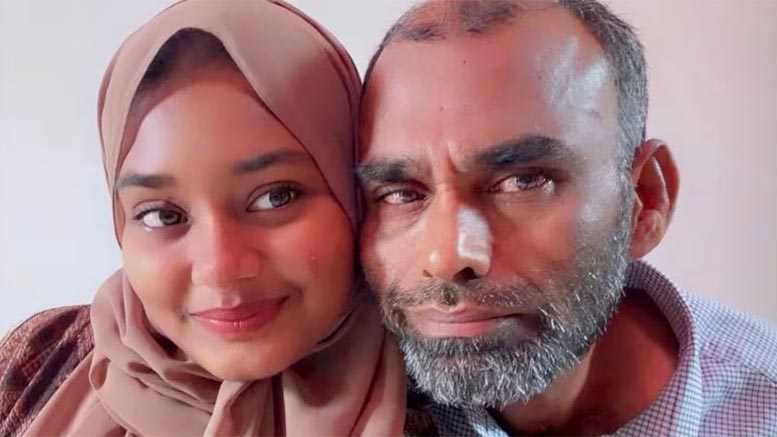
Kasaragod: An 18-year-old girl was stabbed to death at Thuminad in Manjeshwar panchayat on Monday, allegedly by her father following a domestic dispute. 

The victim has been identified as K U Mariyamath Jumaila. Her father, Umar Farooq, has been taken into police custody, Manjeshwar Station House Officer Inspector Ajith Kumar P said.

According to the police, Umar Farooq had been working in a West Asian country and returned home about three months ago. 

Family tensions reportedly escalated after his wife, Thahira (41), decided to seek a divorce and asked him to leave her life. Kasaragod district panchayat member Harshad Vorkady alleged that Umer was addicted to marijuana and frequently caused disturbances at home.

On Monday, Thahira asked Umar to come to her sister’s house in Thuminad to discuss the dispute. Jumaila accompanied her mother. 

Manjeshwar panchayat member Illiyas Thuminad said Umar arrived along with his brother, following which Thahira handed over gold ornaments and property documents to him and asked him to sever ties with her.

However, the police said a property dispute had been ongoing between Umar Farooq and his sister-in-law’s husband. During a heated argument, Umar allegedly attempted to attack the man with a sharp weapon. When Jumaila intervened to stop the assault, she was stabbed in the neck.

The teenager collapsed after bleeding profusely and was rushed to a private hospital in Mangaluru, where doctors declared her dead. Her body was later shifted to Mangalpady Taluk Hospital for post-mortem examination.

Jumaila was a former student of Sirajul Huda English Medium Higher Secondary School, Manjeshwar. 

Comments

Add new comment

  • Coastaldigest.com reserves the right to delete or block any comments.
  • Coastaldigset.com is not responsible for its readers’ comments.
  • Comments that are abusive, incendiary or irrelevant are strictly prohibited.
  • Please use a genuine email ID and provide your name to avoid reject.
News Network
February 1,2026

Bengaluru: The Karnataka High Court has refused to quash an investigation against a WhatsApp group administrator accused of allowing the circulation of obscene and offensive images depicting Hindutva politicians and idols in 2021.

Justice M Nagaprasanna observed that, prima facie, the ingredients of the offence under Section 295A of the Indian Penal Code were made out. “The offence under Section 295A of the IPC is met to every word of its ingredient, albeit prima facie,” the judge said.

The petitioner, Sirajuddin, a resident of Belthangady taluk in Dakshina Kannada district, had challenged the FIR registered against him at the CEN (Cyber, Economics and Narcotics) police station, Mangaluru, for offences under Section 295A of the IPC and Section 67 of the Information Technology Act. Section 295A relates to punishment for deliberate and malicious acts intended to outrage the religious feelings of any class of citizens.

According to the complaint filed by K Jayaraj Salian, also a resident of Belthangady taluk, he received a WhatsApp group link from an unknown source and was added to the group after accessing it. The group reportedly had six administrators and around 250 participants, where obscene and offensive images depicting Hindu deities and certain political figures were allegedly circulated repeatedly.

Sirajuddin was arrested in connection with the case and later released on bail on February 16, 2021. He argued before the court that he was being selectively targeted, while other administrators—including the creator of the group—were neither arrested nor investigated. He also contended that the Magistrate could not have taken cognisance of the offence under Section 295A without prior sanction under Section 196(1) of the CrPC.

Rejecting the argument, Justice Nagaprasanna held that prior sanction is required only at the stage of taking cognisance, and not at the stage of registration of the crime or during investigation.

The judge noted that the State had produced the entire investigation material before the court. “A perusal of the material reveals depictions of Hindu deities in an extraordinarily obscene, demeaning and profane manner. The content is such that its reproduction in a judicial order would itself be inappropriate,” the court said, adding that the material, on its face, had the tendency to outrage religious feelings and disturb communal harmony.

Observing that the case was still at the investigation stage, the court said it could not interdict the probe at this juncture. However, it expressed concern that the investigating officer appeared to have not proceeded uniformly against all administrators. The court clarified that if the investigation revealed the active involvement of any member in permitting the circulation of such content, they must also be proceeded against.

“At this investigative stage, any further observation by this Court would be unnecessary,” the order concluded.

Comments

Add new comment

  • Coastaldigest.com reserves the right to delete or block any comments.
  • Coastaldigset.com is not responsible for its readers’ comments.
  • Comments that are abusive, incendiary or irrelevant are strictly prohibited.
  • Please use a genuine email ID and provide your name to avoid reject.
News Network
January 20,2026

Mangaluru: In a major step towards strengthening rural innovation, the Office of the Principal Scientific Adviser (PSA) to the Government of India is supporting the establishment of RuTAGe Smart Village Centres (RSVCs) across the country through collaborations with academic institutions, civil society organisations and philanthropic partners.

As part of this national initiative, Nitte (Deemed to be University) will set up the first RSVCs in the region at Nitte GP in Udupi district and at the Nitte Health Centre, Sevanjali Trust, Farangipete, in Dakshina Kannada district. The centres will be inaugurated on January 21. In South India, the programme is being implemented by the Section Infin-8 Foundation (SI-8).

Speaking to reporters on Monday, SI-8 founder-director Vishwas US said experts from Nitte University and SI-8 would work closely with farmers, students, youth and local entrepreneurs to adapt and deploy technologies tailored to local needs.

Project head Prof Iddya Karunasagar, representing Nitte DU, said the RSVCs at Nitte and Farangipete would serve as demonstration hubs for a wide range of agriculture, energy, skill-development and assistive technologies. These include solar dryers for fruits, vegetables and crops; soil-testing solutions; power weeders and women-friendly farm tools; wind-powered devices for rural artisans; grain storage systems; grass-cutting and tree-climbing equipment; and liquid fertiliser production using cowshed waste.

SI-8 CEO Aravind C Kumar said the centres would also provide access to digital and knowledge-based platforms such as ISRO applications, government scheme portals, market linkage tools and gamified learning resources, along with assistive technologies for persons with visual impairments.

Highlighting the broader impact of the initiative, Principal Scientific Adviser Prof Ajay Kumar Sood said it demonstrated how applied research could bridge the rural–urban divide and help create self-reliant, technology-enabled villages.

The initiative has been made possible through philanthropic support from Dr NC Murthy of ACM Business Solutions, LLC, USA. Dr Sapna Poti, Director (Strategic Alliances) at the Office of the Principal Scientific Adviser, said the long-term objective is to build self-sufficient, technology-driven communities capable of generating sustainable livelihoods on their own.

Comments

Add new comment

  • Coastaldigest.com reserves the right to delete or block any comments.
  • Coastaldigset.com is not responsible for its readers’ comments.
  • Comments that are abusive, incendiary or irrelevant are strictly prohibited.
  • Please use a genuine email ID and provide your name to avoid reject.