UN report details alarming level of reprisals against human rights defenders in India

Agencies
September 14, 2018

United Nations, Sept 14: India, China, Russia and Myanmar are among several countries named in a report by UN chief Antonio Guterres that details an "alarming" level of harsh reprisals and intimidation against those who cooperate with the United Nations on human rights issues.

The ninth annual report of the Secretary-General details the level of retaliation against human rights defenders on a country-by-country basis, including allegations of killing, torture, arbitrary arrests, and public stigmatisation campaigns, which also target victims of rights abuse.

The report documents allegations of reprisals and intimidation in 38 countries, some of which are members of the Human Rights Council.

Prior to officially presenting the Human Rights Council with the report next week, assistant rights chief Andrew Gilmour said the cases of reprisals and intimidation detailed in the report and its two annexes "represent the tip of the iceberg," adding that "many more are reported to us".

"We are also increasingly seeing legal, political and administrative hurdles used to intimidate - and silence - civil society," he said.

The report points out that selective laws and new legislation are restricting and obstructing organisations from cooperating with the UN, including by limiting their funding capacity, especially from foreign donors.

The countries named in Annex 1 of the report, in which new cases are listed are Bahrain, Cameroon, China, Colombia, Cuba, the Democratic Republic of Congo, Djibouti, Egypt, Guatemala, Guyana, Honduras, Hungary, India, Israel, Kyrgyzstan, Maldives, Mali, Morocco, Myanmar, Philippines, Russia, Rwanda, Saudi Arabia, South Sudan, Thailand, Trinidad and Tobago, Turkey, Turkmenistan, and Venezuela.

Countries named in Annex 2, where the UN has been following up, and where cases are ongoing, are Algeria, Bahrain, Burundi, China, Egypt, India, Iran, Iraq, Japan, Mexico, Morocco, Myanmar, Pakistan, Rwanda, Saudi Arabia, Thailand, United Arab Emirates, Uzbekistan and Venezuela.

In the context of India, the report states that in November 2017, two special procedures mandate holders expressed concern at the use of the Foreign Contribution Regulation Act of 2010 to restrict the work of non-governmental organisations who seek to cooperate with the United Nations, for example, by refusing to renew or grant licenses.

The report said that the special procedures mandate holders drew attention to the revocation of the license of the Centre for Promotion of Social Concern (also known as People's Watch) under the Foreign Contribution Regulation Act. In October 2016, the Ministry of Home Affairs had refused to renew the organization's license to receive foreign funding under and its bank accounts were frozen.

The SG report points out that selective laws and new legislation are restricting and obstructing organisations from cooperating with the UN, including by limiting their funding capacity, especially from foreign donors.

The report cited the cases of Henri Tiphagne, the Executive Director of the Centre for Promotion of Social Concern (CPSC) and the Centre for Social Development and its Secretary Nobokishore Urikhimbam. The cases of Kartik Murukutla, a member of the Jammu and Kashmir Coalition of Civil Society and Khurram Parvez, Chairperson of the Asian Federation Against Involuntary Disappearances and Program Coordinator of the Central Jammu and Kashmir Coalition of Civil Society (JKCCS), were also mentioned.

According to the report, the fear of reprisals is not only visible in the field, where UN personnel often encounter people who are too-frightened to speak with them, but also at what would perhaps be regarded as safe spaces such as UN Headquarters in New York, Geneva and elsewhere.

Against the backdrop of numerous non-governmental organizations, human rights defenders, activists and experts having been labelled "terrorists" by their governments, it highlights a "disturbing trend" of national security and counter-terrorism strategies used to block UN access to communities and civil society organizations.

"The real global threat of terrorism notwithstanding, this issue must be tackled without compromising respect for human rights," the report says.

The wide scope of reprisals greatly inhibits the UN's work, including in conflict settings, when delivering humanitarian assistance or in protecting civilians, it adds.

"Governments can do much more to stop reprisals, ensure that they do not recur, and hold those responsible to account for their actions," Gilmour said.

Comments

Add new comment

  • Coastaldigest.com reserves the right to delete or block any comments.
  • Coastaldigset.com is not responsible for its readers’ comments.
  • Comments that are abusive, incendiary or irrelevant are strictly prohibited.
  • Please use a genuine email ID and provide your name to avoid reject.
News Network
February 4,2026

shettigar.jpg

An Indian resident who won the Dh20 million (approximately Rs 50 crore) jackpot in Abu Dhabi's Big Ticket draw has told of his joy at sharing his life-changing fortune with a friend.

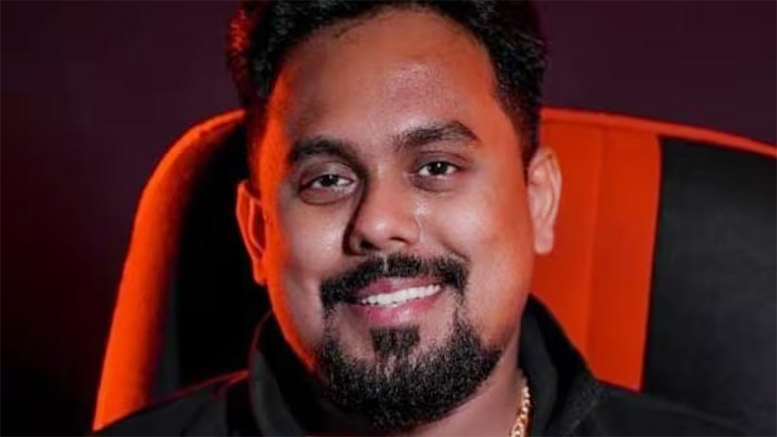
Shanthanu Shettigar, a shop manager in Muscat, regularly buys tickets for the monthly grand prize draw with one of his closest friends – and the pair won on February 3.

Mr Shettigar, 33, who is from Udyavar in Udupi district of the southern state of Karnataka and has lived in the Omani capital for eight years, said he was left speechless after learning of his success.

“When I first moved to Muscat, many of my colleagues were purchasing Big Ticket, which encouraged me to give it a try,” he said.

“I started buying tickets on my own, and later began sharing tickets with a close friend. The ticket that brought me this win was one we purchased together.”

“Like most people, I receive a lot of spam calls, and I was fully absorbed in my work as well. I knew the live draw was taking place tonight, but I never imagined my name would be announced,” he said.

“When I realised it was real and that I had won, I was honestly speechless. It still hasn’t fully sunk in, but I’m extremely happy.”

Mr Shettigar is not sure how he will spend his share of the money, but encouraged others to take part.

“This win was completely unexpected, so I want to take some time to think things through before deciding what to do next,” he said.

“I would definitely encourage others to participate with Big Ticket, whether with family or friends – you never know when your moment might come.”

The Big Ticket was established in 1992 with an initial first prize of Dh1 million. It is one of the most popular monthly raffles in the UAE.

It has transformed the lives of many people across the Emirates and beyond.

Entry to the Big Ticket Millionaire is Dh500. Tickets can be bought online or at counters at Zayed International Airport and Al Ain Airport.

Comments

Add new comment

  • Coastaldigest.com reserves the right to delete or block any comments.
  • Coastaldigset.com is not responsible for its readers’ comments.
  • Comments that are abusive, incendiary or irrelevant are strictly prohibited.
  • Please use a genuine email ID and provide your name to avoid reject.
News Network
January 23,2026

modIKERALA.jpg

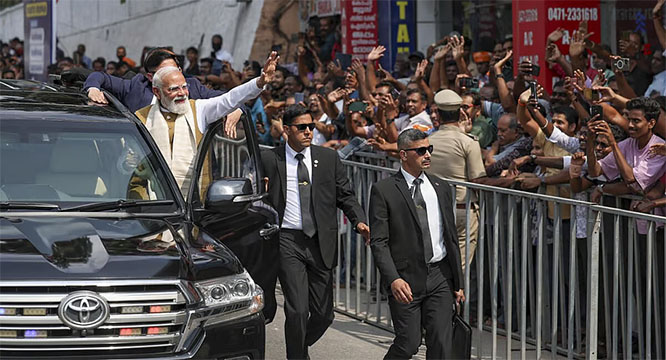
Prime Minister Narendra Modi, during his visit to Thiruvananthapuram on Friday, January 23, indicated that the Bharatiya Janata Party (BJP) is aiming to expand its political footprint in Kerala ahead of the Assembly elections scheduled in the coming months.

Speaking at a BJP-organised public meeting, Modi drew parallels between the party’s early electoral gains in Gujarat and its recent victory in the Thiruvananthapuram Municipal Corporation. The civic body win, which ended decades of Left control, was cited by the Prime Minister as a possible starting point for the party’s broader ambitions in the state.

Recalling BJP’s political trajectory in Gujarat, Modi said the party was largely insignificant before 1987 and received little media attention. He pointed out that the BJP’s first major breakthrough came with its victory in the Ahmedabad Municipal Corporation that year.

“Just as our journey in Gujarat began with one city, Kerala’s journey has also started with a single city,” Modi said, suggesting that the party’s municipal-level success could translate into wider electoral acceptance.

The Prime Minister alleged that successive governments led by the Left Democratic Front (LDF) and the United Democratic Front (UDF) had failed to adequately develop Thiruvananthapuram. He accused both fronts of corruption and neglect, claiming that basic infrastructure and facilities were denied to the capital city for decades.

According to Modi, the BJP’s control of the civic body represents a shift driven by public dissatisfaction with the existing political alternatives. He asserted that the BJP administration in Thiruvananthapuram had begun working towards development, though no specific details or timelines were outlined.

Addressing the gathering at Putharikandam Maidan, Modi said the BJP intended to project Thiruvananthapuram as a “model city,” reiterating his party’s commitment to governance-led change.

The Prime Minister’s visit to Kerala also included the inauguration of several development projects and the flagging off of new train services, as the BJP intensifies its political outreach in the poll-bound state.

Comments

Add new comment

  • Coastaldigest.com reserves the right to delete or block any comments.
  • Coastaldigset.com is not responsible for its readers’ comments.
  • Comments that are abusive, incendiary or irrelevant are strictly prohibited.
  • Please use a genuine email ID and provide your name to avoid reject.
News Network
February 4,2026

Mangaluru: Urban local bodies and gram panchayats should make the use of Kannada on signboards mandatory while issuing trade licences to commercial establishments, Dakshina Kannada Deputy Commissioner Darshan HV said. He also called for regular inspections to ensure compliance.

Presiding over the District Kannada Awareness Committee meeting at the deputy commissioner’s office, Darshan said the city corporation would be directed to ensure that shops operating in malls prominently display their names in Kannada. “All commercial establishments, including shops, companies, offices and hotels, must mandatorily display their names in Kannada on signboards,” he said.

The deputy commissioner added that the National Highways Authority of India (NHAI) would be instructed to include Kannada on signboards along national highways. Banks, he said, would be directed through committee meetings to provide application forms in Kannada.

“Even if English-medium schools and colleges impart education in English, their signboards must display the institution’s name in Kannada. Steps will also be taken to ensure that private buses display place names in Kannada,” Darshan said.

During the meeting, committee members raised concerns over the closure of Kannada-medium schools in rural areas due to a shortage of teachers and stressed the need for immediate corrective measures. They also pointed out that several industries employ workers from other states while overlooking local candidates.

Members further demanded that nationalised banks provide deposit and withdrawal slips in Kannada. It was brought to the deputy commissioner’s notice that the presence of staff without knowledge of Kannada in rural branches of nationalised banks is causing hardship to local customers.

Meanwhile, MP Srinath, president of the District Kannada Sahitya Parishat, urged the district administration to allot land for the construction of a district Kannada Bhavana in Mangaluru.

Comments

Add new comment

  • Coastaldigest.com reserves the right to delete or block any comments.
  • Coastaldigset.com is not responsible for its readers’ comments.
  • Comments that are abusive, incendiary or irrelevant are strictly prohibited.
  • Please use a genuine email ID and provide your name to avoid reject.