‘Unwell’ Jaish chief Masood Azhar undergoes dialysis in Pakistan Army hospital

Agencies
March 2, 2019

New Delhi, Mar 2: Masood Azhar, the founder of the dreaded terrorist group Jaish-e-Mohammad (JeM), is suspected to be afflicted with renal failure and is under regular dialysis at an army hospital in Rawalpindi in Pakistan, officials said on Saturday.
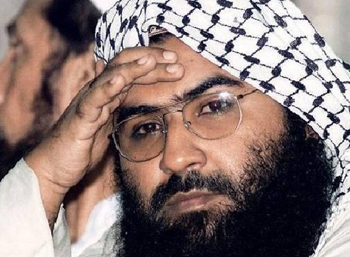
This suggestion of security officials came after Pakistan foreign minister Shah Mahmood Qureshi said the JeM chief is “unwell”.

“Recent reports indicate that Masood Azhar is now afflicted with renal failure and is under treatment and regular dialysis at the army hospital in Rawalpindi, the headquarters of the Pakistan Army,” a senior security official said.

Qureshi said Thursday: “He is in Pakistan, according to my information. He is unwell to the extent that he can’t leave his house, because he’s really unwell”.

The Jaish-e-Mohammad chief was a close associate of Osama bin Laden, terror motivator in several African countries and also known by many as the Pakistani cleric who brought jihad into the religious discourse at mosques in the UK, the official said.

The influence of the 50-year-old terror mastermind was so huge that, when he was released by India in exchange for freeing the hijacked Indian Airlines aircraft IC-814 on December 31, 1999 in Kandahar, Laden hosted a banquet for him the same night.

In the banquet, Laden recalled how he and Azhar had first worked together in 1993, the official said.

Azhar was arrested for preaching jihad in Jammu and Kashmir in 1994. One of his British recruits, Omar Shaikh, as a member of the terrorist group Harkat-ul-Ansar (HuA), kidnapped four western tourists in India in 1994 in order to secure the release of Azhar.

However, security agencies succeeded in releasing the hostages and arresting Shaikh.

Again in 1995, five western tourists were kidnapped by HuA and eventually killed in order to gain the release of Azhar.

Almost immediately after Azhar’s release, Jaish-e-Mohammad was formed and it carried out its first suicide attack in Jammu and Kashmir in April 2000 by striking the Badami Bagh cantonment in Srinagar.

The 24-year-old bomber, Asif Sadiq, was one of Azhar’s earliest recruits and student from Birmingham. At this time, Azhar also began using several al-Qaeda recruits.

In 1979-1989, after he suffered injuries in the Soviet–Afghan War, he was chosen as the head of Harkat-ul-Ansar’s department of motivation.

In the early 1990s, Azhar became the general secretary of Harkat-ul-Ansar and visited international locations to recruit, raise funds and spread the message of pan-Islamism.

Among his destinations were Zambia, Abu Dhabi, Saudi Arabia, Mongolia, the United Kingdom and Albania.

He also went to Kenya to meet an al-Qaida affiliate of Somalia in 1993 and in August 1993, Azhar entered the UK for a speaking, fund-raising, and recruitment tour with the message of jihad.

Azhar made contacts in Britain with people who helped to provide training and logistical support for terrorist plots.

In January 1993, Azhar visited Bangladesh along with Sajjad Afghani, a terrorist leader to facilitate the intrusion of Afghani to India.

Azhar was part of Harkat-ul-Mujahideen or Harkat-ul-Ansar, when he was arrested in 1994 in India for spreading hate.

Azhar formed Jaish-e-Mohammad after his release in 1999 when Indian Airlines flight IC 814 was hijacked and taken to Kandahar.

Since then, the JeM has been involved in terror attacks in the country.

The terror group was responsible for the attack on Indian Parliament on December 13, 2001 in which nine security personnel and officials were killed.

On January 2, 2016, a heavily armed group of JeM attacked the Pathankot airbase in which seven security personnel were killed.

The JeM also carried out the attack on Uri brigade headquarters on September 18, 2016, killing 17 soldiers and injuring 30 others.

On February 14 this year, the JeM carried out a suicide attack on a CRPF bus in Pulwama in Jammu and Kashmir killing 40 Jawans.

Comments

Add new comment

  • Coastaldigest.com reserves the right to delete or block any comments.
  • Coastaldigset.com is not responsible for its readers’ comments.
  • Comments that are abusive, incendiary or irrelevant are strictly prohibited.
  • Please use a genuine email ID and provide your name to avoid reject.
News Network
February 1,2026

Bengaluru: Karnataka Deputy Chief Minister D K Shivakumar on Sunday criticised the Union Budget presented by Finance Minister Nirmala Sitharaman, claiming it offered no tangible benefit to the state.

Though he said he was yet to study the budget in detail, Shivakumar asserted that Karnataka had gained little from it. “There is no benefit for our state from the central budget. I was observing it. They have now named a programme after Mahatma Gandhi, after repealing the MGNREGA Act that was named after him,” he said.

Speaking to reporters here, the Deputy Chief Minister demanded the restoration of MGNREGA, and made it clear that the newly enacted rural employment scheme — VB-G RAM G — which proposes a 60:40 fund-sharing formula between the Centre and the states, would not be implemented in Karnataka.

“I don’t see any major share for our state in this budget,” he added.

Shivakumar, who also holds charge of Bengaluru development, said there were high expectations for the city from the Union Budget. “The Prime Minister calls Bengaluru a ‘global city’, but what has the Centre done for it?” he asked.

He also drew attention to the problems faced by sugar factories, particularly those in the cooperative sector, alleging a lack of timely decisions and support from the central government.

Noting that the Centre has the authority to fix the minimum support price (MSP) for agricultural produce, Shivakumar said the Union government must take concrete steps to protect farmers’ interests.

Comments

Add new comment

  • Coastaldigest.com reserves the right to delete or block any comments.
  • Coastaldigset.com is not responsible for its readers’ comments.
  • Comments that are abusive, incendiary or irrelevant are strictly prohibited.
  • Please use a genuine email ID and provide your name to avoid reject.
News Network
January 20,2026

iran.jpg

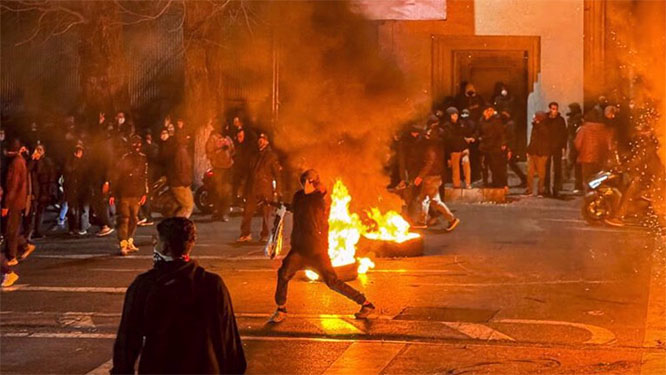
Iranian security and intelligence forces have captured more than 470 individuals in three provinces, identified as key figures behind the recent wave of violent unrest and terrorist activities linked to foreign-backed networks.

The Intelligence Ministry's provincial office in Khorasan Razavi announced on Monday the arrest of 192 armed terrorists, identified as the main agents behind recent riots in the region. 

According to an official statement, the detainees were involved in the killing of several security personnel and civilians, setting fire to mosques, public service facilities, and buses, as well as attacks on military and law enforcement centers.

The seized items from the group include several bulletproof vests, Kalashnikov rifles, hunting weapons, Winchester rifles, and various cold weapons such as daggers, swords, brass knuckles, tactical knives, crossbows, and chains.

Evidence indicates that some of the individuals were tied to hostile movements and terrorist organizations, with links overseas. Others were identified as members of violent criminal gangs, actively taking part in the unrest alongside their associates.

Simultaneously, in the western province of Lorestan, the IRGC announced the arrest of 134 individuals as the main leaders and influential field agents of a US-Israeli terrorist network.

The IRGC statement stated that these individuals formed terrorist cells during the recent unrest, committing "Daesh-like" acts.

They wounded security forces with firearms and cold weapons, and burned and destroyed public and private properties, including mosques, shops, banks, and private and public vehicles.

In the northwestern province of Zanjan, the police reported detaining 150 people identified as principal leaders and agents behind recent riots.

Authorities noted that these individuals were responsible for destroying public and private property and intentionally setting fire to vehicles in the province's squares.

Their crimes include shedding the blood of innocent people, destroying public and private property, attempting to enter military sites, disrupting public order, and spreading terror among citizens.

A variety of cold weapons were reportedly seized from the detainees.

What began late last month as peaceful protests over economic hardship across Iran turned violent after public statements by US and Israeli regime figures encouraged vandalism and disorder.

During the unrest, foreign-backed mercenaries rampaged through cities, killing security forces and civilians and damaging public property.

Comments

Add new comment

  • Coastaldigest.com reserves the right to delete or block any comments.
  • Coastaldigset.com is not responsible for its readers’ comments.
  • Comments that are abusive, incendiary or irrelevant are strictly prohibited.
  • Please use a genuine email ID and provide your name to avoid reject.
News Network
January 23,2026

oscar.jpg

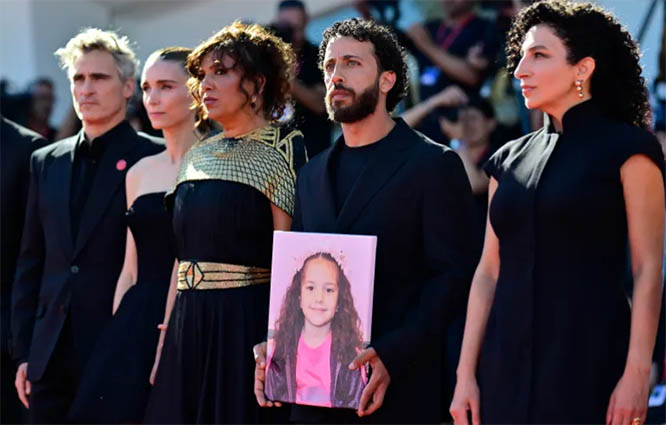
The Voice of Hind Rajab, inspired by the tragic final moments of a young Palestinian girl killed by Israeli fire in Gaza, has been nominated for an Academy Award in the Best International Feature Film category.

Directed by Tunisian filmmaker Kaouther Ben Hania, the film recounts the true story of five-year-old Hind Rajab, who lost her life in January 2024 while fleeing Israeli bombardment with her family.

The film features the real audio of Hind’s desperate call to the Palestinian Red Crescent Society, where she pleaded for help moments before the vehicle she was in was struck by 355 bullets.

The haunting narrative begins with a brief call made from the besieged Tel al-Hawa neighborhood of Gaza, where gunfire and armored vehicles drowned out every sound.

After witnessing the brutal killing of her family, she made a trembling call, her voice reduced to a whisper as she spoke of the massacre and her unbearable loneliness as the sole survivor.

Premiering at the Venice International Film Festival in September 2025, The Voice of Hind Rajab garnered widespread acclaim, receiving a record-setting 23-minute standing ovation and the Silver Lion Grand Jury Prize, the festival’s second-highest honor.

In her acceptance speech, Ben Hania dedicated the film to humanitarian workers and first responders in Gaza, emphasizing that Hind's voice symbolizes countless civilians affected by war.

She aims to give voice to victims often reduced to mere statistics, highlighting the broader suffering of civilians in war zones.

The film’s Oscar nomination underscores its powerful storytelling and ethical approach to depicting real-life tragedy, making it a crucial piece of contemporary cinema.

It serves not only as a narration of individual tragedy but also as an artistic and documentary response to the silence and censorship that often overshadow West Asian struggles and wars.

Using an innovative method she calls docufiction, Ben Hania bridges unvarnished reality and narrative structure, creating a work that is both artistically valuable and socially impactful.

Born in 1977 in Sidi Bouzid—later the epicenter of the Arab revolution—her background profoundly influenced her worldview and artistic approach.

She is a graduate of the Higher School of Audiovisual Arts of Tunis, Pantheon-Sorbonne University, and La Fémis in Paris, where her studies equipped her with the technical and theoretical tools needed to address complex subjects. 

Comments

Add new comment

  • Coastaldigest.com reserves the right to delete or block any comments.
  • Coastaldigset.com is not responsible for its readers’ comments.
  • Comments that are abusive, incendiary or irrelevant are strictly prohibited.
  • Please use a genuine email ID and provide your name to avoid reject.