



US Announces "Efficient" New Rule for Filing H-1B Visas

Agencies
January 31, 2019

Washington, Jan 31: As part of its effort to give greater chance to foreign workers who have received higher education from the US, the Trump administration on Wednesday formally announced a new rule related to the filing of H-1B visas, asserting that it is more efficient, effective and helps in attracting best talent in the US.
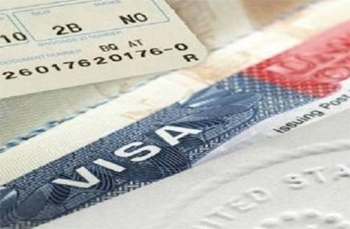
The final rule reverses the order by which US Citizenship and Immigration Services (USCIS) selects H-1B petitions under the regular cap and the advanced degree exemption.

Among other things, it introduces an electronic registration requirement for petitioners seeking to file H-1B cap-subject petitions.

To be published in the Federal Register on Thursday, the new rule will go into effect on April 1, though the electronic registration requirement will be suspended for the fiscal year (FY) 2020 cap season, USCIS said.

"These simple and smart changes are a positive benefit for employers, the foreign workers they seek to employ, and the agency's adjudicators, helping the H-1B visa programme work better," said USCIS Director Francis Cissna.

Early this month, President Donald Trump said that he wants to bring in changes in the H-1B visa systems so that holders of these visas can stay in the country and accelerate their path to citizenship.

The H-1B visa, popular among Indian IT professionals, is a non-immigrant visa that allows US companies to employ foreign workers in speciality occupations that require theoretical or technical expertise.

The new registration system, once implemented, will lower overall costs for employers and increase government efficiency, he said.

Cissna said USCIS is also furthering Donald Trump's goal of improving the immigration system by making a simple adjustment to the H-1B cap selection process.

"As a result, US employers seeking to employ foreign workers with a US master''s or higher degree will have a greater chance of selection in the H-1B lottery in years of excess demand for new H-1B visas," Cissna said

Effective from April 1, USCIS will first select H-1B petitions (or registrations, once the registration requirement is implemented) submitted on behalf of all beneficiaries, including those that may be eligible for the advanced degree exemption.

Thereafter USCIS will select from the remaining eligible petitions, a number projected to reach the advanced degree exemption.

Changing the order in which USCIS counts these allocations will likely increase the number of petitions for beneficiaries with a master''s or higher degree from a US institution of higher education to be selected under the H-1B numerical allocations, a media statement said.

Specifically, the change will result in an estimated increase of up to 16 percent (or 5,340 workers) in the number of selected petitions for H-1B beneficiaries with a master''s degree or higher from a US institution of higher education.

USCIS will begin accepting H-1B cap petitions for fiscal 2020 on April 1, 2019. The reverse selection order will apply to petitions filed for the FY 2020 H-1B cap season.

Based on the feedback, USCIS said it has decided to suspend the electronic registration requirement for the fiscal 2020 cap season to complete user testing and ensure the system and process are fully functional.

Once implemented, the electronic registration requirement will require petitioners seeking to file H-1B cap petitions, including those that may be eligible for the advanced degree exemption, to first electronically register with USCIS during a designated registration period.

Only those whose registrations are selected will be eligible to file an H-1B cap-subject petition. USCIS expects that the electronic registration requirement, once implemented, will reduce overall costs for petitioners and create a more efficient and cost-effective H-1B cap petition process for USCIS and petitioners, according to an official statement.

Comments

Add new comment

  • Coastaldigest.com reserves the right to delete or block any comments.
  • Coastaldigset.com is not responsible for its readers’ comments.
  • Comments that are abusive, incendiary or irrelevant are strictly prohibited.
  • Please use a genuine email ID and provide your name to avoid reject.
News Network
January 23,2026

Karnataka Governor Thaawarchand Gehlot read only three lines from the 122-paragraph address prepared by the Congress-led state government while addressing the joint session of the Legislature on Thursday, effectively bypassing large sections critical of the BJP-led Union government.

The omitted portions of the customary Governor’s address outlined what the state government described as a “suppressive situation in economic and policy matters” under India’s federal framework. The speech also sharply criticised the Centre’s move to replace the Mahatma Gandhi National Rural Employment Guarantee Act (MGNREGA) with the Viksit Bharat–Guarantee for Rozgar and Ajeevika Mission (Gramin) Act, commonly referred to as the VB-GRAM (G) Act.

Governor Gehlot had earlier conveyed his objection to several paragraphs that were explicitly critical of the Union government. On Thursday, he confined himself to the opening lines — “I extend a warm welcome to all of you to the joint session of the State legislature. I am extremely pleased to address this august House” — before jumping directly to the concluding sentence of the final paragraph.

He ended the address by reading the last line of paragraph 122: “Overall, my government is firmly committed to doubling the pace of the State’s economic, social and physical development. Jai Hind — Jai Karnataka.”

According to the prepared speech, the Karnataka government demanded the scrapping of the VB-GRAM (G) Act, describing it as “contractor-centric” and detrimental to rural livelihoods, and called for the full restoration of MGNREGA. The state government argued that the new law undermines decentralisation, weakens labour protections, and centralises decision-making in violation of constitutional norms.

Key points from the unread sections of the speech:

•    Karnataka facing a “suppressive” economic and policy environment within the federal system

•    Repeal of MGNREGA described as a blow to rural livelihoods

•    VB-GRAM (G) Act accused of protecting corporate and contractor interests

•    New law alleged to weaken decentralised governance

•    Decision-making said to be imposed by the Centre without consulting states

•    Rights of Adivasis, women, backward classes and agrarian communities curtailed

•    Labourers allegedly placed under contractor control

•    States facing mounting fiscal stress due to central policies

•    VB-GRAM (G) Act accused of enabling large-scale corruption

Comments

Add new comment

  • Coastaldigest.com reserves the right to delete or block any comments.
  • Coastaldigset.com is not responsible for its readers’ comments.
  • Comments that are abusive, incendiary or irrelevant are strictly prohibited.
  • Please use a genuine email ID and provide your name to avoid reject.
News Network
January 23,2026

Mangaluru: The Karnataka Government Polytechnic (KPT), Mangaluru, has achieved autonomous status from the All India Council for Technical Education (AICTE), becoming the first government polytechnic in the country to receive such recognition in its 78-year history. The status was granted by AICTE, New Delhi, and subsequently approved by the Karnataka Board of Technical Education in October last year.

Officials said the autonomy was conferred a few months ago. Until recently, AICTE extended autonomous status only to engineering colleges, excluding diploma institutions. However, with a renewed national focus on skill development, several government polytechnics across India have now been granted autonomy.

KPT, the second-largest polytechnic in Karnataka, was established in 1946 with four branches and has since expanded to offer eight diploma programmes, including computer science and polymer technology. The institution is spread across a 19-acre campus.

Ravindra M Keni, the first dean of the institution, told The Times of India that AICTE had proposed autonomous status for polytechnic institutions that are over 25 years old. “Many colleges applied. In the first round, 100 institutions were shortlisted, which was further narrowed down to 15 in the second round. We have already completed one semester after becoming an autonomous institution,” he said. He added that nearly 500 students are admitted annually across eight three-year diploma courses.

Explaining the factors that helped KPT secure autonomy, Keni said the institution has consistently recorded 100 per cent admissions and placements for its graduates. He also noted its strong performance in sports, with the college emerging champions for 12 consecutive years, along with active student participation in NCC and NSS activities.

Autonomous status allows KPT to design industry-oriented curricula, conduct examinations, prepare question papers, and manage academic documentation independently. The institution can also directly collaborate with industries and receive priority funding from AICTE or the Ministry of Education. While academic autonomy has been granted, financial control will continue to rest with the state government.

“There will be separate committees for examinations, question paper setting, boards of studies, and boards of examiners. The institution will now have the freedom to conduct admissions without government notifications and issue its own marks cards,” Keni said, adding that new academic initiatives would be planned after a year of functioning under the autonomous framework.

Comments

Add new comment

  • Coastaldigest.com reserves the right to delete or block any comments.
  • Coastaldigset.com is not responsible for its readers’ comments.
  • Comments that are abusive, incendiary or irrelevant are strictly prohibited.
  • Please use a genuine email ID and provide your name to avoid reject.
News Network
January 31,2026

trumpkill.jpg

The US Department of Justice has released millions of new documents linked to the case of convicted child sex offender Jeffrey Epstein, before removing some pages that contained complaints mentioning President Donald Trump.

Deputy Attorney General Todd Blanche said on Friday that approximately 3.5 million files were published to comply with the Epstein Transparency Act, following criticism that the administration had missed a December 19 deadline set by Congress.

The documents include FBI communications and complaints submitted as tips, some of which list comments mentioning Trump and others who had social or professional ties to Epstein.

Trump has repeatedly denied any wrongdoing in relation to his past association with Epstein.

Pages removed from DOJ website

After their publication, pages containing complaints that mentioned Trump were removed from the DOJ website and now return a “page not found” message. Copies of the documents, however, have circulated widely on social media. CNN anchor Jake Tapper was among those who publicly noted that the pages had been taken down.

One complaint, filed by a friend of a victim, says Trump forced a girl aged 13–14 to perform “oral sex” approximately 35 years ago in New Jersey. The document states that an investigator was sent to Washington to conduct an interview.

Another complaint says Trump regularly paid an individual to perform sexual acts and adds that he was present when her newborn child was murdered by a relative. The paperwork notes that there was “no contact made” with the complainant.

A separate complaint, which provided no contact information, said “calendar girls” parties at Trump’s Mar-a-Lago involved children and sexual abuse. The document also names several public figures as present at such events.

In another account, a complainant said they witnessed a “sex trafficking ring” at Trump National Golf Club in Rancho Palos Verdes, California, in the mid-1990s. The person noted “threats” from Trump’s head of security if she spoke publicly about what she had seen.

Other figures mentioned in the files

The latest release also includes a draft email Epstein wrote to himself in 2013, referring to Microsoft co-founder Bill Gates. In the message, Epstein said Gates asked him to delete emails and referenced “personal matters.”

The DOJ has not provided a detailed explanation for why certain pages were removed after publication. The department said the document release was ongoing.

Comments

Add new comment

  • Coastaldigest.com reserves the right to delete or block any comments.
  • Coastaldigset.com is not responsible for its readers’ comments.
  • Comments that are abusive, incendiary or irrelevant are strictly prohibited.
  • Please use a genuine email ID and provide your name to avoid reject.