



US Doctor Dies in Burning Tesla as Futuristic Doors Didn't Open After Crash, Alleges Lawsuit

Agencies
October 24, 2019

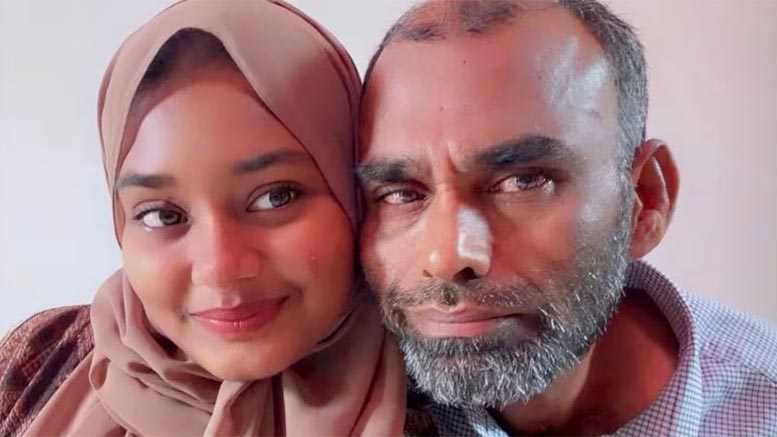
Washington, Oct 24: Omar Awan was driving his dream car when he lost control. The sleek, blue Model S Tesla careened across a road in South Florida and slammed into a palm tree.

But it wasn't the crash that killed him, his family's lawyers said - it was the car's futuristic design features.

The last moments of Awan's life were gruesome and excruciating. After the crash, the Tesla's lithium ion battery caught fire. Smoke - and then flames - filled the car, suffocating Awan and burning him from his feet up. Outside, a crowd gathered, but couldn't help.

That's because the car's retractable door handles, which are supposed to "auto-present" when they detect a key fob nearby, malfunctioned and first responders weren't able to open the doors and save Awan, alleges a wrongful-death lawsuit.

"The fire engulfed the car and burned Dr. Awan beyond recognition - all because the Model S has inaccessible door handles, no other way to open the doors, and an unreasonably dangerous fire risk," the complaint reads.

"These Model S defects and others," the suit says, "rendered it a death trap."

Awan, a 48-year-old anesthesiologist and father of five, leased the Model S for two reasons, family attorney Stuart Grossman said: he was environmentally sensitive and safety conscious.

Tesla, maker of electric vehicles, has also claimed that the Model S once achieved "the best safety rating of any car tested." So Awan, who could have afforded a Mercedes or another luxury vehicle, went with the 2016 Tesla. And it killed him, Grossman said.

"These things, they just love to burn," he said. "The car is so overengineered. It's so techy, it makes you want to buy a Chevy pickup truck."

Tesla's public relations team did not respond to a request for comment on the lawsuit, filed in October, and the company's lawyers have yet to respond in court.

But shortly after the February crash, a Tesla spokeswoman told the Florida Sun-Sentinel that "We are deeply saddened by this accident" but that "Tesla vehicles are engineered to be the safest cars in the world and Tesla drivers have driven more than 10 billion miles to date."

Awan's death is one in a string of recent incidents that has been blamed on Tesla's innovative technology. A lawsuit stemming from a May 2018 crash that killed two teens also blamed a battery fire for at least one of the deaths (Grossman represents the car's third passenger, who survived the accident after being thrown from the vehicle).

In April, surveillance footage from a Shanghai parking garage showed smoke billowing from a Model S moments before the car burst into flames. The widely-shared video prompted Tesla to open an internal investigation.

Several other suits have attributed deaths to Tesla's "Autopilot" system, an automatic driver-assistance feature.

"There are a number of these cases," Grossman said. "What the hell is going on?"

In Awan's case and in other crashes, the carmaker has argued that high-speed crashes can result in fires whether the car is powered by gasoline or batteries. But Awan survived the collision, and he could have escaped the smoke and fire, too, Grossman said - if only the police officer who arrived on scene could have opened the car's doors.

The lawsuit asserts that the features rendered the car "defective" and "dangerous" - the door handles compounding the problem of an "inherently unstable" battery.

"Tesla failed to warn users about the scope and extent of the defective and unreasonably dangerous conditions of the Model S," the complaint says.

The Broward County autopsy report, obtained by The Washington Post, lists Awan's cause of death as "inhalation of products of combustion with a contributory cause of death of thermal injuries."

The medical examiner who responded to the crash wrote that Awan "was not identifiable on scene." His clothes and hair were burned and a yellow metal ring was found on his left ring finger.

After the crash, and after firefighters extinguished the blaze, Awan's Tesla was transported to a tow yard. Once there, it reignited and burned again.

Comments

Add new comment

  • Coastaldigest.com reserves the right to delete or block any comments.
  • Coastaldigset.com is not responsible for its readers’ comments.
  • Comments that are abusive, incendiary or irrelevant are strictly prohibited.
  • Please use a genuine email ID and provide your name to avoid reject.
News Network
February 1,2026

Bengaluru: Karnataka Deputy Chief Minister D K Shivakumar on Sunday criticised the Union Budget presented by Finance Minister Nirmala Sitharaman, claiming it offered no tangible benefit to the state.

Though he said he was yet to study the budget in detail, Shivakumar asserted that Karnataka had gained little from it. “There is no benefit for our state from the central budget. I was observing it. They have now named a programme after Mahatma Gandhi, after repealing the MGNREGA Act that was named after him,” he said.

Speaking to reporters here, the Deputy Chief Minister demanded the restoration of MGNREGA, and made it clear that the newly enacted rural employment scheme — VB-G RAM G — which proposes a 60:40 fund-sharing formula between the Centre and the states, would not be implemented in Karnataka.

“I don’t see any major share for our state in this budget,” he added.

Shivakumar, who also holds charge of Bengaluru development, said there were high expectations for the city from the Union Budget. “The Prime Minister calls Bengaluru a ‘global city’, but what has the Centre done for it?” he asked.

He also drew attention to the problems faced by sugar factories, particularly those in the cooperative sector, alleging a lack of timely decisions and support from the central government.

Noting that the Centre has the authority to fix the minimum support price (MSP) for agricultural produce, Shivakumar said the Union government must take concrete steps to protect farmers’ interests.

Comments

Add new comment

  • Coastaldigest.com reserves the right to delete or block any comments.
  • Coastaldigset.com is not responsible for its readers’ comments.
  • Comments that are abusive, incendiary or irrelevant are strictly prohibited.
  • Please use a genuine email ID and provide your name to avoid reject.
News Network
February 3,2026

manjeshwar.jpg

Kasaragod: An 18-year-old girl was stabbed to death at Thuminad in Manjeshwar panchayat on Monday, allegedly by her father following a domestic dispute. 

The victim has been identified as K U Mariyamath Jumaila. Her father, Umar Farooq, has been taken into police custody, Manjeshwar Station House Officer Inspector Ajith Kumar P said.

According to the police, Umar Farooq had been working in a West Asian country and returned home about three months ago. 

Family tensions reportedly escalated after his wife, Thahira (41), decided to seek a divorce and asked him to leave her life. Kasaragod district panchayat member Harshad Vorkady alleged that Umer was addicted to marijuana and frequently caused disturbances at home.

On Monday, Thahira asked Umar to come to her sister’s house in Thuminad to discuss the dispute. Jumaila accompanied her mother. 

Manjeshwar panchayat member Illiyas Thuminad said Umar arrived along with his brother, following which Thahira handed over gold ornaments and property documents to him and asked him to sever ties with her.

However, the police said a property dispute had been ongoing between Umar Farooq and his sister-in-law’s husband. During a heated argument, Umar allegedly attempted to attack the man with a sharp weapon. When Jumaila intervened to stop the assault, she was stabbed in the neck.

The teenager collapsed after bleeding profusely and was rushed to a private hospital in Mangaluru, where doctors declared her dead. Her body was later shifted to Mangalpady Taluk Hospital for post-mortem examination.

Jumaila was a former student of Sirajul Huda English Medium Higher Secondary School, Manjeshwar. 

Comments

Add new comment

  • Coastaldigest.com reserves the right to delete or block any comments.
  • Coastaldigset.com is not responsible for its readers’ comments.
  • Comments that are abusive, incendiary or irrelevant are strictly prohibited.
  • Please use a genuine email ID and provide your name to avoid reject.
News Network
January 20,2026

Mangaluru: In a major step towards strengthening rural innovation, the Office of the Principal Scientific Adviser (PSA) to the Government of India is supporting the establishment of RuTAGe Smart Village Centres (RSVCs) across the country through collaborations with academic institutions, civil society organisations and philanthropic partners.

As part of this national initiative, Nitte (Deemed to be University) will set up the first RSVCs in the region at Nitte GP in Udupi district and at the Nitte Health Centre, Sevanjali Trust, Farangipete, in Dakshina Kannada district. The centres will be inaugurated on January 21. In South India, the programme is being implemented by the Section Infin-8 Foundation (SI-8).

Speaking to reporters on Monday, SI-8 founder-director Vishwas US said experts from Nitte University and SI-8 would work closely with farmers, students, youth and local entrepreneurs to adapt and deploy technologies tailored to local needs.

Project head Prof Iddya Karunasagar, representing Nitte DU, said the RSVCs at Nitte and Farangipete would serve as demonstration hubs for a wide range of agriculture, energy, skill-development and assistive technologies. These include solar dryers for fruits, vegetables and crops; soil-testing solutions; power weeders and women-friendly farm tools; wind-powered devices for rural artisans; grain storage systems; grass-cutting and tree-climbing equipment; and liquid fertiliser production using cowshed waste.

SI-8 CEO Aravind C Kumar said the centres would also provide access to digital and knowledge-based platforms such as ISRO applications, government scheme portals, market linkage tools and gamified learning resources, along with assistive technologies for persons with visual impairments.

Highlighting the broader impact of the initiative, Principal Scientific Adviser Prof Ajay Kumar Sood said it demonstrated how applied research could bridge the rural–urban divide and help create self-reliant, technology-enabled villages.

The initiative has been made possible through philanthropic support from Dr NC Murthy of ACM Business Solutions, LLC, USA. Dr Sapna Poti, Director (Strategic Alliances) at the Office of the Principal Scientific Adviser, said the long-term objective is to build self-sufficient, technology-driven communities capable of generating sustainable livelihoods on their own.

Comments

Add new comment

  • Coastaldigest.com reserves the right to delete or block any comments.
  • Coastaldigset.com is not responsible for its readers’ comments.
  • Comments that are abusive, incendiary or irrelevant are strictly prohibited.
  • Please use a genuine email ID and provide your name to avoid reject.