US struggling in North Korea denuclearisation: Experts

Agencies
July 22, 2018

Washington, Jul 22: The US appeal at the United Nations for "full enforcement" of sanctions against North Korea underscored the difficulty of attaining real progress on denuclearisation, more than a month after the much-vaunted Donald Trump-Kim Jong Un summit.

In their joint declaration after the historic meeting on June 12 in Singapore, the North Korean leader "reaffirmed his commitment" to the "complete denuclearisation of the Korean Peninsula." But the actual details of the process, including how and by what timetable the North's nuclear programme is to be dismantled, have yet to be negotiated.

At the time, the US administration insisted on the "urgency" of denuclearisation, which was supposed to begin "very quickly."

"We're hopeful we can get it done" by 2020, before the end of Trump's current presidential term, Secretary of State Mike Pompeo said at the time.

Pompeo has been charged with the challenge of putting meat on the bare bones of the Singapore commitment.

But 40 days and one apparently fruitless visit by Pompeo to Pyongyang later, the tone of the American side has clearly changed.

"We have no time limit," Trump told reporters on Wednesday. "We have no speed limit."

Asked about the change in tone, State Department spokeswoman Heather Nauert sought to reassure: "We have teams in place that are working very hard on this issue every day." "We have said there's a lot of work left to be done."

For several experts who had warned that the Singapore summit, for all its hype, pomp and high expectations, had provided only the barest outline of a long and arduous process, the return to reality is welcome.

"To be successful, negotiations need time," said Abraham Denmark of the Wilson Center think tank in Washington. Some experts, he added, "warn that complete and verified denuclearisation could take 15 years." So after the head-spinning events and reversals of the past six months, it may now be time to dig in for a long wait.

To some observers, moreover, the loss of momentum that Singapore should have provided is worrying. There have been few if any real advances.

Even the North's return to the US of the remains of American soldiers killed in the Korean War (1950-53), described as "immediate" on June 12, appears more complicated -- with Pompeo now saying it may take place in "the next couple of weeks."

For now, the only concrete results of the Washington-Pyongyang thaw are the North's halt to nuclear and missile testing and the American side's suspension of planned military maneuvers with South Korea, long denounced as a "provocation" by Pyongyang.

The US had long rejected such a "double freeze." It involves gestures that could be reversed in a moment.

"If our goal still is the complete, verifiable and irreversible dismantlement of the North Korean nuclear programme, we're not succeeding," said Sue Mi Terry of the Center for Strategic and International Studies, speaking to a security conference in Aspen, Colorado.

"Not only are they not giving up their nuclear weapons programme," she continued, "they've been working overtime on advancing their programme."

The Trump administration, criticised for failing to obtain a written promise of this key objective in Singapore, now insists negotiations are progressing toward the North's "final, fully verified" denuclearisation.

But a Pompeo visit to North Korea in early July was "by all accounts except his own deeply disappointing," said Jeffrey Bader and Ryan Hass in an article for the Brookings Institution. The problem, say the two experts, is that in Singapore, "Trump gave away much of that leverage" to ensure the North's cooperation.

And now the international campaign of "maximum pressure" on Pyongyang -- the stringent sanctions and the diplomatic isolation that Washington helped orchestrate -- is beginning to weaken.

"The sanctions are already loosening," said Terry, "because China is not really implementing" them.

Hence Pompeo's visit to the UN on Friday to condemn the erosion of the sanctions regime and to demand that the international community maintain serious pressure.

But this could be a challenge, experts say. "Maximum pressure" will be difficult to maintain in the absence of some new North Korean provocation.

"In case it doesn't work, we need to have a plan," Terry said. "We don't really have a Plan B."

Comments

Add new comment

  • Coastaldigest.com reserves the right to delete or block any comments.
  • Coastaldigset.com is not responsible for its readers’ comments.
  • Comments that are abusive, incendiary or irrelevant are strictly prohibited.
  • Please use a genuine email ID and provide your name to avoid reject.
News Network
February 1,2026

Bengaluru, Feb 1: For travelers landing at Kempegowda International Airport (KIA), the sleek, wood-paneled curves of Terminal 2 promise a world-class welcome. But the famed “Garden City” charm quickly withers at the curb. As India’s aviation sector swells to record numbers—handling over 43 million passengers in Bengaluru alone this past year—the “last mile” has turned into a marathon of frustration.

The Bengaluru Logjam: Rules vs Reality

While the city awaits the 2027 completion of the Namma Metro Blue Line, the interim has been chaotic. Recent “decongestion” rules at Terminal 1 have pushed app-based cab pickups to distant parking zones, forcing weary passengers into a 20-minute walk with luggage.

“I landed after ten months away and felt like a stranger in my own city,” says Ruchitha Jain, a Koramangala resident. “My driver couldn’t find me, staff couldn’t guide me, and the so-called ‘Premium’ lane is just a fancy tax on convenience.”

•    The Cost of Distance: A 40-km cab ride can now easily cross ₹1,500, driven by demand pricing and airport surcharges.

•    The Bus Gap: While Vayu Vajra remains a lifeline, its ₹300–₹400 fare is often cited as the most expensive airport bus service in the country.

A National Pattern of Disconnect

The struggle is not unique to Karnataka. From Chennai’s coast to Hyderabad’s plateau, India’s airports tell a familiar story: brilliant runways, broken exits.

City:    Primary Issue   |    Recent Development

Bengaluru:    Cab pickup restrictions & distance  |    App-based taxis shifted to far parking zones; long walks and fare spikes reported

Chennai:    Multi-Level Parking (MLCP) hike  |    Passengers report 40-minute walks to reach cab pickup points

Hyderabad:    “Taxi mafia” & touting  |    Over 440 touting cases reported; security presence intensified

Mumbai:    Fare scams  |     Tourists charged ₹18,000 for just 400 metres, triggering police action

In Hyderabad, travelers continue to battle entrenched local groups that intimidate Uber and Ola drivers, pushing passengers toward overpriced private taxis. Chennai flyers, meanwhile, complain that reaching the designated pickup zones now takes longer than short-haul flights from cities like Coimbatore.

The ‘Budget Day’ Hope

As Finance Minister Nirmala Sitharaman presents the Union Budget 2026 today, the aviation sector is watching closely. With the government’s renewed emphasis on multimodal integration, there is cautious hope for funding toward seamless airport-metro-bus hubs.

The vision is clear: a future where planes, trains, and metros speak the same language. Until then, passengers at KIA—and airports across India—will continue to discover that the hardest part of flying isn’t the thousands of kilometres in the air, but the last few on the ground.

Comments

Add new comment

  • Coastaldigest.com reserves the right to delete or block any comments.
  • Coastaldigset.com is not responsible for its readers’ comments.
  • Comments that are abusive, incendiary or irrelevant are strictly prohibited.
  • Please use a genuine email ID and provide your name to avoid reject.
News Network
February 4,2026

Mangaluru: Urban local bodies and gram panchayats should make the use of Kannada on signboards mandatory while issuing trade licences to commercial establishments, Dakshina Kannada Deputy Commissioner Darshan HV said. He also called for regular inspections to ensure compliance.

Presiding over the District Kannada Awareness Committee meeting at the deputy commissioner’s office, Darshan said the city corporation would be directed to ensure that shops operating in malls prominently display their names in Kannada. “All commercial establishments, including shops, companies, offices and hotels, must mandatorily display their names in Kannada on signboards,” he said.

The deputy commissioner added that the National Highways Authority of India (NHAI) would be instructed to include Kannada on signboards along national highways. Banks, he said, would be directed through committee meetings to provide application forms in Kannada.

“Even if English-medium schools and colleges impart education in English, their signboards must display the institution’s name in Kannada. Steps will also be taken to ensure that private buses display place names in Kannada,” Darshan said.

During the meeting, committee members raised concerns over the closure of Kannada-medium schools in rural areas due to a shortage of teachers and stressed the need for immediate corrective measures. They also pointed out that several industries employ workers from other states while overlooking local candidates.

Members further demanded that nationalised banks provide deposit and withdrawal slips in Kannada. It was brought to the deputy commissioner’s notice that the presence of staff without knowledge of Kannada in rural branches of nationalised banks is causing hardship to local customers.

Meanwhile, MP Srinath, president of the District Kannada Sahitya Parishat, urged the district administration to allot land for the construction of a district Kannada Bhavana in Mangaluru.

Comments

Add new comment

  • Coastaldigest.com reserves the right to delete or block any comments.
  • Coastaldigset.com is not responsible for its readers’ comments.
  • Comments that are abusive, incendiary or irrelevant are strictly prohibited.
  • Please use a genuine email ID and provide your name to avoid reject.
News Network
February 3,2026

wind.jpg

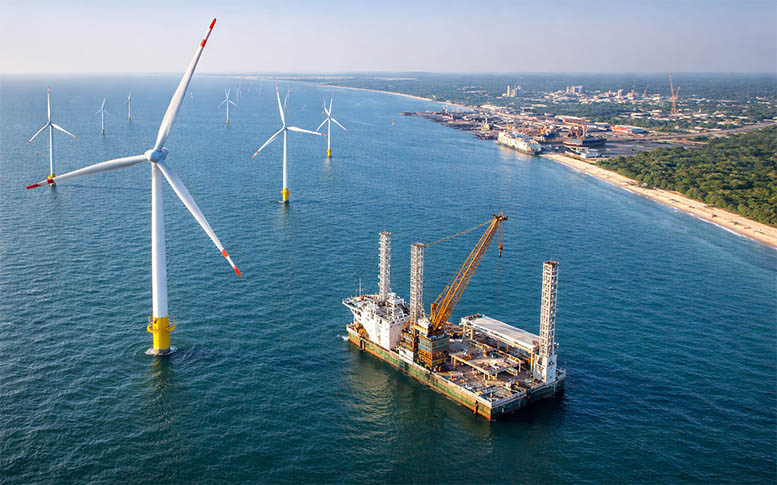
Dakshina Kannada MP Capt Brijesh Chowta has urged the Centre to give high priority to offshore wind energy generation along the Mangaluru coast, citing its strategic importance to India’s green energy and port-led development goals.

Raising the issue in the Lok Sabha under Rule 377, Chowta said studies by the National Institute of Oceanography have identified the Mangaluru coastline as part of India’s promising offshore wind ‘Zone-2’, covering nearly 6,490 sq km. He noted that the region’s relatively low exposure to cyclones and earthquakes makes it suitable for long-term offshore wind projects and called for its development as a dedicated offshore wind energy zone.

Highlighting the role of New Mangalore Port, Chowta said its modern infrastructure, multiple berths and heavy cargo-handling capacity position it well as a logistics hub for transporting and assembling large wind energy equipment.

He also pointed to the presence of major industrial units such as MRPL, OMPL, UPCL and the Mangaluru SEZ, which could serve as direct buyers of green power through power purchase agreements, improving project viability and speeding up execution.

With Karnataka’s peak power demand crossing 18,000 MW in early 2025, Chowta stressed the need to diversify renewable energy sources. He added that offshore wind projects in the Arabian Sea are strategically safer compared to the cyclone-prone Bay of Bengal.

Calling the project vital to India’s target of 500 GW of renewable energy by 2030, Chowta urged the Ministry of New and Renewable Energy to initiate resource assessments, pilot projects and stakeholder consultations at the earliest.

Comments

Add new comment

  • Coastaldigest.com reserves the right to delete or block any comments.
  • Coastaldigset.com is not responsible for its readers’ comments.
  • Comments that are abusive, incendiary or irrelevant are strictly prohibited.
  • Please use a genuine email ID and provide your name to avoid reject.