



Vatican City, Jul 28: The nun no longer goes to confession regularly, after an Italian priest forced himself on her while she was at her most vulnerable: recounting her sins to him in a university classroom nearly 20 years ago.
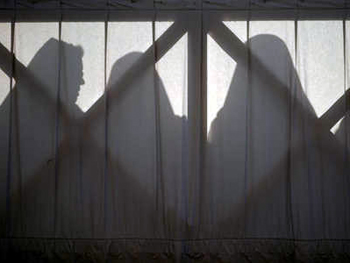
At the time, the sister only told her provincial superior and her spiritual director, silenced by the Catholic Church's culture of secrecy, her vows of obedience and her own fear, repulsion and shame.
"It opened a great wound inside of me," she told the Associated Press. "I pretended it didn't happen."
After decades of silence, the nun is one of a handful worldwide to come forward recently on an issue that the Catholic Church has yet to come to terms with: The sexual abuse of religious sisters by priests and bishops. An AP examination has found that cases have emerged in Europe, Africa, South America and Asia, demonstrating that the problem is global and pervasive, thanks to the universal tradition of sisters' second-class status in the Catholic Church and their ingrained subservience to the men who run it.
Some nuns are now finding their voices, buoyed by the #MeToo movement and the growing recognition that adults can be victims of sexual abuse when there is an imbalance of power in a relationship. The sisters are going public in part because of years of inaction by church leaders, even after major studies on the problem in Africa were reported to the Vatican in the 1990s.
The issue has flared in the wake of scandals over the sexual abuse of children, and recently of adults, including revelations that one of the most prominent American cardinals, Theodore McCarrick, sexually abused and harassed his seminarians.
The extent of the abuse of nuns is unclear, at least outside the Vatican. Victims are reluctant to report the abuse because of well-founded fears they won't be believed, experts told the AP. Church leaders are reluctant to acknowledge that some priests and bishops simply ignore their vows of celibacy, knowing that their secrets will be kept.
However, this week, about half a dozen sisters in a small religious congregation in Chile went public on national television with their stories of abuse by priests and other nuns — and how their superiors did nothing to stop it. A nun in India recently filed a formal police complaint accusing a bishop of rape, something that would have been unthinkable even a year ago.
Cases in Africa have come up periodically; in 2013, for example, a well-known priest in Uganda wrote a letter to his superiors that mentioned "priests romantically involved with religious sisters" — for which he was promptly suspended from the church until he apologized in May. And the sister in Europe spoke to the AP to help bring the issue to light.
"I am so sad that it took so long for this to come into the open, because there were reports long ago," Karlijn Demasure, one of the church's leading experts on clergy sexual abuse and abuse of power, told the AP in an interview. "I hope that now actions will be taken to take care of the victims and put an end to this kind of abuse."
Taking victims seriously
The Vatican declined to comment on what measures, if any, it has taken to assess the scope of the problem globally, what it has done to punish offenders and care for the victims. A Vatican official said it is up to local church leaders to sanction priests who sexually abuse sisters, but that often such crimes go unpunished both in civil and canonical courts.
The official, who spoke on condition of anonymity because he wasn't authorized to speak to the issue, said only some cases arrive at the Holy See for investigation. It was a reference to the fact that the Catholic Church has no clear measures in place to investigate and punish bishops who themselves abuse or allow abusers to remain in their ranks — a legal loophole that has recently been highlighted by the McCarrick case.
The official said the church has focused much of its attention recently on protecting children, but that vulnerable adults "deserve the same protection."
"Consecrated women have to be encouraged to speak up when they are molested," the official told the AP. "Bishops have to be encouraged to take them seriously, and make sure the priests are punished if guilty."
But being taken seriously is often the toughest obstacle for sisters who are sexually abused, said Demasure, until recently executive director of the church's Center for Child Protection at the Pontifical Gregorian University, the church's leading think tank on the issue.
"They (the priests) can always say ‘she wanted it,'" Demasure said. "It is also difficult to get rid of the opinion that it is always the woman who seduces the man, and not vice versa."
Demasure said many priests in Africa, for example, struggle with celibacy because of traditional and cultural beliefs in the importance of having children. Novices, who are just entering religious life, are particularly vulnerable because they often need a letter from their parish priest to be accepted into certain religious congregations. "And sometimes they have to pay for that," she said.
And when these women become pregnant?
"Mainly she has an abortion. Even more than once. And he pays for that. A religious sister has no money. A priest, yes," she said.
There can also be a price for blowing the whistle on the problem.
In 2013, the Rev. Anthony Musaala in Kampala, Uganda wrote what he called an open letter to members of the local Catholic establishment about "numerous cases" of alleged sex liaisons of priests, including with nuns. He charged that it was "an open secret that many Catholic priests and some bishops, in Uganda and elsewhere, no longer live celibate chastity."
He was sanctioned, even though Ugandan newspapers regularly report cases of priests caught in sex escapades. The topic is even the subject of a popular novel taught in high schools.
In 2012, a priest sued a bishop in western Uganda who had suspended him and ordered him to stop interacting with at least four nuns. The priest, who denied the allegations, lost the suit, and the sisters later withdrew their own suit against the bishop.
Archbishop John Baptist Odama, leader of the local Ugandan conference of bishops, told the AP that unverified or verified allegations against individual priests should not be used to smear the whole church.
"Individual cases may happen, if they are there," he said Thursday. "Individual cases must be treated as individual cases."
Priestly abuse of nuns is not a new problem
Long before the most recent incidents, confidential reports into the problem focused on Africa and AIDS were prepared in the 1990s by members of religious orders for top church officials. In 1994, the late Sr. Maura O'Donohue wrote the most comprehensive study about a six-year, 23-nation survey, in which she learned of 29 nuns who had been impregnated in a single congregation.
Nuns, she reported, were considered "safe" sexual partners for priests who feared they might be infected with HIV if they went to prostitutes or women in the general population.
Four years later, in a report to top religious superiors and Vatican officials, Sr. Marie McDonald said harassment and rape of African sisters by priests is "allegedly common." Sometimes, when a nun becomes pregnant, the priest insists on an abortion, the report said.
The problem travelled when the sisters were sent to Rome for studies. They "frequently turn to seminarians and priests for help in writing essays. Sexual favors are sometimes the payment they have to make for such help," the report said.
The reports were never meant to be made public. The US National Catholic Reporter put them online in 2001, exposing the depths of a scandal the church had long sought to keep under wraps. To date, the Vatican hasn't said what, if anything, it ever did with the information.
Sister Paola Moggi, a member of the Missionary Combonian Sisters — a religious congregation with a significant presence in 16 African countries — said in her experience the African church "had made great strides" since the 1990s, when she did missionary work in Kenya, but the problem has not been eliminated.
"I have found in Africa sisters who are absolutely emancipated and who say what they think to a priest they meet who might ask to have sex with them," she told the AP.
"I have also found sisters who said ‘Well, you have to understand their needs, and that while we only have a monthly cycle a man has a continuous cycle of sperm' — verbatim words from the '90s," she said.
But the fact that in just a few weeks scandals of priests allegedly molesting sisters have erupted publicly on two other continents — Asia and Latin America — suggests that the problem is not confined to Africa, and that some women are now willing to break the taboo to denounce it publicly.
In India, a sister of the Missionaries of Jesus filed a police report last month alleging a bishop raped her in May 2014 during a visit to the heavily Christian state of Kerala, and that he subsequently sexually abused her around a dozen more times over the following two years, Indian media have reported. The bishop denied the accusation and said the woman was retaliating against him for having taken disciplinary action against her for her own sexual misdeeds.
In Chile, the scandal of the Sisters of the Good Samaritan, an order dedicated to health care in the diocese of Talca, erupted at the same time the country's entire Catholic hierarchy has been under fire for decades of sex abuse and cover-ups. The scandal got so bad that in May, Francis summoned all Chilean bishops to Rome, where they all offered to resign en masse.
The case, exposed by the Chilean state broadcaster, involves accusations of priests fondling and kissing nuns, including while naked, and some religious sisters sexually abusing younger ones. The victims said they told their mother superior, but that she did nothing. Talca's new temporary bishop has vowed to find justice.
The Vatican is well aware that religious sisters have long been particularly vulnerable to abuse. Perhaps the most sensational account was detailed in the 2013 book "The Nuns of Sant'Ambrogio," based on the archives of the Vatican's 1860s Inquisition trial of abuse, embezzlement, murder and "false holiness" inside a Roman convent. Once word got out, the Vatican poured the full force of its Inquisition to investigate and punish.
It remains to be seen what the Vatican will do now that more sisters are speaking out.
One sister's story — and years of hurt
The sister who spoke to the AP about her assault in 2000 during confession at a Bologna university clasped her rosary as she recounted the details.
She recalled exactly how she and the priest were seated in two armchairs face-to-face in the university classroom, her eyes cast to the floor. At a certain point, she said, the priest got up from his chair and forced himself on her. Petite but not frail, she was so shocked, she said, that she grabbed him by the shoulders and with all her strength, stood up and pushed him back into his chair.
The nun continued with her confession that day. But the assault — and a subsequent advance by a different priest a year later — eventually led her to stop going to confession with any priest other than her spiritual father, who lives in a different country.
"The place of confession should be a place of salvation, freedom and mercy," she said. "Because of this experience, confession became a place of sin and abuse of power."
She recalled at one point a priest in whom she had confided had apologized "on behalf of the church." But nobody ever took any action against the offender, who was a prominent university professor.
The woman recounted her story to the AP without knowing that at that very moment, a funeral service was being held for the priest who had assaulted her 18 years earlier.
She later said the combination of his death and her decision to speak out lifted a great weight.
"I see it as two freedoms: freedom of the weight for a victim, and freedom of a lie and a violation by the priest," she said. "I hope this helps other sisters free themselves of this weight."



Comments
Add new comment