



Will not hesitate to hit US, Israel targets if attacked: Iran

Agencies
August 23, 2018

London/Jerusalem, Aug 23: Iran warned on Wednesday it would hit U.S. and Israeli targets if it were attacked by the United States after President Donald Trump's security adviser said Washington would exert maximum pressure on Tehran going beyond economic sanctions.

A U.S.-Iranian war of words has escalated since Trump withdrew Washington from the world powers' nuclear deal with Iran in May, blasting it as flawed and reimposing sanctions to choke Iran's economy and force it to renegotiate or change direction.

The U.S. turnaround, which scrapped a wary detente between Iran and the United States after decades of hostility, has drawn defiance from Tehran despite renewed unrest over economic privations, and has unnerved other big powers where businesses have been debating whether to divest from Iran.

U.S. National Security Adviser John Bolton told Reuters the return of U.S. sanctions was having a strong effect on Iran's economy and popular opinion.

"There should not be any doubt that the United States wants this resolved peacefully, but we are fully prepared for any contingency that Iran creates," Bolton said during a visit to Israel, Iran's enemy in the Middle East.

U.S. sanctions dusted off this month targeted Iran's car industry, trade in gold and other precious metals, and purchases of U.S. dollars crucial to international financing and investment and trade relations. Farther-reaching sanctions are to follow in November on Iran's banking sector and oil exports.

European powers have been scrambling to ensure Iran secures enough economic benefits to persuade it to stay in the deal. This has proven difficult, with many European firms keen to avoid financial penalties by the Trump administration.

"We expect that Europeans will see, as businesses all over Europe are seeing, that the choice between doing business with Iran or doing business with the United States is very clear to them," Bolton said.

"So we will see what plays out in November. But (Trump) has made it very clear - his words - he wants maximum pressure on Iran, maximum pressure, and that is what is going on."

Asked at a news conference later whether the United States had discussed any plans with ally Israel on how to capitalise on economic protests in Iran and if these posed any tangible threat to the Tehran government, Bolton said:

"Just to be clear, regime change in Iran is not American policy. But what we want is massive change in the regime's behaviour ... We are going to do other things to put pressure on Iran as well, beyond economic sanctions." He did not elaborate.

"Price of war"

A senior Iranian cleric seen as close to Supreme Leader Ayatollah Ali Khamenei told worshippers at Eid holiday prayers in Tehran: "The price of a war with Iran is very high for America.

"They know if they harm this country and this state in the slightest way the United States and its main ally in the region, the Zionist regime (Israel), would be targeted," Ahmad Khatami said.

Iran's Revolutionary Guards have said it could strike Israeli cities with missiles if it were threatened. Iran also has proxies in the region including Lebanon's Hezbollah.

The Revolutionary Guards said on Wednesday they would continue increasing Iran's defensive capabilities not surrender to U.S. pressure to scrap its ballistic missile programme.

Last week, Khamenei - who has the ultimate say on Iranian policy - said the United States would avoid outright conflict because of Iranian military might.

"There will be no war...We have never started a war and they will not confront Iran militarily," he said.

Trump's campaign to isolate Iran and cripple its economy has put the old adversaries back on a collision course that European signatories to the nuclear accord fear will raise the risk of a broader Middle East war.

Deal 'soft on Iran'

Under the 2015 deal, Iran curbed its contested uranium enrichment programme under U.N. monitoring and won an end to global sanctions in return.

Trump has condemned the deal as too soft on Tehran and would not stop it developing a nuclear bomb, though U.N. nuclear non-proliferation inspectors have repeatedly certified Iranian compliance with its terms.

Khatami, the prominent Iranian cleric, also said Trump's offer of talks was unacceptable as he was demanding Tehran give up its ballistic missile programme and scale back regional influence. Neither issue was covered by the 2015 agreement.

"Americans say you should accept what we say in the talks. So this is not negotiation, but dictatorship," Mizan news agency quoted Khatami as saying.

Trump has said Iran must stop meddling in wars in Syria and Yemen, part of a foreign policy supporting regional allies in conflict with proxies of U.S.-backed Gulf Arab kingdoms.

Tehran has not given an inch to Trump's pressure despite an economy beset by high unemployment and inflation and a rial currency that has lost half its value since April.

Thousands of Iranians have protested against price rises of some food items, a lack of jobs and state corruption. The protests over the cost of living have often turned into anti-government rallies.

"I think the effects, the economic effects certainly, are even stronger than we anticipated," Bolton said.

"But Iranian activity in the region has continued to be belligerent: what they are doing in Iraq, what they are doing in Syria, what they are doing with Hezbollah in Lebanon, what they are doing in Yemen, what they have threatened to do in the Strait of Hormuz."

The Strait is a strategic waterway for oil shipments which Iran's Revolutionary Guards have threatened to block in response to Trump administration calls to ban all Iranian oil exports.

Comments

Add new comment

  • Coastaldigest.com reserves the right to delete or block any comments.
  • Coastaldigset.com is not responsible for its readers’ comments.
  • Comments that are abusive, incendiary or irrelevant are strictly prohibited.
  • Please use a genuine email ID and provide your name to avoid reject.
News Network
February 1,2026

US President Donald Trump on Saturday claimed that the government of India led by Prime Minister Narendra Modi has made a deal to buy Venezuelan oil, as opposed to purchasing it from Iran.

"We've already made that deal, the concept of the deal," he told reporters on Air Force One.

Trump had imposed 25% tariffs on countries buying Venezuelan oil, including India, in March 2025. He had also hit India with tariffs for buying Russian oil, saying it was "funding" President Vladimir Putin's war against Ukraine.

Trump has said that the US has taken control of the oil-rich Venezuela after capturing former President Nicolas Maduro in January.

A fleet of 18 ships loaded with crude oil bound for refineries in Texas, Louisiana, and Mississippi in January, the most since December 2024, according to a report by the news agency Bloomberg.

Combined crude deliveries to the US will reach about 2,75,000 barrels a day, more than doubling volumes seen in December last year. Shipments to China, which averaged 4,00,000 barrels a day last year, fell to zero in January.

PM Modi, Venezuelan President Agree To Expand Ties

Prime Minister Narendra Modi and Venezuela's acting President Delcy Rodriguez spoke on Friday and agreed to take the bilateral relations to "new heights" in the years ahead.

It was the first phone call between the two leaders since the capture of Maduro and his wife by the US on January 3.

"Spoke with Acting President of Venezuela, Ms. Delcy Rodriguez. We agreed to further deepen and expand our bilateral partnership in all areas, with a shared vision of taking India-Venezuela relations to new heights in the years ahead," PM Modi said in a post on X.

A statement from Prime Minister Modi's office said the two leaders agreed to further expand and deepen the India-Venezuela partnership in all areas, including trade and investment, energy, digital technology, health, agriculture, and people-to-people ties.

They exchanged views on various regional and global issues of mutual interest and underscored the importance of their close cooperation for the Global South, the statement said.

Rodriguez also said that they discussed partnerships in the fields of agriculture, science and technology, mining, and tourism, as well as the pharmaceutical and automotive industries.

Comments

Add new comment

  • Coastaldigest.com reserves the right to delete or block any comments.
  • Coastaldigset.com is not responsible for its readers’ comments.
  • Comments that are abusive, incendiary or irrelevant are strictly prohibited.
  • Please use a genuine email ID and provide your name to avoid reject.
News Network
February 3,2026

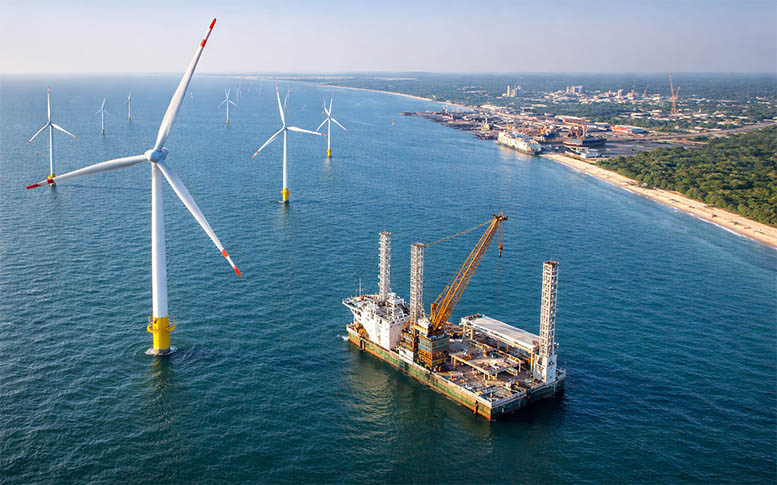
wind.jpg

Dakshina Kannada MP Capt Brijesh Chowta has urged the Centre to give high priority to offshore wind energy generation along the Mangaluru coast, citing its strategic importance to India’s green energy and port-led development goals.

Raising the issue in the Lok Sabha under Rule 377, Chowta said studies by the National Institute of Oceanography have identified the Mangaluru coastline as part of India’s promising offshore wind ‘Zone-2’, covering nearly 6,490 sq km. He noted that the region’s relatively low exposure to cyclones and earthquakes makes it suitable for long-term offshore wind projects and called for its development as a dedicated offshore wind energy zone.

Highlighting the role of New Mangalore Port, Chowta said its modern infrastructure, multiple berths and heavy cargo-handling capacity position it well as a logistics hub for transporting and assembling large wind energy equipment.

He also pointed to the presence of major industrial units such as MRPL, OMPL, UPCL and the Mangaluru SEZ, which could serve as direct buyers of green power through power purchase agreements, improving project viability and speeding up execution.

With Karnataka’s peak power demand crossing 18,000 MW in early 2025, Chowta stressed the need to diversify renewable energy sources. He added that offshore wind projects in the Arabian Sea are strategically safer compared to the cyclone-prone Bay of Bengal.

Calling the project vital to India’s target of 500 GW of renewable energy by 2030, Chowta urged the Ministry of New and Renewable Energy to initiate resource assessments, pilot projects and stakeholder consultations at the earliest.

Comments

Add new comment

  • Coastaldigest.com reserves the right to delete or block any comments.
  • Coastaldigset.com is not responsible for its readers’ comments.
  • Comments that are abusive, incendiary or irrelevant are strictly prohibited.
  • Please use a genuine email ID and provide your name to avoid reject.
News Network
February 1,2026

Bengaluru, Feb 1: For travelers landing at Kempegowda International Airport (KIA), the sleek, wood-paneled curves of Terminal 2 promise a world-class welcome. But the famed “Garden City” charm quickly withers at the curb. As India’s aviation sector swells to record numbers—handling over 43 million passengers in Bengaluru alone this past year—the “last mile” has turned into a marathon of frustration.

The Bengaluru Logjam: Rules vs Reality

While the city awaits the 2027 completion of the Namma Metro Blue Line, the interim has been chaotic. Recent “decongestion” rules at Terminal 1 have pushed app-based cab pickups to distant parking zones, forcing weary passengers into a 20-minute walk with luggage.

“I landed after ten months away and felt like a stranger in my own city,” says Ruchitha Jain, a Koramangala resident. “My driver couldn’t find me, staff couldn’t guide me, and the so-called ‘Premium’ lane is just a fancy tax on convenience.”

•    The Cost of Distance: A 40-km cab ride can now easily cross ₹1,500, driven by demand pricing and airport surcharges.

•    The Bus Gap: While Vayu Vajra remains a lifeline, its ₹300–₹400 fare is often cited as the most expensive airport bus service in the country.

A National Pattern of Disconnect

The struggle is not unique to Karnataka. From Chennai’s coast to Hyderabad’s plateau, India’s airports tell a familiar story: brilliant runways, broken exits.

City:    Primary Issue   |    Recent Development

Bengaluru:    Cab pickup restrictions & distance  |    App-based taxis shifted to far parking zones; long walks and fare spikes reported

Chennai:    Multi-Level Parking (MLCP) hike  |    Passengers report 40-minute walks to reach cab pickup points

Hyderabad:    “Taxi mafia” & touting  |    Over 440 touting cases reported; security presence intensified

Mumbai:    Fare scams  |     Tourists charged ₹18,000 for just 400 metres, triggering police action

In Hyderabad, travelers continue to battle entrenched local groups that intimidate Uber and Ola drivers, pushing passengers toward overpriced private taxis. Chennai flyers, meanwhile, complain that reaching the designated pickup zones now takes longer than short-haul flights from cities like Coimbatore.

The ‘Budget Day’ Hope

As Finance Minister Nirmala Sitharaman presents the Union Budget 2026 today, the aviation sector is watching closely. With the government’s renewed emphasis on multimodal integration, there is cautious hope for funding toward seamless airport-metro-bus hubs.

The vision is clear: a future where planes, trains, and metros speak the same language. Until then, passengers at KIA—and airports across India—will continue to discover that the hardest part of flying isn’t the thousands of kilometres in the air, but the last few on the ground.

Comments

Add new comment

  • Coastaldigest.com reserves the right to delete or block any comments.
  • Coastaldigset.com is not responsible for its readers’ comments.
  • Comments that are abusive, incendiary or irrelevant are strictly prohibited.
  • Please use a genuine email ID and provide your name to avoid reject.