Foreign students stuck at Ukraine border witness racist face of Europe

News Network
March 2, 2022

ukrain.jpg

Jean-Jacques Kabeya is furious: like other foreign students in Ukraine -- from Africa, Asia and the Middle East -- he says has been stopped from leaving the country by its border guards.

He and several other foreigners alleged racist treatment by both the border guards and ordinary Ukrainians in interviews to a news agency.

Two days after fleeing the bombing around the eastern city of Kharkiv, Kabeya reached the checkpoint at Shegyni, at the border with Poland, on Sunday evening.

But the soldiers and security guards there turned him back, said the 30-year-old student studying to become a pharmacist.

"They told me 'You're going to stay here, you're fleeing the war, stay here; you are going to fight with us -- you're not leaving, least of all you blacks'," he said.

Now, after 36 hours waiting in vain to get through, he was back at the train station in the western city of Lviv.

There he found some compatriots from the Democratic Republic of Congo, who took him under their wing.

"It's a catastrophe!" said Kabeya, adding that he was still trying to find a way out.

Ukraine is a popular destination for foreign students, with tens of thousands heading there to study.

But other foreign students in Lviv had similar stories to tell, and the governments of Nigeria and South Africa have already called for better treatment for their citizens.

The African Union issued a statement Monday expressing concern at what appeared to be "shockingly racist" treatment of foreign students.

Some countries did however report that a few dozen of their citizens had managed to leave the country.

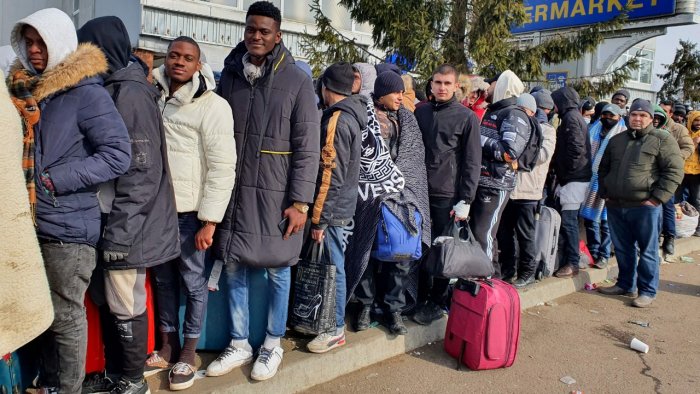
At Shegyni border post on Tuesday morning, there were still several hundred people, muffled up against the cold, queueing patiently to make the crossing.

They were from Pakistan, India, Algeria, DR Congo, Cameroon, Ghana and Algeria. Some said they had spent four nights there, with temperatures dropping as low as -10° (14 degrees Fahrenheit), in a desperate bid to leave.

On the other side of the road was another queue, reserved for Ukrainians -- mainly women and children as most men had stayed behind to fight.

That line was moving more quickly.

"All of us, we've got our papers," said Mesum Ahmed, a 23-year-old computer student from Pakistan. "Because we're foreigners, they are treating us like dogs.

"We've been sleeping here, on this pavement," said Ahmed, dressed in denim and sporting a beanie and a travel pillow around his neck.

"But the Ukrainians, they couldn't care less."

"You can see fine well what separates them from us," a young Nigerian added, bitterly. "We're black, that's what it is."

The only help on hand was from the local volunteers serving them hot drinks and sandwiches.

"We're here, we wait, and they don't tell us anything," said Richard Adjen Kusi, a student from Ghana.

He left the central city of Cherkassy when Russian President Vladimir Putin "started talking about nuclear weapons three days ago."

But everything seemed to be blocked here, he said. "It's not moving one centimetre...I'm scared."

A group of around 30 students from Cameroon who until recently had been in the central city of Kirovograd said it was only in the last few days that they had experienced racism in Ukraine.

Before the war, everything had been fine.

But Bryan Famini, a 22-year-old economics student, said that changed with the invasion.

"In the stations, on the trains, were were systematically kept away from the seating," he said.

"Some Ukrainians even made fun of us from their cars, seeing us walking," said 22-year-old Ghislain Weledji.

"I've been disappointed by this country," he added. "I won't be coming back."

Ukraine's border service denied there had been any difficulties.

"Nobody has been prevented from leaving Ukraine," they told AFP. No they had received no complaints.

On the Polish side, officials confirmed that anyone fleeing Ukraine would be welcomed, whatever their nationality.

As well as the nearly 680,000 refugees who have already left Ukraine, there are an estimated one million who have had fled their homes but are still inside the country.

At Lviv station, 70 kilometres (44 miles) from the border, thousands of Ukrainians -- and some foreigners -- were still waiting Tuesday, in the hope of getting a place on one of the rare trains leaving for Poland.

Amanjyot, a 23-year-old medical student said she had tried to board one train the day before but that Ukrainians had been given priority.

But she and her friends were grateful for the succour provided by Ukraine's Red Cross workers and other charities in front of the station.

"They help so much!" she said. There was plenty of food and they took care of everyone, without discrimination, she added. 

Comments

Add new comment

  • Coastaldigest.com reserves the right to delete or block any comments.
  • Coastaldigset.com is not responsible for its readers’ comments.
  • Comments that are abusive, incendiary or irrelevant are strictly prohibited.
  • Please use a genuine email ID and provide your name to avoid reject.
News Network
January 20,2026

iran.jpg

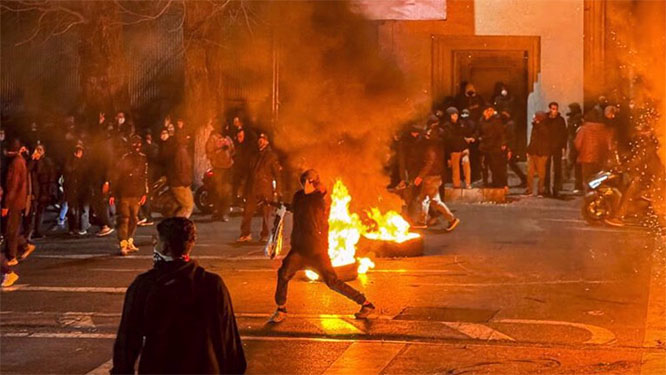
Iranian security and intelligence forces have captured more than 470 individuals in three provinces, identified as key figures behind the recent wave of violent unrest and terrorist activities linked to foreign-backed networks.

The Intelligence Ministry's provincial office in Khorasan Razavi announced on Monday the arrest of 192 armed terrorists, identified as the main agents behind recent riots in the region. 

According to an official statement, the detainees were involved in the killing of several security personnel and civilians, setting fire to mosques, public service facilities, and buses, as well as attacks on military and law enforcement centers.

The seized items from the group include several bulletproof vests, Kalashnikov rifles, hunting weapons, Winchester rifles, and various cold weapons such as daggers, swords, brass knuckles, tactical knives, crossbows, and chains.

Evidence indicates that some of the individuals were tied to hostile movements and terrorist organizations, with links overseas. Others were identified as members of violent criminal gangs, actively taking part in the unrest alongside their associates.

Simultaneously, in the western province of Lorestan, the IRGC announced the arrest of 134 individuals as the main leaders and influential field agents of a US-Israeli terrorist network.

The IRGC statement stated that these individuals formed terrorist cells during the recent unrest, committing "Daesh-like" acts.

They wounded security forces with firearms and cold weapons, and burned and destroyed public and private properties, including mosques, shops, banks, and private and public vehicles.

In the northwestern province of Zanjan, the police reported detaining 150 people identified as principal leaders and agents behind recent riots.

Authorities noted that these individuals were responsible for destroying public and private property and intentionally setting fire to vehicles in the province's squares.

Their crimes include shedding the blood of innocent people, destroying public and private property, attempting to enter military sites, disrupting public order, and spreading terror among citizens.

A variety of cold weapons were reportedly seized from the detainees.

What began late last month as peaceful protests over economic hardship across Iran turned violent after public statements by US and Israeli regime figures encouraged vandalism and disorder.

During the unrest, foreign-backed mercenaries rampaged through cities, killing security forces and civilians and damaging public property.

Comments

Add new comment

  • Coastaldigest.com reserves the right to delete or block any comments.
  • Coastaldigset.com is not responsible for its readers’ comments.
  • Comments that are abusive, incendiary or irrelevant are strictly prohibited.
  • Please use a genuine email ID and provide your name to avoid reject.
News Network
January 23,2026

modIKERALA.jpg

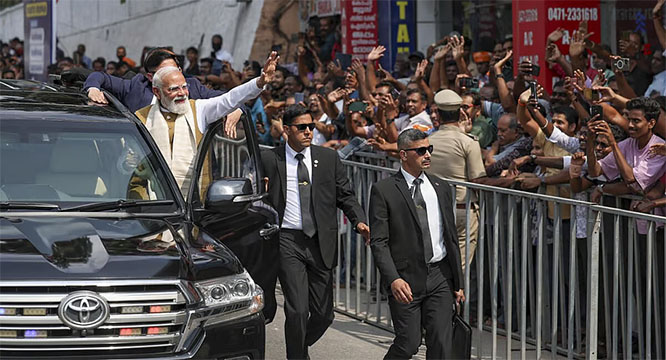
Prime Minister Narendra Modi, during his visit to Thiruvananthapuram on Friday, January 23, indicated that the Bharatiya Janata Party (BJP) is aiming to expand its political footprint in Kerala ahead of the Assembly elections scheduled in the coming months.

Speaking at a BJP-organised public meeting, Modi drew parallels between the party’s early electoral gains in Gujarat and its recent victory in the Thiruvananthapuram Municipal Corporation. The civic body win, which ended decades of Left control, was cited by the Prime Minister as a possible starting point for the party’s broader ambitions in the state.

Recalling BJP’s political trajectory in Gujarat, Modi said the party was largely insignificant before 1987 and received little media attention. He pointed out that the BJP’s first major breakthrough came with its victory in the Ahmedabad Municipal Corporation that year.

“Just as our journey in Gujarat began with one city, Kerala’s journey has also started with a single city,” Modi said, suggesting that the party’s municipal-level success could translate into wider electoral acceptance.

The Prime Minister alleged that successive governments led by the Left Democratic Front (LDF) and the United Democratic Front (UDF) had failed to adequately develop Thiruvananthapuram. He accused both fronts of corruption and neglect, claiming that basic infrastructure and facilities were denied to the capital city for decades.

According to Modi, the BJP’s control of the civic body represents a shift driven by public dissatisfaction with the existing political alternatives. He asserted that the BJP administration in Thiruvananthapuram had begun working towards development, though no specific details or timelines were outlined.

Addressing the gathering at Putharikandam Maidan, Modi said the BJP intended to project Thiruvananthapuram as a “model city,” reiterating his party’s commitment to governance-led change.

The Prime Minister’s visit to Kerala also included the inauguration of several development projects and the flagging off of new train services, as the BJP intensifies its political outreach in the poll-bound state.

Comments

Add new comment

  • Coastaldigest.com reserves the right to delete or block any comments.
  • Coastaldigset.com is not responsible for its readers’ comments.
  • Comments that are abusive, incendiary or irrelevant are strictly prohibited.
  • Please use a genuine email ID and provide your name to avoid reject.
News Network
January 20,2026

DGP.jpg

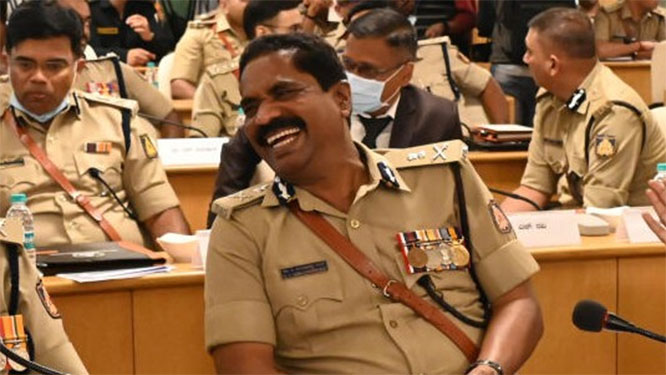
Karnataka DGP (Civil Rights Enforcement) K Ramachandra Rao was suspended with immediate effect, as per a state government order issued on Monday, 19 January. The order cited conduct unbecoming of a government servant and causing embarrassment to the state administration.

The Karnataka government suspended Rao after a purported video showed him in a compromising position with a woman inside his official chamber. The video went viral on social media. Rao rejected the videos outright, terming them "fabricated and false".

Who is K Ramachandra Rao?

Rao is a DGP-rank officer who was heading the Directorate of Civil Rights Enforcement until his suspension. He was promoted to DGP in September 2023 and assumed office in October 2023, the Sunday Guardian reported.

He also served as the Chairman and Managing Director of the Karnataka State Police Housing and Infrastructure Development Corporation Limited.

His stint as the Inspector General of Police (IGP) for the Southern Range was also marred by controversy. In 2014, during a cash seizure near Mysuru’s Yelwal, officials claimed the seized amount was ₹20 lakh, while the accused (Kerala-based merchants) claimed it was around ₹2.27 crore.

Rao, who was present during the seizure, denied all allegations. However, he was transferred soon after.

Allegations of collusion with a businessman surfaced, and a senior police officer was quoted by The Sunday Guardian as saying, “In Rao’s case, the CID has clearly mentioned that there was a great degree of lapse on the part of Rao and a deputy superintendent of police after it was brought to their notice that a few policemen, including a gunman attached to the IGP, were involved in the robbery.”

Rao had denied all wrongdoing in that incident. Despite past controversies, he rose to the state’s top police position, the Sunday Guardian reported.

Ranya Rao’s stepfather

Rao is the stepfather of Kannada actress Harshavardhini Ranya alias Ranya Rao, accused of orchestrating the illegal import of gold worth over ₹12.56 crore from Dubai to India along with two others — businessman Tarun Raju, and jewellery dealer Sahil Jain.

‘Obscene video’ controversy

A viral video showed Rao behaving inappropriately with a woman inside his office while in uniform.

The Karnataka government said in its Monday order that “vide videos and news reports widely broadcast on public news channels and media platforms, it is observed that Dr K Ramachandra Rao has acted in an obscene manner which is unbecoming of a Government Servant and also causing embarrassment to the Government.”

The order said the matter was examined by the state government, which found that the officer's conduct amounted to a violation of Rule 3 of the All India Services (Conduct) Rules, 1968.

The government said it is prima facie satisfied that "it is necessary to place Rao under suspension with immediate effect, pending inquiry".

During the suspension period, Rao will be entitled to subsistence allowance as per Rule 4 of the All India Services (Discipline and Appeal) Rules, 1969.

The order also places restrictions on his movement, stating that during the period of suspension, the officer must not leave headquarters under any circumstances without the written permission of the state government.

Comments

Add new comment

  • Coastaldigest.com reserves the right to delete or block any comments.
  • Coastaldigset.com is not responsible for its readers’ comments.
  • Comments that are abusive, incendiary or irrelevant are strictly prohibited.
  • Please use a genuine email ID and provide your name to avoid reject.