



Trump’s ‘Golden Dome’: A New Missile Shield for America

Media Release
March 5, 2025

trump.jpg

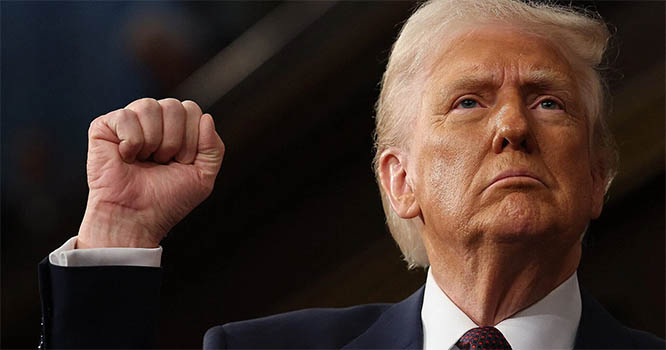
New Delhi: Former U.S. President Donald Trump has announced plans to develop a state-of-the-art missile defense system called the ‘Golden Dome’, inspired by Israel’s ‘Iron Dome.’ Addressing a joint session of Congress, Trump declared his intention to build “the most powerful military of the future” and pledged funding for a comprehensive missile shield to protect the U.S. homeland.

A Modern Take on Reagan’s Vision

Trump claimed that former President Ronald Reagan had envisioned a similar system decades ago but lacked the technology to bring it to life. The initiative he referred to was the Strategic Defense Initiative (SDI) of the 1980s, which aimed to intercept intercontinental ballistic missiles (ICBMs) but was eventually abandoned following the collapse of the Soviet Union.

How Will the ‘Golden Dome’ Work?

The U.S. already has several missile defense systems in place. Trump’s ‘Golden Dome’ would likely integrate existing technologies, including:

🔹 Space-Based Infrared System (SBIRS) – Satellites that provide early missile launch warnings.

🔹 Ground-Based Midcourse Defense (GMD) – Interceptors in Alaska and California designed to shoot down ICBMs.

🔹 Aegis Ballistic Missile Defense (BMD) – A naval-based system for intercepting short- to intermediate-range missiles.

🔹 Terminal High Altitude Area Defense (THAAD) – A mobile system to destroy medium- and intermediate-range missiles.

🔹 Patriot Advanced Capability-3 (PAC-3) – Interceptor missiles designed to counter Chinese hypersonic threats.

Comparing with Israel’s ‘Iron Dome’

Israel’s multi-layered missile defense includes:

✅ Iron Dome – Protects against short-range rockets.
✅ David’s Sling – Targets mid- to long-range missiles.
✅ Arrow-2 and Arrow-3 – Designed to intercept long-range ballistic missiles.

With the U.S. contributing over $3.7 billion toward Israel’s Arrow defense system, Trump’s ‘Golden Dome’ could follow a similar model but on a much larger scale.

While the feasibility and timeline of this ambitious project remain unclear, Trump's announcement signals a renewed push for advanced missile defense in an increasingly volatile world.

Comments

Add new comment

  • Coastaldigest.com reserves the right to delete or block any comments.
  • Coastaldigset.com is not responsible for its readers’ comments.
  • Comments that are abusive, incendiary or irrelevant are strictly prohibited.
  • Please use a genuine email ID and provide your name to avoid reject.
News Network
January 23,2026

Karnataka Governor Thaawarchand Gehlot read only three lines from the 122-paragraph address prepared by the Congress-led state government while addressing the joint session of the Legislature on Thursday, effectively bypassing large sections critical of the BJP-led Union government.

The omitted portions of the customary Governor’s address outlined what the state government described as a “suppressive situation in economic and policy matters” under India’s federal framework. The speech also sharply criticised the Centre’s move to replace the Mahatma Gandhi National Rural Employment Guarantee Act (MGNREGA) with the Viksit Bharat–Guarantee for Rozgar and Ajeevika Mission (Gramin) Act, commonly referred to as the VB-GRAM (G) Act.

Governor Gehlot had earlier conveyed his objection to several paragraphs that were explicitly critical of the Union government. On Thursday, he confined himself to the opening lines — “I extend a warm welcome to all of you to the joint session of the State legislature. I am extremely pleased to address this august House” — before jumping directly to the concluding sentence of the final paragraph.

He ended the address by reading the last line of paragraph 122: “Overall, my government is firmly committed to doubling the pace of the State’s economic, social and physical development. Jai Hind — Jai Karnataka.”

According to the prepared speech, the Karnataka government demanded the scrapping of the VB-GRAM (G) Act, describing it as “contractor-centric” and detrimental to rural livelihoods, and called for the full restoration of MGNREGA. The state government argued that the new law undermines decentralisation, weakens labour protections, and centralises decision-making in violation of constitutional norms.

Key points from the unread sections of the speech:

•    Karnataka facing a “suppressive” economic and policy environment within the federal system

•    Repeal of MGNREGA described as a blow to rural livelihoods

•    VB-GRAM (G) Act accused of protecting corporate and contractor interests

•    New law alleged to weaken decentralised governance

•    Decision-making said to be imposed by the Centre without consulting states

•    Rights of Adivasis, women, backward classes and agrarian communities curtailed

•    Labourers allegedly placed under contractor control

•    States facing mounting fiscal stress due to central policies

•    VB-GRAM (G) Act accused of enabling large-scale corruption

Comments

Add new comment

  • Coastaldigest.com reserves the right to delete or block any comments.
  • Coastaldigset.com is not responsible for its readers’ comments.
  • Comments that are abusive, incendiary or irrelevant are strictly prohibited.
  • Please use a genuine email ID and provide your name to avoid reject.
News Network
February 3,2026

wind.jpg

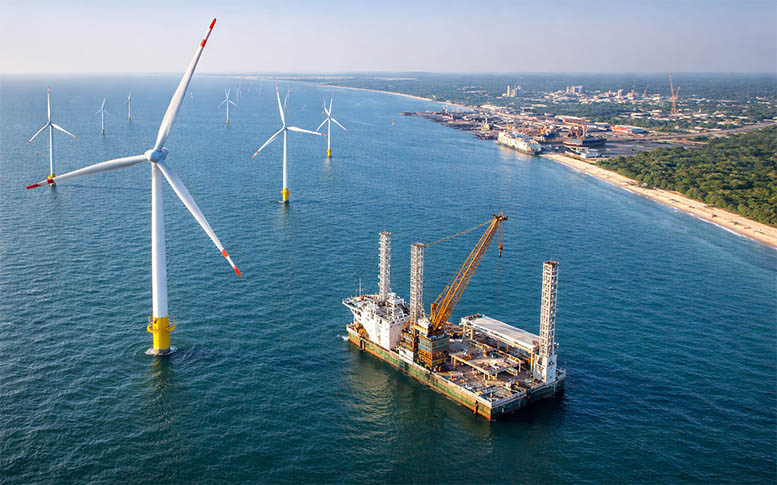
Dakshina Kannada MP Capt Brijesh Chowta has urged the Centre to give high priority to offshore wind energy generation along the Mangaluru coast, citing its strategic importance to India’s green energy and port-led development goals.

Raising the issue in the Lok Sabha under Rule 377, Chowta said studies by the National Institute of Oceanography have identified the Mangaluru coastline as part of India’s promising offshore wind ‘Zone-2’, covering nearly 6,490 sq km. He noted that the region’s relatively low exposure to cyclones and earthquakes makes it suitable for long-term offshore wind projects and called for its development as a dedicated offshore wind energy zone.

Highlighting the role of New Mangalore Port, Chowta said its modern infrastructure, multiple berths and heavy cargo-handling capacity position it well as a logistics hub for transporting and assembling large wind energy equipment.

He also pointed to the presence of major industrial units such as MRPL, OMPL, UPCL and the Mangaluru SEZ, which could serve as direct buyers of green power through power purchase agreements, improving project viability and speeding up execution.

With Karnataka’s peak power demand crossing 18,000 MW in early 2025, Chowta stressed the need to diversify renewable energy sources. He added that offshore wind projects in the Arabian Sea are strategically safer compared to the cyclone-prone Bay of Bengal.

Calling the project vital to India’s target of 500 GW of renewable energy by 2030, Chowta urged the Ministry of New and Renewable Energy to initiate resource assessments, pilot projects and stakeholder consultations at the earliest.

Comments

Add new comment

  • Coastaldigest.com reserves the right to delete or block any comments.
  • Coastaldigset.com is not responsible for its readers’ comments.
  • Comments that are abusive, incendiary or irrelevant are strictly prohibited.
  • Please use a genuine email ID and provide your name to avoid reject.