While Trump considered bombing Iran, Biden ponders a new deal with it: Report

News Network
November 23, 2020

Nicosia, Nov 23: The New York Times reported that on November 12, US President Donald Trump asked his senior advisers to examine options for airstrikes against Iran's main nuclear facility at Natanz. Trump convened the meeting just one day after the International Atomic Energy Agency inspectors reported a significant increase in Iran's nuclear material.

Fortunately, Trump's advisers persuaded him that the risks of military action against Iran are very high. Had a strike against Iran actually taken place, apart from the fact that would be a clear violation of international law, it would also have scuttled any new deal with Iran, President-elect Joe Biden is pondering.

The nuclear deal, known as Joint Comprehensive Plan of Action (JCPOA), signed in 2015 with the United States, Germany, France, Britain, China and Russia, allows Iran to keep a stockpile of 202.8 kilograms. Inspectors reported that the stockpile increased to 2,442 kilograms, while Iran continues to enrich uranium to a purity of up to 4.5 per cent, higher than the 3.67 per cent allowed under the deal. It should be noted that low enriched uranium between 3 and 5 per cent can be used for nuclear power, but for nuclear weapons 90 per cent purity is required.

According to New York Times, Trump had to be persuaded not to order the attack by Vice President Mike Pence, Secretary of State Mike Pompeo, Acting Defense Secretary Chris Miller, and Chairman of the Joint Chiefs Gen. Mark Milley. They pointed out that a military strike would have no basis on international law, while the UN Security Council in all probability would not approve a military action against Iran.

Iranian Government Spokesman Ali Rabiei, responding to the NY Times' report, said that any US attack on Iran would face a "crushing" response.

Meanwhile, the US Administration announced fresh sanctions on numerous Iranian individuals, including the Intelligence Chief and a charitable foundation linked to Iran's Supreme Leader Ayatollah Ali Khamenei.

Trump had withdrawn from JCPOA in May 2018 and imposed sanctions, which according to US Secretary of State Mike Pompeo cut vital and lucrative Iranian exports by some 75 per cent, denying the regime of USD 70 billion in oil. Iran continued to comply with the provisions of JCPOA until July 2019, and then started violating parts of the deal, but last January following the assassination by the US of Major General Qassem Soleimani in Baghdad, it ended all compliance with JCPOA.

As Trump was mulling over an attack on Iran, the Israelis carried out strikes in Syria on Iranian-backed militias. On 18 November, the Israeli Air Force hit targets of the Iranian Revolutionary Guards' Quds Force and the Syrian Army in the Golan Heights and Damascus International Airport, as retaliation for the planting of explosives near an Israeli military position in the Golan Heights.

Undoubtedly, if a military attack on Iran took place during Trump's final days in office, it would have certainly derailed Joe Biden's stated election promise to handle Iran "the smart way" and to give the Iranian regime "a credible path back to diplomacy".

Karim Sadjapour, a senior fellow at the Carnegie Endowment for International Peace, says that as both a Senator and a Vice President Biden's views on Iran was always realistic. "He has no illusions about the nature of the Iranian regime and the challenges it poses to US interests, but he's also been a consistent advocate of direct dialogue with Iran.... If Tehran shows a willingness to return to the status quo ante, no questions asked, it would strengthen the argument of those in Washington who favour an immediate return to the JCPOA. But if Tehran insists on being compensated for the sanctions imposed on Iran during the Trump era, or if Iranian leaders attempt to expand their nuclear program or carry out regional provocations in an attempt to expand their nuclear programme, or carry out regional provocations in an attempt to strengthen their bargaining position or signal that they are not weak, it will have the opposite effect."

Paul Adams, BBC diplomatic correspondent points out that Iran, which "has weathered the Trump storm, has its own demands. Officials say the removal of sanctions won't be enough. Iran expects to be compensated for two-and-a-half years of crippling economic damage..... The JCPOA was never a bilateral affair. Its other international sponsors - Russia, China, France, the UK and Germany, plus the European Union - are all, in one way or another, invested in its future. The European sponsors, in particular, are anxious to see Washington once more committed to the deal's success. The UK, France and Germany (the "E3") have tried to keep the deal alive during the Trump years and could now play a role in negotiating the terms of Washington's return. But in London, Paris and Berlin, there's a recognition that the world has moved on and that a simple return to the original deal is unlikely."

A deal between Biden and the Tehran government is possible but could be much more difficult if Tehran insists on demanding compensation for US withdrawal from the deal, or if Biden raises the issues of the Iranian ballistic missiles or the Tehran supported militias in the region.

Comments

Add new comment

  • Coastaldigest.com reserves the right to delete or block any comments.
  • Coastaldigset.com is not responsible for its readers’ comments.
  • Comments that are abusive, incendiary or irrelevant are strictly prohibited.
  • Please use a genuine email ID and provide your name to avoid reject.
News Network
January 20,2026

DGP.jpg

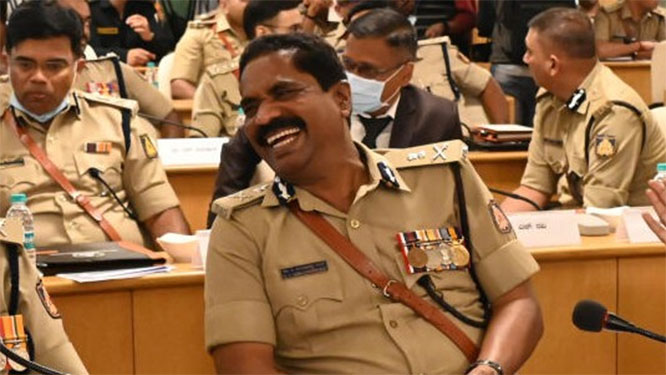
Karnataka DGP (Civil Rights Enforcement) K Ramachandra Rao was suspended with immediate effect, as per a state government order issued on Monday, 19 January. The order cited conduct unbecoming of a government servant and causing embarrassment to the state administration.

The Karnataka government suspended Rao after a purported video showed him in a compromising position with a woman inside his official chamber. The video went viral on social media. Rao rejected the videos outright, terming them "fabricated and false".

Who is K Ramachandra Rao?

Rao is a DGP-rank officer who was heading the Directorate of Civil Rights Enforcement until his suspension. He was promoted to DGP in September 2023 and assumed office in October 2023, the Sunday Guardian reported.

He also served as the Chairman and Managing Director of the Karnataka State Police Housing and Infrastructure Development Corporation Limited.

His stint as the Inspector General of Police (IGP) for the Southern Range was also marred by controversy. In 2014, during a cash seizure near Mysuru’s Yelwal, officials claimed the seized amount was ₹20 lakh, while the accused (Kerala-based merchants) claimed it was around ₹2.27 crore.

Rao, who was present during the seizure, denied all allegations. However, he was transferred soon after.

Allegations of collusion with a businessman surfaced, and a senior police officer was quoted by The Sunday Guardian as saying, “In Rao’s case, the CID has clearly mentioned that there was a great degree of lapse on the part of Rao and a deputy superintendent of police after it was brought to their notice that a few policemen, including a gunman attached to the IGP, were involved in the robbery.”

Rao had denied all wrongdoing in that incident. Despite past controversies, he rose to the state’s top police position, the Sunday Guardian reported.

Ranya Rao’s stepfather

Rao is the stepfather of Kannada actress Harshavardhini Ranya alias Ranya Rao, accused of orchestrating the illegal import of gold worth over ₹12.56 crore from Dubai to India along with two others — businessman Tarun Raju, and jewellery dealer Sahil Jain.

‘Obscene video’ controversy

A viral video showed Rao behaving inappropriately with a woman inside his office while in uniform.

The Karnataka government said in its Monday order that “vide videos and news reports widely broadcast on public news channels and media platforms, it is observed that Dr K Ramachandra Rao has acted in an obscene manner which is unbecoming of a Government Servant and also causing embarrassment to the Government.”

The order said the matter was examined by the state government, which found that the officer's conduct amounted to a violation of Rule 3 of the All India Services (Conduct) Rules, 1968.

The government said it is prima facie satisfied that "it is necessary to place Rao under suspension with immediate effect, pending inquiry".

During the suspension period, Rao will be entitled to subsistence allowance as per Rule 4 of the All India Services (Discipline and Appeal) Rules, 1969.

The order also places restrictions on his movement, stating that during the period of suspension, the officer must not leave headquarters under any circumstances without the written permission of the state government.

Comments

Add new comment

  • Coastaldigest.com reserves the right to delete or block any comments.
  • Coastaldigset.com is not responsible for its readers’ comments.
  • Comments that are abusive, incendiary or irrelevant are strictly prohibited.
  • Please use a genuine email ID and provide your name to avoid reject.
News Network
January 23,2026

oscar.jpg

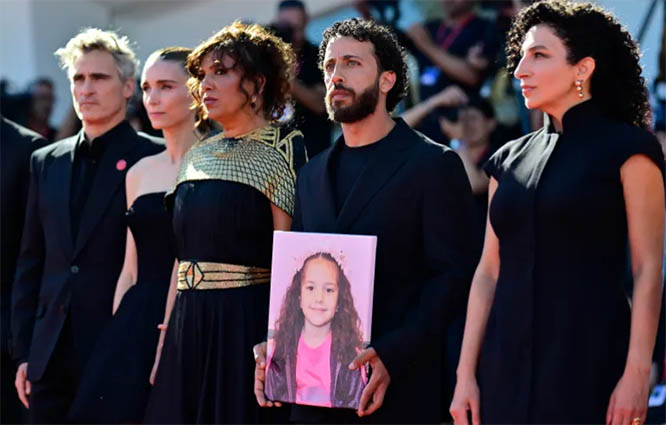
The Voice of Hind Rajab, inspired by the tragic final moments of a young Palestinian girl killed by Israeli fire in Gaza, has been nominated for an Academy Award in the Best International Feature Film category.

Directed by Tunisian filmmaker Kaouther Ben Hania, the film recounts the true story of five-year-old Hind Rajab, who lost her life in January 2024 while fleeing Israeli bombardment with her family.

The film features the real audio of Hind’s desperate call to the Palestinian Red Crescent Society, where she pleaded for help moments before the vehicle she was in was struck by 355 bullets.

The haunting narrative begins with a brief call made from the besieged Tel al-Hawa neighborhood of Gaza, where gunfire and armored vehicles drowned out every sound.

After witnessing the brutal killing of her family, she made a trembling call, her voice reduced to a whisper as she spoke of the massacre and her unbearable loneliness as the sole survivor.

Premiering at the Venice International Film Festival in September 2025, The Voice of Hind Rajab garnered widespread acclaim, receiving a record-setting 23-minute standing ovation and the Silver Lion Grand Jury Prize, the festival’s second-highest honor.

In her acceptance speech, Ben Hania dedicated the film to humanitarian workers and first responders in Gaza, emphasizing that Hind's voice symbolizes countless civilians affected by war.

She aims to give voice to victims often reduced to mere statistics, highlighting the broader suffering of civilians in war zones.

The film’s Oscar nomination underscores its powerful storytelling and ethical approach to depicting real-life tragedy, making it a crucial piece of contemporary cinema.

It serves not only as a narration of individual tragedy but also as an artistic and documentary response to the silence and censorship that often overshadow West Asian struggles and wars.

Using an innovative method she calls docufiction, Ben Hania bridges unvarnished reality and narrative structure, creating a work that is both artistically valuable and socially impactful.

Born in 1977 in Sidi Bouzid—later the epicenter of the Arab revolution—her background profoundly influenced her worldview and artistic approach.

She is a graduate of the Higher School of Audiovisual Arts of Tunis, Pantheon-Sorbonne University, and La Fémis in Paris, where her studies equipped her with the technical and theoretical tools needed to address complex subjects. 

Comments

Add new comment

  • Coastaldigest.com reserves the right to delete or block any comments.
  • Coastaldigset.com is not responsible for its readers’ comments.
  • Comments that are abusive, incendiary or irrelevant are strictly prohibited.
  • Please use a genuine email ID and provide your name to avoid reject.
News Network
January 23,2026

Karnataka Governor Thaawarchand Gehlot read only three lines from the 122-paragraph address prepared by the Congress-led state government while addressing the joint session of the Legislature on Thursday, effectively bypassing large sections critical of the BJP-led Union government.

The omitted portions of the customary Governor’s address outlined what the state government described as a “suppressive situation in economic and policy matters” under India’s federal framework. The speech also sharply criticised the Centre’s move to replace the Mahatma Gandhi National Rural Employment Guarantee Act (MGNREGA) with the Viksit Bharat–Guarantee for Rozgar and Ajeevika Mission (Gramin) Act, commonly referred to as the VB-GRAM (G) Act.

Governor Gehlot had earlier conveyed his objection to several paragraphs that were explicitly critical of the Union government. On Thursday, he confined himself to the opening lines — “I extend a warm welcome to all of you to the joint session of the State legislature. I am extremely pleased to address this august House” — before jumping directly to the concluding sentence of the final paragraph.

He ended the address by reading the last line of paragraph 122: “Overall, my government is firmly committed to doubling the pace of the State’s economic, social and physical development. Jai Hind — Jai Karnataka.”

According to the prepared speech, the Karnataka government demanded the scrapping of the VB-GRAM (G) Act, describing it as “contractor-centric” and detrimental to rural livelihoods, and called for the full restoration of MGNREGA. The state government argued that the new law undermines decentralisation, weakens labour protections, and centralises decision-making in violation of constitutional norms.

Key points from the unread sections of the speech:

•    Karnataka facing a “suppressive” economic and policy environment within the federal system

•    Repeal of MGNREGA described as a blow to rural livelihoods

•    VB-GRAM (G) Act accused of protecting corporate and contractor interests

•    New law alleged to weaken decentralised governance

•    Decision-making said to be imposed by the Centre without consulting states

•    Rights of Adivasis, women, backward classes and agrarian communities curtailed

•    Labourers allegedly placed under contractor control

•    States facing mounting fiscal stress due to central policies

•    VB-GRAM (G) Act accused of enabling large-scale corruption

Comments

Add new comment

  • Coastaldigest.com reserves the right to delete or block any comments.
  • Coastaldigset.com is not responsible for its readers’ comments.
  • Comments that are abusive, incendiary or irrelevant are strictly prohibited.
  • Please use a genuine email ID and provide your name to avoid reject.