



"World's Oldest Woman" Died At 122. She Lied about Age, Says Researcher

Agencies
January 6, 2019

Jan 6: Jeanne Calment died in 1997 in the southern French town in which she was born, and her death drew a flurry of attention.

At 122, an age that had been certified by the Guinness World Records as well as public health researchers, she was the oldest documented person to ever have lived.

But a Russian mathematician is casting doubt on her record. Nikolay Zak, of the Moscow Center For Continuous Mathematical Education, said in a report that he believes that Calment was actually Yvonne Calment, Jeanne's daughter, who had assumed her mother's identity to avoid inheritance taxes in the 1930s. That would have made her 99 when she died.

The evidence produced by Zak in a paper published recently on the portal ResearchGate is not definitive.

He points to studies that showed that Calment had lost less than an inch of her height by the time she was well into her hundreds, significantly less than what would have been expected; Yvonne was also taller than Jeanne, he says. A passport for Jeanne in the 1930s lists different eye colors for her than she had later in life. And he raises questions about other physical discrepancies in her forehead and chin. He also claims that Calment had destroyed photographs and other family documents when she had been requested to send them to the archives in Arles.

The study has caused a global stir since it was issued. It has been covered by news media organizations around the world. Sample headline: "Jeanne Calment cheater?" France Inter radio asked.

But it has been denounced by some scientists, including the Jean-Marie Robine, who validated Calment's age and wrote a book about her around the time of her death.

"All of this is incredibly shaky and rests on nothing," Robine told Le Parisien.

According to Smithsonian magazine, he said Jeanne answered questions when he interviewed her that only she would have known the answer to, like the name of her math teacher and housekeepers in her building at the time.

"Her daughter couldn't have known that," he said. And he said that the whole town of Arles would have been in on the ruse.

"Can you imagine how many people would have lied? Overnight, Fernand Calment [Jeanne's husband] would have passed his daughter for his wife and everyone would have kept silent?" Robine said. "It is staggering."

Michel Vauzelle, who was the mayor of Arles when Calment died, has said the Russians' theory is "completely impossible and ridiculous."

Nicolas Brouard, research director at France's National Demographics Studies Institute said that there are some in the research community who do "favour of exhuming the bodies of Jeanne and Yvonne Calment" because of Zak's study, according to French public radio broadcaster RFI. He also said that DNA testing could settle the debate.

In an email, Zak told the Washington Post that he became convinced that Calment's age was suspicious in February while studying mortality patterns of people older then 105.

He said he started to investigate her life in September.

"I funded the work myself, it was a fascinating detective story in front of me," he said. "Those who criticize my work heavily are those who have a huge conflict of interest or those who didn't read it."

He called critics of his report "dishonest," and released a document where he sought to rebut their rebuttals point by point.

Still, he admitted to Reuters that he does not have "cast-iron proof."

"I reviewed the whole situation," he said. "There are lots of small pieces of evidence."

Guinness World Records said that it was aware of the report.

"Extensive research is performed for every oldest person record title we verify, which is led by experts in the gerontology field, and they have been notified of the current situation," it said in a statement distributed by spokeswoman Rachel Gluck.

Robine did not respond to a request for comment.

A Washington Post story about Calment's 120th birthday describes the broad contours of her life. She was born in Arles, in southern France, on Feb. 21, 1875, before the invention of the lightbulb. She grew up to marry Fernand Calment at 21.

"She dabbled in painting, played the piano in her parlor, rode her bicycle around town, hiked and hunted," reporter Dana Thomas wrote, buoyed by the success of her husband's fabric shop.

She said she met Vincent van Gogh as a teacher when he came to Arles to paint in 1888, saying she found him "very ugly, ungracious, impolite, sick."

"Pardon me, but we called him 'the madman.'" she said. She outlived much of her family. Yvonne died at 36 of pleurisy, Thomas wrote. Fernand died in 1942 at the age of 72 from eating tainted cherries. And her only grandchild, Frederic was killed in a car accident at 36 in 1963.

Questions about age-related records are not uncommon. Shigechiyo Izumi, of Japan, was dubbed the world's oldest man when he died in 1986 at what was believed to be 120 years old. But research that came out later claimed that he was around 105. Others claiming ages as high as 125 and up have lacked the required documentation to prove their ages.

And the secrets of an exceptionally long life remain elusive. Obituaries about Calment noted that she was known for her love of chocolate - she reportedly ate two pounds a week - treated her skin with olive oil and rode a bicycle until she was 100. She had only quit her two cigarettes a day habit a few years before her death - not for health, but because she could no longer light her own cigarette without asking for help, the Washington Post wrote.

Under an obscure French system called viager, where a buyer purchases a home from an older person and begins paying its mortgage, and are only able to move in after they die, Calment had a man paying her mortgage for more than 30 years, The Post reported. She had signed the deal with him when she was 90.

Comments

Add new comment

  • Coastaldigest.com reserves the right to delete or block any comments.
  • Coastaldigset.com is not responsible for its readers’ comments.
  • Comments that are abusive, incendiary or irrelevant are strictly prohibited.
  • Please use a genuine email ID and provide your name to avoid reject.
News Network
February 3,2026

manjeshwar.jpg

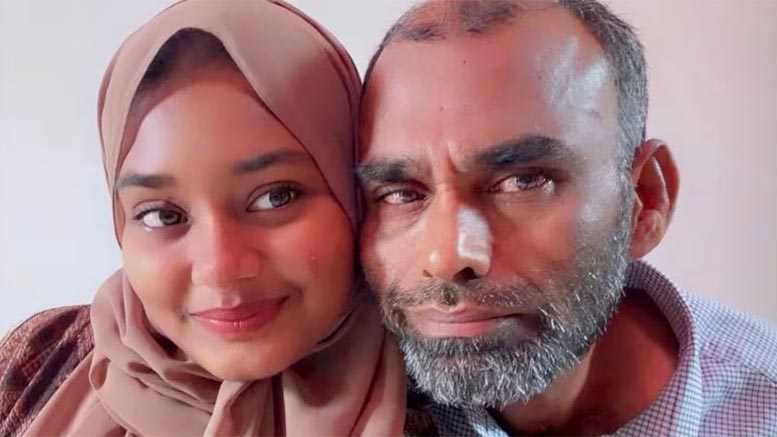
Kasaragod: An 18-year-old girl was stabbed to death at Thuminad in Manjeshwar panchayat on Monday, allegedly by her father following a domestic dispute. 

The victim has been identified as K U Mariyamath Jumaila. Her father, Umar Farooq, has been taken into police custody, Manjeshwar Station House Officer Inspector Ajith Kumar P said.

According to the police, Umar Farooq had been working in a West Asian country and returned home about three months ago. 

Family tensions reportedly escalated after his wife, Thahira (41), decided to seek a divorce and asked him to leave her life. Kasaragod district panchayat member Harshad Vorkady alleged that Umer was addicted to marijuana and frequently caused disturbances at home.

On Monday, Thahira asked Umar to come to her sister’s house in Thuminad to discuss the dispute. Jumaila accompanied her mother. 

Manjeshwar panchayat member Illiyas Thuminad said Umar arrived along with his brother, following which Thahira handed over gold ornaments and property documents to him and asked him to sever ties with her.

However, the police said a property dispute had been ongoing between Umar Farooq and his sister-in-law’s husband. During a heated argument, Umar allegedly attempted to attack the man with a sharp weapon. When Jumaila intervened to stop the assault, she was stabbed in the neck.

The teenager collapsed after bleeding profusely and was rushed to a private hospital in Mangaluru, where doctors declared her dead. Her body was later shifted to Mangalpady Taluk Hospital for post-mortem examination.

Jumaila was a former student of Sirajul Huda English Medium Higher Secondary School, Manjeshwar. 

Comments

Add new comment

  • Coastaldigest.com reserves the right to delete or block any comments.
  • Coastaldigset.com is not responsible for its readers’ comments.
  • Comments that are abusive, incendiary or irrelevant are strictly prohibited.
  • Please use a genuine email ID and provide your name to avoid reject.
News Network
January 23,2026

oscar.jpg

The Voice of Hind Rajab, inspired by the tragic final moments of a young Palestinian girl killed by Israeli fire in Gaza, has been nominated for an Academy Award in the Best International Feature Film category.

Directed by Tunisian filmmaker Kaouther Ben Hania, the film recounts the true story of five-year-old Hind Rajab, who lost her life in January 2024 while fleeing Israeli bombardment with her family.

The film features the real audio of Hind’s desperate call to the Palestinian Red Crescent Society, where she pleaded for help moments before the vehicle she was in was struck by 355 bullets.

The haunting narrative begins with a brief call made from the besieged Tel al-Hawa neighborhood of Gaza, where gunfire and armored vehicles drowned out every sound.

After witnessing the brutal killing of her family, she made a trembling call, her voice reduced to a whisper as she spoke of the massacre and her unbearable loneliness as the sole survivor.

Premiering at the Venice International Film Festival in September 2025, The Voice of Hind Rajab garnered widespread acclaim, receiving a record-setting 23-minute standing ovation and the Silver Lion Grand Jury Prize, the festival’s second-highest honor.

In her acceptance speech, Ben Hania dedicated the film to humanitarian workers and first responders in Gaza, emphasizing that Hind's voice symbolizes countless civilians affected by war.

She aims to give voice to victims often reduced to mere statistics, highlighting the broader suffering of civilians in war zones.

The film’s Oscar nomination underscores its powerful storytelling and ethical approach to depicting real-life tragedy, making it a crucial piece of contemporary cinema.

It serves not only as a narration of individual tragedy but also as an artistic and documentary response to the silence and censorship that often overshadow West Asian struggles and wars.

Using an innovative method she calls docufiction, Ben Hania bridges unvarnished reality and narrative structure, creating a work that is both artistically valuable and socially impactful.

Born in 1977 in Sidi Bouzid—later the epicenter of the Arab revolution—her background profoundly influenced her worldview and artistic approach.

She is a graduate of the Higher School of Audiovisual Arts of Tunis, Pantheon-Sorbonne University, and La Fémis in Paris, where her studies equipped her with the technical and theoretical tools needed to address complex subjects. 

Comments

Add new comment

  • Coastaldigest.com reserves the right to delete or block any comments.
  • Coastaldigset.com is not responsible for its readers’ comments.
  • Comments that are abusive, incendiary or irrelevant are strictly prohibited.
  • Please use a genuine email ID and provide your name to avoid reject.
News Network
February 1,2026

Bengaluru, Feb 1: For travelers landing at Kempegowda International Airport (KIA), the sleek, wood-paneled curves of Terminal 2 promise a world-class welcome. But the famed “Garden City” charm quickly withers at the curb. As India’s aviation sector swells to record numbers—handling over 43 million passengers in Bengaluru alone this past year—the “last mile” has turned into a marathon of frustration.

The Bengaluru Logjam: Rules vs Reality

While the city awaits the 2027 completion of the Namma Metro Blue Line, the interim has been chaotic. Recent “decongestion” rules at Terminal 1 have pushed app-based cab pickups to distant parking zones, forcing weary passengers into a 20-minute walk with luggage.

“I landed after ten months away and felt like a stranger in my own city,” says Ruchitha Jain, a Koramangala resident. “My driver couldn’t find me, staff couldn’t guide me, and the so-called ‘Premium’ lane is just a fancy tax on convenience.”

•    The Cost of Distance: A 40-km cab ride can now easily cross ₹1,500, driven by demand pricing and airport surcharges.

•    The Bus Gap: While Vayu Vajra remains a lifeline, its ₹300–₹400 fare is often cited as the most expensive airport bus service in the country.

A National Pattern of Disconnect

The struggle is not unique to Karnataka. From Chennai’s coast to Hyderabad’s plateau, India’s airports tell a familiar story: brilliant runways, broken exits.

City:    Primary Issue   |    Recent Development

Bengaluru:    Cab pickup restrictions & distance  |    App-based taxis shifted to far parking zones; long walks and fare spikes reported

Chennai:    Multi-Level Parking (MLCP) hike  |    Passengers report 40-minute walks to reach cab pickup points

Hyderabad:    “Taxi mafia” & touting  |    Over 440 touting cases reported; security presence intensified

Mumbai:    Fare scams  |     Tourists charged ₹18,000 for just 400 metres, triggering police action

In Hyderabad, travelers continue to battle entrenched local groups that intimidate Uber and Ola drivers, pushing passengers toward overpriced private taxis. Chennai flyers, meanwhile, complain that reaching the designated pickup zones now takes longer than short-haul flights from cities like Coimbatore.

The ‘Budget Day’ Hope

As Finance Minister Nirmala Sitharaman presents the Union Budget 2026 today, the aviation sector is watching closely. With the government’s renewed emphasis on multimodal integration, there is cautious hope for funding toward seamless airport-metro-bus hubs.

The vision is clear: a future where planes, trains, and metros speak the same language. Until then, passengers at KIA—and airports across India—will continue to discover that the hardest part of flying isn’t the thousands of kilometres in the air, but the last few on the ground.

Comments

Add new comment

  • Coastaldigest.com reserves the right to delete or block any comments.
  • Coastaldigset.com is not responsible for its readers’ comments.
  • Comments that are abusive, incendiary or irrelevant are strictly prohibited.
  • Please use a genuine email ID and provide your name to avoid reject.
