World's worst serial killers

Agencies
June 6, 2019

Paris, Jun 6: Former German hospital nurse Niels Hoegel, who was handed a life sentence on Thursday for murdering 85 patients in his care, is believed to be the most prolific serial killer in the country's post-war history.

Police suspect that Hoegel's final death toll may be more than 200.

Here are some of the other most notorious serial killers of the past decades.

Siberian ex-policeman Mikhail Popkov was found guilty in December 2018, at the age of 54, of 56 murders. He was already in jail for 22 killings.

Between 1992 and 2007, he raped and killed women with an axe or hammer after offering them late-night rides, sometimes in his police car. He also killed a male policeman.

He is Russia's worst serial killer of recent times.

Samuel Little, a 78-year-old drifter, confessed in November 2018 to 90 murders between 1970 and 2005, and law enforcement authorities have corroborated more than 40 of them so far.

If all 90 confessions are confirmed, Little would be the most prolific known US serial killer.

The former boxer, arrested in 2012, targeted mainly drug addicts and prostitutes, many of whom were never identified. The FBI in February 2019 released 16 portraits drawn by him in an attempt to identify some of his victims.

Alexander Pichushkin was sentenced to life in prison in Moscow in 2007 for 48 murders, most between 2002 and 2006.

Aged 33 at his trial, Pichushkin said he wanted to kill one person for each of the 64 squares on a chessboard, and crossed out a square for every kill, hence his nickname.

His victims were mainly elderly alcoholic men he met in a park.

Yang Xinhai was executed in China in 2004, aged 35, after murdering 67 people in a three-year rampage that ended in 2003.

Characterised as an introverted drifter, he entered rural homes and sometimes slaughtered entire families with an axe, hammer or spade.

Police listed robbery and rape as motives but Yang was also described as a deranged killer who enjoyed what he was doing.

US truck painter Gary Ridgway confessed in 2003 to strangling 48 mainly prostitutes and runaways from 1982 to 1984, but he is suspected of more.

Nicknamed the "Green River Killer" after the Seattle waterway where his first victims were found, he was 54 years old when he was convicted and jailed.

Harold Shipman, a family doctor near Manchester, was sentenced to life in 2000 after being convicted of killing 15 of his elderly patients with fatal doses of morphine. He hanged himself in prison in 2004, aged 57.

An inquiry found that Shipman, nicknamed "Doctor Death", had killed around 250 patients between 1971 and 1998, making him the country's worst serial killer.

Luis Alfredo Garavito was jailed for 835 years in 2000, aged 42, for murdering 189 boys over a five-year span until 1996.

Known as "The Monster of Genova" after his birthplace in Colombia, Garavito gained access to his victims -- aged between eight and 16 -- by posing as a charity worker, salesman, monk or disabled person.

In 1992 Andrei Chikatilo, 56, was sentenced to death for 52 sexually motivated killings between 1978 and 1990.

The former teacher, known as the "Butcher of Rostov" after the area in southern Russia where he was particularly active, was executed in 1994.

In 1980 Colombian Pedro Lopez Monsalve was arrested at a market in Ecuador after attempting to abduct a young girl. He later confessed to having strangled at least 310 children from poor backgrounds in Colombia, Ecuador and Peru.

The "Monster of the Andes" was sentenced to 16 years in prison in Ecuador and then extradited in 1994 to Colombia where he was interned in a psychiatric hospital.

Freed several years later, he disappeared and would today be in his 70s.

Comments

Add new comment

  • Coastaldigest.com reserves the right to delete or block any comments.
  • Coastaldigset.com is not responsible for its readers’ comments.
  • Comments that are abusive, incendiary or irrelevant are strictly prohibited.
  • Please use a genuine email ID and provide your name to avoid reject.
News Network
February 1,2026

Bengaluru: The Karnataka High Court has refused to quash an investigation against a WhatsApp group administrator accused of allowing the circulation of obscene and offensive images depicting Hindutva politicians and idols in 2021.

Justice M Nagaprasanna observed that, prima facie, the ingredients of the offence under Section 295A of the Indian Penal Code were made out. “The offence under Section 295A of the IPC is met to every word of its ingredient, albeit prima facie,” the judge said.

The petitioner, Sirajuddin, a resident of Belthangady taluk in Dakshina Kannada district, had challenged the FIR registered against him at the CEN (Cyber, Economics and Narcotics) police station, Mangaluru, for offences under Section 295A of the IPC and Section 67 of the Information Technology Act. Section 295A relates to punishment for deliberate and malicious acts intended to outrage the religious feelings of any class of citizens.

According to the complaint filed by K Jayaraj Salian, also a resident of Belthangady taluk, he received a WhatsApp group link from an unknown source and was added to the group after accessing it. The group reportedly had six administrators and around 250 participants, where obscene and offensive images depicting Hindu deities and certain political figures were allegedly circulated repeatedly.

Sirajuddin was arrested in connection with the case and later released on bail on February 16, 2021. He argued before the court that he was being selectively targeted, while other administrators—including the creator of the group—were neither arrested nor investigated. He also contended that the Magistrate could not have taken cognisance of the offence under Section 295A without prior sanction under Section 196(1) of the CrPC.

Rejecting the argument, Justice Nagaprasanna held that prior sanction is required only at the stage of taking cognisance, and not at the stage of registration of the crime or during investigation.

The judge noted that the State had produced the entire investigation material before the court. “A perusal of the material reveals depictions of Hindu deities in an extraordinarily obscene, demeaning and profane manner. The content is such that its reproduction in a judicial order would itself be inappropriate,” the court said, adding that the material, on its face, had the tendency to outrage religious feelings and disturb communal harmony.

Observing that the case was still at the investigation stage, the court said it could not interdict the probe at this juncture. However, it expressed concern that the investigating officer appeared to have not proceeded uniformly against all administrators. The court clarified that if the investigation revealed the active involvement of any member in permitting the circulation of such content, they must also be proceeded against.

“At this investigative stage, any further observation by this Court would be unnecessary,” the order concluded.

Comments

Add new comment

  • Coastaldigest.com reserves the right to delete or block any comments.
  • Coastaldigset.com is not responsible for its readers’ comments.
  • Comments that are abusive, incendiary or irrelevant are strictly prohibited.
  • Please use a genuine email ID and provide your name to avoid reject.
News Network
January 23,2026

modIKERALA.jpg

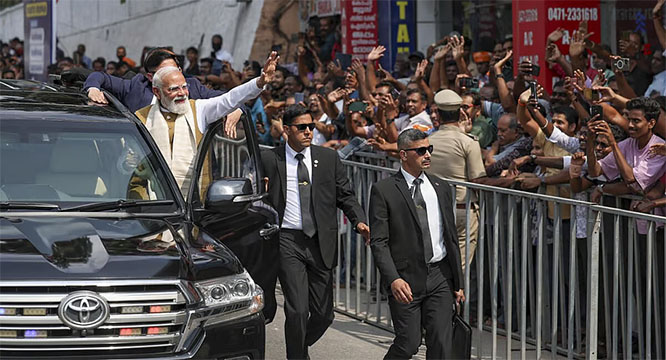
Prime Minister Narendra Modi, during his visit to Thiruvananthapuram on Friday, January 23, indicated that the Bharatiya Janata Party (BJP) is aiming to expand its political footprint in Kerala ahead of the Assembly elections scheduled in the coming months.

Speaking at a BJP-organised public meeting, Modi drew parallels between the party’s early electoral gains in Gujarat and its recent victory in the Thiruvananthapuram Municipal Corporation. The civic body win, which ended decades of Left control, was cited by the Prime Minister as a possible starting point for the party’s broader ambitions in the state.

Recalling BJP’s political trajectory in Gujarat, Modi said the party was largely insignificant before 1987 and received little media attention. He pointed out that the BJP’s first major breakthrough came with its victory in the Ahmedabad Municipal Corporation that year.

“Just as our journey in Gujarat began with one city, Kerala’s journey has also started with a single city,” Modi said, suggesting that the party’s municipal-level success could translate into wider electoral acceptance.

The Prime Minister alleged that successive governments led by the Left Democratic Front (LDF) and the United Democratic Front (UDF) had failed to adequately develop Thiruvananthapuram. He accused both fronts of corruption and neglect, claiming that basic infrastructure and facilities were denied to the capital city for decades.

According to Modi, the BJP’s control of the civic body represents a shift driven by public dissatisfaction with the existing political alternatives. He asserted that the BJP administration in Thiruvananthapuram had begun working towards development, though no specific details or timelines were outlined.

Addressing the gathering at Putharikandam Maidan, Modi said the BJP intended to project Thiruvananthapuram as a “model city,” reiterating his party’s commitment to governance-led change.

The Prime Minister’s visit to Kerala also included the inauguration of several development projects and the flagging off of new train services, as the BJP intensifies its political outreach in the poll-bound state.

Comments

Add new comment

  • Coastaldigest.com reserves the right to delete or block any comments.
  • Coastaldigset.com is not responsible for its readers’ comments.
  • Comments that are abusive, incendiary or irrelevant are strictly prohibited.
  • Please use a genuine email ID and provide your name to avoid reject.
News Network
February 3,2026

manjeshwar.jpg

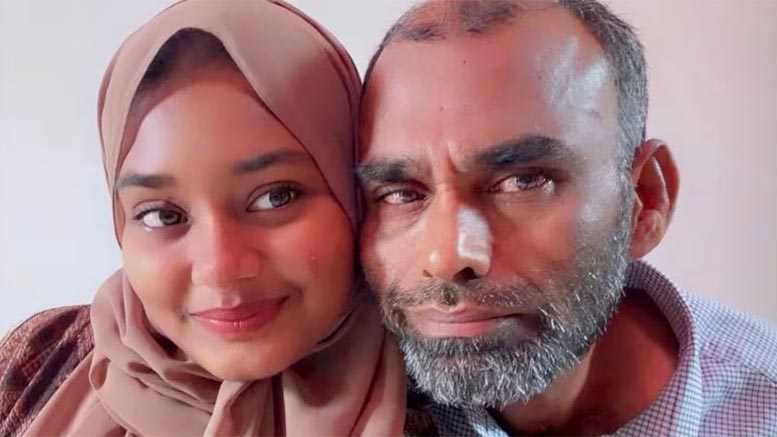
Kasaragod: An 18-year-old girl was stabbed to death at Thuminad in Manjeshwar panchayat on Monday, allegedly by her father following a domestic dispute. 

The victim has been identified as K U Mariyamath Jumaila. Her father, Umar Farooq, has been taken into police custody, Manjeshwar Station House Officer Inspector Ajith Kumar P said.

According to the police, Umar Farooq had been working in a West Asian country and returned home about three months ago. 

Family tensions reportedly escalated after his wife, Thahira (41), decided to seek a divorce and asked him to leave her life. Kasaragod district panchayat member Harshad Vorkady alleged that Umer was addicted to marijuana and frequently caused disturbances at home.

On Monday, Thahira asked Umar to come to her sister’s house in Thuminad to discuss the dispute. Jumaila accompanied her mother. 

Manjeshwar panchayat member Illiyas Thuminad said Umar arrived along with his brother, following which Thahira handed over gold ornaments and property documents to him and asked him to sever ties with her.

However, the police said a property dispute had been ongoing between Umar Farooq and his sister-in-law’s husband. During a heated argument, Umar allegedly attempted to attack the man with a sharp weapon. When Jumaila intervened to stop the assault, she was stabbed in the neck.

The teenager collapsed after bleeding profusely and was rushed to a private hospital in Mangaluru, where doctors declared her dead. Her body was later shifted to Mangalpady Taluk Hospital for post-mortem examination.

Jumaila was a former student of Sirajul Huda English Medium Higher Secondary School, Manjeshwar. 

Comments

Add new comment

  • Coastaldigest.com reserves the right to delete or block any comments.
  • Coastaldigset.com is not responsible for its readers’ comments.
  • Comments that are abusive, incendiary or irrelevant are strictly prohibited.
  • Please use a genuine email ID and provide your name to avoid reject.