Abrogation of Article 370 will help curb terrorism, says European Parliament member

Agencies
September 2, 2019

Brussels, Sept 2: A Member of the European Parliament (MEP) has said that the abrogation of Article 370 will help in rooting out several terrorist organisations operating in Kashmir.

In an article published in the European Parliament's monthly newspaper EP Today, MEP Tomas Zdechovsky said that "such terrorist groups are spreading violence in the Kashmir valley and Pakistan occupied Kashmir (PoK)".

These armed groups were reportedly responsible for attacks on persons affiliated or associated with political organisations in Jammu and Kashmir, including in the killings of at least six political party workers and a separatist leader.

In the lead up to the local elections in October 2018, these armed groups threatened Kashmiris who were attempting to participate in the elections, and warned of "dire consequences" if those running for elections did not immediately withdraw their nomination papers and publicly apologised for their actions.

"While armed groups have sporadically threatened political workers in previous elections, the number of attacks in 2018 is amongst the highest in recent times," said Tomas.

Pakistan-based armed groups that operate mostly in Kashmir have also been accused of harassing and threatening nationalist and pro-independence political workers in PoK.

On August 2, last year, members of an unknown armed group attacked and burned down at least 12 schools in Gilgit-Baltistan's Diamer district. At least half of these were girls school.

On February 14, this year, a suicide bombing targetting the Indian security forces in Pulwama, was claimed by Jaish-e-Mohammed (JeM).

"India blamed Pakistan for continuing to support the group's activities. Pakistan foreign minister Shah Mehmood Qureshi confirmed to an international news organisation that JeM founder Masood Azhar was present in Pakistan," the article read.

On May 1, the United Nations Security Council Da'esh and al-Qaida Sanctions Committee announced that it had added Azhar to its list of individuals or entities subject to assets freeze, travel ban and arms embargo.

Pakistan's endorsed engagement and support of state-sponsored terrorism has also been confirmed by the Financial Action Task Force (FATF). (The FATF is an inter-governmental organisation that monitors money laundering and terrorist financing.)

The organisation had stated in February that Pakistan "does not demonstrate a proper understanding of the Terror financing risks posed by Da'esh, al-Qaida, Jamaat-ud-Dawa (JuD), Falah-i-Insaniyat Foundation (FIF), Lashkar-e -Taiba (LeT), Jaish-e-Mohammed (JeM), Haqqani Network (HQN), and persons affiliated with the Taliban."

It urged Pakistan to address its "strategic deficiencies" and complete its action plan.

The 2019 report of the Office of the United Nations High Commissioner for Human Rights (OHCHR) on the human rights situation in Kashmir and PoK covering the period from May 2018 to April 2019, noted that "since the late 1980s, a variety of armed groups have been actively operating in the Indian state of Jammu and Kashmir, and there has been documented evidence of these groups committing a wide range of human rights abuses, including kidnappings, killings of civilians, and sexual violence.

The UN report said, "while in the 1990s there were reportedly over a dozen armed groups operating in Kashmir, in recent years, four major armed groups are believed to be operational in this region: Lashkar-e-Taiba, Jaish-e-Mohammed, Hizbul Mujahideen and Harakat Ul-Mujahidin. All four are believed to be based in Pakistan-administered Kashmir."

Furthermore, the report states that "two armed groups have been accused of recruiting and deploying child soldiers in Kashmir."

The MEP said in his article, "In its fight against terrorism, and against acts of violence in Kashmir and also in India by Pakistani based terrorists and armed groups, Prime Minister of India, Narendra Modi had to act. His choice of action, whilst harsh and direct, was criticised by many who failed to understand his motive. On the August 5, this year, PM Modi revoked Article 370 through a Presidential Order and the passage of a resolution in Parliament."

Article 370 of the Indian constitution gives a special status to Jammu and Kashmir, thereby allowing it to have a separate constitution, a state flag and autonomy over the internal administration of the state.

This article, along with Article 35A, defined that the Jammu and Kashmir state's residents live under a separate set of laws, including those related to citizenship, ownership of property, and fundamental rights, as compared to the residents of other Indian states.

"The removal, temporarily or permanently of these articles, should be seen as a global stance against terrorist activities, where today terrorists exploit the principles of democracy, freedom of speech and human rights practised by the majority, whilst at the same time imposing fear, violence and killings as justification for their causes," said the MEP. PM Modi understood the challenge he was undertaking with his sudden revocation of Article 370, although for those following his election campaign, he had already committed to undertake this initiative if his electorate were to appoint him.

Tomas Zdechovsky said, "With his landslide victory, his focus on genuinely protecting his people by prioritising the fight against terrorism remains unshaken... providing almost immediate justification to his actions, on 6th August, the day after his announcement to revoke Article 370, the Pakistani Prime Minister Imran Khangave a dramatic speech that invited and incited further terrorist activity in India."

"Incidents like Pulwama are bound to happen again, I can already predict this will happen," Khan said, calling to his Parliament, people and Pakistan based terrorist groups. At the same time his Army Chief, General Qamar Javed Bajwa, stated that Pakistan's military will "go to any extent" to protect Kashmir.

Masood Azhar, chief of the Jihadi group, further explained that "now is the time that Kashmiris need to come out with unity so that the enemy will beg for peace and negotiations."

"It is hoped that by the equal inclusion of Jammu and Kashmir state under the same constitution as India's other twenty-eight states, India can ensure that its values of free and fair elections without intimidation, its values of diversity and religious harmony, and its fight against terrorism, can provide greater stability and security not only for the people of India, but for those throughout South Asia," Zdechovsky concluded.

Comments

Add new comment

  • Coastaldigest.com reserves the right to delete or block any comments.
  • Coastaldigset.com is not responsible for its readers’ comments.
  • Comments that are abusive, incendiary or irrelevant are strictly prohibited.
  • Please use a genuine email ID and provide your name to avoid reject.
News Network
February 3,2026

Bengaluru: Following reports of fresh Nipah virus (NiV) cases in West Bengal and heightened vigilance across parts of Southeast Asia, the Karnataka Health Department has placed the state on high alert and activated emergency preparedness protocols.

Health officials said enhanced surveillance measures have been initiated after two healthcare workers in Barasat, West Bengal, tested positive for the virus earlier this month. While no cases have been reported in Karnataka so far, authorities said the state’s past exposure to Nipah outbreaks and high inter-state mobility warranted preventive action.

Officials have directed district health teams to intensify monitoring, particularly at hospitals and points of entry, and to ensure early detection and isolation of suspected cases.

High Mortality Virus with Multiple Transmission Routes

Nipah virus is a zoonotic disease that can spread from animals to humans and has a reported fatality rate ranging between 60 and 75 per cent. Fruit bats, also known as flying foxes, are the natural reservoirs of the virus and can transmit it by contaminating food sources with saliva or urine.

Known modes of transmission include:

•    Contaminated food: Consumption of fruits partially eaten by bats or raw date-palm sap
•    Animal contact: Exposure to infected pigs or other animals
•    Human-to-human transmission: Close contact with body fluids of infected persons, particularly in healthcare settings

Symptoms and Disease Progression

The incubation period typically ranges from 4 to 14 days, though delayed onset has also been reported. Early symptoms often resemble common viral infections, making prompt clinical suspicion critical.

•    Initial symptoms: Fever, headache, body aches, fatigue, sore throat
•    Progressive symptoms: Drowsiness, disorientation, altered mental state
•    Severe stage: Seizures, neck stiffness and acute encephalitis, which can rapidly progress to coma

Public Health Advisory

The Health Department has issued precautionary guidelines urging the public to adopt risk-avoidance practices to prevent any local spillover.

Do’s
•    Wash fruits thoroughly before consumption
•    Drink boiled and cooled water
•    Use protective equipment while handling livestock
•    Maintain strict hand hygiene

Don’ts
•    Avoid fruits found on the ground or showing bite marks
•    Do not consume beverages made from raw tree sap, including toddy
•    Avoid areas with dense bat populations
•    Do not handle sick or dead animals

Preparedness Measures

Officials confirmed that isolation wards are being readied in major government hospitals and that medical staff are being sensitised to identify early warning signs.

“There is no cause for panic, but there is a need for heightened vigilance,” a senior health official said, adding that there is currently no approved vaccine or specific antiviral treatment for Nipah, and care remains largely supportive.

Comments

Add new comment

  • Coastaldigest.com reserves the right to delete or block any comments.
  • Coastaldigset.com is not responsible for its readers’ comments.
  • Comments that are abusive, incendiary or irrelevant are strictly prohibited.
  • Please use a genuine email ID and provide your name to avoid reject.
News Network
February 3,2026

manjeshwar.jpg

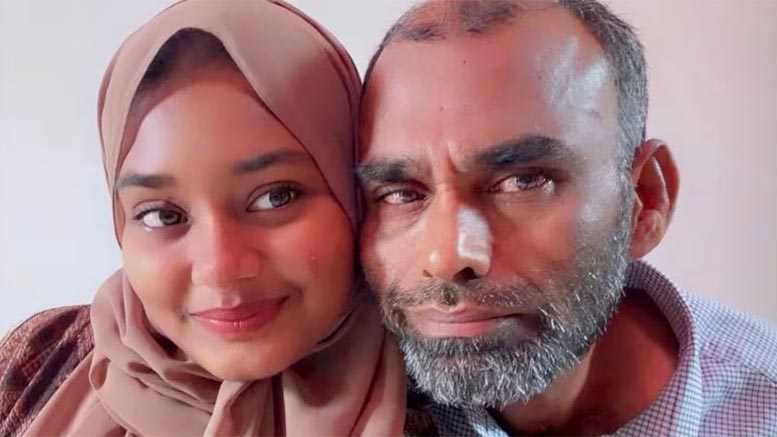
Kasaragod: An 18-year-old girl was stabbed to death at Thuminad in Manjeshwar panchayat on Monday, allegedly by her father following a domestic dispute. 

The victim has been identified as K U Mariyamath Jumaila. Her father, Umar Farooq, has been taken into police custody, Manjeshwar Station House Officer Inspector Ajith Kumar P said.

According to the police, Umar Farooq had been working in a West Asian country and returned home about three months ago. 

Family tensions reportedly escalated after his wife, Thahira (41), decided to seek a divorce and asked him to leave her life. Kasaragod district panchayat member Harshad Vorkady alleged that Umer was addicted to marijuana and frequently caused disturbances at home.

On Monday, Thahira asked Umar to come to her sister’s house in Thuminad to discuss the dispute. Jumaila accompanied her mother. 

Manjeshwar panchayat member Illiyas Thuminad said Umar arrived along with his brother, following which Thahira handed over gold ornaments and property documents to him and asked him to sever ties with her.

However, the police said a property dispute had been ongoing between Umar Farooq and his sister-in-law’s husband. During a heated argument, Umar allegedly attempted to attack the man with a sharp weapon. When Jumaila intervened to stop the assault, she was stabbed in the neck.

The teenager collapsed after bleeding profusely and was rushed to a private hospital in Mangaluru, where doctors declared her dead. Her body was later shifted to Mangalpady Taluk Hospital for post-mortem examination.

Jumaila was a former student of Sirajul Huda English Medium Higher Secondary School, Manjeshwar. 

Comments

Add new comment

  • Coastaldigest.com reserves the right to delete or block any comments.
  • Coastaldigset.com is not responsible for its readers’ comments.
  • Comments that are abusive, incendiary or irrelevant are strictly prohibited.
  • Please use a genuine email ID and provide your name to avoid reject.
News Network
January 20,2026

DGP.jpg

Karnataka DGP (Civil Rights Enforcement) K Ramachandra Rao was suspended with immediate effect, as per a state government order issued on Monday, 19 January. The order cited conduct unbecoming of a government servant and causing embarrassment to the state administration.

The Karnataka government suspended Rao after a purported video showed him in a compromising position with a woman inside his official chamber. The video went viral on social media. Rao rejected the videos outright, terming them "fabricated and false".

Who is K Ramachandra Rao?

Rao is a DGP-rank officer who was heading the Directorate of Civil Rights Enforcement until his suspension. He was promoted to DGP in September 2023 and assumed office in October 2023, the Sunday Guardian reported.

He also served as the Chairman and Managing Director of the Karnataka State Police Housing and Infrastructure Development Corporation Limited.

His stint as the Inspector General of Police (IGP) for the Southern Range was also marred by controversy. In 2014, during a cash seizure near Mysuru’s Yelwal, officials claimed the seized amount was ₹20 lakh, while the accused (Kerala-based merchants) claimed it was around ₹2.27 crore.

Rao, who was present during the seizure, denied all allegations. However, he was transferred soon after.

Allegations of collusion with a businessman surfaced, and a senior police officer was quoted by The Sunday Guardian as saying, “In Rao’s case, the CID has clearly mentioned that there was a great degree of lapse on the part of Rao and a deputy superintendent of police after it was brought to their notice that a few policemen, including a gunman attached to the IGP, were involved in the robbery.”

Rao had denied all wrongdoing in that incident. Despite past controversies, he rose to the state’s top police position, the Sunday Guardian reported.

Ranya Rao’s stepfather

Rao is the stepfather of Kannada actress Harshavardhini Ranya alias Ranya Rao, accused of orchestrating the illegal import of gold worth over ₹12.56 crore from Dubai to India along with two others — businessman Tarun Raju, and jewellery dealer Sahil Jain.

‘Obscene video’ controversy

A viral video showed Rao behaving inappropriately with a woman inside his office while in uniform.

The Karnataka government said in its Monday order that “vide videos and news reports widely broadcast on public news channels and media platforms, it is observed that Dr K Ramachandra Rao has acted in an obscene manner which is unbecoming of a Government Servant and also causing embarrassment to the Government.”

The order said the matter was examined by the state government, which found that the officer's conduct amounted to a violation of Rule 3 of the All India Services (Conduct) Rules, 1968.

The government said it is prima facie satisfied that "it is necessary to place Rao under suspension with immediate effect, pending inquiry".

During the suspension period, Rao will be entitled to subsistence allowance as per Rule 4 of the All India Services (Discipline and Appeal) Rules, 1969.

The order also places restrictions on his movement, stating that during the period of suspension, the officer must not leave headquarters under any circumstances without the written permission of the state government.

Comments

Add new comment

  • Coastaldigest.com reserves the right to delete or block any comments.
  • Coastaldigset.com is not responsible for its readers’ comments.
  • Comments that are abusive, incendiary or irrelevant are strictly prohibited.
  • Please use a genuine email ID and provide your name to avoid reject.