



Beijing's stand on Masood doing material harm to China-India ties: Experts

Agencies
November 7, 2017

Washington, Nov 7: The recent decision by China to block a bid at the United Nations to list Maulana Masood Azhar, chief of Pakistan-based Jaish-e-Mohammed (JeM) militant group, as a global terrorist, is doing "material harm" to its ties with India, top American experts said today.

Last week, China had blocked a bid at the United Nations by the US, France, and Britain to list Azhar as a global terrorist, citing a lack of consensus among the members of the UN Security Council.

A veto-wielding permanent member of the UN Security Council, China has repeatedly blocked Indias move to designate Azhar a terrorist under the Al-Qaeda Sanctions Committee of the UN Security Council.

"I think it's an unfortunate move on China's part and I question the logic of continuing to block sanctions on known Pakistan-based terrorists at the United Nations," Jeff Smith from the Heritage Foundation said.

Smith said that China was "clearly" seeing its action as a favor to its all-weather friend, Pakistan.

"But the policy is increasingly undermining China's own strategic interests and stated foreign policy objectives," he said, noting that in September, China had, for the first time, relented to including specific criticism of JeM and other Pakistani terror outfits in the statement issued at the BRICS summit in Xiamen.

"It grievously undermines an increasingly prominent Chinese narrative about the need to take a tougher line on terrorism broadly, and in Afghanistan specifically," Smith said.

"It's actions are also doing material harm to the health of a China-India relationship already under duress," he said.

The Permanent Mission of the United States to the United Nations said that the Committee discussions over whether to add an individual or entity to the 1267 sanctions list are confidential to the committee.

"However, we would support efforts to list Azhar, Jaish-e Mohammeds founder and leader, on the 1267 Sanctions List and would encourage others to support his listing as well," a spokesperson for the US mission in New York said.

According to Rick Rossow from Center for Strategic and International Studies (CSIS), an American think-tank, China's latest move affirmed Delhi's belief in Sino-Pakistani collusion.

"By supporting this decision, China could have taken an important step to restart its ties with Delhi, yet Beijing chose a different path," Rossow said.

Rossow alleged that China continued to use the international system where it saw fit, "such as this vote", while undermining the international system in other areas, "such as maritime law".

"The timing is significant, coming on the heels of Washingtons stronger rhetoric against Pakistans support for terrorism. Much like the announcement of the China-Pakistan Economic Corridor, this decision was another Chinese lifeline to Islamabad at a precarious time," Rossow said.

Director of Initiative on the Future of India and South Asia at Hudson Institute think tank, Aparna Pande, said she was not surprised by Beijing's decision.

"While China worries about Islamist radicals it is concerned primarily with Uyghurs and on that front it will apply pressure on Pakistan," she noted.

"When it comes to Jihadis that target India, China does not see it as in its interest to force Pakistan. Further, being seen as Pakistans benefactor in the international arena is another benefit for Beijing," Pande said. The JeM, founded by Azhar, has already been in the UNs list of banned terror outfits.

Last year in March, China was the only member in the 15- nation UN Security Council to put a hold on Indias application.

The other 14 members supported New Delhis bid to place Azhar on the sanctions list that would subject him to an assets freeze and travel ban.

Azhar is accused of several terrorist attacks in India, including one on the Pathankot air force station in January 2016.

Comments

Add new comment

  • Coastaldigest.com reserves the right to delete or block any comments.
  • Coastaldigset.com is not responsible for its readers’ comments.
  • Comments that are abusive, incendiary or irrelevant are strictly prohibited.
  • Please use a genuine email ID and provide your name to avoid reject.
News Network
February 3,2026

wind.jpg

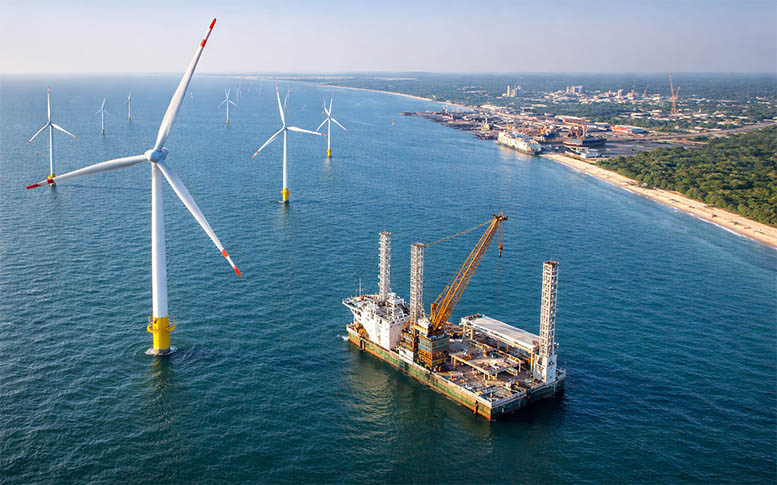
Dakshina Kannada MP Capt Brijesh Chowta has urged the Centre to give high priority to offshore wind energy generation along the Mangaluru coast, citing its strategic importance to India’s green energy and port-led development goals.

Raising the issue in the Lok Sabha under Rule 377, Chowta said studies by the National Institute of Oceanography have identified the Mangaluru coastline as part of India’s promising offshore wind ‘Zone-2’, covering nearly 6,490 sq km. He noted that the region’s relatively low exposure to cyclones and earthquakes makes it suitable for long-term offshore wind projects and called for its development as a dedicated offshore wind energy zone.

Highlighting the role of New Mangalore Port, Chowta said its modern infrastructure, multiple berths and heavy cargo-handling capacity position it well as a logistics hub for transporting and assembling large wind energy equipment.

He also pointed to the presence of major industrial units such as MRPL, OMPL, UPCL and the Mangaluru SEZ, which could serve as direct buyers of green power through power purchase agreements, improving project viability and speeding up execution.

With Karnataka’s peak power demand crossing 18,000 MW in early 2025, Chowta stressed the need to diversify renewable energy sources. He added that offshore wind projects in the Arabian Sea are strategically safer compared to the cyclone-prone Bay of Bengal.

Calling the project vital to India’s target of 500 GW of renewable energy by 2030, Chowta urged the Ministry of New and Renewable Energy to initiate resource assessments, pilot projects and stakeholder consultations at the earliest.

Comments

Add new comment

  • Coastaldigest.com reserves the right to delete or block any comments.
  • Coastaldigset.com is not responsible for its readers’ comments.
  • Comments that are abusive, incendiary or irrelevant are strictly prohibited.
  • Please use a genuine email ID and provide your name to avoid reject.
News Network
February 5,2026

Bengaluru: As air quality continues to worsen across several parts of the city, hospitals in Bengaluru are reporting a steady rise in patients suffering from respiratory illnesses such as asthma, bronchitis and Chronic Obstructive Pulmonary Disease (COPD), health officials and doctors said.

Data from the Suvarna Arogya Suraksha Trust (SAST) shows that 3,891 patients received treatment for respiratory ailments between April and November 2024. The figure rose to 4,187 during the same period in 2025.

Private hospitals, too, are witnessing a 10–15 per cent year-on-year increase in such cases.

While doctors caution that the rise cannot be attributed solely to air pollution, a significant number of patients are non-smokers with no prior history of respiratory disease.

“Nearly 70 per cent of the patients we see are non-smokers with no previous respiratory issues. When other causes are ruled out, air pollution emerges as the most likely factor,” said Dr Manjunath PH, consultant interventional pulmonologist at a hospital in Kengeri.

Doctors noted that patient footfall spikes during the winter months and around Deepavali, when air quality typically worsens.

“There is a clear correlation between poor air quality and the rise in cases. People commonly present with persistent cough, breathlessness and irritation of the respiratory tract, indicating the impact of polluted air on their health,” said Dr Sheetal Chaurasia, consultant in pulmonary medicine at a private hospital in Whitefield.

Dr Chaurasia added that respiratory tract infections are also on the rise.

“Poor air quality leads to chronic airway inflammation, making the airways more vulnerable to infections. We are seeing an increase in both upper and lower respiratory tract infections,” she said.

Patients with pre-existing respiratory conditions remain the worst affected.

“For those already diagnosed with respiratory illnesses, deteriorating air quality significantly worsens the condition. Both the frequency and severity of attacks increase sharply,” said Dr Vandana P, a pulmonologist at a hospital on Bannerghatta Road.

Doctors also flagged a worrying trend of rising respiratory problems among younger adults and children.

To reduce exposure, they advised people to wear masks while travelling on two-wheelers or autos and ensure adequate ventilation at home to minimise indoor air pollution.

Comments

Add new comment

  • Coastaldigest.com reserves the right to delete or block any comments.
  • Coastaldigset.com is not responsible for its readers’ comments.
  • Comments that are abusive, incendiary or irrelevant are strictly prohibited.
  • Please use a genuine email ID and provide your name to avoid reject.
News Network
January 23,2026

Mangaluru: The Karnataka Government Polytechnic (KPT), Mangaluru, has achieved autonomous status from the All India Council for Technical Education (AICTE), becoming the first government polytechnic in the country to receive such recognition in its 78-year history. The status was granted by AICTE, New Delhi, and subsequently approved by the Karnataka Board of Technical Education in October last year.

Officials said the autonomy was conferred a few months ago. Until recently, AICTE extended autonomous status only to engineering colleges, excluding diploma institutions. However, with a renewed national focus on skill development, several government polytechnics across India have now been granted autonomy.

KPT, the second-largest polytechnic in Karnataka, was established in 1946 with four branches and has since expanded to offer eight diploma programmes, including computer science and polymer technology. The institution is spread across a 19-acre campus.

Ravindra M Keni, the first dean of the institution, told The Times of India that AICTE had proposed autonomous status for polytechnic institutions that are over 25 years old. “Many colleges applied. In the first round, 100 institutions were shortlisted, which was further narrowed down to 15 in the second round. We have already completed one semester after becoming an autonomous institution,” he said. He added that nearly 500 students are admitted annually across eight three-year diploma courses.

Explaining the factors that helped KPT secure autonomy, Keni said the institution has consistently recorded 100 per cent admissions and placements for its graduates. He also noted its strong performance in sports, with the college emerging champions for 12 consecutive years, along with active student participation in NCC and NSS activities.

Autonomous status allows KPT to design industry-oriented curricula, conduct examinations, prepare question papers, and manage academic documentation independently. The institution can also directly collaborate with industries and receive priority funding from AICTE or the Ministry of Education. While academic autonomy has been granted, financial control will continue to rest with the state government.

“There will be separate committees for examinations, question paper setting, boards of studies, and boards of examiners. The institution will now have the freedom to conduct admissions without government notifications and issue its own marks cards,” Keni said, adding that new academic initiatives would be planned after a year of functioning under the autonomous framework.

Comments

Add new comment

  • Coastaldigest.com reserves the right to delete or block any comments.
  • Coastaldigset.com is not responsible for its readers’ comments.
  • Comments that are abusive, incendiary or irrelevant are strictly prohibited.
  • Please use a genuine email ID and provide your name to avoid reject.