



Brunei introduces stoning to death for gay sex,adultery

Agencies
April 3, 2019

Brunei, Apr 3: Brunei on Wednesday introduced harsh new sharia laws, including death by stoning for adultery and gay sex, despite a storm of global criticism from politicians, celebrities and rights groups.
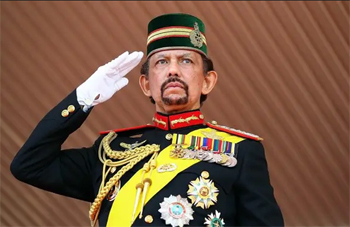
The tough penal code in the tiny country on tropical Borneo island -- ruled by the all-powerful Sultan Hassanal Bolkiah -- fully came into force following years of delays.

The laws, which also include amputation of hands and feet for thieves, make Brunei the first place in East or Southeast Asia to have a sharia penal code at the national level, joining several mostly Middle Eastern countries such as Saudi Arabia.

Rape and robbery are also punishable by death under the code and many of the new laws, such as capital punishment for insulting the Prophet Mohammed, apply to non-Muslims as well as Muslims.

The decision to push ahead with the punishments has sparked alarm around the world, with the United Nations labelling them "cruel and inhumane" and celebrities, led by actor George Clooney and pop star Elton John, calling for Brunei-owned hotels to be boycotted.

In a public address to mark a special date in the Muslim calendar, the sultan called for stronger Islamic teachings but did not mention the new penal code.

"I want to see Islamic teachings in this country grow stronger," he said in the nationally televised speech at a convention centre near the capital Bandar Seri Begawan.

The sultan, who has been on the throne for over five decades, also insisted that Brunei was a "fair" country and the environment for visitors was "safe and harmonious".

Government officials later confirmed the laws had entered into force.

The sharia laws have triggered worldwide condemnation, and Phil Robertson, deputy Asia director at Human Rights Watch, described the code as "barbaric to the core, imposing archaic punishments for acts that shouldn't even be crimes".

The European Union said in a statement that some of the new punishments "amount to torture, acts of cruel, inhuman or degrading treatment".

They are particularly upsetting for the country's small lesbian, gay, bisexual and transgender (LGBT) community. Before the new laws, sex between men was already illegal in Brunei and punishable with up to 10 years in jail.

But the new code stipulates death by stoning as a punishment for sex between men, while women convicted of having sexual relations with other women face up to 40 strokes of the cane or a maximum 10-year jail term.

A 33-year-old gay Bruneian man, who spoke anonymously, said the new laws were "unfair, cruel and should not happen".

"It really takes away my happiness and freedom to express myself, and depresses me so much," he told AFP.

Zulhelmi bin Mohamad, a transgender woman who fled Brunei last year and is seeking asylum in Canada, told AFP that the environment will be more terrifying for the country's LGBT community, who were already leading "very secretive" lives.

"Some worry a lot and would like to escape the country before they are found out not to be... heterosexual," the 19-year-old said.

Confirming the new penal code was now in force, a religious affairs ministry official told AFP: "The statement from the prime minister's office last weekend on (the code's) implementation prevails, hence (April 3) marks the date of its implementation."

A second government official, speaking anonymously, confirmed it had entered into force.

The sultan -- who is one of the world's wealthiest men and lives in a vast, golden-domed palace -- announced plans for the code in 2013.

The first section was introduced in 2014 and included less stringent penalties, such as fines or jail terms for offences including indecent behaviour or skipping Friday prayers.

Clooney's call to boycott nine Brunei-owned hotels in Europe and the United States last week catapulted the issue into the international headlines.

Since then, a series of well-known figures have lined up to add their names to the chorus of condemnation.

The sultan, who is the world's second-longest reigning monarch, first called for the penal code in the late 1990s and it appears to enjoy broad support in the former British protectorate of about 400,000 people.

Analysts say he is seeking to burnish his Islamic credentials and shore up support among the country's conservatives due to the waning fortunes of the oil-dependent economy, which has been ravaged by recession in recent years.

It is also unclear whether death by stoning will actually be implemented, as a high burden of proof is needed to hand down the punishment and Brunei has not executed anyone for decades.

Comments

Add new comment

  • Coastaldigest.com reserves the right to delete or block any comments.
  • Coastaldigset.com is not responsible for its readers’ comments.
  • Comments that are abusive, incendiary or irrelevant are strictly prohibited.
  • Please use a genuine email ID and provide your name to avoid reject.
News Network
January 20,2026

DGP.jpg

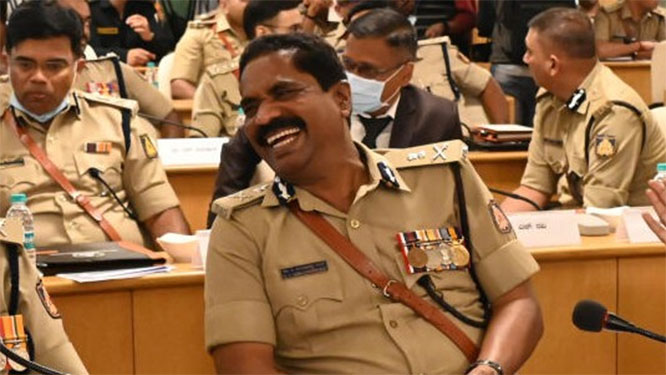
Karnataka DGP (Civil Rights Enforcement) K Ramachandra Rao was suspended with immediate effect, as per a state government order issued on Monday, 19 January. The order cited conduct unbecoming of a government servant and causing embarrassment to the state administration.

The Karnataka government suspended Rao after a purported video showed him in a compromising position with a woman inside his official chamber. The video went viral on social media. Rao rejected the videos outright, terming them "fabricated and false".

Who is K Ramachandra Rao?

Rao is a DGP-rank officer who was heading the Directorate of Civil Rights Enforcement until his suspension. He was promoted to DGP in September 2023 and assumed office in October 2023, the Sunday Guardian reported.

He also served as the Chairman and Managing Director of the Karnataka State Police Housing and Infrastructure Development Corporation Limited.

His stint as the Inspector General of Police (IGP) for the Southern Range was also marred by controversy. In 2014, during a cash seizure near Mysuru’s Yelwal, officials claimed the seized amount was ₹20 lakh, while the accused (Kerala-based merchants) claimed it was around ₹2.27 crore.

Rao, who was present during the seizure, denied all allegations. However, he was transferred soon after.

Allegations of collusion with a businessman surfaced, and a senior police officer was quoted by The Sunday Guardian as saying, “In Rao’s case, the CID has clearly mentioned that there was a great degree of lapse on the part of Rao and a deputy superintendent of police after it was brought to their notice that a few policemen, including a gunman attached to the IGP, were involved in the robbery.”

Rao had denied all wrongdoing in that incident. Despite past controversies, he rose to the state’s top police position, the Sunday Guardian reported.

Ranya Rao’s stepfather

Rao is the stepfather of Kannada actress Harshavardhini Ranya alias Ranya Rao, accused of orchestrating the illegal import of gold worth over ₹12.56 crore from Dubai to India along with two others — businessman Tarun Raju, and jewellery dealer Sahil Jain.

‘Obscene video’ controversy

A viral video showed Rao behaving inappropriately with a woman inside his office while in uniform.

The Karnataka government said in its Monday order that “vide videos and news reports widely broadcast on public news channels and media platforms, it is observed that Dr K Ramachandra Rao has acted in an obscene manner which is unbecoming of a Government Servant and also causing embarrassment to the Government.”

The order said the matter was examined by the state government, which found that the officer's conduct amounted to a violation of Rule 3 of the All India Services (Conduct) Rules, 1968.

The government said it is prima facie satisfied that "it is necessary to place Rao under suspension with immediate effect, pending inquiry".

During the suspension period, Rao will be entitled to subsistence allowance as per Rule 4 of the All India Services (Discipline and Appeal) Rules, 1969.

The order also places restrictions on his movement, stating that during the period of suspension, the officer must not leave headquarters under any circumstances without the written permission of the state government.

Comments

Add new comment

  • Coastaldigest.com reserves the right to delete or block any comments.
  • Coastaldigset.com is not responsible for its readers’ comments.
  • Comments that are abusive, incendiary or irrelevant are strictly prohibited.
  • Please use a genuine email ID and provide your name to avoid reject.
News Network
February 3,2026

Bengaluru: Following reports of fresh Nipah virus (NiV) cases in West Bengal and heightened vigilance across parts of Southeast Asia, the Karnataka Health Department has placed the state on high alert and activated emergency preparedness protocols.

Health officials said enhanced surveillance measures have been initiated after two healthcare workers in Barasat, West Bengal, tested positive for the virus earlier this month. While no cases have been reported in Karnataka so far, authorities said the state’s past exposure to Nipah outbreaks and high inter-state mobility warranted preventive action.

Officials have directed district health teams to intensify monitoring, particularly at hospitals and points of entry, and to ensure early detection and isolation of suspected cases.

High Mortality Virus with Multiple Transmission Routes

Nipah virus is a zoonotic disease that can spread from animals to humans and has a reported fatality rate ranging between 60 and 75 per cent. Fruit bats, also known as flying foxes, are the natural reservoirs of the virus and can transmit it by contaminating food sources with saliva or urine.

Known modes of transmission include:

•    Contaminated food: Consumption of fruits partially eaten by bats or raw date-palm sap
•    Animal contact: Exposure to infected pigs or other animals
•    Human-to-human transmission: Close contact with body fluids of infected persons, particularly in healthcare settings

Symptoms and Disease Progression

The incubation period typically ranges from 4 to 14 days, though delayed onset has also been reported. Early symptoms often resemble common viral infections, making prompt clinical suspicion critical.

•    Initial symptoms: Fever, headache, body aches, fatigue, sore throat
•    Progressive symptoms: Drowsiness, disorientation, altered mental state
•    Severe stage: Seizures, neck stiffness and acute encephalitis, which can rapidly progress to coma

Public Health Advisory

The Health Department has issued precautionary guidelines urging the public to adopt risk-avoidance practices to prevent any local spillover.

Do’s
•    Wash fruits thoroughly before consumption
•    Drink boiled and cooled water
•    Use protective equipment while handling livestock
•    Maintain strict hand hygiene

Don’ts
•    Avoid fruits found on the ground or showing bite marks
•    Do not consume beverages made from raw tree sap, including toddy
•    Avoid areas with dense bat populations
•    Do not handle sick or dead animals

Preparedness Measures

Officials confirmed that isolation wards are being readied in major government hospitals and that medical staff are being sensitised to identify early warning signs.

“There is no cause for panic, but there is a need for heightened vigilance,” a senior health official said, adding that there is currently no approved vaccine or specific antiviral treatment for Nipah, and care remains largely supportive.

Comments

Add new comment

  • Coastaldigest.com reserves the right to delete or block any comments.
  • Coastaldigset.com is not responsible for its readers’ comments.
  • Comments that are abusive, incendiary or irrelevant are strictly prohibited.
  • Please use a genuine email ID and provide your name to avoid reject.