



Beijing, Oct 20: A campaign to boycott Chinese goods in India due to differences over India's bid for NSG membership and UN ban on JeM chief Masood Azhar will not have much "political effect" and will fail to "fundamentally change the bilateral trade ties, state-run Chinese media said today.
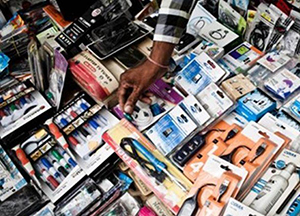
Quoting Indian media reports, an article in the state-run Global Times said that "some politicians and citizens in India have recently launched campaigns to boycott Chinese products".
"They blame China for India's failure to enter the Nuclear Suppliers Group (NSG), and for Beijing blocking India's UN bid on sanctioning a commander in Lashkar-e-Taiba, a Pakistan-based military group.
"Beijing and New Delhi are currently negotiating about these two issues and it is believed that mutual understanding will be reached eventually," said the article written by Liu Xiaoxue, an associate research fellow at the Institute of Asia-Pacific Studies at the Chinese Academy of Social Sciences said.
India is seeking a UN ban on Azhar, chief of Pakistan-based Jaish-e-Muhammad (JeM) which has been blamed for the January 2 Pathankot attack.
Scuttling India's move, China has recently put a second technical hold on Azhar's UN ban issue.
Underlining that Sino-Indian relationship has always been "haunted" by border disputes and China's ties with Pakistan, the article, said, "However, the two sides have long realised that setting aside divergences is beneficial for both sides' overall development than being hostile to each other."
"...A boycott of Chinese goods will not only result in little of the political effect that people who initiated the movement would like to see, but will also fail to fundamentally change India's current trade ties with China. In the end, it will be nothing more than a tiny incident," it said.
Referring to improvement in India-China political ties since the visit of former prime minister Rajiv Gandhi in 1988, the daily said economic and trade ties have also been boosted following which China has become India's largest trading partner since 2013.
"Of course, apart from political issues, some economic factors have also disrupted Sino-Indian trade development. Unresolved problems between the two nations sometimes influence their political mutual trust and have led to the non-tariff barriers in India against Chinese capital and products, such as security checks in major projects in the fields of defence, telecommunications, Internet and transportation," it said.
On the growing trade deficit, the daily said, "Economically, India has unbalanced trade ties with China. The increasing trade deficit with China has been irritating New Delhi. India's trade deficit with China jumped to USD 51.45 billion in 2015."
"As a country with a long-term account deficit which faces balance of payments problems, India is always vigilant against trade deficits. Chinese products can hence be easily turned into the target of India's anti-dumping sanctions," it said.
"After Indian Prime Minister Narendra Modi started promoting the slogan 'Make in India', some of the country's media and citizens have tended to hype up the substantial quantities of made-in-China balloons, coloured lanterns and ribbons that always appear in the nation's Hindu spring festival by asking, 'should our valuable foreign currency be wasted on these products?' or 'Are Indian manufacturing industries too backward to produce those goods?" it said.
"However, for consumers, attractive goods with a reasonable price are naturally their first option. Moreover, the merchandise, which is mentioned by Indian media all the time, is only a small part of Chinese exports to India," the daily said.
"Being a major exporter of high-tech goods, today's China mainly exports high-tech products to India, including electrical equipment, telecommunications equipment, train locomotives, computers and telephones. These are all necessary for India's economic development and its people's everyday lives," it said.
"Will Indian people answer the call of boycott? How long can the campaign last? What specific influence will it have on Sino-Indian trade relations? Even the Indian media pushing for a ban does not have the answers," the daily said.
"It is believed that after this round of patriotic passion, businessmen and consumers in India will make a rational choice," it said.


Comments
Add new comment