Catalonia declares independence from Spain, direct Madrid rule looms

Agencies
October 27, 2017

Barcelona/Madrid, Oct 27: Catalonia's parliament declared independence from Spainon Friday in defiance of the Madridgovernment, which at the same time was preparing to impose direct rule over the region.

Although the declaration was in effect a symbolic gesture as it will not be accepted by Spain or the international community, the moves by both sides take Spain's worst political crisis in four decades to a new level.

Spanish Prime Minister Mariano Rajoy immediately called for calm and said the rule of law would be restored.

The motion passed in the regional parliament in Barcelona -- which was boycotted by opposition parties -- said Catalonia constituted an independent, sovereign and social democratic state. It called on other countries and institutions to recognise it.

It also said it wanted to open talks with Madrid to collaborate on setting up the new republic.

"It is not going to be easy, it is not going to be free, it is not going to change in a day. But there is no alternative to a process towards the Catalan Republic," lawmaker Marta Rovira of the Junts pel Si pro-independence alliance said in a debate leading to the vote.

After the debate, lawmakers from members of three main national parties -- the People's Party, the Socialists and Ciudadanos, walked out.

Members of the pro-independence parties and the far-left Podemos then voted in 70-10 in favour in a secret ballot aimed at hindering any attempt by the central government to lay criminal charges on them.

Spanish shares and bonds were sold off when the result of the vote was announced.

Catalan leader Carles Puigdemont left the chamber to shouts of "President!".

Meanwhile in Madrid the upper house of Spain's parliament, the Senate, was due to approve Article 155, the law that allowing the central government to take over the autonomous region.

"Exceptional measures should only be adopted when no other remedy is possible," Spanish Prime Minister Mariano Rajoy said in an address to the Senate. "In my opinion there is no alternative. The only thing that can be done and should be done is to accept and comply with the law."

The Catalan leadership was ignoring the law and making a mockery of democracy, he said.

"We are facing a challenge unprecedented in our recent history," said Rajoy, who has staked out an uncompromising position against Catalonia's campaign to break away from Spain.

After the Senate vote, Rajoy was expected to convene his cabinet to adopt the first measures to govern Catalonia directly. This could include sacking the Barcelona government and assuming direct supervision of Catalan police forces.

But how direct rule would work on the ground - including the reaction of civil servants and the police - is uncertain.

Some independence supporters have promised to mount a campaign of civil disobedience, which could lead to direct confrontation with security forces.

The crisis developed after an independence referendum on Oct. 1 was declared illegal by Madrid. Although it endorsed independence, it drew only a 43 percent turnout as Catalans who oppose independence largely boycotted it.

WORRIED, NERVOUS

In Barcelona, crowds of independence supporters were swelling on downtown streets, shouting "Liberty" in the Catalan language and singing traditional Catalan songs.

"I'm worried, I'm nervous like everybody. But freedom is never free," said Jaume Moline, 50, musician.

Montserrat Rectoret, a 61-year-old historian, said: "I am emotional because Catalonia has struggled for 40 years to be independent and finally I can see it."

The crisis has split Catalonia and caused deep resentment around Spain - national flags now hang from many balconies in the capital in an expression of unity.

It has also prompted a flight of business from the wealthy northeastern region and alarmed European leaders who fear the crisis could fan separatist sentiment around the continent.

Catalonia is one of Spain's most prosperous regions and already has a high degree of autonomy. But it has a litany of historic grievances, exacerbated during the 1939-1975 Franco dictatorship, when its culture and politics were suppressed.


Comments

Add new comment

  • Coastaldigest.com reserves the right to delete or block any comments.
  • Coastaldigset.com is not responsible for its readers’ comments.
  • Comments that are abusive, incendiary or irrelevant are strictly prohibited.
  • Please use a genuine email ID and provide your name to avoid reject.
News Network
February 3,2026

wind.jpg

Dakshina Kannada MP Capt Brijesh Chowta has urged the Centre to give high priority to offshore wind energy generation along the Mangaluru coast, citing its strategic importance to India’s green energy and port-led development goals.

Raising the issue in the Lok Sabha under Rule 377, Chowta said studies by the National Institute of Oceanography have identified the Mangaluru coastline as part of India’s promising offshore wind ‘Zone-2’, covering nearly 6,490 sq km. He noted that the region’s relatively low exposure to cyclones and earthquakes makes it suitable for long-term offshore wind projects and called for its development as a dedicated offshore wind energy zone.

Highlighting the role of New Mangalore Port, Chowta said its modern infrastructure, multiple berths and heavy cargo-handling capacity position it well as a logistics hub for transporting and assembling large wind energy equipment.

He also pointed to the presence of major industrial units such as MRPL, OMPL, UPCL and the Mangaluru SEZ, which could serve as direct buyers of green power through power purchase agreements, improving project viability and speeding up execution.

With Karnataka’s peak power demand crossing 18,000 MW in early 2025, Chowta stressed the need to diversify renewable energy sources. He added that offshore wind projects in the Arabian Sea are strategically safer compared to the cyclone-prone Bay of Bengal.

Calling the project vital to India’s target of 500 GW of renewable energy by 2030, Chowta urged the Ministry of New and Renewable Energy to initiate resource assessments, pilot projects and stakeholder consultations at the earliest.

Comments

Add new comment

  • Coastaldigest.com reserves the right to delete or block any comments.
  • Coastaldigset.com is not responsible for its readers’ comments.
  • Comments that are abusive, incendiary or irrelevant are strictly prohibited.
  • Please use a genuine email ID and provide your name to avoid reject.
News Network
February 3,2026

manjeshwar.jpg

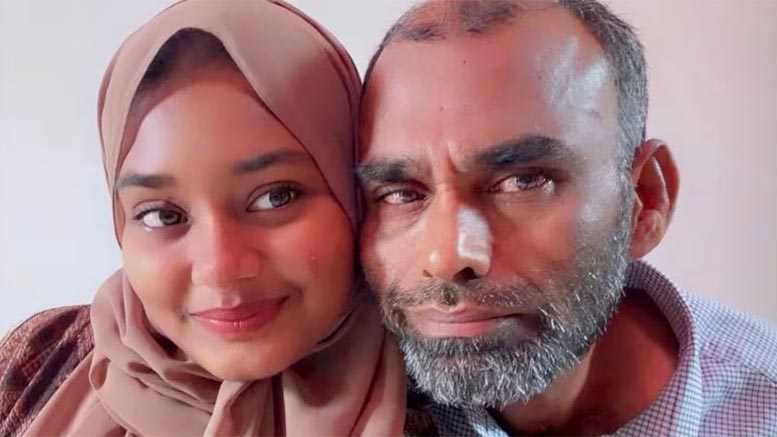
Kasaragod: An 18-year-old girl was stabbed to death at Thuminad in Manjeshwar panchayat on Monday, allegedly by her father following a domestic dispute. 

The victim has been identified as K U Mariyamath Jumaila. Her father, Umar Farooq, has been taken into police custody, Manjeshwar Station House Officer Inspector Ajith Kumar P said.

According to the police, Umar Farooq had been working in a West Asian country and returned home about three months ago. 

Family tensions reportedly escalated after his wife, Thahira (41), decided to seek a divorce and asked him to leave her life. Kasaragod district panchayat member Harshad Vorkady alleged that Umer was addicted to marijuana and frequently caused disturbances at home.

On Monday, Thahira asked Umar to come to her sister’s house in Thuminad to discuss the dispute. Jumaila accompanied her mother. 

Manjeshwar panchayat member Illiyas Thuminad said Umar arrived along with his brother, following which Thahira handed over gold ornaments and property documents to him and asked him to sever ties with her.

However, the police said a property dispute had been ongoing between Umar Farooq and his sister-in-law’s husband. During a heated argument, Umar allegedly attempted to attack the man with a sharp weapon. When Jumaila intervened to stop the assault, she was stabbed in the neck.

The teenager collapsed after bleeding profusely and was rushed to a private hospital in Mangaluru, where doctors declared her dead. Her body was later shifted to Mangalpady Taluk Hospital for post-mortem examination.

Jumaila was a former student of Sirajul Huda English Medium Higher Secondary School, Manjeshwar. 

Comments

Add new comment

  • Coastaldigest.com reserves the right to delete or block any comments.
  • Coastaldigset.com is not responsible for its readers’ comments.
  • Comments that are abusive, incendiary or irrelevant are strictly prohibited.
  • Please use a genuine email ID and provide your name to avoid reject.
News Network
February 1,2026

Bengaluru: The Karnataka High Court has refused to quash an investigation against a WhatsApp group administrator accused of allowing the circulation of obscene and offensive images depicting Hindutva politicians and idols in 2021.

Justice M Nagaprasanna observed that, prima facie, the ingredients of the offence under Section 295A of the Indian Penal Code were made out. “The offence under Section 295A of the IPC is met to every word of its ingredient, albeit prima facie,” the judge said.

The petitioner, Sirajuddin, a resident of Belthangady taluk in Dakshina Kannada district, had challenged the FIR registered against him at the CEN (Cyber, Economics and Narcotics) police station, Mangaluru, for offences under Section 295A of the IPC and Section 67 of the Information Technology Act. Section 295A relates to punishment for deliberate and malicious acts intended to outrage the religious feelings of any class of citizens.

According to the complaint filed by K Jayaraj Salian, also a resident of Belthangady taluk, he received a WhatsApp group link from an unknown source and was added to the group after accessing it. The group reportedly had six administrators and around 250 participants, where obscene and offensive images depicting Hindu deities and certain political figures were allegedly circulated repeatedly.

Sirajuddin was arrested in connection with the case and later released on bail on February 16, 2021. He argued before the court that he was being selectively targeted, while other administrators—including the creator of the group—were neither arrested nor investigated. He also contended that the Magistrate could not have taken cognisance of the offence under Section 295A without prior sanction under Section 196(1) of the CrPC.

Rejecting the argument, Justice Nagaprasanna held that prior sanction is required only at the stage of taking cognisance, and not at the stage of registration of the crime or during investigation.

The judge noted that the State had produced the entire investigation material before the court. “A perusal of the material reveals depictions of Hindu deities in an extraordinarily obscene, demeaning and profane manner. The content is such that its reproduction in a judicial order would itself be inappropriate,” the court said, adding that the material, on its face, had the tendency to outrage religious feelings and disturb communal harmony.

Observing that the case was still at the investigation stage, the court said it could not interdict the probe at this juncture. However, it expressed concern that the investigating officer appeared to have not proceeded uniformly against all administrators. The court clarified that if the investigation revealed the active involvement of any member in permitting the circulation of such content, they must also be proceeded against.

“At this investigative stage, any further observation by this Court would be unnecessary,” the order concluded.

Comments

Add new comment

  • Coastaldigest.com reserves the right to delete or block any comments.
  • Coastaldigset.com is not responsible for its readers’ comments.
  • Comments that are abusive, incendiary or irrelevant are strictly prohibited.
  • Please use a genuine email ID and provide your name to avoid reject.