



China urges India to abide by historic treaty on border

Agencies
October 8, 2017

Beijing, Oct 8: China today referred to the 1890 UK-China treaty which it claims demarcated the Sikkim sector of the Sino-Indian border as it urged New Delhi to abide by its provisions, a day after Defence Minister Nirmala Sitharaman made her maiden visit to the Nathu La post.
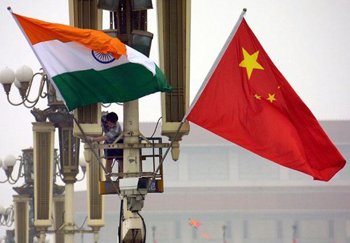
Reacting to Sitharamans visit to the area, the Chinese foreign ministry today said "the Sikkim section of the China- India border has been demarcated by the historical boundary".

"It is the best testimony to this fact. We urge the Indian side to face the facts, abide by the provisions of the historic boundary treaty and the relevant agreement of the parties, and work together with the Chinese side to maintain peace and tranquillity in the border areas," it said in a written response to PTI, to a query about Sitharamans visit.

The ministry did not directly name the 1890 Britain-China treaty which Beijing often referred to during the Dokalam standoff stating that it has defined the Sikkim section of the boundary with Tibet, therefore the border in that area has been settled.

Sitharaman yesterday visited the Nathu La area on the Sino-Indian border and interacted with Army and Indo-Tibetan Border Police officials.

Nathu La is the last post separating the border between the Sikkim on the Indian side and Tibet on the Chinese side. Sitharamans trip was the first high level visit to the area after the 73-day standoff between Indian and Chinese troops at Dokalam in the Sikkim sector of the border which ended on August 28 following a mutual agreement between India and China.

Of the 3,488-km India-China border which stretches from Jammu and Kashmir to Arunachal Pradesh, a 220-km section falls in Sikkim. The two sides have so far held 19 rounds of Special Representatives talks to resolve the dispute.

The Dokalam standoff began on June 16 over the PLAs plans to build a road in the area claimed by Bhutan after which Indian troops intervened to stop the construction as it posed a security risk to the Chickens Neck - the narrow corridor connecting India with its northeastern states.

China, which earlier opened the Nathu La route for Indian pilgrims to visit Kailash and Manasarovar, closed it after the Dokalam standoff and is yet to reopen it.

Comments

Add new comment

  • Coastaldigest.com reserves the right to delete or block any comments.
  • Coastaldigset.com is not responsible for its readers’ comments.
  • Comments that are abusive, incendiary or irrelevant are strictly prohibited.
  • Please use a genuine email ID and provide your name to avoid reject.
News Network
December 7,2025

envoy.jpg

Since 1946, the United States has attempted 93 coups or “regime change” operations across the world — including two in Iran, US Special Envoy for Syria Tom Barrack has admitted.

Speaking to the UAE-based IMI Media Group, in remarks published by The National, Barrack said Washington tried twice to overthrow the Iranian government but failed both times. 

“For (Trump) then to be imputed with regime change — we had two regime changes in Iran already. Neither one worked. So I think wisely leave it to the region to solve,” said Barrack, who also serves as the US ambassador to Turkey.

His comments come six months after the US joined Israel in airstrikes against Iran during ongoing indirect nuclear negotiations between Tehran and Washington.

On June 13, Israel launched an attack on Iran that killed at least 1,064 people and hit civilian infrastructure. Days later, the United States targeted three nuclear facilities — Fordow, Natanz and Isfahan — in what Iran called a clear violation of international law. Iranian retaliation eventually forced a halt to the assault on June 24.

Barrack further claimed that US President Donald Trump and Foreign Secretary Marco Rubio are “not into regime change” and prefer a regional approach driven by Middle Eastern countries themselves. According to him, regional dialogue and non-interference by outside powers offer a more durable path forward.

He added that Washington is still open to an agreement with Tehran if Iranian authorities show “seriousness” and willingness to engage constructively.

However, Iran maintains the US has not shown readiness for meaningful talks. In an interview with Japan’s Kyodo News, Iranian Foreign Minister Abbas Araghchi said negotiations could advance only if Washington acknowledges Iran’s right to peaceful nuclear energy and lifts unilateral sanctions.

Comments

Add new comment

  • Coastaldigest.com reserves the right to delete or block any comments.
  • Coastaldigset.com is not responsible for its readers’ comments.
  • Comments that are abusive, incendiary or irrelevant are strictly prohibited.
  • Please use a genuine email ID and provide your name to avoid reject.