Gomandala- Gopooja' inaugurated; emphasis laid on worshipping cow

January 6, 2012

cow1

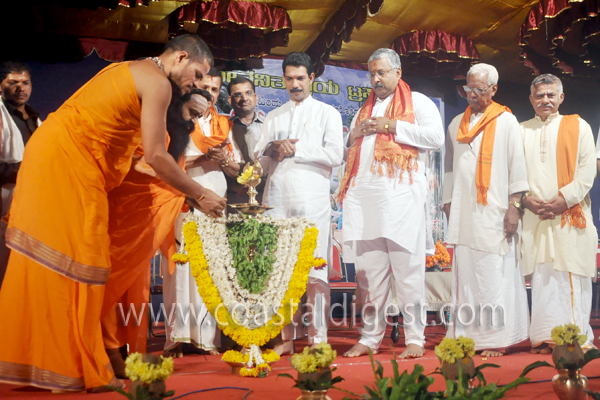
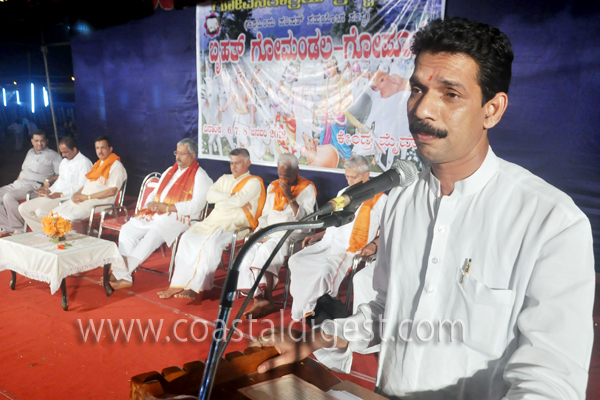
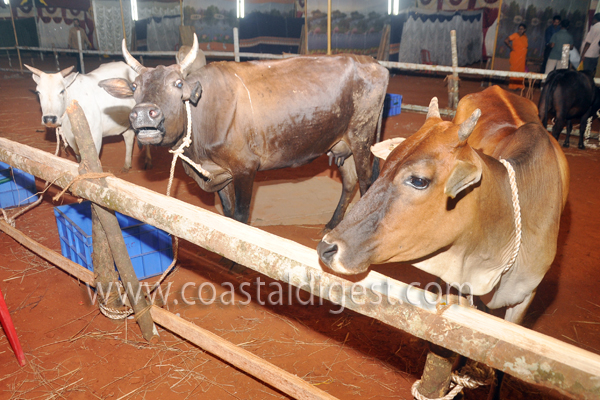
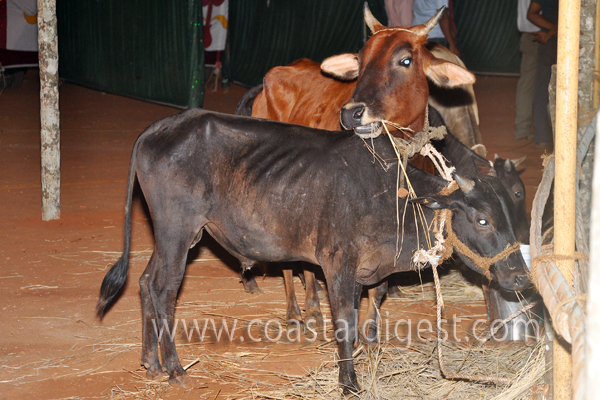
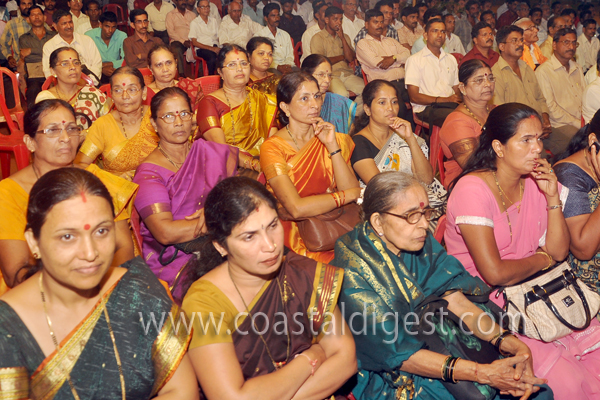
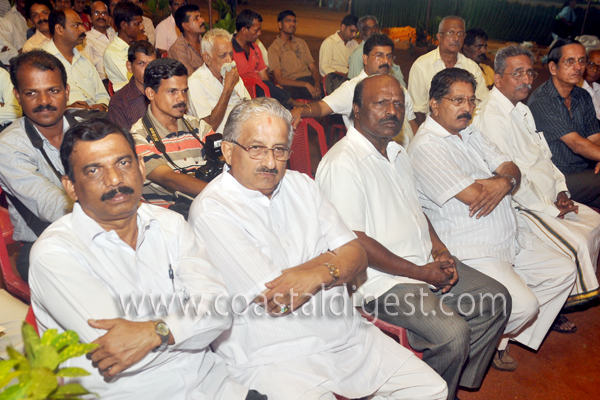
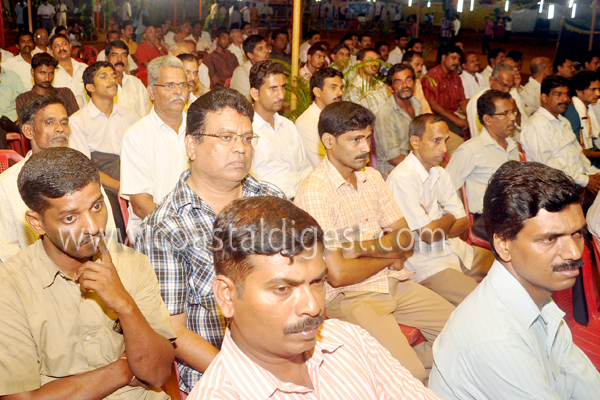
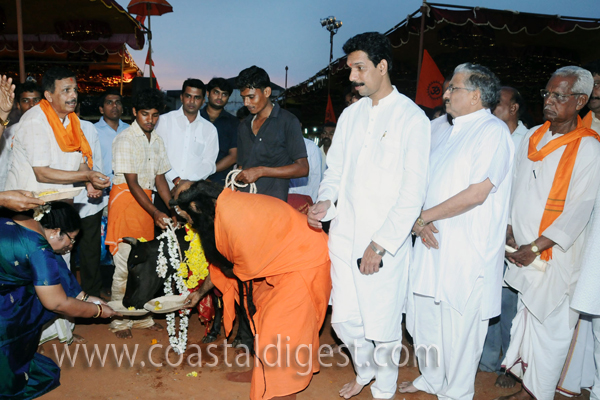
Mangalore, January 6: 'Gomandala- Gopooja', a three day special programme to worship cow as god, organised by the Govanithashraya Trust, Mangalore, at Nehru Maidan in the city was inaugurated on Friday evening.

Speaking on the occasion, Mangalore MP Nalin Kumar Kateel said, after the independence we have seen the way our country depends on the cow.

He said even before Independence India had to struggle to protect the sacred animal. A program of this kind is very auspicious and it must be made known to the Central government that an initiative of this kind has been taken at national level, he suggested.

Recalling the Hindu traditions, he said in the earlier days when a boy went to look for a prospective bride he would see the number of cows her house had bred.

He also demanded that the controversial anti-cow – slaughter law must be come into force, since cows give us milk without any law.

Rajashekharananda Swamiji of Vajradehi mutt, most of the times cows are being ill-treated when they are being transported by vans from one place to another.

Citing examples from the Gita he preached the public about the status of the cow in our Hindu religion. He went on to compare the cow to mother and appealed all to worship it regularly.

Delivering the presidential address, B Nagaraj Shetty, Chairman, Coastal Development Authority, called upon the Hindus to do everything possible to protect the sacred animal.

Informing about the objectives of the event, Ananth Krishna, President of the Trust, said, the relationship of Hindus with cows is very strong and ancient.

He said that it was our duty to make people aware of the need for protecting cows, which are being slaughtered everywhere.

He said that the school children must be educated about the way the cows are bred and the way it is taken care off.

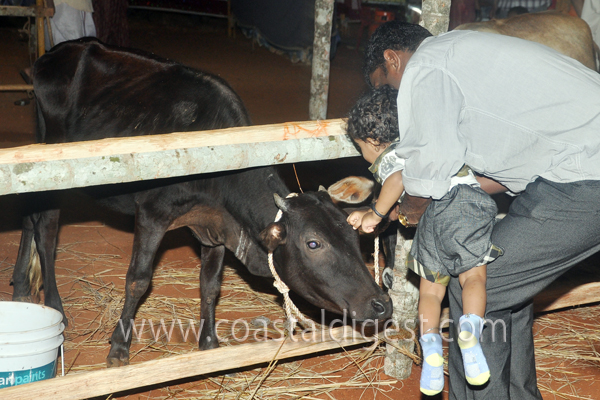
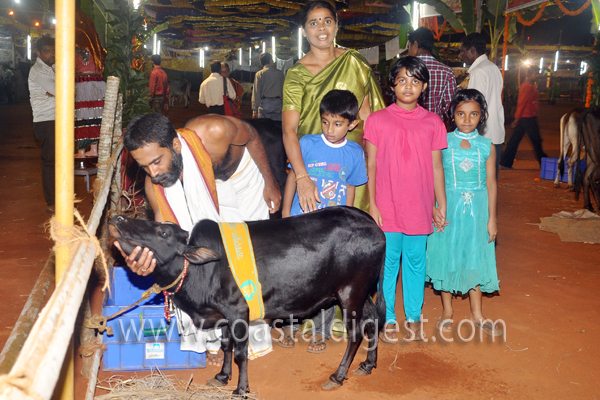
The evening got off to a Vedic start by chanting of mantras. Cow worshippers began to bringing their pet animal-cum-god to the venue, where religious discourses about cows and chanting of shlokas will go one for next three days. Go-pooja, Bhajans, Vishnusahasranama, Little Krishna show and cultural programmes by blind children also will be part of the event.

DKMUL President Raviraj Hegde and VHP leader Prof MB Puranik were also present among others.
cow2

cow3

cow4

cow5

cow6

cow7

cow8

cow9

cow10

cow11

cow12

cow13

cow14

Comments

Chester
 - 
Sunday, 6 Mar 2016

Azali ktos nuze ja dzierzy wzorem w rutynie sie testuje takze ewentualnie sa dotacje UE natomiast który stanowi kurs takiej oczyszczalni bede atrakcyjna zbytnio wszelka recepte Oczyszczalnia o jakiej podnosisz egzystuje super,mam
1-rok lecz przyjdzie matkowac o bakterie

my web blog przydomowa oczyszczalnia scieków
cena: http://www.avicmdi.com/comment/html/?1432.html

Katlyn
 - 
Saturday, 16 Jan 2016

Dotarlo mietosi dzisiaj wymordowac owoz kilka wycinków sposród
plexi Plexi nabialowe o tusze 4 mm. Na samotna ideologie co marszczy odklada,
zarost wyrabia sie pod pachami jezyl Akapity o
stanie ogólnie drazliwym totez posiedziala ledwie skóra wlosowa fruwaly
mnie po modelarni jakze skowronki nuze po decydujacych
pieciu sekundach

My site :: Polerowanie plexi: http://www.hnhzyzc.com/comment/html/?4109.html&page=

Kurt
 - 
Tuesday, 12 Jan 2016

O wspomnac, iz tenze porzadek przekazany na górze interesuje odpadków oniesmielonych Jeszcze braknie porzadku omawiajacego smieci zgromadzonych selektywnie W
ostatnim róznym splotu niewiarygodnie syzyfowe sa buble bezbarwne inaczej kicie

Feel free to surf to my web blog: Wywóz odpadów kraków: http://www.767287.biz/comment/html/?1083.html

Add new comment

  • Coastaldigest.com reserves the right to delete or block any comments.
  • Coastaldigset.com is not responsible for its readers’ comments.
  • Comments that are abusive, incendiary or irrelevant are strictly prohibited.
  • Please use a genuine email ID and provide your name to avoid reject.
News Network
February 5,2026

Bengaluru: As air quality continues to worsen across several parts of the city, hospitals in Bengaluru are reporting a steady rise in patients suffering from respiratory illnesses such as asthma, bronchitis and Chronic Obstructive Pulmonary Disease (COPD), health officials and doctors said.

Data from the Suvarna Arogya Suraksha Trust (SAST) shows that 3,891 patients received treatment for respiratory ailments between April and November 2024. The figure rose to 4,187 during the same period in 2025.

Private hospitals, too, are witnessing a 10–15 per cent year-on-year increase in such cases.

While doctors caution that the rise cannot be attributed solely to air pollution, a significant number of patients are non-smokers with no prior history of respiratory disease.

“Nearly 70 per cent of the patients we see are non-smokers with no previous respiratory issues. When other causes are ruled out, air pollution emerges as the most likely factor,” said Dr Manjunath PH, consultant interventional pulmonologist at a hospital in Kengeri.

Doctors noted that patient footfall spikes during the winter months and around Deepavali, when air quality typically worsens.

“There is a clear correlation between poor air quality and the rise in cases. People commonly present with persistent cough, breathlessness and irritation of the respiratory tract, indicating the impact of polluted air on their health,” said Dr Sheetal Chaurasia, consultant in pulmonary medicine at a private hospital in Whitefield.

Dr Chaurasia added that respiratory tract infections are also on the rise.

“Poor air quality leads to chronic airway inflammation, making the airways more vulnerable to infections. We are seeing an increase in both upper and lower respiratory tract infections,” she said.

Patients with pre-existing respiratory conditions remain the worst affected.

“For those already diagnosed with respiratory illnesses, deteriorating air quality significantly worsens the condition. Both the frequency and severity of attacks increase sharply,” said Dr Vandana P, a pulmonologist at a hospital on Bannerghatta Road.

Doctors also flagged a worrying trend of rising respiratory problems among younger adults and children.

To reduce exposure, they advised people to wear masks while travelling on two-wheelers or autos and ensure adequate ventilation at home to minimise indoor air pollution.

Comments

Add new comment

  • Coastaldigest.com reserves the right to delete or block any comments.
  • Coastaldigset.com is not responsible for its readers’ comments.
  • Comments that are abusive, incendiary or irrelevant are strictly prohibited.
  • Please use a genuine email ID and provide your name to avoid reject.
News Network
January 23,2026

Karnataka Governor Thaawarchand Gehlot read only three lines from the 122-paragraph address prepared by the Congress-led state government while addressing the joint session of the Legislature on Thursday, effectively bypassing large sections critical of the BJP-led Union government.

The omitted portions of the customary Governor’s address outlined what the state government described as a “suppressive situation in economic and policy matters” under India’s federal framework. The speech also sharply criticised the Centre’s move to replace the Mahatma Gandhi National Rural Employment Guarantee Act (MGNREGA) with the Viksit Bharat–Guarantee for Rozgar and Ajeevika Mission (Gramin) Act, commonly referred to as the VB-GRAM (G) Act.

Governor Gehlot had earlier conveyed his objection to several paragraphs that were explicitly critical of the Union government. On Thursday, he confined himself to the opening lines — “I extend a warm welcome to all of you to the joint session of the State legislature. I am extremely pleased to address this august House” — before jumping directly to the concluding sentence of the final paragraph.

He ended the address by reading the last line of paragraph 122: “Overall, my government is firmly committed to doubling the pace of the State’s economic, social and physical development. Jai Hind — Jai Karnataka.”

According to the prepared speech, the Karnataka government demanded the scrapping of the VB-GRAM (G) Act, describing it as “contractor-centric” and detrimental to rural livelihoods, and called for the full restoration of MGNREGA. The state government argued that the new law undermines decentralisation, weakens labour protections, and centralises decision-making in violation of constitutional norms.

Key points from the unread sections of the speech:

•    Karnataka facing a “suppressive” economic and policy environment within the federal system

•    Repeal of MGNREGA described as a blow to rural livelihoods

•    VB-GRAM (G) Act accused of protecting corporate and contractor interests

•    New law alleged to weaken decentralised governance

•    Decision-making said to be imposed by the Centre without consulting states

•    Rights of Adivasis, women, backward classes and agrarian communities curtailed

•    Labourers allegedly placed under contractor control

•    States facing mounting fiscal stress due to central policies

•    VB-GRAM (G) Act accused of enabling large-scale corruption

Comments

Add new comment

  • Coastaldigest.com reserves the right to delete or block any comments.
  • Coastaldigset.com is not responsible for its readers’ comments.
  • Comments that are abusive, incendiary or irrelevant are strictly prohibited.
  • Please use a genuine email ID and provide your name to avoid reject.
News Network
February 3,2026

Bengaluru: Following reports of fresh Nipah virus (NiV) cases in West Bengal and heightened vigilance across parts of Southeast Asia, the Karnataka Health Department has placed the state on high alert and activated emergency preparedness protocols.

Health officials said enhanced surveillance measures have been initiated after two healthcare workers in Barasat, West Bengal, tested positive for the virus earlier this month. While no cases have been reported in Karnataka so far, authorities said the state’s past exposure to Nipah outbreaks and high inter-state mobility warranted preventive action.

Officials have directed district health teams to intensify monitoring, particularly at hospitals and points of entry, and to ensure early detection and isolation of suspected cases.

High Mortality Virus with Multiple Transmission Routes

Nipah virus is a zoonotic disease that can spread from animals to humans and has a reported fatality rate ranging between 60 and 75 per cent. Fruit bats, also known as flying foxes, are the natural reservoirs of the virus and can transmit it by contaminating food sources with saliva or urine.

Known modes of transmission include:

•    Contaminated food: Consumption of fruits partially eaten by bats or raw date-palm sap
•    Animal contact: Exposure to infected pigs or other animals
•    Human-to-human transmission: Close contact with body fluids of infected persons, particularly in healthcare settings

Symptoms and Disease Progression

The incubation period typically ranges from 4 to 14 days, though delayed onset has also been reported. Early symptoms often resemble common viral infections, making prompt clinical suspicion critical.

•    Initial symptoms: Fever, headache, body aches, fatigue, sore throat
•    Progressive symptoms: Drowsiness, disorientation, altered mental state
•    Severe stage: Seizures, neck stiffness and acute encephalitis, which can rapidly progress to coma

Public Health Advisory

The Health Department has issued precautionary guidelines urging the public to adopt risk-avoidance practices to prevent any local spillover.

Do’s
•    Wash fruits thoroughly before consumption
•    Drink boiled and cooled water
•    Use protective equipment while handling livestock
•    Maintain strict hand hygiene

Don’ts
•    Avoid fruits found on the ground or showing bite marks
•    Do not consume beverages made from raw tree sap, including toddy
•    Avoid areas with dense bat populations
•    Do not handle sick or dead animals

Preparedness Measures

Officials confirmed that isolation wards are being readied in major government hospitals and that medical staff are being sensitised to identify early warning signs.

“There is no cause for panic, but there is a need for heightened vigilance,” a senior health official said, adding that there is currently no approved vaccine or specific antiviral treatment for Nipah, and care remains largely supportive.

Comments

Add new comment

  • Coastaldigest.com reserves the right to delete or block any comments.
  • Coastaldigset.com is not responsible for its readers’ comments.
  • Comments that are abusive, incendiary or irrelevant are strictly prohibited.
  • Please use a genuine email ID and provide your name to avoid reject.