235 students and 19 institutions receive Yenepoya academic excellence awards

[email protected] (CD Network)
February 20, 2012

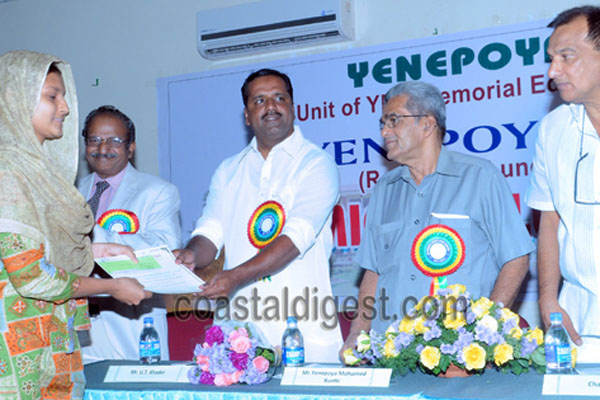
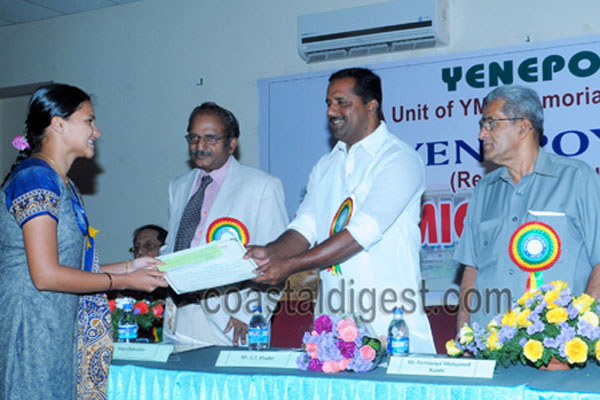
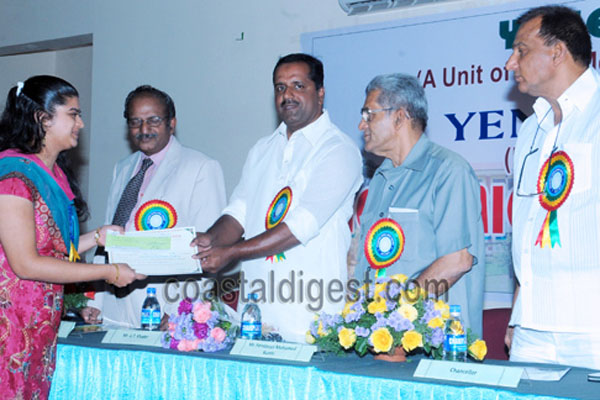
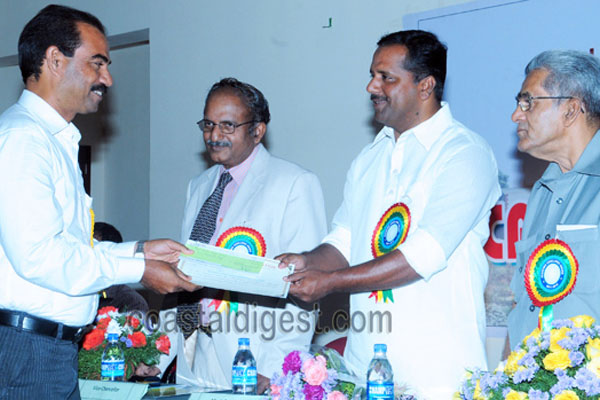
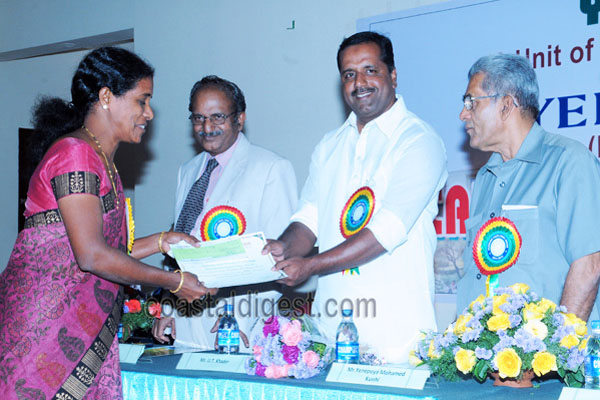
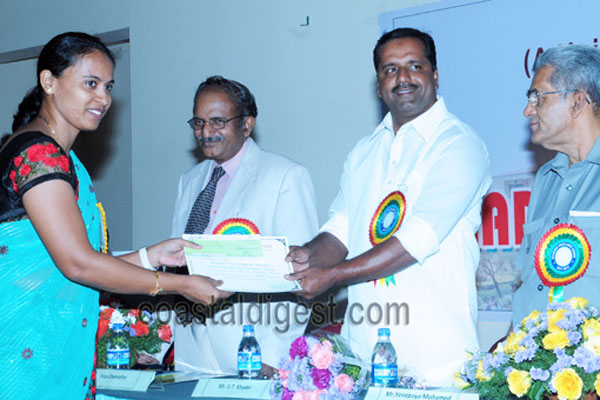
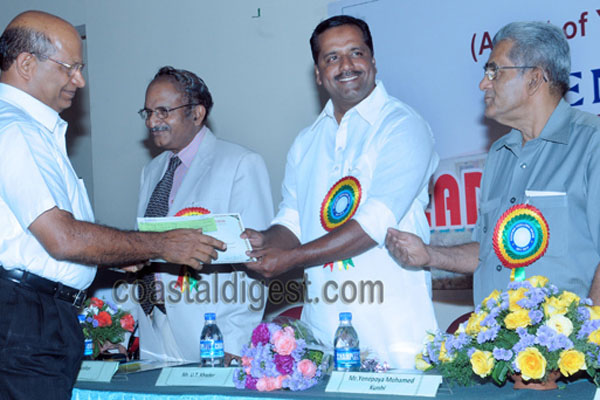
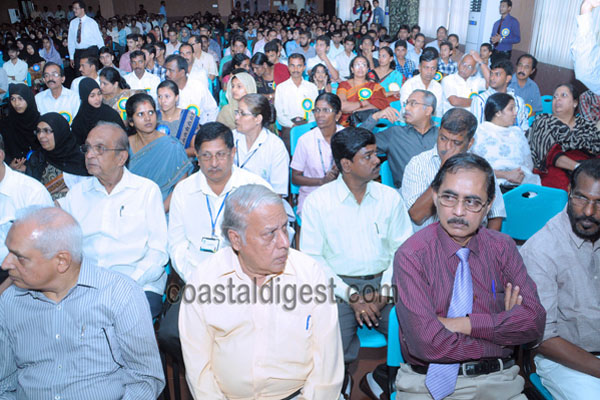
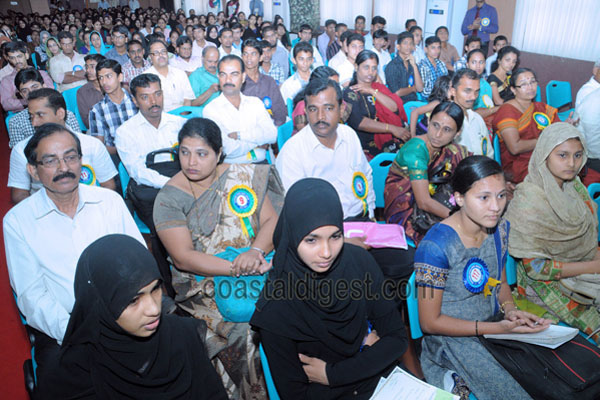
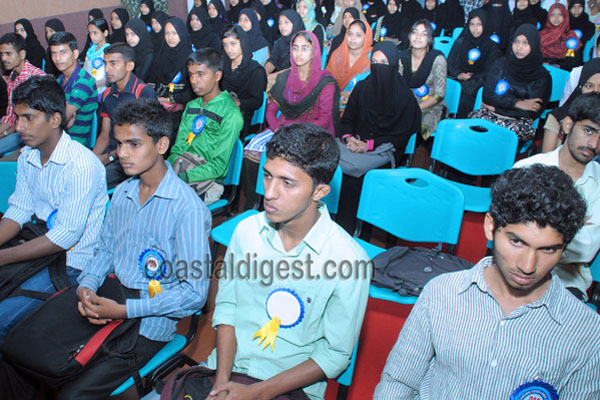
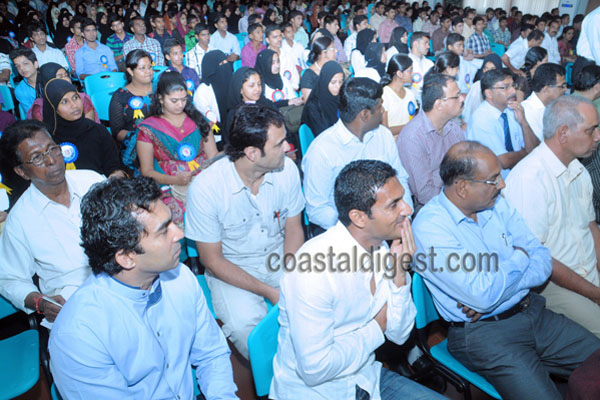
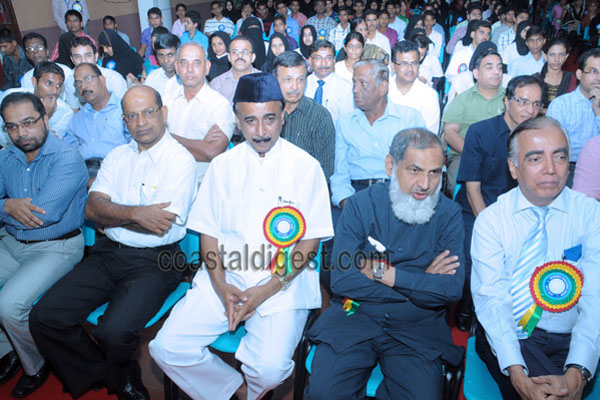
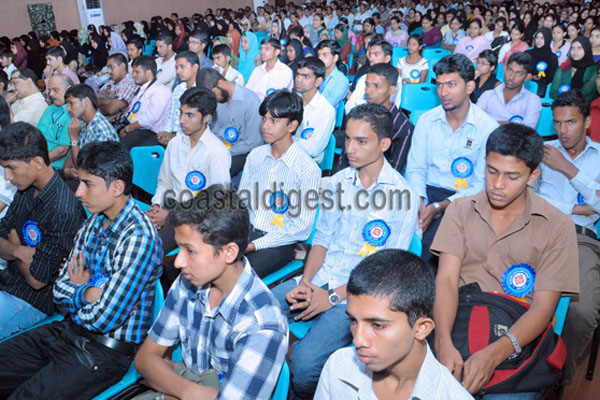
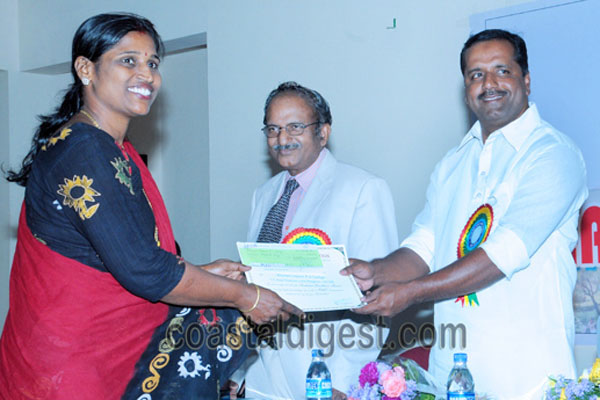
Mangalore, February 20: Yenepoya Foundation, a unit of Yenepoya Moideen Kunhi Memorial Educational and Charitable Trust, distributed academic excellence awards to 235 students and 19 institutions for their performance in SSLC, PUC and undergraduate degree examinations in 2010-11.

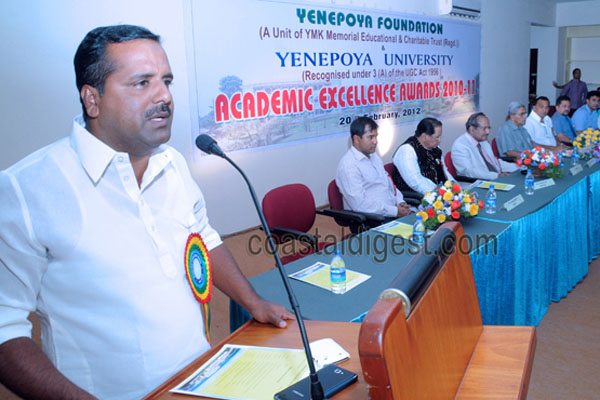
Mangalore MLA U T Khader distributed the awards at a function organized at indoor stadium of the Yenepoya University.

Speaking on the occasion he said the talent in a student should not be confined for obtaining marks but it should encompass all areas including discipline.

He said that it was a frightening fact that the number of educated and qualified people is rapidly increasing in illegal activities, crime and corruption throughout the country. We should seriously think on it, he said.

Mr Khader also urged that more and more students from rural area should plunge into higher education and compete with urban students.

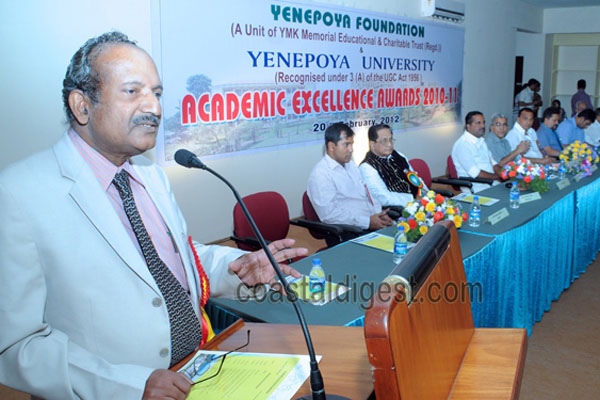
Delivering the introductory remarks, B Ahmed Haji Mohiuddin, Chairman of the Thumbay Group of Institutions chairman, informed that as many as 2055 students and 35 institutions had submitted applications for the academic excellence awards.

The Foundation distributes academic excellence awards to students excelling in SSLC, PUC and undergraduate degree examinations and motivates them through scholarships every year.

These awards are given to students of Dakshina Kannada and Udupi districts of Karnataka and Kasargod district of Kerala purely on basis of merit. The recipients of these awards are around 200 every year and the total annual budgetary allocation for this is around Rs 10 lakh. For the year 2010-11 the foundation is giving awards for 235 students and 19 institutions.

He said the award is given to individuals who have scored highest percentage in respective examinations (SSLC, PUC, BA, Bcom, BSc, BBM, BEd,BCA) and to a few minority institutions which have scored 100 % result in their respective examinations. The selection committee consists of YMK Foundation members who select the awardees as per procedure and strictly on the basis of merit. The award consists of cash awards ranging from Rs 3000 to Rs 10,000 and certificates. Yenepoya foundation is also giving excellence awards for the meritorious children of the employees of Yenepoya group who have scored highest percentage in respective examinations.

As a Social commitment , Yenepoya Foundation also sponsors five seats each in MBBS, BDS, BSc (Nursing) and BPT every year to the Yenepoya Medical, Dental ,Nursing and Physiotherapy colleges which are based on merit cum means for the students from Karnataka state and Kasargod districts. Out of which, one seat in each course is reserved for orphans, sponsored by the orphanages, he said.

Yenepoya Mohammed Kunhi, Chairman, Yenepoya Group, presided over the programme. Yenepoya Abdullah Kunhi, Chancellor, Yenepoya University, Dr P Chandramohan, Vice Chancellor and Dr C P Habeeb Rahman, Chairman, Unity Health Complex were present among others.

yenepoya_award_1_copy

yenepoya_award_2_copy

yenepoya_award_3_copy

yenepoya_award_4_copy

yenepoya_award_5_copy

yenepoya_award_6_copy

yenepoya_award_7_copy

yenepoya_award_8_copy

yenepoya_award_9_copy

yenepoya_award_10_copy

yenepoya_award_11_copy

yenepoya_award_12_copy

yenepoya_award_13

yenepoya_award_14_copy

yenepoya_award_15

yenepoya_award_16

yenepoya_award_17

yenepoya_award_18

Comments

Udath M
 - 
Tuesday, 23 Aug 2016

The prestigious \ Yenepoya Academic Excellence Award\", which is given every year to the deserved , meritorious and needy students , is an indication of the SOCIAL OBLIGATION which the benefactor institution is having in the real sense. Hardly few (finger count) institutions are having this kind of practice and one lively example as per my knowledge is concerned is the \" Shyamanuru Shiva Shankarrappa Education Foundation which is, convening similar programme in the name and style \"S S Jana Kalyana Trust \". Khudos to Yenepoya Foundation for convening this auspicious mission of lending supporting hands for the fulfillment of ambition for good education of the students community as a whole. Spending Rs.10,00,000/- every year on this, can be defined with a popular simile in Kannada language \" KEREYA NEERANU KEREGE CHELLI \" . Thank You and keep it up Sir."

Add new comment

  • Coastaldigest.com reserves the right to delete or block any comments.
  • Coastaldigset.com is not responsible for its readers’ comments.
  • Comments that are abusive, incendiary or irrelevant are strictly prohibited.
  • Please use a genuine email ID and provide your name to avoid reject.
News Network
February 5,2026

In an era where digital distractions are the primary rival to academic excellence, the Karnataka Education Department is taking the fight directly to the living room. As the SSLC (Class 10) annual examinations loom, officials have launched a localized "digital strike" to ensure students aren't losing their competitive edge to scrolling or soap operas.

The 7-to-9 Lockdown

The department has issued a formal directive urging—and in some cases, enforcing via home visits—a total blackout of mobile phones and television sets between 7:00 PM and 9:00 PM. This two-hour window is being designated as "sacred study time" across the state until the examinations conclude on April 2.

Key Pillars of the Initiative:

•    Doorstep Advocacy: Teachers are transitioning from classrooms to living rooms, meeting parents to explain the psychological benefits of a distraction-free environment.

•    Parental Accountability: The campaign shifts the burden of discipline from the student to the household, asking parents to lead by example and switch off their own devices.

•    The Timeline: The focus remains sharp on the upcoming exam block, scheduled from March 18 to April 2.

"The objective is simple: uninterrupted focus. We are reclaiming the evening hours for the students, ensuring their environment is as prepared as their minds," stated a senior department official.

Student vs. Reality

While the student community has largely welcomed the "forced focus"—with many admitting they lack the willpower to ignore notifications—the move has sparked a debate on enforceability. Without a "TV Police," the success of this initiative rests entirely on the shoulders of parents and the persuasive power of visiting educators.

Comments

Add new comment

  • Coastaldigest.com reserves the right to delete or block any comments.
  • Coastaldigset.com is not responsible for its readers’ comments.
  • Comments that are abusive, incendiary or irrelevant are strictly prohibited.
  • Please use a genuine email ID and provide your name to avoid reject.
News Network
January 23,2026

Karnataka Governor Thaawarchand Gehlot read only three lines from the 122-paragraph address prepared by the Congress-led state government while addressing the joint session of the Legislature on Thursday, effectively bypassing large sections critical of the BJP-led Union government.

The omitted portions of the customary Governor’s address outlined what the state government described as a “suppressive situation in economic and policy matters” under India’s federal framework. The speech also sharply criticised the Centre’s move to replace the Mahatma Gandhi National Rural Employment Guarantee Act (MGNREGA) with the Viksit Bharat–Guarantee for Rozgar and Ajeevika Mission (Gramin) Act, commonly referred to as the VB-GRAM (G) Act.

Governor Gehlot had earlier conveyed his objection to several paragraphs that were explicitly critical of the Union government. On Thursday, he confined himself to the opening lines — “I extend a warm welcome to all of you to the joint session of the State legislature. I am extremely pleased to address this august House” — before jumping directly to the concluding sentence of the final paragraph.

He ended the address by reading the last line of paragraph 122: “Overall, my government is firmly committed to doubling the pace of the State’s economic, social and physical development. Jai Hind — Jai Karnataka.”

According to the prepared speech, the Karnataka government demanded the scrapping of the VB-GRAM (G) Act, describing it as “contractor-centric” and detrimental to rural livelihoods, and called for the full restoration of MGNREGA. The state government argued that the new law undermines decentralisation, weakens labour protections, and centralises decision-making in violation of constitutional norms.

Key points from the unread sections of the speech:

•    Karnataka facing a “suppressive” economic and policy environment within the federal system

•    Repeal of MGNREGA described as a blow to rural livelihoods

•    VB-GRAM (G) Act accused of protecting corporate and contractor interests

•    New law alleged to weaken decentralised governance

•    Decision-making said to be imposed by the Centre without consulting states

•    Rights of Adivasis, women, backward classes and agrarian communities curtailed

•    Labourers allegedly placed under contractor control

•    States facing mounting fiscal stress due to central policies

•    VB-GRAM (G) Act accused of enabling large-scale corruption

Comments

Add new comment

  • Coastaldigest.com reserves the right to delete or block any comments.
  • Coastaldigset.com is not responsible for its readers’ comments.
  • Comments that are abusive, incendiary or irrelevant are strictly prohibited.
  • Please use a genuine email ID and provide your name to avoid reject.
News Network
January 23,2026

Mangaluru: The Karnataka Government Polytechnic (KPT), Mangaluru, has achieved autonomous status from the All India Council for Technical Education (AICTE), becoming the first government polytechnic in the country to receive such recognition in its 78-year history. The status was granted by AICTE, New Delhi, and subsequently approved by the Karnataka Board of Technical Education in October last year.

Officials said the autonomy was conferred a few months ago. Until recently, AICTE extended autonomous status only to engineering colleges, excluding diploma institutions. However, with a renewed national focus on skill development, several government polytechnics across India have now been granted autonomy.

KPT, the second-largest polytechnic in Karnataka, was established in 1946 with four branches and has since expanded to offer eight diploma programmes, including computer science and polymer technology. The institution is spread across a 19-acre campus.

Ravindra M Keni, the first dean of the institution, told The Times of India that AICTE had proposed autonomous status for polytechnic institutions that are over 25 years old. “Many colleges applied. In the first round, 100 institutions were shortlisted, which was further narrowed down to 15 in the second round. We have already completed one semester after becoming an autonomous institution,” he said. He added that nearly 500 students are admitted annually across eight three-year diploma courses.

Explaining the factors that helped KPT secure autonomy, Keni said the institution has consistently recorded 100 per cent admissions and placements for its graduates. He also noted its strong performance in sports, with the college emerging champions for 12 consecutive years, along with active student participation in NCC and NSS activities.

Autonomous status allows KPT to design industry-oriented curricula, conduct examinations, prepare question papers, and manage academic documentation independently. The institution can also directly collaborate with industries and receive priority funding from AICTE or the Ministry of Education. While academic autonomy has been granted, financial control will continue to rest with the state government.

“There will be separate committees for examinations, question paper setting, boards of studies, and boards of examiners. The institution will now have the freedom to conduct admissions without government notifications and issue its own marks cards,” Keni said, adding that new academic initiatives would be planned after a year of functioning under the autonomous framework.

Comments

Add new comment

  • Coastaldigest.com reserves the right to delete or block any comments.
  • Coastaldigset.com is not responsible for its readers’ comments.
  • Comments that are abusive, incendiary or irrelevant are strictly prohibited.
  • Please use a genuine email ID and provide your name to avoid reject.