



Majuro/Marshall Islands, Oct 5: As the Marshall Islands awaits an international court ruling on Wednesday on whether its lawsuit against three nuclear powers can proceed, many in the western Pacific nation question the merit of the David-versus-Goliath legal battle.
Initially the lawsuit was even more ambitious — also including China, France, Israel, North Korea, Russia and the United States — none of which recognised the ICJ's jurisdiction on the matter.
The Marshalls has a long, bitter history with nuclear weapons, making it one of the few nations that can argue with credibility before the ICJ about their impact.
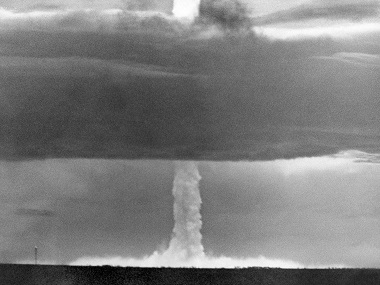
The island nation was ground zero for 67 American nuclear weapons tests from 1946-58 at Bikini and Enewetak atolls, when it was under US administration.
The tests included the 1954 "Bravo" hydrogen bomb, the most powerful ever detonated by the United States, about 1,000 times bigger than the atomic bomb dropped on Hiroshima.
They fed into an apocalyptic zeitgeist in Cold War popular culture, giving a name to the bikini swimsuit and leading to the development of Japan's Godzilla movie monster.
In "Godzilla", the creature is awakened by a hydrogen bomb test, rising from a roiling sea to destroy Tokyo, in a walking, radiation-breathing analogy for nuclear disaster.
'Sky turned blood red'
On the Marshall Islands, the impacts of the nuclear tests were all too real.
Numerous islanders were forcibly evacuated from ancestral lands and resettled, while thousands more were exposed to radioactive fallout.
"Several islands in my country were vaporised and others are estimated to remain uninhabitable for thousands of years," Tony deBrum, a former Marshall Islands foreign minister, told an ICJ hearing earlier this year.
He recalled witnessing the Bravo test as a nine-year-old while fishing with his grandfather in an atoll, some 200 kilometres (125 miles) from the blast's epicentre.
"The entire sky turned blood red," he said. "Many died, or suffered birth defects never before seen and cancers as a result of contamination."
DeBrum launched the Marshall's ICJ action in 2014 with cooperation from the California-based Nuclear Age Peace Foundation.
His actions prompted the International Peace Bureau to nominate him in January for the 2016 Nobel Peace Prize, which is yet to be awarded.
Yet critics argue the ICJ action is a distraction and the islanders' real fight is with Washington, which carried out the tests in their backyard.
They contend the case has no relationship to victims' claims for increased compensation, better health care and clean-ups to make sites habitable again.
Official criticism has been muted recently to avoid undermining deBrum's Nobel nomination.
But his successor as foreign minister, John Silk, made his views clear before an election last November when voters ousted 40 percent of the parliament, including deBrum.
Labelling the action "unauthorised" and "a publicity stunt", he said the focus should remain on petitioning the US Congress for increased compensation.
"What do these lawsuits have to do with resolving the legacy of the US nuclear testing programme?" he asked.
The Nuclear Age Peace Foundation argues that the Marshalls is taking a broader perspective in trying to re-start nuclear disarmament talks that have stalled over the past 20 years.
"The Republic of the Marshall Islands acts for the seven billion of us who live on this planet to end the nuclear weapons threat hanging over all humanity," its website says.
"Everyone has a stake in this."
The ICJ, the UN's top court, will decide on Wednesday whether it believes the case should go to a full hearing.

Comments
Haha. CD u are very slow. The UN Court has already rejected nuclear case against India. But you are very quick to post something about BJP
Add new comment