Death toll mounts to 76 as heavy rains hammer southern Japan

Agencies
July 8, 2018

Tokyo, Jul 8: Heavy rainfall hammered southern Japan for the third day, prompting new disaster warnings on Kyushu and Shikoku islands on Sunday, as the government put the death toll at 48 with 28 others presumed dead.

Rivers burst their banks and forced several million people from their homes, media reports said, with more rain set to hit some areas for at least another day.

Japanese government spokesman Yoshihide Suga said the whereabouts of 92 people are unknown, mostly in the southern area of Hiroshima prefecture.

More than 100 reports of casualties had been received, such as cars being swept away, he said. Some 40 helicopters were out on rescue missions.

“Rescue efforts are a battle with time,” Prime Minister Shinzo Abe told reporters. “The rescue teams are doing their utmost.”

The Japan Meteorological Agency said three hours of rainfall in one area in Kochi prefecture reached an accumulated 26.3 centimetres (10.4 inches), the highest since such records started in 1976.

“We’ve never experienced this kind of rain before,” an official at the Japanese Meteorological Agency [JMA] told a news conference. “This is a situation of extreme danger.”

The assessment of casualties has been difficult because of the widespread area affected by the rainfall, flooding and landslides. Authorities warned landslides could strike even after rain subsides as the calamity shaped up to be potentially the worst in decades.

Kochi prefecture, on Shikoku, issued landslide warnings almost over the entire island. Public broadcaster NHK TV showed overturned cars on roads covered with mud. A convenience store worker, who had fled to a nearby rooftop, said water had reached as high as his head.

The Japanese government set up an emergency office, designed for crises such as major earthquakes.

A residential area in Okayama prefecture, on the main island of Honshu, was seeped in brown water spreading like a huge lake. Some people fled to rooftops and balconies and waved furiously at hovering rescue helicopters. Military paddle boats were also being used to take people to dry land.

Okayama prefecture said three people had died, six others were missing and seven were injured, one of them seriously Six homes were destroyed, while nearly 500 were flooded. Evacuation orders or advisories were issued to more than 9,10,000 people, the prefecture said in a statement.

Kyodo news service reported several deaths in a landslide in Hiroshima and more bodies were retrieved from collapsed housing in the ancient capital of Kyoto, both areas where the rainfall was heavy in the past few days.

Throughout the hard hit areas, rivers swelled and parked cars sat in pools of water. Japan has sent troops, firefighters, police and other disaster relief. People have also taken to social media to plead for help.

In Ehime prefecture, a woman was found dead on the second floor of a home buried by a landslide, Kyodo said. Also in Ehime, two elementary schoolgirls and their mother who got sucked into a mudslide were pulled out but could not be revived, it said.

‘Pouring down’

“All I have is what I’m wearing,” a rescued woman clutching a toy poodle told NHK television.

“We had fled to the second floor but then the water rose more, so we went up to the third floor,” she said.

Evacuation orders remained in place for some 2 million people and another 2.3 million were advised to evacuate, although rain had stopped and floodwaters receded in some areas. Landslide warnings were issued in more than a quarter of the nation’s prefectures.

“My husband couldn’t make it home from work since the road was flooded, and since it was pouring down rain I didn’t have enough courage to walk to an evacuation centre with two infants after dark,” one woman wrote on Twitter, without giving further details.

The rain began late last week as the remnants of a typhoon fed into a seasonal rainy front, with humid, warm air pouring in from the Pacific making it still more active — a pattern similar to one that set off flooding in southwestern Japan exactly a year ago that killed dozens. The front then remained in one place for an unusually long time, the JMA said.

Roads were closed and train services suspended in parts of western Japan. Shinkansen bullet train services, resumed on a limited schedule after they were suspended on Friday.

Automakers including Mazda Motor Corp. and Daihatsu Diesel Manufacturing Co. suspended operations at several plants on Saturday due to a shortage of parts or dangerous conditions. They were set to decide later on Sunday on plans for the coming week.

Electronics maker Panasonic Corp. said one plant in Okayama, western Japan, could not be reached due to road closures, although it had been closed for the weekend anyway. A decision about next week would be made on Monday.

While the Japanese government monitors weather conditions closely and issues warnings from an early stage, the fact that much of the country outside major cities is mountainous and building takes place on virtually every bit of usable land leaves it vulnerable to disasters.

Reforestation policies after World War II that saw many mountains logged and replanted with trees whose roots are less able to retain water have also contributed to the danger.


Comments

Add new comment

  • Coastaldigest.com reserves the right to delete or block any comments.
  • Coastaldigset.com is not responsible for its readers’ comments.
  • Comments that are abusive, incendiary or irrelevant are strictly prohibited.
  • Please use a genuine email ID and provide your name to avoid reject.
News Network
February 1,2026

Bengaluru, Feb 1: For travelers landing at Kempegowda International Airport (KIA), the sleek, wood-paneled curves of Terminal 2 promise a world-class welcome. But the famed “Garden City” charm quickly withers at the curb. As India’s aviation sector swells to record numbers—handling over 43 million passengers in Bengaluru alone this past year—the “last mile” has turned into a marathon of frustration.

The Bengaluru Logjam: Rules vs Reality

While the city awaits the 2027 completion of the Namma Metro Blue Line, the interim has been chaotic. Recent “decongestion” rules at Terminal 1 have pushed app-based cab pickups to distant parking zones, forcing weary passengers into a 20-minute walk with luggage.

“I landed after ten months away and felt like a stranger in my own city,” says Ruchitha Jain, a Koramangala resident. “My driver couldn’t find me, staff couldn’t guide me, and the so-called ‘Premium’ lane is just a fancy tax on convenience.”

•    The Cost of Distance: A 40-km cab ride can now easily cross ₹1,500, driven by demand pricing and airport surcharges.

•    The Bus Gap: While Vayu Vajra remains a lifeline, its ₹300–₹400 fare is often cited as the most expensive airport bus service in the country.

A National Pattern of Disconnect

The struggle is not unique to Karnataka. From Chennai’s coast to Hyderabad’s plateau, India’s airports tell a familiar story: brilliant runways, broken exits.

City:    Primary Issue   |    Recent Development

Bengaluru:    Cab pickup restrictions & distance  |    App-based taxis shifted to far parking zones; long walks and fare spikes reported

Chennai:    Multi-Level Parking (MLCP) hike  |    Passengers report 40-minute walks to reach cab pickup points

Hyderabad:    “Taxi mafia” & touting  |    Over 440 touting cases reported; security presence intensified

Mumbai:    Fare scams  |     Tourists charged ₹18,000 for just 400 metres, triggering police action

In Hyderabad, travelers continue to battle entrenched local groups that intimidate Uber and Ola drivers, pushing passengers toward overpriced private taxis. Chennai flyers, meanwhile, complain that reaching the designated pickup zones now takes longer than short-haul flights from cities like Coimbatore.

The ‘Budget Day’ Hope

As Finance Minister Nirmala Sitharaman presents the Union Budget 2026 today, the aviation sector is watching closely. With the government’s renewed emphasis on multimodal integration, there is cautious hope for funding toward seamless airport-metro-bus hubs.

The vision is clear: a future where planes, trains, and metros speak the same language. Until then, passengers at KIA—and airports across India—will continue to discover that the hardest part of flying isn’t the thousands of kilometres in the air, but the last few on the ground.

Comments

Add new comment

  • Coastaldigest.com reserves the right to delete or block any comments.
  • Coastaldigset.com is not responsible for its readers’ comments.
  • Comments that are abusive, incendiary or irrelevant are strictly prohibited.
  • Please use a genuine email ID and provide your name to avoid reject.
News Network
January 23,2026

modIKERALA.jpg

Prime Minister Narendra Modi, during his visit to Thiruvananthapuram on Friday, January 23, indicated that the Bharatiya Janata Party (BJP) is aiming to expand its political footprint in Kerala ahead of the Assembly elections scheduled in the coming months.

Speaking at a BJP-organised public meeting, Modi drew parallels between the party’s early electoral gains in Gujarat and its recent victory in the Thiruvananthapuram Municipal Corporation. The civic body win, which ended decades of Left control, was cited by the Prime Minister as a possible starting point for the party’s broader ambitions in the state.

Recalling BJP’s political trajectory in Gujarat, Modi said the party was largely insignificant before 1987 and received little media attention. He pointed out that the BJP’s first major breakthrough came with its victory in the Ahmedabad Municipal Corporation that year.

“Just as our journey in Gujarat began with one city, Kerala’s journey has also started with a single city,” Modi said, suggesting that the party’s municipal-level success could translate into wider electoral acceptance.

The Prime Minister alleged that successive governments led by the Left Democratic Front (LDF) and the United Democratic Front (UDF) had failed to adequately develop Thiruvananthapuram. He accused both fronts of corruption and neglect, claiming that basic infrastructure and facilities were denied to the capital city for decades.

According to Modi, the BJP’s control of the civic body represents a shift driven by public dissatisfaction with the existing political alternatives. He asserted that the BJP administration in Thiruvananthapuram had begun working towards development, though no specific details or timelines were outlined.

Addressing the gathering at Putharikandam Maidan, Modi said the BJP intended to project Thiruvananthapuram as a “model city,” reiterating his party’s commitment to governance-led change.

The Prime Minister’s visit to Kerala also included the inauguration of several development projects and the flagging off of new train services, as the BJP intensifies its political outreach in the poll-bound state.

Comments

Add new comment

  • Coastaldigest.com reserves the right to delete or block any comments.
  • Coastaldigset.com is not responsible for its readers’ comments.
  • Comments that are abusive, incendiary or irrelevant are strictly prohibited.
  • Please use a genuine email ID and provide your name to avoid reject.
News Network
February 3,2026

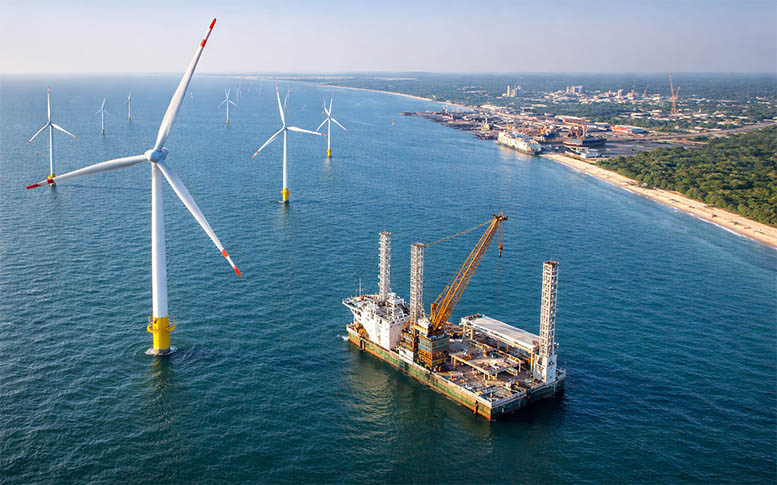
wind.jpg

Dakshina Kannada MP Capt Brijesh Chowta has urged the Centre to give high priority to offshore wind energy generation along the Mangaluru coast, citing its strategic importance to India’s green energy and port-led development goals.

Raising the issue in the Lok Sabha under Rule 377, Chowta said studies by the National Institute of Oceanography have identified the Mangaluru coastline as part of India’s promising offshore wind ‘Zone-2’, covering nearly 6,490 sq km. He noted that the region’s relatively low exposure to cyclones and earthquakes makes it suitable for long-term offshore wind projects and called for its development as a dedicated offshore wind energy zone.

Highlighting the role of New Mangalore Port, Chowta said its modern infrastructure, multiple berths and heavy cargo-handling capacity position it well as a logistics hub for transporting and assembling large wind energy equipment.

He also pointed to the presence of major industrial units such as MRPL, OMPL, UPCL and the Mangaluru SEZ, which could serve as direct buyers of green power through power purchase agreements, improving project viability and speeding up execution.

With Karnataka’s peak power demand crossing 18,000 MW in early 2025, Chowta stressed the need to diversify renewable energy sources. He added that offshore wind projects in the Arabian Sea are strategically safer compared to the cyclone-prone Bay of Bengal.

Calling the project vital to India’s target of 500 GW of renewable energy by 2030, Chowta urged the Ministry of New and Renewable Energy to initiate resource assessments, pilot projects and stakeholder consultations at the earliest.

Comments

Add new comment

  • Coastaldigest.com reserves the right to delete or block any comments.
  • Coastaldigset.com is not responsible for its readers’ comments.
  • Comments that are abusive, incendiary or irrelevant are strictly prohibited.
  • Please use a genuine email ID and provide your name to avoid reject.