George Saunders wins Booker prize for 'Lincoln in the Bardo'

Agencies
October 18, 2017

London, Oct 18: American author George Saunders won the prestigious Man Booker Prize for fiction on Tuesday for Lincoln in the Bardo, a polyphonic symphony of a novel about restless souls adrift in the afterlife.

It is the second year in a row an American has won the £50,000 ($66,000) prize, which was opened to U.S. authors in 2014.

“I feel kind of numb,” said Saunders, who said disbelief and gratitude were his principal emotions on winning.

The book is based on a real visit President Abraham Lincoln made in 1862 to the body of his 11-year-old son Willie at a Washington cemetery. By turns witty, bawdy, poetic and unsettling, Lincoln in the Bardo juxtaposes events from Lincoln’s life and the U.S. Civil War through passages from historians both real and fictional with a chorus of otherworldly characters who are dead, but unwilling or unable to let go of life.

In Tibetan Buddhism, the bardo is the transition state between death and rebirth.

Baroness Lola Young, who chaired the Booker judging panel, said the novel “stood out because of its innovation, its very different styling, the way in which it paradoxically brought to life these almost-dead souls.”

Saunders was awarded the prize by Prince Charles’ wife, Camilla, Duchess of Cornwall, during a ceremony at London’s medieval Guildhall.

Accepting his trophy, Saunders said the book’s style may be complex, but the question posed at its heart is simple - Do we respond to uncertain times with fear and division, “or do we take that ancient great leap of faith and try to respond with love?”

The author said he resisted telling the story of Lincoln, an American icon, for 20 years. But the novel, which took four years to write, turned out to be pointedly timely in a divided United States.

Saunders said Lincoln had “a quiet, confident generosity of spirit.”

“He underwent I think a kind of spiritual growth spurt that we don’t see very often,” outgrowing the “lazy, racist attitudes” he was raised with, the author told reporters.

“His compassion and his heart kept growing out even as his own life was becoming more and more difficult,” Saunders said.

“Contrast that with the current administration that seems intent on shrinking the commonwealth of compassion until we can only care about people who are exactly like us. It’s a complete eradication of the American ideal.”

Lincoln in the Bardo is the first novel by the 58-year-old Saunders, an acclaimed short story writer who won the Folio Prize in 2014 for his darkly funny story collection Tenth of December.

A former oil industry engineer who teaches creative writing at Syracuse University in New York state, Saunders is probably best known outside literary circles for a commencement speech he gave in 2013 with the key message “Try to be kinder.” It went viral on the Internet, became an animated cartoon and was published as a book.

Saunders beat five other finalists- New Yorker Paul Auster’s quadruple coming-of-age story 4321; U.S. writer Emily Fridlund’s story of a Midwest teenager, History of Wolves; Scottish author Ali Smith’s Brexit-themed Autumn; British-Pakistani novelist Mohsin Hamid’s migration story Exit West; and British writer Fiona Mozley’s debut novel Elmet about a fiercely independent family under threat.

Saunders is the second American in a row to win the prize, founded in 1969 and until 2013 limited to writers from Britain, Ireland and the Commonwealth. The 2016 winner was Paul Beatty’s The Sellout.

The move to admit all English-language writers spurred fears among some British writers and publishers that Americans would come to dominate a prize whose previous winners include Salman Rushdie, Ben Okri, Margaret Atwood and Hilary Mantel.

Young said the judges “don’t look at the nationality of the writer. I can say that hand on heart it’s not an issue for us. The sole concern is the book.”

Prize organizers said 30 percent of the 144 books submitted by publishers for consideration this year were American, a figure slightly down from last year.

Young said the five jurors met for almost five hours Tuesday to choose the winner, finally agreeing unanimously on Saunders.

“I’m not going to pretend it was easy,” she said.

“We didn’t have any major meltdowns at all. But we did have quite fierce debates.”

Comments

Add new comment

  • Coastaldigest.com reserves the right to delete or block any comments.
  • Coastaldigset.com is not responsible for its readers’ comments.
  • Comments that are abusive, incendiary or irrelevant are strictly prohibited.
  • Please use a genuine email ID and provide your name to avoid reject.
News Network
January 23,2026

Karnataka Governor Thaawarchand Gehlot read only three lines from the 122-paragraph address prepared by the Congress-led state government while addressing the joint session of the Legislature on Thursday, effectively bypassing large sections critical of the BJP-led Union government.

The omitted portions of the customary Governor’s address outlined what the state government described as a “suppressive situation in economic and policy matters” under India’s federal framework. The speech also sharply criticised the Centre’s move to replace the Mahatma Gandhi National Rural Employment Guarantee Act (MGNREGA) with the Viksit Bharat–Guarantee for Rozgar and Ajeevika Mission (Gramin) Act, commonly referred to as the VB-GRAM (G) Act.

Governor Gehlot had earlier conveyed his objection to several paragraphs that were explicitly critical of the Union government. On Thursday, he confined himself to the opening lines — “I extend a warm welcome to all of you to the joint session of the State legislature. I am extremely pleased to address this august House” — before jumping directly to the concluding sentence of the final paragraph.

He ended the address by reading the last line of paragraph 122: “Overall, my government is firmly committed to doubling the pace of the State’s economic, social and physical development. Jai Hind — Jai Karnataka.”

According to the prepared speech, the Karnataka government demanded the scrapping of the VB-GRAM (G) Act, describing it as “contractor-centric” and detrimental to rural livelihoods, and called for the full restoration of MGNREGA. The state government argued that the new law undermines decentralisation, weakens labour protections, and centralises decision-making in violation of constitutional norms.

Key points from the unread sections of the speech:

•    Karnataka facing a “suppressive” economic and policy environment within the federal system

•    Repeal of MGNREGA described as a blow to rural livelihoods

•    VB-GRAM (G) Act accused of protecting corporate and contractor interests

•    New law alleged to weaken decentralised governance

•    Decision-making said to be imposed by the Centre without consulting states

•    Rights of Adivasis, women, backward classes and agrarian communities curtailed

•    Labourers allegedly placed under contractor control

•    States facing mounting fiscal stress due to central policies

•    VB-GRAM (G) Act accused of enabling large-scale corruption

Comments

Add new comment

  • Coastaldigest.com reserves the right to delete or block any comments.
  • Coastaldigset.com is not responsible for its readers’ comments.
  • Comments that are abusive, incendiary or irrelevant are strictly prohibited.
  • Please use a genuine email ID and provide your name to avoid reject.
News Network
February 1,2026

Bengaluru: Karnataka Deputy Chief Minister D K Shivakumar on Sunday criticised the Union Budget presented by Finance Minister Nirmala Sitharaman, claiming it offered no tangible benefit to the state.

Though he said he was yet to study the budget in detail, Shivakumar asserted that Karnataka had gained little from it. “There is no benefit for our state from the central budget. I was observing it. They have now named a programme after Mahatma Gandhi, after repealing the MGNREGA Act that was named after him,” he said.

Speaking to reporters here, the Deputy Chief Minister demanded the restoration of MGNREGA, and made it clear that the newly enacted rural employment scheme — VB-G RAM G — which proposes a 60:40 fund-sharing formula between the Centre and the states, would not be implemented in Karnataka.

“I don’t see any major share for our state in this budget,” he added.

Shivakumar, who also holds charge of Bengaluru development, said there were high expectations for the city from the Union Budget. “The Prime Minister calls Bengaluru a ‘global city’, but what has the Centre done for it?” he asked.

He also drew attention to the problems faced by sugar factories, particularly those in the cooperative sector, alleging a lack of timely decisions and support from the central government.

Noting that the Centre has the authority to fix the minimum support price (MSP) for agricultural produce, Shivakumar said the Union government must take concrete steps to protect farmers’ interests.

Comments

Add new comment

  • Coastaldigest.com reserves the right to delete or block any comments.
  • Coastaldigset.com is not responsible for its readers’ comments.
  • Comments that are abusive, incendiary or irrelevant are strictly prohibited.
  • Please use a genuine email ID and provide your name to avoid reject.
News Network
January 31,2026

files.jpg

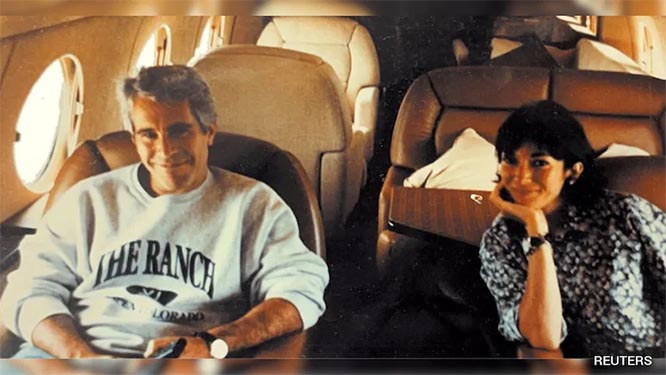
A fresh cache of files related to the investigation into the late convicted sex offender Jeffrey Epstein contains documents that reference President Donald Trump and other high-profile figures including Microsoft co-founder Bill Gates, Commerce Secretary Howard Lutnick and British billionaire Richard Branson.

Here are key details about mentions of the celebrities, none of whom have been accused of wrongdoing:

Donald Trump

The files included an FBI-compiled list of sexual assault allegations related to President Donald Trump -- many of them involving anonymous callers and unverified tips.

The allegations -- some secondhand -- were sent to the FBI's National Threat Operations Center which receives information by phone and electronically.

The document suggests that investigators followed up on a number of the tips. Some were deemed to lack credibility.

Trump has long denied any wrongdoing related to Epstein.

In a statement accompanying Friday's file dump, the Justice Department said: "Some of the documents contain untrue and sensationalist claims against President Trump that were submitted to the FBI right before the 2020 election. To be clear, the claims are unfounded and false."

Bill Gates

In a draft email among the documents, Epstein alleged Gates had engaged in extramarital affairs.

In the mail, Epstein wrote that his relationship with Gates had ranged from "helping Bill to get drugs, in order to deal with consequences of sex with russian girls, to facilitating his illicit trysts, with married women."

Richard Branson

Files show friendly relations between the two billionaires.

In an email sent to Epstein on Sept 11, 2013, Branson wrote "It was really nice seeing you yesterday. The boys in Watersports can't stop speaking about it! Any time you're in the area would love to see you. As long as you bring your harem!"

Elon Musk

The files contain numerous mail exchanges between Epstein and billionaire entrepreneur Elon Musk.

In November 2012, Epstein sent Musk an email asking "how many people will you be for the heli to island."

"Probably just Talulah and me. What day/night will be the wildest party on your island?" Musk replied.

Andrew Mountbatten-Windsor

The disgraced former prince invited Epstein to visit him at Buckingham Palace in September 2010 while the financier was making a trip to London.

An email exchange shows Epstein contacting Andrew to ask: "What time would you like me... we will also need... private time."

Andrew replied: "we could have dinner at Buckingham Palace and lots of privacy."

Howard Lutnick

Emails show that Epstein and businessman Lutnick -- currently Trump's commerce secretary -- made plans in December 2012 to lunch on Epstein's Caribbean island.

"We are heading towards you from St. Thomas" Lutnick's wife wrote to Epstein's secretary, asking where they should anchor.

Steve Tisch

Several mails suggested Epstein connected Steve Tisch, 76, producer of the movies "Forrest Gump" and "Risky Business" and the co-owner of the New York Giants football team, with multiple women.

In one exchange with Tisch, Epstein describes a woman as "russian, and rarely tells the full truth, but fun."

Zohran Mamdani's Mother, Filmmaker Mira Nair 

New York City Mayor Zohran Mamdani's mother, Mira Nair, attended an afterparty at convicted sex trafficker Ghislaine Maxwell's house for her 2009 film "Amelia", reveals a new set of Epstein files.

An email dated October 21, 2009, sent by publicist Peggy Siegal to Jeffrey Epstein, also surfaced in documents. The email, sent in the early hours, right after Siegal left the gathering, gives an insight into the afterparty. 

The party was also attended by former President Bill Clinton and Amazon CEO Jeff Bezos.

"Just left Ghislaine's townhouse...after party for film. Bill Clinton and Jeff Bezos were there...Jean Pigoni, director Mira Nair....etc," the email read.

The email described the reaction of guests to Nair's film as "tepid."

"Film received tepid reaction although women like it much more...Hillary Swank and Gen: at stupid party in Bloomingdales cheap sportwear department....very weird. Studio went for free party from store and windows for a month....Going to be in Wall Street 2 tomorrow ....more to come. xoxo Peg," the email read.

Comments

Add new comment

  • Coastaldigest.com reserves the right to delete or block any comments.
  • Coastaldigset.com is not responsible for its readers’ comments.
  • Comments that are abusive, incendiary or irrelevant are strictly prohibited.
  • Please use a genuine email ID and provide your name to avoid reject.