



Growing up Afghanistan: ‘My parents were told to swap me for a boy’

Agencies
December 1, 2018

Kabul, Dec 1: When Nargis Taraki became the fifth girl born to her parents in Afghanistan, her parents were told they should swap her with another baby in the village.

Now 21, she has made it her life ambition to prove they were right to keep her.

Nargis now campaigns for women's education and empowerment in her home country, and is one of the BBC's 2018 100 Women, according to a BBC News report.

"In 1997, I opened my eyes to the world as my parents' fifth child, and their fifth girl," said Nargis.

"My father's sister, and other relatives, immediately put pressure on my mum to agree to my father taking a second wife. Taking a second or even third wife is not uncommon in Afghanistan, and is sometimes done because they believe a new wife could mean a new chance to have a male child."

When she refused, they suggested that my father swap me for a boy. They even found a family in the village who was willing to give their boy away and take me.

Swapping children is not something that is part of our culture, and I haven't heard of it happening before, but boys are more valued in Afghan society as the traditional family breadwinners.

"People deliberately said things to upset my mother and make her feel inferior for not having a son. Despite her refusal to part ways with me, some elders still kept approaching my father. But he had a completely different mentality. He told them he loved me, and he would one day prove to them that a daughter can achieve everything a son can.

"It was not an easy time for my father. He had a military background and a history of service in the previous Soviet-backed regime, and my native district at the time was controlled by people with religious or fundamentalist tendencies.

"So certain people in the village used to detest him and did not socialise with us.

But my father believed in what he said, and he always stood by his word. Although there was pressure on my parents to swap me because I was a girl, it was a man who had the most positive impact on my character.

"Things got worse for us after Taliban militants took control of our district. In 1998, my father had to flee to Pakistan and soon after that we joined him there.

"Life there was not easy - but he managed to get work as a manager in a shoe factory. Perhaps the best thing to happen to my parents whilst in Pakistan was that they finally had a son, followed by my fifth sister.

"In 2001, we all returned to Kabul after the Taliban regime was toppled. We didn't have a house of our own and had to live with my uncles. My sisters and I managed to keep going to school despite conservatism in our culture.

"I went on to study public policy and administration at Kabul University and graduated two years ago with the highest marks for that year. Throughout that time my father never stopped supporting me.

"A couple of years ago I went to watch a cricket game in Kabul with my sister. There weren't many women in the stadium and our photographs and videos were circulated on social media. People started criticising us and leaving negative comments, saying we were shameless to be in a stadium amongst men. Others said we were trying to spread adultery and were being paid by the Americans.

"When my father saw some of the comments on Facebook, he looked at me and said: "My dear. You have done the right thing. I am glad you have annoyed some of these idiots. Life is short. Enjoy it as much as you can."

"My father died of cancer earlier this year. In him, I lost someone whose constant support made me into the person that I am today, and I know he will always be with me.

"Three years ago I tried to open a school for girls in my native village in Ghazni. I talked to my father about it and he said it would be almost impossible because of cultural boundaries, and even boys have difficulties because of the security situation. My father thought giving it a name of a religious madrassa might have improved our chances.

"In the end I was unable to travel to my native village because it was simply too dangerous. One of my sisters and I still hope to achieve this goal one day.

"In the meantime, I volunteered for several years for NGOs in that part of the world, working for women's education, health and empowerment.

I've also presented talks on a girl's right to go to school, university and to get a job.

"I've always dreamed of studying at the University of Oxford one day. When I look at international university rankings I always find Oxford in first or second position, and when I compare that with Kabul University I feel a bit sad - although that's not to say I'm not thankful I was able to go.

"I love to read in my spare time - an average of two to three books a week - and Paolo Coelho is my favourite author.

"In terms of marriage, I would like to choose someone myself and my family have given me permission to marry someone of my own choice.

"It would be great if I can find someone who has the same qualities as my father. I would want to spend the rest of my life with someone who has a similar attitude - who can support me and stand by my choices.

"Family is also important - sometimes you marry the best man out there but then you cannot adapt to his family.

"They will have to support me in what I want to do in my life. If they resist then I will try and change their minds. I believe in what I want to achieve in life and will not compromise.

Comments

Add new comment

  • Coastaldigest.com reserves the right to delete or block any comments.
  • Coastaldigset.com is not responsible for its readers’ comments.
  • Comments that are abusive, incendiary or irrelevant are strictly prohibited.
  • Please use a genuine email ID and provide your name to avoid reject.
News Network
January 20,2026

Mangaluru: In a major step towards strengthening rural innovation, the Office of the Principal Scientific Adviser (PSA) to the Government of India is supporting the establishment of RuTAGe Smart Village Centres (RSVCs) across the country through collaborations with academic institutions, civil society organisations and philanthropic partners.

As part of this national initiative, Nitte (Deemed to be University) will set up the first RSVCs in the region at Nitte GP in Udupi district and at the Nitte Health Centre, Sevanjali Trust, Farangipete, in Dakshina Kannada district. The centres will be inaugurated on January 21. In South India, the programme is being implemented by the Section Infin-8 Foundation (SI-8).

Speaking to reporters on Monday, SI-8 founder-director Vishwas US said experts from Nitte University and SI-8 would work closely with farmers, students, youth and local entrepreneurs to adapt and deploy technologies tailored to local needs.

Project head Prof Iddya Karunasagar, representing Nitte DU, said the RSVCs at Nitte and Farangipete would serve as demonstration hubs for a wide range of agriculture, energy, skill-development and assistive technologies. These include solar dryers for fruits, vegetables and crops; soil-testing solutions; power weeders and women-friendly farm tools; wind-powered devices for rural artisans; grain storage systems; grass-cutting and tree-climbing equipment; and liquid fertiliser production using cowshed waste.

SI-8 CEO Aravind C Kumar said the centres would also provide access to digital and knowledge-based platforms such as ISRO applications, government scheme portals, market linkage tools and gamified learning resources, along with assistive technologies for persons with visual impairments.

Highlighting the broader impact of the initiative, Principal Scientific Adviser Prof Ajay Kumar Sood said it demonstrated how applied research could bridge the rural–urban divide and help create self-reliant, technology-enabled villages.

The initiative has been made possible through philanthropic support from Dr NC Murthy of ACM Business Solutions, LLC, USA. Dr Sapna Poti, Director (Strategic Alliances) at the Office of the Principal Scientific Adviser, said the long-term objective is to build self-sufficient, technology-driven communities capable of generating sustainable livelihoods on their own.

Comments

Add new comment

  • Coastaldigest.com reserves the right to delete or block any comments.
  • Coastaldigset.com is not responsible for its readers’ comments.
  • Comments that are abusive, incendiary or irrelevant are strictly prohibited.
  • Please use a genuine email ID and provide your name to avoid reject.
News Network
January 31,2026

files.jpg

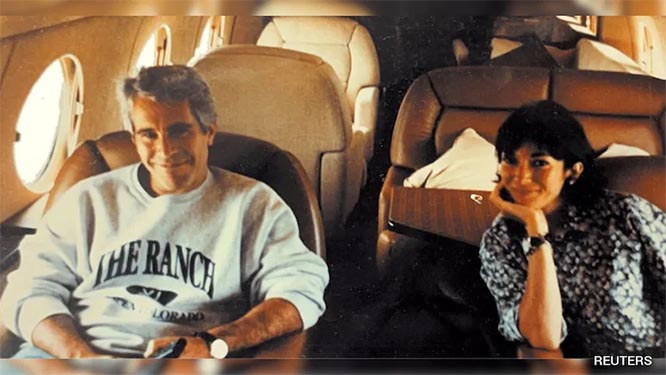
A fresh cache of files related to the investigation into the late convicted sex offender Jeffrey Epstein contains documents that reference President Donald Trump and other high-profile figures including Microsoft co-founder Bill Gates, Commerce Secretary Howard Lutnick and British billionaire Richard Branson.

Here are key details about mentions of the celebrities, none of whom have been accused of wrongdoing:

Donald Trump

The files included an FBI-compiled list of sexual assault allegations related to President Donald Trump -- many of them involving anonymous callers and unverified tips.

The allegations -- some secondhand -- were sent to the FBI's National Threat Operations Center which receives information by phone and electronically.

The document suggests that investigators followed up on a number of the tips. Some were deemed to lack credibility.

Trump has long denied any wrongdoing related to Epstein.

In a statement accompanying Friday's file dump, the Justice Department said: "Some of the documents contain untrue and sensationalist claims against President Trump that were submitted to the FBI right before the 2020 election. To be clear, the claims are unfounded and false."

Bill Gates

In a draft email among the documents, Epstein alleged Gates had engaged in extramarital affairs.

In the mail, Epstein wrote that his relationship with Gates had ranged from "helping Bill to get drugs, in order to deal with consequences of sex with russian girls, to facilitating his illicit trysts, with married women."

Richard Branson

Files show friendly relations between the two billionaires.

In an email sent to Epstein on Sept 11, 2013, Branson wrote "It was really nice seeing you yesterday. The boys in Watersports can't stop speaking about it! Any time you're in the area would love to see you. As long as you bring your harem!"

Elon Musk

The files contain numerous mail exchanges between Epstein and billionaire entrepreneur Elon Musk.

In November 2012, Epstein sent Musk an email asking "how many people will you be for the heli to island."

"Probably just Talulah and me. What day/night will be the wildest party on your island?" Musk replied.

Andrew Mountbatten-Windsor

The disgraced former prince invited Epstein to visit him at Buckingham Palace in September 2010 while the financier was making a trip to London.

An email exchange shows Epstein contacting Andrew to ask: "What time would you like me... we will also need... private time."

Andrew replied: "we could have dinner at Buckingham Palace and lots of privacy."

Howard Lutnick

Emails show that Epstein and businessman Lutnick -- currently Trump's commerce secretary -- made plans in December 2012 to lunch on Epstein's Caribbean island.

"We are heading towards you from St. Thomas" Lutnick's wife wrote to Epstein's secretary, asking where they should anchor.

Steve Tisch

Several mails suggested Epstein connected Steve Tisch, 76, producer of the movies "Forrest Gump" and "Risky Business" and the co-owner of the New York Giants football team, with multiple women.

In one exchange with Tisch, Epstein describes a woman as "russian, and rarely tells the full truth, but fun."

Zohran Mamdani's Mother, Filmmaker Mira Nair 

New York City Mayor Zohran Mamdani's mother, Mira Nair, attended an afterparty at convicted sex trafficker Ghislaine Maxwell's house for her 2009 film "Amelia", reveals a new set of Epstein files.

An email dated October 21, 2009, sent by publicist Peggy Siegal to Jeffrey Epstein, also surfaced in documents. The email, sent in the early hours, right after Siegal left the gathering, gives an insight into the afterparty. 

The party was also attended by former President Bill Clinton and Amazon CEO Jeff Bezos.

"Just left Ghislaine's townhouse...after party for film. Bill Clinton and Jeff Bezos were there...Jean Pigoni, director Mira Nair....etc," the email read.

The email described the reaction of guests to Nair's film as "tepid."

"Film received tepid reaction although women like it much more...Hillary Swank and Gen: at stupid party in Bloomingdales cheap sportwear department....very weird. Studio went for free party from store and windows for a month....Going to be in Wall Street 2 tomorrow ....more to come. xoxo Peg," the email read.

Comments

Add new comment

  • Coastaldigest.com reserves the right to delete or block any comments.
  • Coastaldigset.com is not responsible for its readers’ comments.
  • Comments that are abusive, incendiary or irrelevant are strictly prohibited.
  • Please use a genuine email ID and provide your name to avoid reject.
News Network
January 23,2026

Mangaluru: The Karnataka Government Polytechnic (KPT), Mangaluru, has achieved autonomous status from the All India Council for Technical Education (AICTE), becoming the first government polytechnic in the country to receive such recognition in its 78-year history. The status was granted by AICTE, New Delhi, and subsequently approved by the Karnataka Board of Technical Education in October last year.

Officials said the autonomy was conferred a few months ago. Until recently, AICTE extended autonomous status only to engineering colleges, excluding diploma institutions. However, with a renewed national focus on skill development, several government polytechnics across India have now been granted autonomy.

KPT, the second-largest polytechnic in Karnataka, was established in 1946 with four branches and has since expanded to offer eight diploma programmes, including computer science and polymer technology. The institution is spread across a 19-acre campus.

Ravindra M Keni, the first dean of the institution, told The Times of India that AICTE had proposed autonomous status for polytechnic institutions that are over 25 years old. “Many colleges applied. In the first round, 100 institutions were shortlisted, which was further narrowed down to 15 in the second round. We have already completed one semester after becoming an autonomous institution,” he said. He added that nearly 500 students are admitted annually across eight three-year diploma courses.

Explaining the factors that helped KPT secure autonomy, Keni said the institution has consistently recorded 100 per cent admissions and placements for its graduates. He also noted its strong performance in sports, with the college emerging champions for 12 consecutive years, along with active student participation in NCC and NSS activities.

Autonomous status allows KPT to design industry-oriented curricula, conduct examinations, prepare question papers, and manage academic documentation independently. The institution can also directly collaborate with industries and receive priority funding from AICTE or the Ministry of Education. While academic autonomy has been granted, financial control will continue to rest with the state government.

“There will be separate committees for examinations, question paper setting, boards of studies, and boards of examiners. The institution will now have the freedom to conduct admissions without government notifications and issue its own marks cards,” Keni said, adding that new academic initiatives would be planned after a year of functioning under the autonomous framework.

Comments

Add new comment

  • Coastaldigest.com reserves the right to delete or block any comments.
  • Coastaldigset.com is not responsible for its readers’ comments.
  • Comments that are abusive, incendiary or irrelevant are strictly prohibited.
  • Please use a genuine email ID and provide your name to avoid reject.