Growing up Afghanistan: ‘My parents were told to swap me for a boy’

Agencies
December 1, 2018

Kabul, Dec 1: When Nargis Taraki became the fifth girl born to her parents in Afghanistan, her parents were told they should swap her with another baby in the village.

Now 21, she has made it her life ambition to prove they were right to keep her.

Nargis now campaigns for women's education and empowerment in her home country, and is one of the BBC's 2018 100 Women, according to a BBC News report.

"In 1997, I opened my eyes to the world as my parents' fifth child, and their fifth girl," said Nargis.

"My father's sister, and other relatives, immediately put pressure on my mum to agree to my father taking a second wife. Taking a second or even third wife is not uncommon in Afghanistan, and is sometimes done because they believe a new wife could mean a new chance to have a male child."

When she refused, they suggested that my father swap me for a boy. They even found a family in the village who was willing to give their boy away and take me.

Swapping children is not something that is part of our culture, and I haven't heard of it happening before, but boys are more valued in Afghan society as the traditional family breadwinners.

"People deliberately said things to upset my mother and make her feel inferior for not having a son. Despite her refusal to part ways with me, some elders still kept approaching my father. But he had a completely different mentality. He told them he loved me, and he would one day prove to them that a daughter can achieve everything a son can.

"It was not an easy time for my father. He had a military background and a history of service in the previous Soviet-backed regime, and my native district at the time was controlled by people with religious or fundamentalist tendencies.

"So certain people in the village used to detest him and did not socialise with us.

But my father believed in what he said, and he always stood by his word. Although there was pressure on my parents to swap me because I was a girl, it was a man who had the most positive impact on my character.

"Things got worse for us after Taliban militants took control of our district. In 1998, my father had to flee to Pakistan and soon after that we joined him there.

"Life there was not easy - but he managed to get work as a manager in a shoe factory. Perhaps the best thing to happen to my parents whilst in Pakistan was that they finally had a son, followed by my fifth sister.

"In 2001, we all returned to Kabul after the Taliban regime was toppled. We didn't have a house of our own and had to live with my uncles. My sisters and I managed to keep going to school despite conservatism in our culture.

"I went on to study public policy and administration at Kabul University and graduated two years ago with the highest marks for that year. Throughout that time my father never stopped supporting me.

"A couple of years ago I went to watch a cricket game in Kabul with my sister. There weren't many women in the stadium and our photographs and videos were circulated on social media. People started criticising us and leaving negative comments, saying we were shameless to be in a stadium amongst men. Others said we were trying to spread adultery and were being paid by the Americans.

"When my father saw some of the comments on Facebook, he looked at me and said: "My dear. You have done the right thing. I am glad you have annoyed some of these idiots. Life is short. Enjoy it as much as you can."

"My father died of cancer earlier this year. In him, I lost someone whose constant support made me into the person that I am today, and I know he will always be with me.

"Three years ago I tried to open a school for girls in my native village in Ghazni. I talked to my father about it and he said it would be almost impossible because of cultural boundaries, and even boys have difficulties because of the security situation. My father thought giving it a name of a religious madrassa might have improved our chances.

"In the end I was unable to travel to my native village because it was simply too dangerous. One of my sisters and I still hope to achieve this goal one day.

"In the meantime, I volunteered for several years for NGOs in that part of the world, working for women's education, health and empowerment.

I've also presented talks on a girl's right to go to school, university and to get a job.

"I've always dreamed of studying at the University of Oxford one day. When I look at international university rankings I always find Oxford in first or second position, and when I compare that with Kabul University I feel a bit sad - although that's not to say I'm not thankful I was able to go.

"I love to read in my spare time - an average of two to three books a week - and Paolo Coelho is my favourite author.

"In terms of marriage, I would like to choose someone myself and my family have given me permission to marry someone of my own choice.

"It would be great if I can find someone who has the same qualities as my father. I would want to spend the rest of my life with someone who has a similar attitude - who can support me and stand by my choices.

"Family is also important - sometimes you marry the best man out there but then you cannot adapt to his family.

"They will have to support me in what I want to do in my life. If they resist then I will try and change their minds. I believe in what I want to achieve in life and will not compromise.

Comments

Add new comment

  • Coastaldigest.com reserves the right to delete or block any comments.
  • Coastaldigset.com is not responsible for its readers’ comments.
  • Comments that are abusive, incendiary or irrelevant are strictly prohibited.
  • Please use a genuine email ID and provide your name to avoid reject.
News Network
February 3,2026

wind.jpg

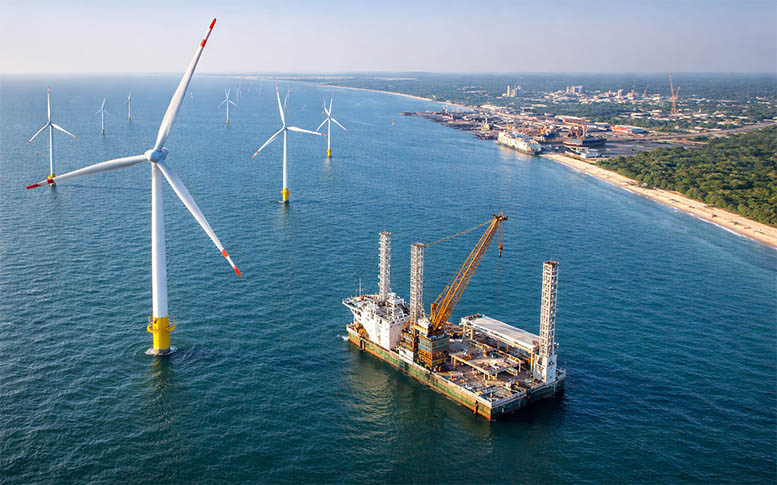
Dakshina Kannada MP Capt Brijesh Chowta has urged the Centre to give high priority to offshore wind energy generation along the Mangaluru coast, citing its strategic importance to India’s green energy and port-led development goals.

Raising the issue in the Lok Sabha under Rule 377, Chowta said studies by the National Institute of Oceanography have identified the Mangaluru coastline as part of India’s promising offshore wind ‘Zone-2’, covering nearly 6,490 sq km. He noted that the region’s relatively low exposure to cyclones and earthquakes makes it suitable for long-term offshore wind projects and called for its development as a dedicated offshore wind energy zone.

Highlighting the role of New Mangalore Port, Chowta said its modern infrastructure, multiple berths and heavy cargo-handling capacity position it well as a logistics hub for transporting and assembling large wind energy equipment.

He also pointed to the presence of major industrial units such as MRPL, OMPL, UPCL and the Mangaluru SEZ, which could serve as direct buyers of green power through power purchase agreements, improving project viability and speeding up execution.

With Karnataka’s peak power demand crossing 18,000 MW in early 2025, Chowta stressed the need to diversify renewable energy sources. He added that offshore wind projects in the Arabian Sea are strategically safer compared to the cyclone-prone Bay of Bengal.

Calling the project vital to India’s target of 500 GW of renewable energy by 2030, Chowta urged the Ministry of New and Renewable Energy to initiate resource assessments, pilot projects and stakeholder consultations at the earliest.

Comments

Add new comment

  • Coastaldigest.com reserves the right to delete or block any comments.
  • Coastaldigset.com is not responsible for its readers’ comments.
  • Comments that are abusive, incendiary or irrelevant are strictly prohibited.
  • Please use a genuine email ID and provide your name to avoid reject.
News Network
February 1,2026

Bengaluru, Feb 1: For travelers landing at Kempegowda International Airport (KIA), the sleek, wood-paneled curves of Terminal 2 promise a world-class welcome. But the famed “Garden City” charm quickly withers at the curb. As India’s aviation sector swells to record numbers—handling over 43 million passengers in Bengaluru alone this past year—the “last mile” has turned into a marathon of frustration.

The Bengaluru Logjam: Rules vs Reality

While the city awaits the 2027 completion of the Namma Metro Blue Line, the interim has been chaotic. Recent “decongestion” rules at Terminal 1 have pushed app-based cab pickups to distant parking zones, forcing weary passengers into a 20-minute walk with luggage.

“I landed after ten months away and felt like a stranger in my own city,” says Ruchitha Jain, a Koramangala resident. “My driver couldn’t find me, staff couldn’t guide me, and the so-called ‘Premium’ lane is just a fancy tax on convenience.”

•    The Cost of Distance: A 40-km cab ride can now easily cross ₹1,500, driven by demand pricing and airport surcharges.

•    The Bus Gap: While Vayu Vajra remains a lifeline, its ₹300–₹400 fare is often cited as the most expensive airport bus service in the country.

A National Pattern of Disconnect

The struggle is not unique to Karnataka. From Chennai’s coast to Hyderabad’s plateau, India’s airports tell a familiar story: brilliant runways, broken exits.

City:    Primary Issue   |    Recent Development

Bengaluru:    Cab pickup restrictions & distance  |    App-based taxis shifted to far parking zones; long walks and fare spikes reported

Chennai:    Multi-Level Parking (MLCP) hike  |    Passengers report 40-minute walks to reach cab pickup points

Hyderabad:    “Taxi mafia” & touting  |    Over 440 touting cases reported; security presence intensified

Mumbai:    Fare scams  |     Tourists charged ₹18,000 for just 400 metres, triggering police action

In Hyderabad, travelers continue to battle entrenched local groups that intimidate Uber and Ola drivers, pushing passengers toward overpriced private taxis. Chennai flyers, meanwhile, complain that reaching the designated pickup zones now takes longer than short-haul flights from cities like Coimbatore.

The ‘Budget Day’ Hope

As Finance Minister Nirmala Sitharaman presents the Union Budget 2026 today, the aviation sector is watching closely. With the government’s renewed emphasis on multimodal integration, there is cautious hope for funding toward seamless airport-metro-bus hubs.

The vision is clear: a future where planes, trains, and metros speak the same language. Until then, passengers at KIA—and airports across India—will continue to discover that the hardest part of flying isn’t the thousands of kilometres in the air, but the last few on the ground.

Comments

Add new comment

  • Coastaldigest.com reserves the right to delete or block any comments.
  • Coastaldigset.com is not responsible for its readers’ comments.
  • Comments that are abusive, incendiary or irrelevant are strictly prohibited.
  • Please use a genuine email ID and provide your name to avoid reject.
News Network
January 23,2026

modIKERALA.jpg

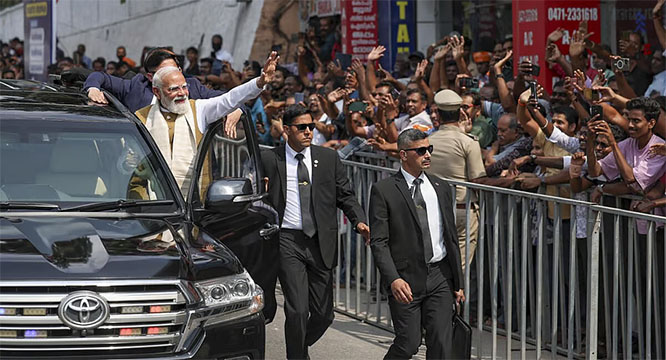
Prime Minister Narendra Modi, during his visit to Thiruvananthapuram on Friday, January 23, indicated that the Bharatiya Janata Party (BJP) is aiming to expand its political footprint in Kerala ahead of the Assembly elections scheduled in the coming months.

Speaking at a BJP-organised public meeting, Modi drew parallels between the party’s early electoral gains in Gujarat and its recent victory in the Thiruvananthapuram Municipal Corporation. The civic body win, which ended decades of Left control, was cited by the Prime Minister as a possible starting point for the party’s broader ambitions in the state.

Recalling BJP’s political trajectory in Gujarat, Modi said the party was largely insignificant before 1987 and received little media attention. He pointed out that the BJP’s first major breakthrough came with its victory in the Ahmedabad Municipal Corporation that year.

“Just as our journey in Gujarat began with one city, Kerala’s journey has also started with a single city,” Modi said, suggesting that the party’s municipal-level success could translate into wider electoral acceptance.

The Prime Minister alleged that successive governments led by the Left Democratic Front (LDF) and the United Democratic Front (UDF) had failed to adequately develop Thiruvananthapuram. He accused both fronts of corruption and neglect, claiming that basic infrastructure and facilities were denied to the capital city for decades.

According to Modi, the BJP’s control of the civic body represents a shift driven by public dissatisfaction with the existing political alternatives. He asserted that the BJP administration in Thiruvananthapuram had begun working towards development, though no specific details or timelines were outlined.

Addressing the gathering at Putharikandam Maidan, Modi said the BJP intended to project Thiruvananthapuram as a “model city,” reiterating his party’s commitment to governance-led change.

The Prime Minister’s visit to Kerala also included the inauguration of several development projects and the flagging off of new train services, as the BJP intensifies its political outreach in the poll-bound state.

Comments

Add new comment

  • Coastaldigest.com reserves the right to delete or block any comments.
  • Coastaldigset.com is not responsible for its readers’ comments.
  • Comments that are abusive, incendiary or irrelevant are strictly prohibited.
  • Please use a genuine email ID and provide your name to avoid reject.