India, China must respect each other’s core concerns: Jaishankar in Beijing

Agencies
August 14, 2019

Beijing, Aug 14: India and China should find stronger convergences, respect each other’s core concerns and manage differences, External Affairs Minister S. Jaishankar has said as he underlined that the relationship between the two Asian giants has become “so big” that it has acquired a “global dimension”.
Mr. Jaishankar, who concluded his three-day visit to Beijing on Monday, held extensive and in-depth talks with his counterpart Wang Yi on the entire gamut of the India-China ties.

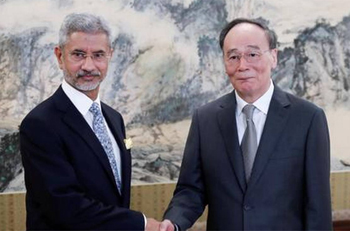
During his visit, he also met Chinese Vice President Wang Qishan, a close confidant of President Xi Jinping.

As the two largest developing countries and emerging economies, cooperation between India and China is of great importance to the world, Mr. Jaishankar told state-run Xinhua news agency here in an interview on Sunday.

“Our relationship is so big that it is no longer a bilateral relationship. It has global dimensions,” the report quoted Mr. Jaishankar as saying.

Describing the world as “more multi-polar” with changing global order, he said India and China need to enhance communication and coordination to contribute to world peace, stability and development.

‘People-to-people exchanges’

The two countries should find stronger areas of convergence, respect each other’s core concerns, find ways of managing differences and keep a strategic view of the direction of bilateral ties, he said.

The Minister said the two neighbours have a long history that goes back to thousands of years and the two countries’ civilisations are among the oldest that represent two pillars of the civilisation of the East.

“A lot of people, including young people of both countries, really don’t have a good understanding of how much our two cultures of civilisations have affected each other,” Mr. Jaishankar said, underlining that “promoting a greater awareness of that history” through more cultural exchanges is an important task for the two countries.

India and China have agreed to establish a high-level people-to-people exchanges mechanism in April last year and the first meeting was held in New Delhi in December.

Describing the move as “taking the bilateral relationship from the narrow diplomatic field to a larger societal interaction”, Jaishankar said the more people of the two nations interact face-to-face, the more their sense of relating to each other will grow.

“It’s important for our relationship to build popular support. Our people must feel good about each other,” he said.

Jaishankar had also co-chaired the 2nd meeting of the China-India high-level people-to-people exchanges mechanism with Wang Yi, agreeing to further promote friendship between the two peoples.

This was his first visit to China after taking over the position of the External Affairs Minister. He had earlier served as India’s envoy to China from 2009 to 2013, the longest tenure by an Indian diplomat to Beijing.

His visit was finalised much before India’s move to revoke Article 370 of the Constitution that gave special status to J&K.

Jaishankar also discussed arrangements for President Jinping’s visit to India later this year for second informal summit with Prime Minister Narendra Modi.

During his meeting with Mr. Wang Yi, Mr. Jaishankar said India’s decisions on Jammu and Kashmir are country’s “internal” matter and have no implication for either the external boundaries of India or the Line of Actual Control (LAC) with China.

The remarks came in response to Wang, who brought up developments pertaining to legislation passed recently by the Indian Parliament on J&K, saying China is “very closely” following the Indo-Pak tensions over Kashmir and its “ramifications” while asking New Delhi to play a “constructive role” for regional peace and stability.

According to an official release from the external affairs ministry, during the bilateral meeting, Jaishankar conveyed that this was an “internal” matter for India and the issue related to changes in a temporary provision of the Constitution of India and was the sole prerogative of the country.

Asserting that the legislative measures were aimed at promoting better governance and socio-economic development, Jaishankar also said there was no implication for either the external boundaries of India or the LAC with China.

“India was not raising any additional territorial claims. The Chinese concerns in this regard were therefore misplaced. The minister also conveyed that so far as the India China boundary question was concerned the two sides had agreed to a fair, reasonable and mutually acceptable settlement of the Boundary Question on the basis of the 2005 Political Parameters and Guiding Principles,” the release said.

Jaishankar also told Wang that it was important to ensure that bilateral differences should not become disputes and emphasised that the future of the ties will depend on the mutual sensitivity to each other’s “core concerns“.

China on August 6 had objected to the formation of Ladakh as Union Territory by India, saying it undermined its territorial sovereignty, evoking a sharp reaction from New Delhi, which asked Beijing to refrain from commenting on its “internal affairs“.

Ahead of Mr. aishankar’s visit, Pakistan Foreign Minister Shah Mehmood Qureshi air-dashed to Beijing and held talks with Wang, seeking China’s support for Islamabad’s efforts to take India’s decision to revoke special status to Kashmir to the UN Security Council.

Comments

Add new comment

  • Coastaldigest.com reserves the right to delete or block any comments.
  • Coastaldigset.com is not responsible for its readers’ comments.
  • Comments that are abusive, incendiary or irrelevant are strictly prohibited.
  • Please use a genuine email ID and provide your name to avoid reject.
News Network
January 23,2026

oscar.jpg

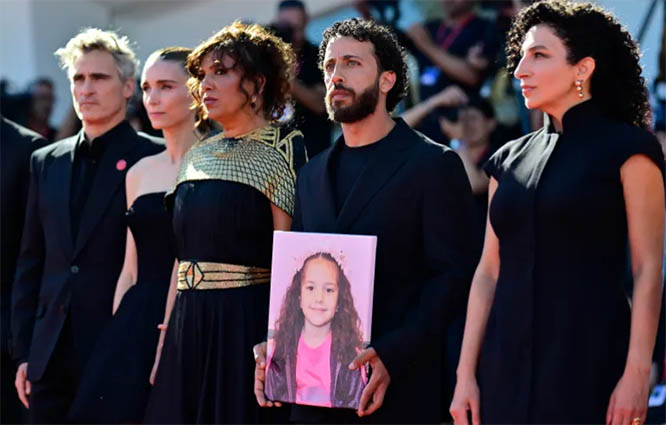
The Voice of Hind Rajab, inspired by the tragic final moments of a young Palestinian girl killed by Israeli fire in Gaza, has been nominated for an Academy Award in the Best International Feature Film category.

Directed by Tunisian filmmaker Kaouther Ben Hania, the film recounts the true story of five-year-old Hind Rajab, who lost her life in January 2024 while fleeing Israeli bombardment with her family.

The film features the real audio of Hind’s desperate call to the Palestinian Red Crescent Society, where she pleaded for help moments before the vehicle she was in was struck by 355 bullets.

The haunting narrative begins with a brief call made from the besieged Tel al-Hawa neighborhood of Gaza, where gunfire and armored vehicles drowned out every sound.

After witnessing the brutal killing of her family, she made a trembling call, her voice reduced to a whisper as she spoke of the massacre and her unbearable loneliness as the sole survivor.

Premiering at the Venice International Film Festival in September 2025, The Voice of Hind Rajab garnered widespread acclaim, receiving a record-setting 23-minute standing ovation and the Silver Lion Grand Jury Prize, the festival’s second-highest honor.

In her acceptance speech, Ben Hania dedicated the film to humanitarian workers and first responders in Gaza, emphasizing that Hind's voice symbolizes countless civilians affected by war.

She aims to give voice to victims often reduced to mere statistics, highlighting the broader suffering of civilians in war zones.

The film’s Oscar nomination underscores its powerful storytelling and ethical approach to depicting real-life tragedy, making it a crucial piece of contemporary cinema.

It serves not only as a narration of individual tragedy but also as an artistic and documentary response to the silence and censorship that often overshadow West Asian struggles and wars.

Using an innovative method she calls docufiction, Ben Hania bridges unvarnished reality and narrative structure, creating a work that is both artistically valuable and socially impactful.

Born in 1977 in Sidi Bouzid—later the epicenter of the Arab revolution—her background profoundly influenced her worldview and artistic approach.

She is a graduate of the Higher School of Audiovisual Arts of Tunis, Pantheon-Sorbonne University, and La Fémis in Paris, where her studies equipped her with the technical and theoretical tools needed to address complex subjects. 

Comments

Add new comment

  • Coastaldigest.com reserves the right to delete or block any comments.
  • Coastaldigset.com is not responsible for its readers’ comments.
  • Comments that are abusive, incendiary or irrelevant are strictly prohibited.
  • Please use a genuine email ID and provide your name to avoid reject.
News Network
February 1,2026

Bengaluru: Karnataka Deputy Chief Minister D K Shivakumar on Sunday criticised the Union Budget presented by Finance Minister Nirmala Sitharaman, claiming it offered no tangible benefit to the state.

Though he said he was yet to study the budget in detail, Shivakumar asserted that Karnataka had gained little from it. “There is no benefit for our state from the central budget. I was observing it. They have now named a programme after Mahatma Gandhi, after repealing the MGNREGA Act that was named after him,” he said.

Speaking to reporters here, the Deputy Chief Minister demanded the restoration of MGNREGA, and made it clear that the newly enacted rural employment scheme — VB-G RAM G — which proposes a 60:40 fund-sharing formula between the Centre and the states, would not be implemented in Karnataka.

“I don’t see any major share for our state in this budget,” he added.

Shivakumar, who also holds charge of Bengaluru development, said there were high expectations for the city from the Union Budget. “The Prime Minister calls Bengaluru a ‘global city’, but what has the Centre done for it?” he asked.

He also drew attention to the problems faced by sugar factories, particularly those in the cooperative sector, alleging a lack of timely decisions and support from the central government.

Noting that the Centre has the authority to fix the minimum support price (MSP) for agricultural produce, Shivakumar said the Union government must take concrete steps to protect farmers’ interests.

Comments

Add new comment

  • Coastaldigest.com reserves the right to delete or block any comments.
  • Coastaldigset.com is not responsible for its readers’ comments.
  • Comments that are abusive, incendiary or irrelevant are strictly prohibited.
  • Please use a genuine email ID and provide your name to avoid reject.
News Network
January 20,2026

DGP.jpg

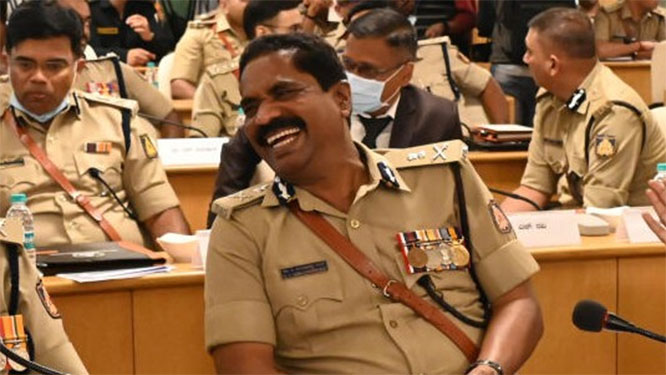
Karnataka DGP (Civil Rights Enforcement) K Ramachandra Rao was suspended with immediate effect, as per a state government order issued on Monday, 19 January. The order cited conduct unbecoming of a government servant and causing embarrassment to the state administration.

The Karnataka government suspended Rao after a purported video showed him in a compromising position with a woman inside his official chamber. The video went viral on social media. Rao rejected the videos outright, terming them "fabricated and false".

Who is K Ramachandra Rao?

Rao is a DGP-rank officer who was heading the Directorate of Civil Rights Enforcement until his suspension. He was promoted to DGP in September 2023 and assumed office in October 2023, the Sunday Guardian reported.

He also served as the Chairman and Managing Director of the Karnataka State Police Housing and Infrastructure Development Corporation Limited.

His stint as the Inspector General of Police (IGP) for the Southern Range was also marred by controversy. In 2014, during a cash seizure near Mysuru’s Yelwal, officials claimed the seized amount was ₹20 lakh, while the accused (Kerala-based merchants) claimed it was around ₹2.27 crore.

Rao, who was present during the seizure, denied all allegations. However, he was transferred soon after.

Allegations of collusion with a businessman surfaced, and a senior police officer was quoted by The Sunday Guardian as saying, “In Rao’s case, the CID has clearly mentioned that there was a great degree of lapse on the part of Rao and a deputy superintendent of police after it was brought to their notice that a few policemen, including a gunman attached to the IGP, were involved in the robbery.”

Rao had denied all wrongdoing in that incident. Despite past controversies, he rose to the state’s top police position, the Sunday Guardian reported.

Ranya Rao’s stepfather

Rao is the stepfather of Kannada actress Harshavardhini Ranya alias Ranya Rao, accused of orchestrating the illegal import of gold worth over ₹12.56 crore from Dubai to India along with two others — businessman Tarun Raju, and jewellery dealer Sahil Jain.

‘Obscene video’ controversy

A viral video showed Rao behaving inappropriately with a woman inside his office while in uniform.

The Karnataka government said in its Monday order that “vide videos and news reports widely broadcast on public news channels and media platforms, it is observed that Dr K Ramachandra Rao has acted in an obscene manner which is unbecoming of a Government Servant and also causing embarrassment to the Government.”

The order said the matter was examined by the state government, which found that the officer's conduct amounted to a violation of Rule 3 of the All India Services (Conduct) Rules, 1968.

The government said it is prima facie satisfied that "it is necessary to place Rao under suspension with immediate effect, pending inquiry".

During the suspension period, Rao will be entitled to subsistence allowance as per Rule 4 of the All India Services (Discipline and Appeal) Rules, 1969.

The order also places restrictions on his movement, stating that during the period of suspension, the officer must not leave headquarters under any circumstances without the written permission of the state government.

Comments

Add new comment

  • Coastaldigest.com reserves the right to delete or block any comments.
  • Coastaldigset.com is not responsible for its readers’ comments.
  • Comments that are abusive, incendiary or irrelevant are strictly prohibited.
  • Please use a genuine email ID and provide your name to avoid reject.