New strain of covid: State-wise list of Christmas, New Year regulations, night curfew orders

News Network
December 22, 2020

Bengaluru, Dec 22: India is witnessing a reduction in the daily number of COVID-19 cases being reported, but the news of a new "out-of-control" coronavirus strain found in the UK has sent the government into a spiral.

Apart from that, there are concerns over the possibility that the upcoming Christmas and New Year festivities could cause people to throw caution to the wind and go lax on COVID-19 related precautions.

Therefore, the Centre has banned flights to and from the UK, from December 22 till December 31, in view of the new and highly infectious strain of virus detected there.

All states have decided to launch their own COVID-1 related protocols and guidelines for the Christmas and New Year season.

In all states where night curfews are in force during Christmas and New Year, here is what to expect.

What is allowed in night curfew

- Essential services like vegetable and milk supply

- Assembly of not more than 5 people at a place.

What must stay shut during night curfew

-All shops, barring essential services like medical supplies

-Non-essential travel

-Assembly of more than 5 people in public places

Maharashtra:

Maharashtra government on Monday 21 December) declared a night curfew in municipal corporation areas from December 22 to January 5 as a precautionary step amid growing concerns over a new coronavirus variant spreading in Britain.

This spell will cover the Christmas and the New Year festivities time, typically a period when hotels demand the right to be allowed to operate and entertain through the night as patrons celebrate with scant COVID-specific social distancing precautions being imposed.

The Maharashtra state's official statement said that those who arrive at the state's airports from European and West Asian countries will have to undergo 14 days compulsory institutional quarantine. Those found symptomatic or infected will be sent to a hospital for admission directly.

Passengers coming from other countries to Maharashtra, the worst-affected state by COVID-19 in the country, will be home quarantined the statement by the Maha government said.

No Christmas or New Year function excuses will be entertained to keep hotels/restaurants/parties/revelries to continue from 11 pm to 6 am curfew hours.

Manipur:

In the last week of November, Manipur had declared night curfew to last till December end. The curfew hours were 6 pm to 4 am and the state government had declared that the night curfew orders in Manipur will continue till December 31 or until further orders, whichever is earlier. There has been no change in that. This will, of course, mean that people can celebrate Christmas and New Year in public places dring daytime (outside curfew hours) by following COVID-specific SOPs and/or inside homes beyond curfew hours. Movement of essential services, goods trucks, and officials on duty has been exempted from the latest order. Also, the number of attendees at social and customary ceremonies has been capped at 20.

Himachal Pradesh:

Night curfew that had been imposed in 8 districts of Himachal Pradesh has been extended on 14 December till 5th January 2021 in the four Covid-hit districts of Shimla, Mandi, Kangra, and Kullu.

Punjab:

On December 11, the Punjab Chief Minister Captain Amarinder Singh acted on the complaints of mass violations of COVID-19 curbs at weddings and parties, extending night curfew and ordering restrictions of 100 persons on indoor events and 250 on outdoor gatherings in the state. The night curfew hours will be 10 pm to 5 am and will stay in effect till January 1, covering the Christmas and New Year's eve and day, as well.

Karnataka:

Karnataka has noted that 531 passengers from the UK had arrived into the state on Sunday and out of them, 138 did not have COVID-19 negative certificates though all of them were asymptomatic. Now, the Karnataka Government has decided to trace all passengers who had arrived in Bengaluru and Mangaluru from the UK since 7th December. The district surveillance officers have been asked to trace, test, and place such people under home quarantine. Those who are RT-PCR positive shall be placed under hospital isolation and positive samples will be sent to NIMHANS, Bengaluru for molecular testing. Passengers who are RT-PCR negative shall be under strict home quarantine for 14 days.

A draft advisory prepared by the Karnataka state health department based on recommendations of the Technical Advisory Committee (TAC), the state govt had declared on December 1-2 that to avoid a likely second wave in January-February 2021, it may reintroduce night curfew during the Christmas-New Year week.

Comments

Add new comment

  • Coastaldigest.com reserves the right to delete or block any comments.
  • Coastaldigset.com is not responsible for its readers’ comments.
  • Comments that are abusive, incendiary or irrelevant are strictly prohibited.
  • Please use a genuine email ID and provide your name to avoid reject.
News Network
February 3,2026

Kanchur2.jpg

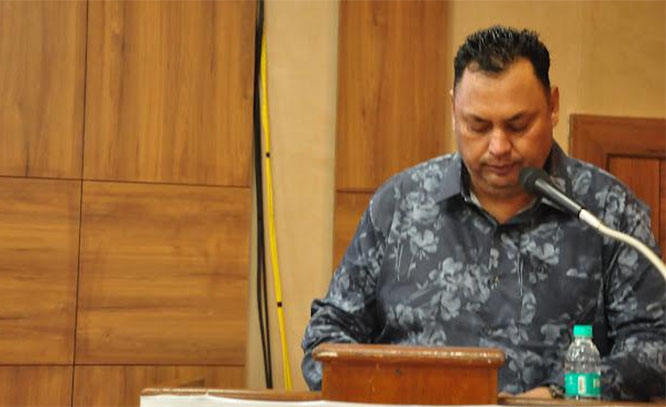
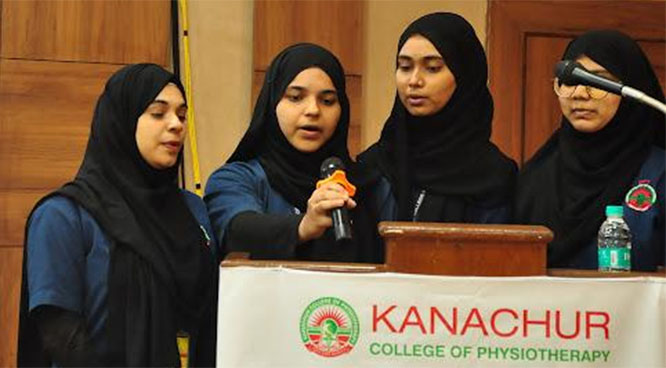
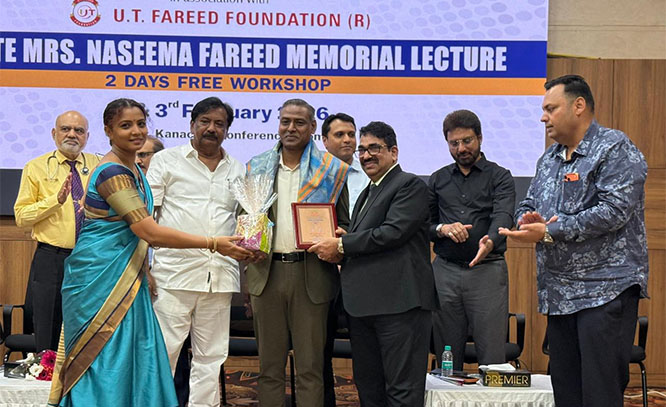
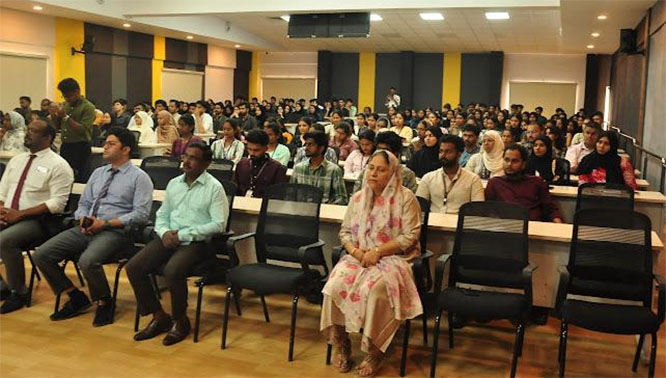
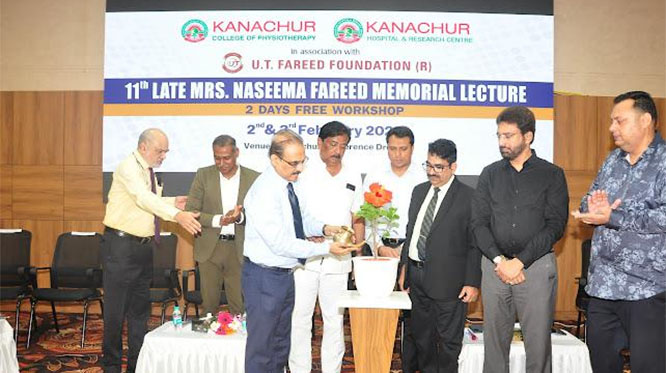
Mangaluru, Feb 3: Kanachur College of Physiotherapy and Kanachur Hospital & Research Centre, in association with U.T. Fareed Foundation (R), organised the 11th Late Mrs. Naseema Fareed Memorial Lecture on Tuesday.

The programme was inaugurated by Dr. Subramanyam K, Head of the Department and Professor, Department of Cardiology, Srinivas Institute of Medical Sciences & Research Centre, Mangaluru. In his inaugural address, Dr. Subramanyam delivered an insightful talk highlighting the vital role of physiotherapy in modern medical care, particularly in cardiac rehabilitation, patient recovery, and improving overall quality of life through a multidisciplinary healthcare approach.

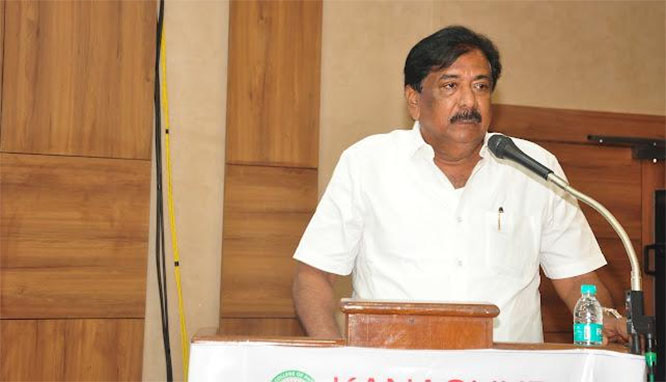
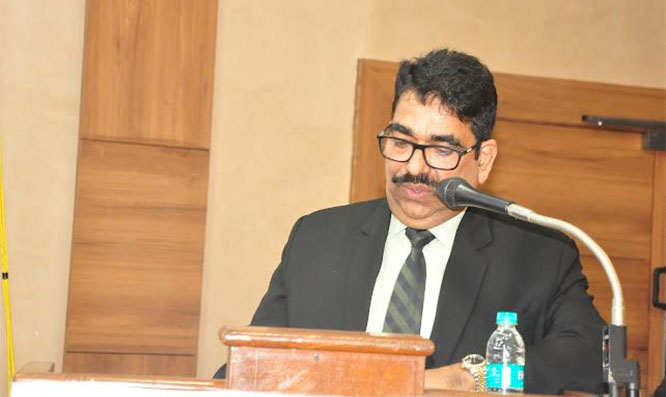
The presidential address was delivered by Dr. Haji U.K. Monu, Chairman, KIET. The keynote address was presented by Dr. Mohammed Ismail Hejamady, who spoke on the evolving scope and significance of physiotherapy.

The event was held in the presence of Mr. Abdul Rahiman, Director, Kanachur Institute of Medical Sciences, Mangaluru; Dr. Vaishali Sreejith, Senate Member, Rajiv Gandhi University of Health Sciences, Bengaluru; Dr. Sudhan S.G., Professor and Principal, Krupanidhi College of Physiotherapy, Bengaluru; Dr. Shanavaz Manipady, Dean, Kanachur Institute of Medical Sciences, Mangaluru; and Dr. Venkat Rai Prabhu, Member, Kanachur Health Science Advisory Council, Kanachur Hospital & Research Centre.

Dr. Mohammad Suhail, Dean, Kanachur College of Physiotherapy, welcomed the guests and delegates.

As part of the programme, a two-day free workshop was organised on the following topics:

•    Art of Practice in Cardiopulmonary Conditions by Dr. Sudhan S.G., Principal, Krupanidhi College of Physiotherapy

•    The Gift of Life – Organ Donation by Dr. Rohan Monis, Chief Administrative Medical Officer

•    Chest X-ray Interpretation by Dr. Hemanth, Department of Radiology, KIMS

•    Pulmonary Rehabilitation by Dr. Vijaya Kumar, Department of Respiratory Medicine, KIMS

Organisers noted that the memorial lecture series has been conducted continuously for the 11th year, benefiting interns and postgraduate students from various colleges across Mangaluru. A total of 130 delegates attended the workshop.

Dr. Reshma, Vice Principal, Kanachur College of Physiotherapy, Mangaluru, delivered the vote of thanks.

Kanchur7.jpg

Kanchur6.jpg

Kanchur5.jpg

Kanchur4.jpg

Kanchur3.jpg

Kanchur1.jpg

Comments

Add new comment

  • Coastaldigest.com reserves the right to delete or block any comments.
  • Coastaldigset.com is not responsible for its readers’ comments.
  • Comments that are abusive, incendiary or irrelevant are strictly prohibited.
  • Please use a genuine email ID and provide your name to avoid reject.
News Network
February 5,2026

In an era where digital distractions are the primary rival to academic excellence, the Karnataka Education Department is taking the fight directly to the living room. As the SSLC (Class 10) annual examinations loom, officials have launched a localized "digital strike" to ensure students aren't losing their competitive edge to scrolling or soap operas.

The 7-to-9 Lockdown

The department has issued a formal directive urging—and in some cases, enforcing via home visits—a total blackout of mobile phones and television sets between 7:00 PM and 9:00 PM. This two-hour window is being designated as "sacred study time" across the state until the examinations conclude on April 2.

Key Pillars of the Initiative:

•    Doorstep Advocacy: Teachers are transitioning from classrooms to living rooms, meeting parents to explain the psychological benefits of a distraction-free environment.

•    Parental Accountability: The campaign shifts the burden of discipline from the student to the household, asking parents to lead by example and switch off their own devices.

•    The Timeline: The focus remains sharp on the upcoming exam block, scheduled from March 18 to April 2.

"The objective is simple: uninterrupted focus. We are reclaiming the evening hours for the students, ensuring their environment is as prepared as their minds," stated a senior department official.

Student vs. Reality

While the student community has largely welcomed the "forced focus"—with many admitting they lack the willpower to ignore notifications—the move has sparked a debate on enforceability. Without a "TV Police," the success of this initiative rests entirely on the shoulders of parents and the persuasive power of visiting educators.

Comments

Add new comment

  • Coastaldigest.com reserves the right to delete or block any comments.
  • Coastaldigset.com is not responsible for its readers’ comments.
  • Comments that are abusive, incendiary or irrelevant are strictly prohibited.
  • Please use a genuine email ID and provide your name to avoid reject.
News Network
February 4,2026

gaming.jpg

Ghaziabad: In a tragic incident, three sisters aged 12, 14 and 16 died after jumping from the ninth floor of their apartment in Uttar Pradesh’s Ghaziabad in the early hours of Wednesday. The girls allegedly took the extreme step after becoming deeply obsessed with an online Korean task-based game.

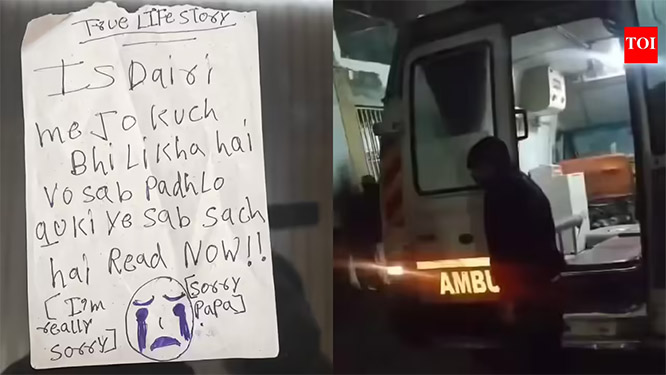
The incident occurred around 2.15 am at a high-rise apartment complex in Bharat City. Before jumping, the sisters — Pakhi (12), Prachi (14) and Vishika (16) — left behind a handwritten note that read, “Sorry, Papa.”

According to police, the girls went to the balcony, bolted the door from inside and jumped one after another. Their screams and the sound alerted their parents, neighbours and security guards. By the time the parents broke open the balcony door, all three had died.

“When we reached the spot, we confirmed that three minor girls, daughters of Chetan Kumar, had died after jumping from the building,” said Assistant Commissioner of Police Atul Kumar Singh.

Visuals from the scene on Wednesday morning showed the bodies lying on the ground, their mother wailing in grief, and stunned neighbours gathering at the complex.

Police said the sisters were heavily influenced by Korean culture and were addicted to an online “Korean love game”, though no specific game has been identified so far. Investigators are examining an eight-page suicide note written in a pocket diary, detailing the girls’ mobile and gaming activities.

“Read everything written in this diary because all of it is true. I’m really sorry. Sorry, Papa,” the note said, accompanied by a hand-drawn crying emoji.

Their father, Chetan Kumar, told police that the girls had even adopted Korean names and had gradually withdrawn from school and daily activities. “They used to say, ‘Korea is our life, Korea is our biggest love. We cannot give it up,’” he said, breaking down.

Police said the parents had recently restricted the girls’ mobile phone usage, which may have triggered distress. “The investigation has not revealed the name of any particular game, but it is evident that the girls were deeply influenced by Korean culture, as mentioned in the suicide note,” said senior police officer Nimish Patel.

The sisters reportedly did everything together, including eating and bathing. Their gaming addiction is believed to have begun during the COVID-19 pandemic, after which they became irregular at school and eventually stopped attending altogether.

Police also revealed that Chetan Kumar is married to two sisters and lives with both wives and their children, all daughters. Two of the deceased girls were daughters of one wife, while the third was their half-sister.

Further investigation is underway.

Comments

Add new comment

  • Coastaldigest.com reserves the right to delete or block any comments.
  • Coastaldigset.com is not responsible for its readers’ comments.
  • Comments that are abusive, incendiary or irrelevant are strictly prohibited.
  • Please use a genuine email ID and provide your name to avoid reject.