'1 Earth, 1 Family, 1 Future': India sets G20 agenda as it assumes presidency

News Network
December 1, 2022

modi.jpg

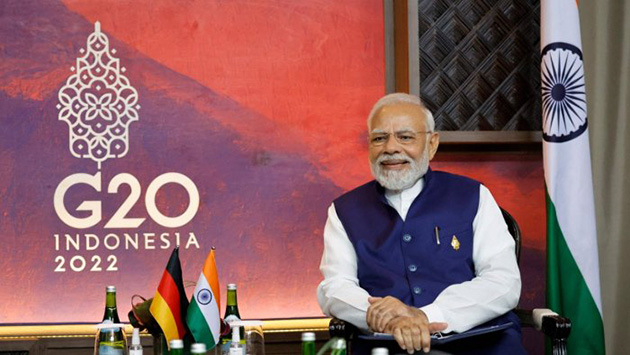
New Delhi, Dec 1: As India began its G-20 presidency from Thursday, Prime Minister Narendra Modi said it will work to further promote oneness, inspired by the theme of "One Earth, One Family, One Future", and listed terror, climate change, pandemic as the greatest challenges that can be best fought together.

India's G20 priorities will be shaped in consultation with not just our G20 partners, but also our fellow-travellers in the global South, whose voice often goes unheard, he said.

India's G20 agenda will be inclusive, ambitious, action-oriented, and decisive, he added. 

"Let us join together to make India's G20 Presidency a Presidency of healing, harmony and hope. Let us work together to shape a new paradigm — of human-centric globalisation," he said in an article which appeared in several newspapers and was posted on his website too.

The country looks forward to working on encouraging sustainable lifestyles, depoliticising the global supply of food, fertilizers and medical products among other subjects, the prime minister said in a series of tweets.

He said, "I firmly believe now is the best time to go further still and catalyse a fundamental mindset shift, to benefit humanity as a whole."

Gone is the time to remain trapped in the the same old zero-sum mindset, which has led to both scarcity and conflict, the prime minister said.

"It is time to get inspired by our spiritual traditions which advocate oneness and work together to solve global challenges," he added.

"As India assumes this important mantle, I ask myself — can the G20 go further still? Can we catalyse a fundamental mindset shift, to benefit humanity as a whole? I believe we can," he said in the write-up to share his thoughts on the significant milestone for Indian diplomacy.

"Our mindsets are shaped by our circumstances as through the history, humanity lived in scarcity. People fought for limited resources because their survival depended on denying them to others. Confrontation and competition between ideas, ideologies and identities became the norm," he said.

"Unfortunately, we remain trapped in the same zero-sum mindset even today. We see it when countries fight over territory or resources. We see it when supplies of essential goods are weaponised. We see it when vaccines are hoarded by a few, even as billions remain vulnerable," he said.

If humans were inherently selfish, what would explain the lasting appeal of so many spiritual traditions that advocate the fundamental one-ness of us all, he asked.

Modi said, "One such tradition, popular in India, sees all living beings, and even inanimate things, as composed of the same five basic elements - the panch tatva of earth, water, fire, air and space. Harmony among these elements - within us and between us - is essential for our physical, social and environmental well-being."

He added, "India's G20 Presidency will work to promote this universal sense of one-ness. Hence our theme — 'One Earth, One Family, One Future".

Today, the world has the means to produce enough to meet the basic needs of all people. "Today, we do not need to fight for our survival — our era need not be one of war. Indeed, it must not be one," he said.

Fortunately, today's technology also gives us the means to address problems on a humanity-wide scale, he said, adding that India with one-sixth of humanity and with its immense diversity of languages, religions, customs and beliefs is a microcosm of the world, he added.

For imbuing hope in our future generations, India will encourage an honest conversation among the most powerful countries on mitigating risks posed by weapons of mass destruction and enhancing global security, he said.

As the "mother of democracy," India's national consensus is forged not by diktat but by blending millions of free voices into one harmonious melody, he said.

India is now the fastest growing large economy and its "citizen-centric governance model" takes care of even its most marginalised citizens, while nurturing the creative genius of its talented youth, he said.

"We have leveraged technology to create digital public goods that are open, inclusive and inter-operable. These have delivered revolutionary progress in fields as varied as social protection, financial inclusion, and electronic payments," he said. 

Comments

Add new comment

  • Coastaldigest.com reserves the right to delete or block any comments.
  • Coastaldigset.com is not responsible for its readers’ comments.
  • Comments that are abusive, incendiary or irrelevant are strictly prohibited.
  • Please use a genuine email ID and provide your name to avoid reject.
News Network
January 23,2026

oscar.jpg

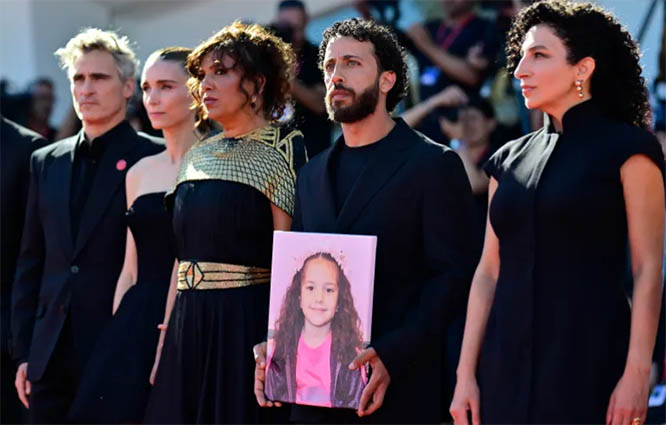
The Voice of Hind Rajab, inspired by the tragic final moments of a young Palestinian girl killed by Israeli fire in Gaza, has been nominated for an Academy Award in the Best International Feature Film category.

Directed by Tunisian filmmaker Kaouther Ben Hania, the film recounts the true story of five-year-old Hind Rajab, who lost her life in January 2024 while fleeing Israeli bombardment with her family.

The film features the real audio of Hind’s desperate call to the Palestinian Red Crescent Society, where she pleaded for help moments before the vehicle she was in was struck by 355 bullets.

The haunting narrative begins with a brief call made from the besieged Tel al-Hawa neighborhood of Gaza, where gunfire and armored vehicles drowned out every sound.

After witnessing the brutal killing of her family, she made a trembling call, her voice reduced to a whisper as she spoke of the massacre and her unbearable loneliness as the sole survivor.

Premiering at the Venice International Film Festival in September 2025, The Voice of Hind Rajab garnered widespread acclaim, receiving a record-setting 23-minute standing ovation and the Silver Lion Grand Jury Prize, the festival’s second-highest honor.

In her acceptance speech, Ben Hania dedicated the film to humanitarian workers and first responders in Gaza, emphasizing that Hind's voice symbolizes countless civilians affected by war.

She aims to give voice to victims often reduced to mere statistics, highlighting the broader suffering of civilians in war zones.

The film’s Oscar nomination underscores its powerful storytelling and ethical approach to depicting real-life tragedy, making it a crucial piece of contemporary cinema.

It serves not only as a narration of individual tragedy but also as an artistic and documentary response to the silence and censorship that often overshadow West Asian struggles and wars.

Using an innovative method she calls docufiction, Ben Hania bridges unvarnished reality and narrative structure, creating a work that is both artistically valuable and socially impactful.

Born in 1977 in Sidi Bouzid—later the epicenter of the Arab revolution—her background profoundly influenced her worldview and artistic approach.

She is a graduate of the Higher School of Audiovisual Arts of Tunis, Pantheon-Sorbonne University, and La Fémis in Paris, where her studies equipped her with the technical and theoretical tools needed to address complex subjects. 

Comments

Add new comment

  • Coastaldigest.com reserves the right to delete or block any comments.
  • Coastaldigset.com is not responsible for its readers’ comments.
  • Comments that are abusive, incendiary or irrelevant are strictly prohibited.
  • Please use a genuine email ID and provide your name to avoid reject.
News Network
February 4,2026

shettigar.jpg

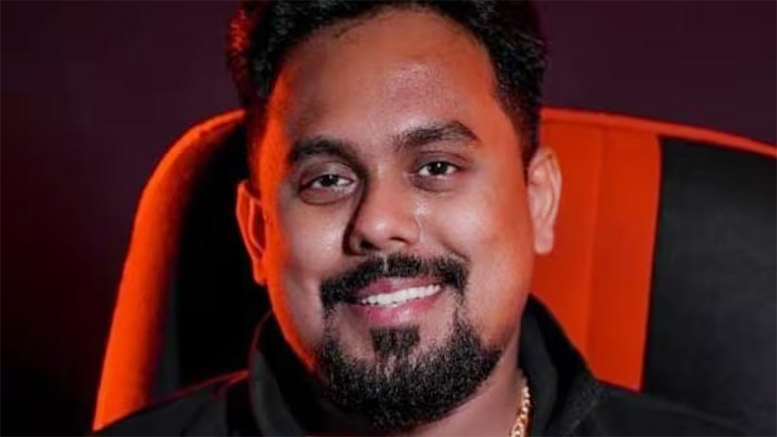
An Indian resident who won the Dh20 million (approximately Rs 50 crore) jackpot in Abu Dhabi's Big Ticket draw has told of his joy at sharing his life-changing fortune with a friend.

Shanthanu Shettigar, a shop manager in Muscat, regularly buys tickets for the monthly grand prize draw with one of his closest friends – and the pair won on February 3.

Mr Shettigar, 33, who is from Udyavar in Udupi district of the southern state of Karnataka and has lived in the Omani capital for eight years, said he was left speechless after learning of his success.

“When I first moved to Muscat, many of my colleagues were purchasing Big Ticket, which encouraged me to give it a try,” he said.

“I started buying tickets on my own, and later began sharing tickets with a close friend. The ticket that brought me this win was one we purchased together.”

“Like most people, I receive a lot of spam calls, and I was fully absorbed in my work as well. I knew the live draw was taking place tonight, but I never imagined my name would be announced,” he said.

“When I realised it was real and that I had won, I was honestly speechless. It still hasn’t fully sunk in, but I’m extremely happy.”

Mr Shettigar is not sure how he will spend his share of the money, but encouraged others to take part.

“This win was completely unexpected, so I want to take some time to think things through before deciding what to do next,” he said.

“I would definitely encourage others to participate with Big Ticket, whether with family or friends – you never know when your moment might come.”

The Big Ticket was established in 1992 with an initial first prize of Dh1 million. It is one of the most popular monthly raffles in the UAE.

It has transformed the lives of many people across the Emirates and beyond.

Entry to the Big Ticket Millionaire is Dh500. Tickets can be bought online or at counters at Zayed International Airport and Al Ain Airport.

Comments

Add new comment

  • Coastaldigest.com reserves the right to delete or block any comments.
  • Coastaldigset.com is not responsible for its readers’ comments.
  • Comments that are abusive, incendiary or irrelevant are strictly prohibited.
  • Please use a genuine email ID and provide your name to avoid reject.
News Network
February 1,2026

Bengaluru, Feb 1: For travelers landing at Kempegowda International Airport (KIA), the sleek, wood-paneled curves of Terminal 2 promise a world-class welcome. But the famed “Garden City” charm quickly withers at the curb. As India’s aviation sector swells to record numbers—handling over 43 million passengers in Bengaluru alone this past year—the “last mile” has turned into a marathon of frustration.

The Bengaluru Logjam: Rules vs Reality

While the city awaits the 2027 completion of the Namma Metro Blue Line, the interim has been chaotic. Recent “decongestion” rules at Terminal 1 have pushed app-based cab pickups to distant parking zones, forcing weary passengers into a 20-minute walk with luggage.

“I landed after ten months away and felt like a stranger in my own city,” says Ruchitha Jain, a Koramangala resident. “My driver couldn’t find me, staff couldn’t guide me, and the so-called ‘Premium’ lane is just a fancy tax on convenience.”

•    The Cost of Distance: A 40-km cab ride can now easily cross ₹1,500, driven by demand pricing and airport surcharges.

•    The Bus Gap: While Vayu Vajra remains a lifeline, its ₹300–₹400 fare is often cited as the most expensive airport bus service in the country.

A National Pattern of Disconnect

The struggle is not unique to Karnataka. From Chennai’s coast to Hyderabad’s plateau, India’s airports tell a familiar story: brilliant runways, broken exits.

City:    Primary Issue   |    Recent Development

Bengaluru:    Cab pickup restrictions & distance  |    App-based taxis shifted to far parking zones; long walks and fare spikes reported

Chennai:    Multi-Level Parking (MLCP) hike  |    Passengers report 40-minute walks to reach cab pickup points

Hyderabad:    “Taxi mafia” & touting  |    Over 440 touting cases reported; security presence intensified

Mumbai:    Fare scams  |     Tourists charged ₹18,000 for just 400 metres, triggering police action

In Hyderabad, travelers continue to battle entrenched local groups that intimidate Uber and Ola drivers, pushing passengers toward overpriced private taxis. Chennai flyers, meanwhile, complain that reaching the designated pickup zones now takes longer than short-haul flights from cities like Coimbatore.

The ‘Budget Day’ Hope

As Finance Minister Nirmala Sitharaman presents the Union Budget 2026 today, the aviation sector is watching closely. With the government’s renewed emphasis on multimodal integration, there is cautious hope for funding toward seamless airport-metro-bus hubs.

The vision is clear: a future where planes, trains, and metros speak the same language. Until then, passengers at KIA—and airports across India—will continue to discover that the hardest part of flying isn’t the thousands of kilometres in the air, but the last few on the ground.

Comments

Add new comment

  • Coastaldigest.com reserves the right to delete or block any comments.
  • Coastaldigset.com is not responsible for its readers’ comments.
  • Comments that are abusive, incendiary or irrelevant are strictly prohibited.
  • Please use a genuine email ID and provide your name to avoid reject.